
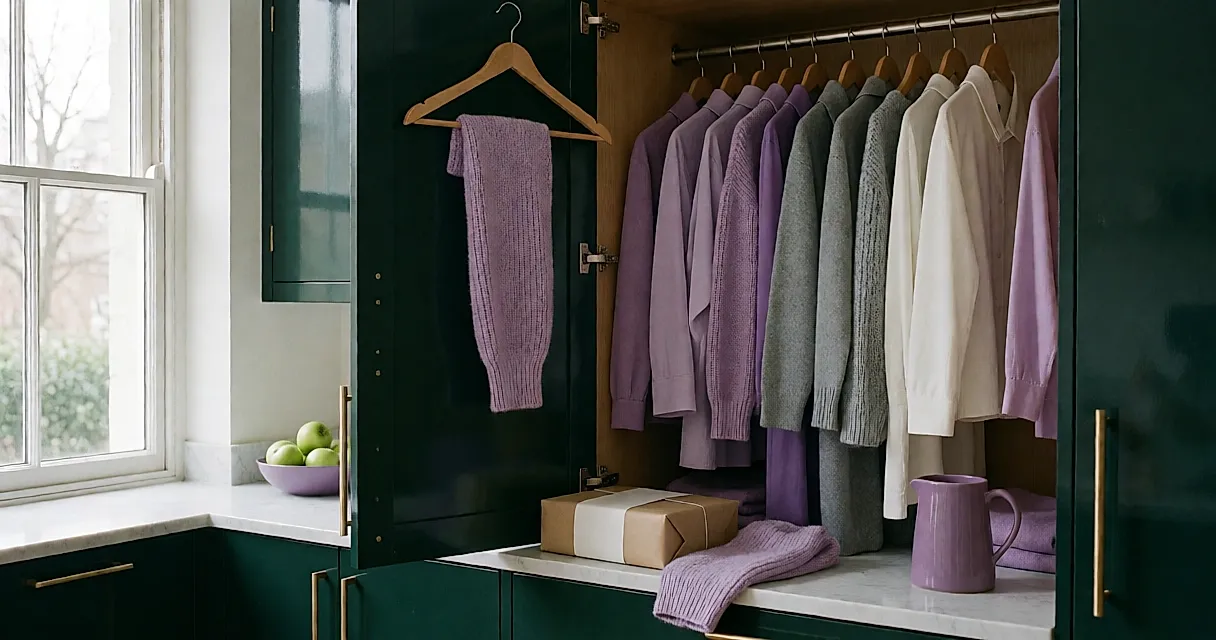
A hanger that snaps the moment you pull a shirt from the back: that is one wardrobe diagnosis that rarely gets it wrong. Behind the groaning rail sits a firmly held belief — buy less, buy better — and a wardrobe that has visibly failed to get the memo. The intention is sound. The cupboard is still overflowing. So what if we stopped reasoning in pounds and started counting the pieces we actually wear?
What we tell ourselves, what the wardrobe says
We know the script by heart. No more impulse buys, in with the basics, one good piece instead of three average ones. On paper it is clean, almost virtuous. In real life the parcel arrives the night before a trip, you try it on standing in the hallway, you hesitate, you tell yourself 'just in case' — and the returns slip stays in its bag until the deadline.
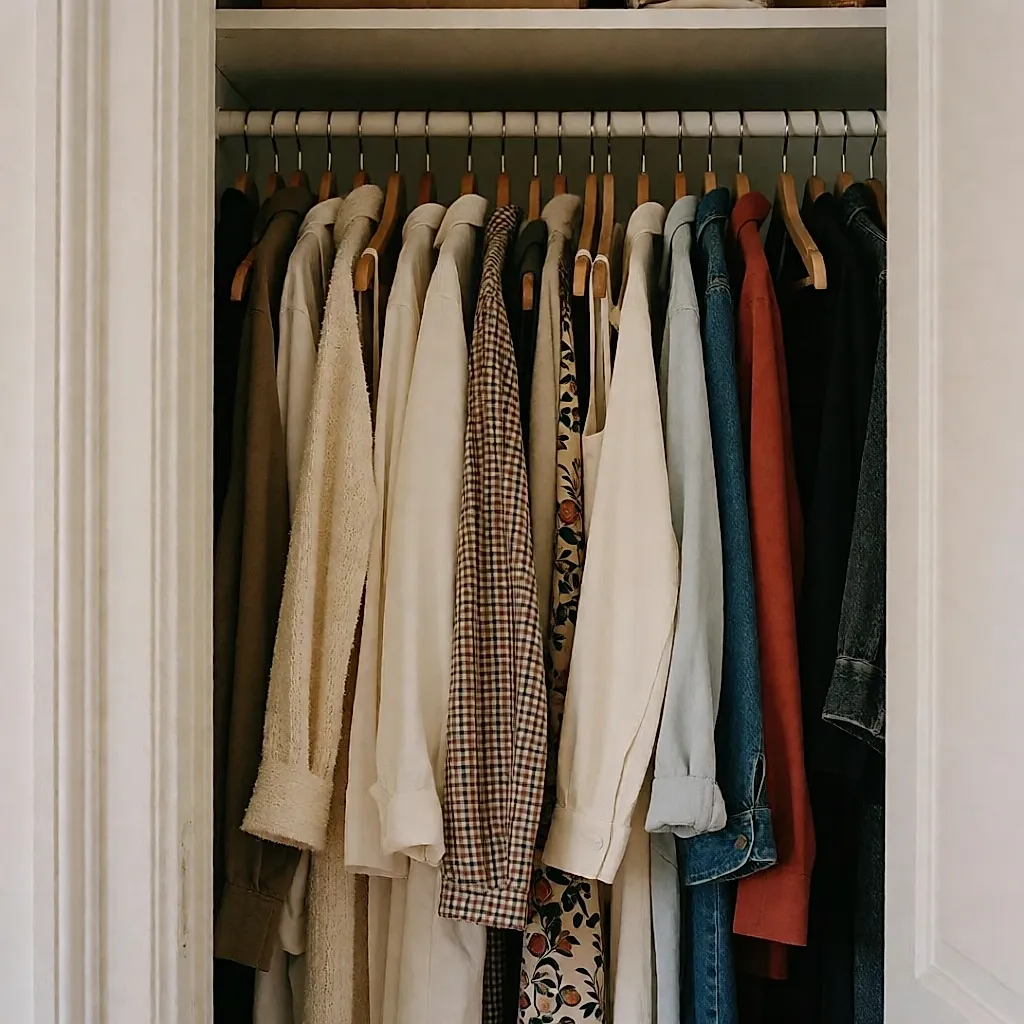
Buying less often doesn't slim a wardrobe down, though. A carefully chosen piece is still one more piece. What overflows isn't the latest order, it's sediment: the slightly scratchy jumper, the jeans from two years ago, the jacket inherited from a sister, the floral blouse that looked so good on screen. None of these is a bad buy. They are simply there, stacked up, taking the space of what you would actually like to wear.
The real problem isn't the budget
When the rail starts to creak, the reflex is accounting. You set a monthly sum, you stick to it, you feel square with yourself. Except the mess doesn't come from the amount spent: in practice, it is often the same small number of pieces that gets worn regularly, whatever the size of the wardrobe. The same three jumpers, the same jeans, the same jacket that goes with everything. The rest isn't quite asleep — it is waiting.
Which is why 'paying better' fixes nothing on its own. A wool knit bought at a higher price and worn twice takes up as much room as a cheap T-shirt. What matters is neither quality nor cost but rotation: what comes in has to be worn, altered, brought back out. A working wardrobe, not a museum.
Count what you wear, not what you spend
The method is a single gesture, and that is exactly what makes it doable. At the start of the month you turn the hanger of every hanging piece the wrong way round, hook facing you. Every time you wear something, you put its hanger back the right way. No app, no spreadsheet, no resolution you have to keep until Wednesday.
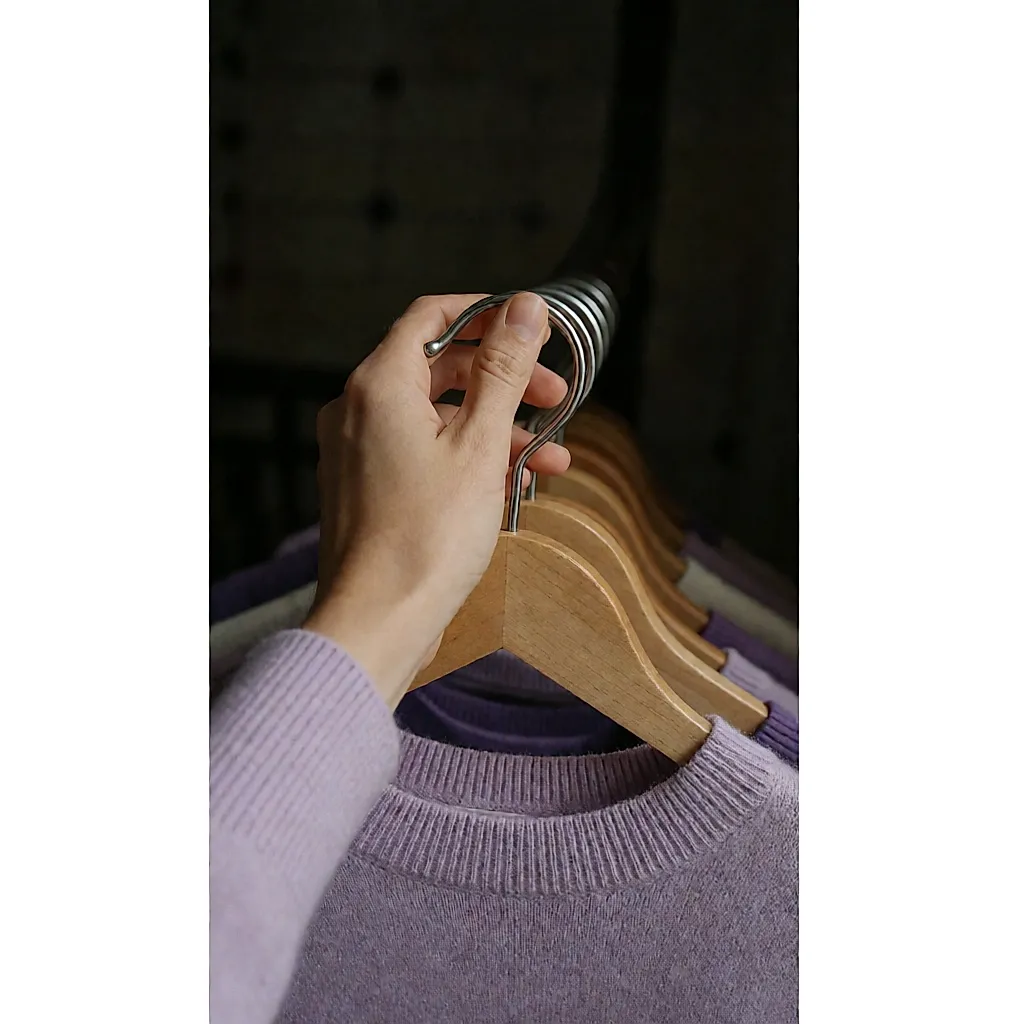
After a few weeks, look: the wardrobe explains itself. On one side, what lives; on the other, what has stalled. And the surprise is usually double — you wear more than you think, but always the same things. The real question then becomes: does that piece which hasn't moved need altering, or does it simply not suit you?
The three-step count. Turn the hangers on day one. Note on a single sheet of paper (or in the notes on your phone) the pieces turned back the right way, with no commentary. After a few weeks, sort them: worn at least twice, worn once, hasn't budged. Count the piles on shelves, the drawers and the seasonal storage bags too — otherwise half the wardrobe slips past the audit.
After the count, two decisions
The pile of never-worn pieces isn't a shopping list, it is the opposite of one. Three near-identical black blouses, no skirt that hangs properly: the gap is in the silhouette, not in the wardrobe. Look instead at what you put on without thinking — trousers that hang well, a fine knit that works under a jacket. That is your basic, the one that genuinely earns its place, and it isn't necessarily the one on the ready-made lists.
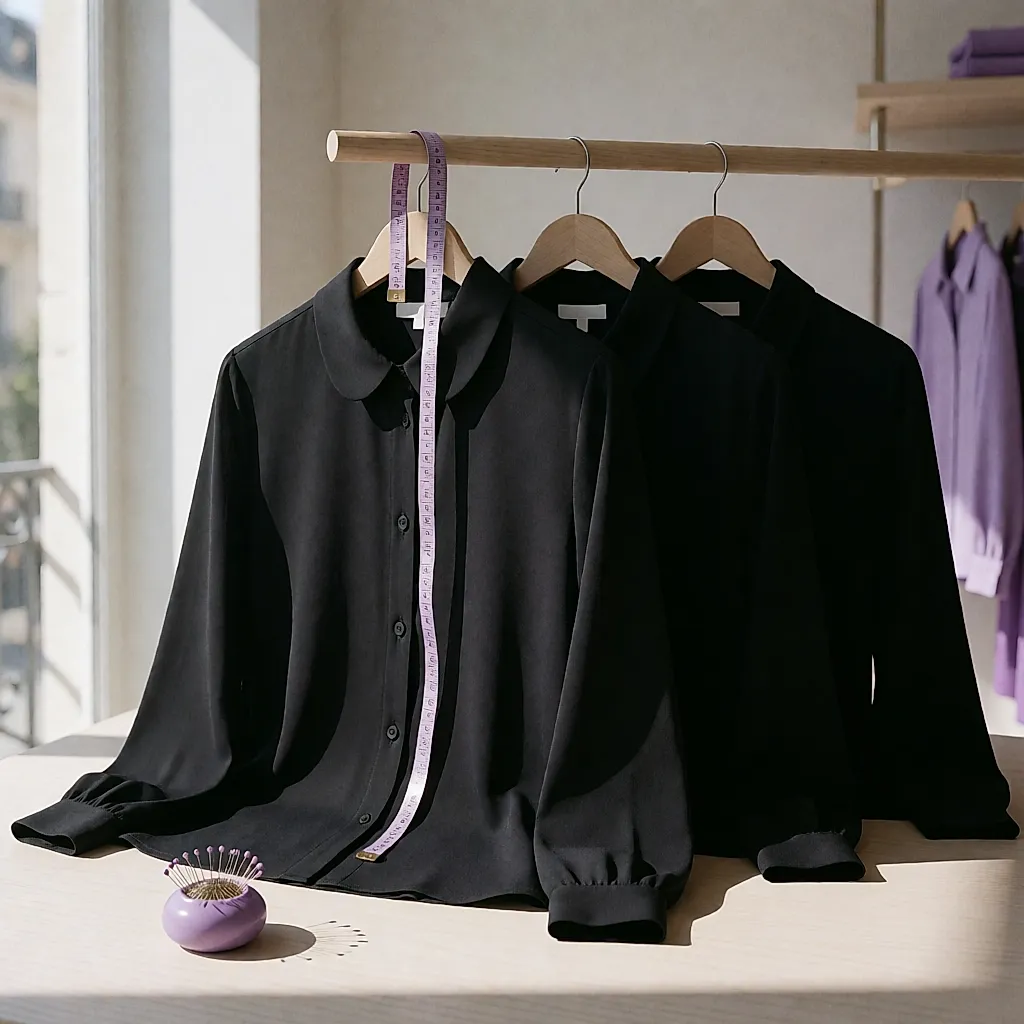
The second decision is about fabric. A piece worn twice a week has to survive the wash: wool, linen, cotton and silk can be repaired, pressed and altered; just check the synthetic content on the label before you buy. And before you buy again, think about alterations: a hem taken up, a waist taken in, a button moved, and the piece can come back into rotation.
What it costs to repair rather than replace
On price, expect around £10–20 for a simple hem and £20–45 to have a waist taken in at a local alterations shop — more in a city centre, less on the outskirts, and the figure climbs with lining or a delicate fabric. Hangers cost roughly £10–30 for a set of ten in wood or slim velvet, and a seasonal storage bag £8–20.
All of these are available from local alterations shops, haberdashery counters, DIY stores or online; some dry cleaners also take in small repairs. If alterations start to pile up, a second-hand sewing machine may work out cheaper in the long run — provided you have the patience to learn how to hem, which is another story.
An overflowing wardrobe doesn't prove you spend too much: it proves you look too little at what you own. This count costs nothing, demands no budget reshuffle and makes no one feel guilty. Take twenty minutes, turn the hangers, let the wardrobe speak — and the next piece you buy, you'll have a clearer idea why.

Comments
Your opinion matters: rate the article, react and reply to comments.
Comments are moderated; AI-assisted comments are flagged. Text emoticons (8-), :-), <3…) are automatically shown as images.