
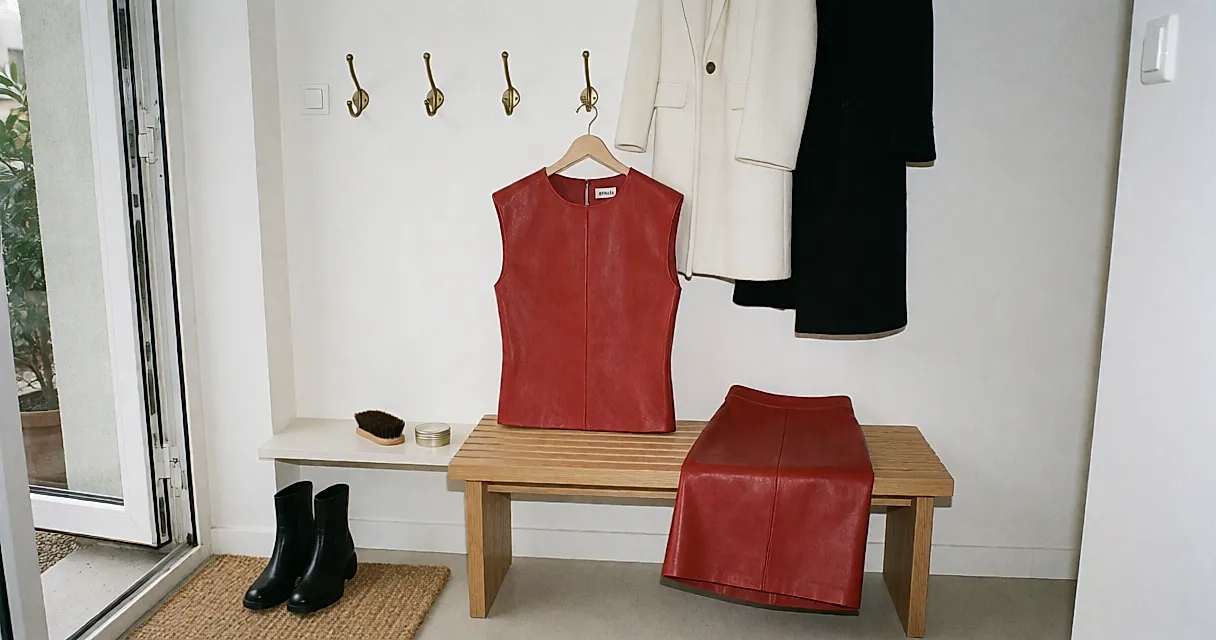
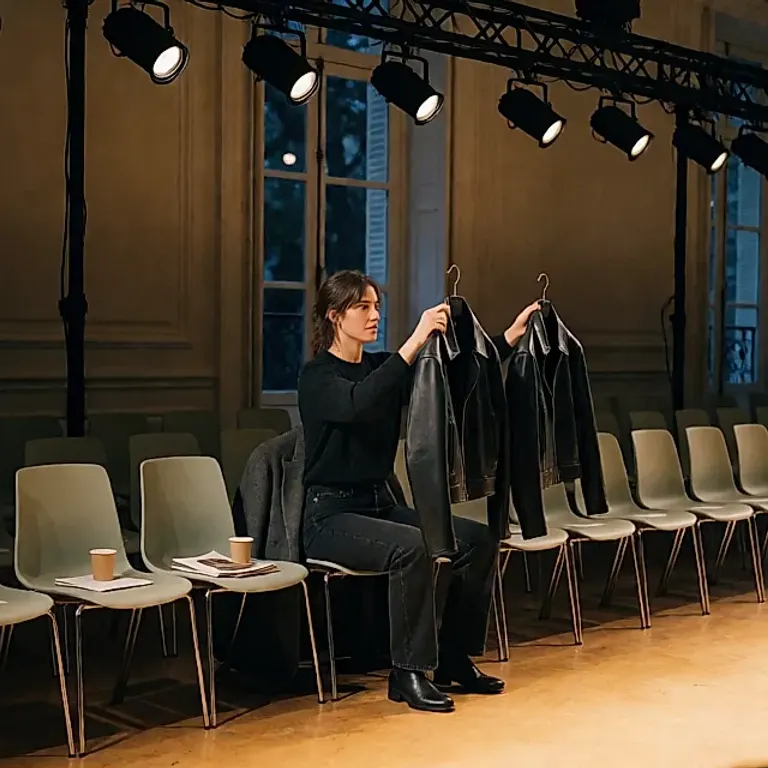
You can judge a fine leather in the palm of your hand: scrunch it up and the material springs back gently, without holding on to the memory of the gesture. That's the kind of leather moving into tops and skirts this season — the pieces you wear against the body rather than over the top of everything else. And since it isn't cheap, it's worth knowing exactly what you're buying: three details are enough to separate a piece that follows the body from a stiff hide that holds you at arm's length.
The scrunch test, the weight and the lining
Close the piece in your fist for a few seconds, then let go. A supple leather settles back with the give of a heavy fabric; a leather with a heavy surface finish keeps hard creases and sometimes a whitish line where it breaks. It isn't about thickness but about drape: fine lambskin or goatskin folds without cracking, while an over-finished calf turns to cardboard. The weight in your hand is a good clue too — a fine leather top should feel about as heavy as a sweatshirt, no more.
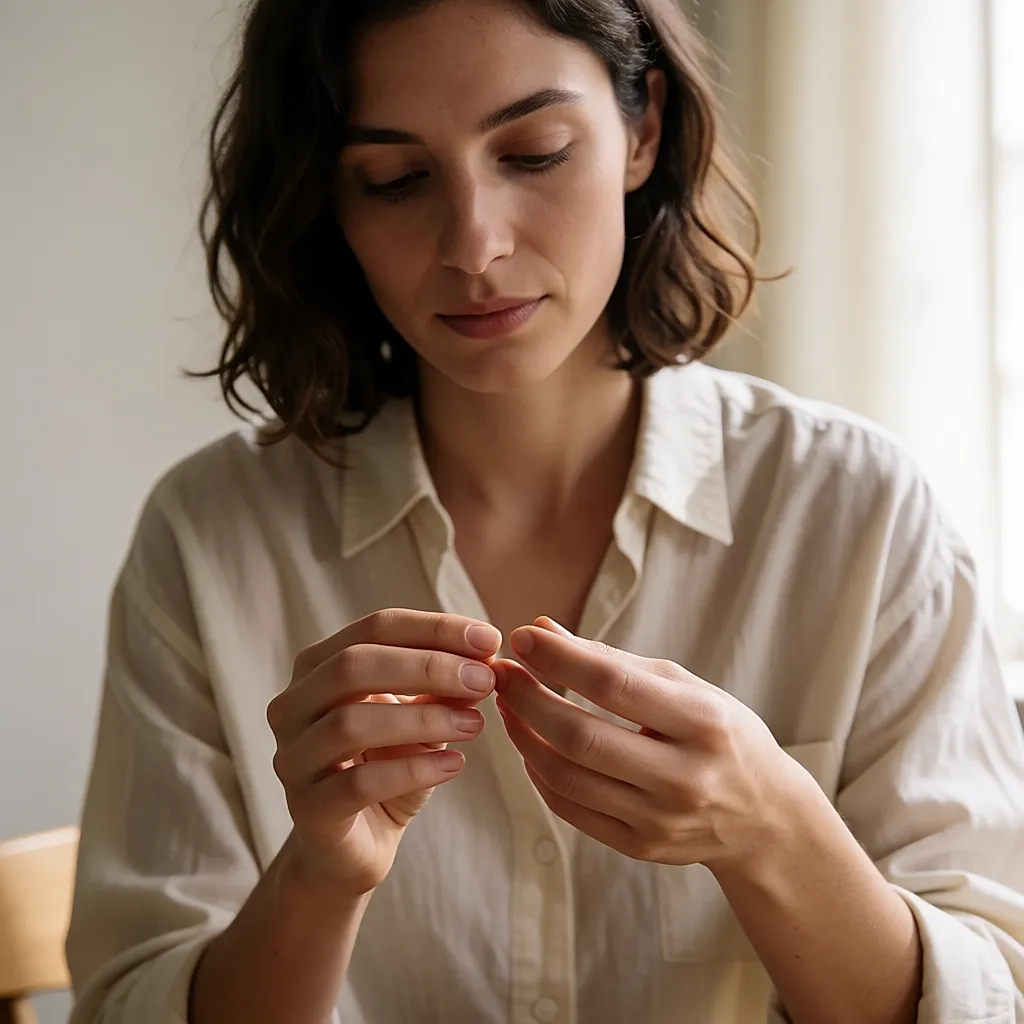
Next, look inside. A breathable lining (viscose, cupro) saves you from the bin-bag effect under the arm; a thick synthetic one makes you sweat and drags the drape down. Edges and seams finish the picture: a raw edge properly sanded smooth, even topstitching, a fastening that runs without catching. And if you come across a vegetable-tanned leather, be aware that it can take a few weeks to relax — it softens with wear, but rarely at the first fitting.
Under a jacket, the layer that doesn't bulk up
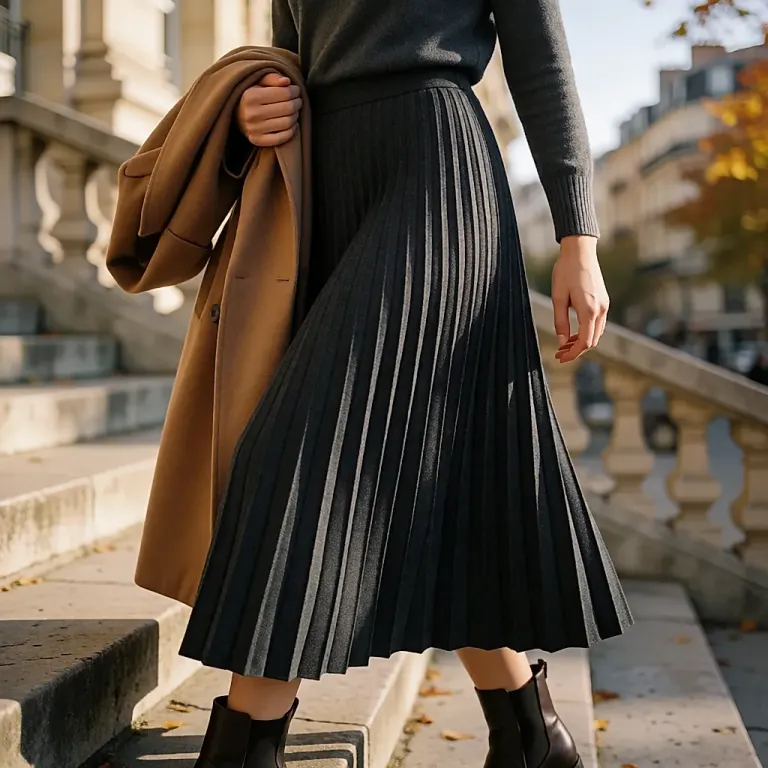
This is where fine leather earns its keep. A supple leather top replaces a shirt under a wool blazer without adding bulk at the shoulders, and a fine skirt slips under a long coat without creating that unflattering roll at the waist which makes you give up on half your winter wardrobe. Layering becomes simple: a fine cotton T-shirt, the leather top, the jacket over the top — and the leather does the textural work you'd normally expect from a print.
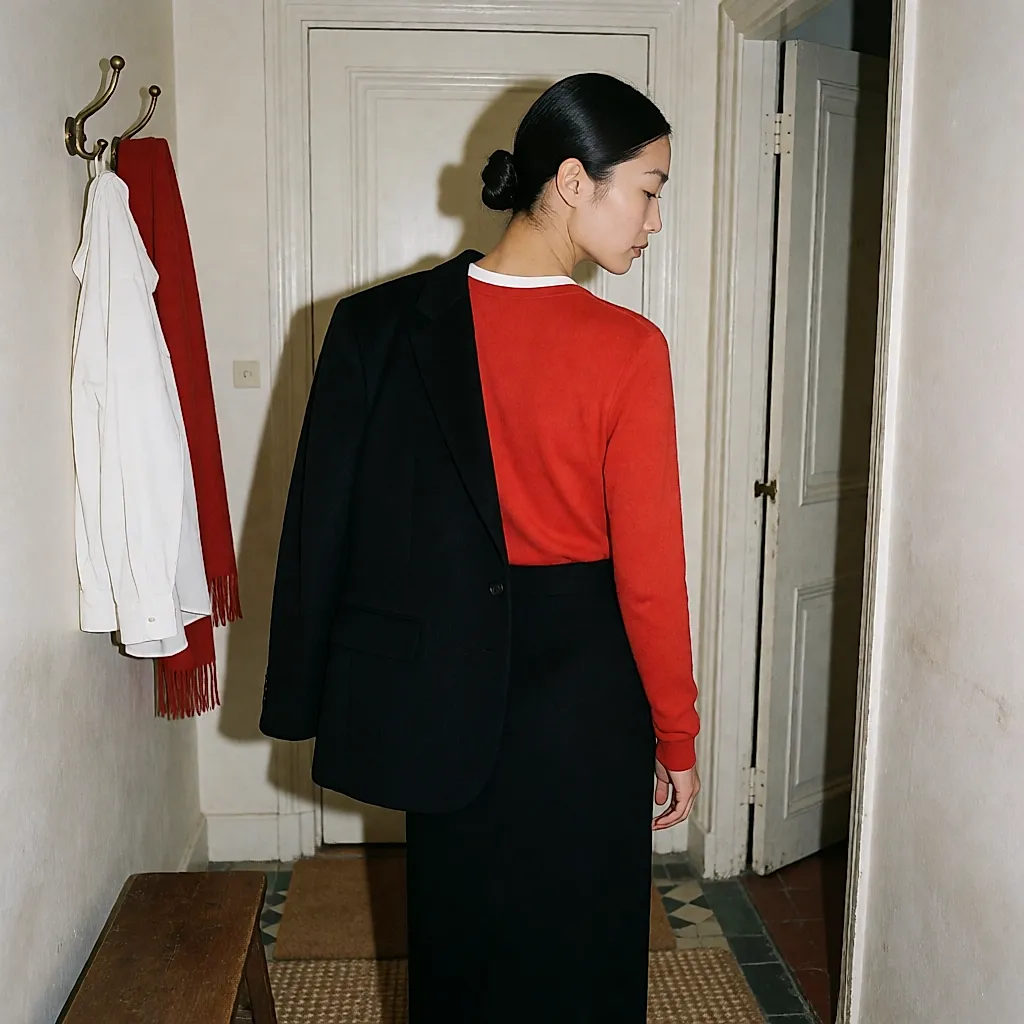
What doesn't work? Thick leather under a fitted jacket — you overheat, you tug at the sleeves, and you end up abandoning the whole idea before you've left the house. And in winter, cold leather against bare skin isn't the best plan: a fine cotton or silk base layer will stop you regretting your enthusiasm. On silhouette, straight skirts and gently flared midi shapes go anywhere; close-fitting fine leather forgives far less than denim. It's up to you whether you're the type to negotiate with a material or to insist that it follows you.
What supple leather asks of you (and what you can skip)
A finer material drinks it up faster: it marks at the elbow crease, keeps the trace of a downpour and doesn't much care for radiators. When the leather looks dry, a thin coat of colourless balm on clean, dry leather is enough; many guides suggest doing it before storage. Skip thick wax, and skip anything that has been lurking at the back of a cupboard for years.
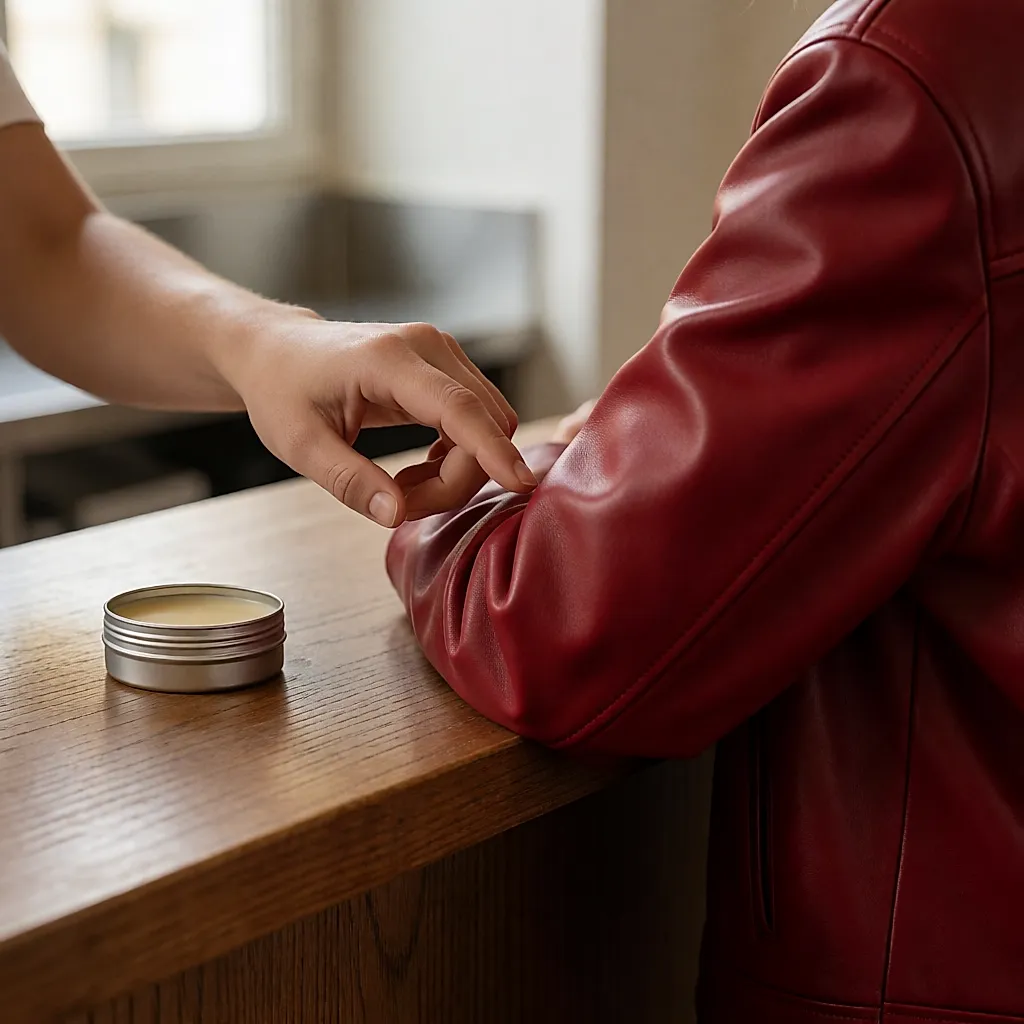
The rest is wardrobe common sense: dry it in the air, never on a radiator or behind a sunny window; a wide hanger and a cotton dust bag rather than a plastic one, which traps damp. For a grease stain or a piece that has had a hard life, head to a specialist dry cleaner rather than reaching for a sponge and a bit of courage.
Fine leather needs wearing in before you wear it out: try it on at home, arms up, sitting down, to see where it pulls. Anything that hurts at the fitting is likely to stay uncomfortable in wear.
What it costs
Expect in the region of £130 to £300 for a fine leather top on the high street, £160 to £350 for a skirt, depending on the quality of the tanning, the lining and the finish on the edges. Specialist cleaning sits at around £25 to £50 per piece, and a care balm at £8 to £20 a tin — money that pays itself back over several winters.
On sourcing, second-hand remains a good way into supple leather on a tight budget: around £50 to £130 for a skirt or a fine jacket from a specialist vintage shop or a resale platform, with the bonus of a material that has already relaxed. If you're buying new, mid-market and general retailers now sell decent lambskins; check the composition on mixed-material pieces, the share of synthetic fibres and the thickness of the lining before you commit.
So, tempted? For a first purchase, go for a top or a straight skirt in fine lambskin, worn under a wool jacket: that's the piece you'll reach for most. Bigger budget: a vegetable-tanned leather whose suppleness will improve season after season. Tight budget: a well-chosen second-hand skirt, a tin of balm, and the same look — without the new price.
Comments
Your opinion matters: rate the article, react and reply to comments.
Comments are moderated; AI-assisted comments are flagged. Text emoticons (8-), :-), <3…) are automatically shown as images.