
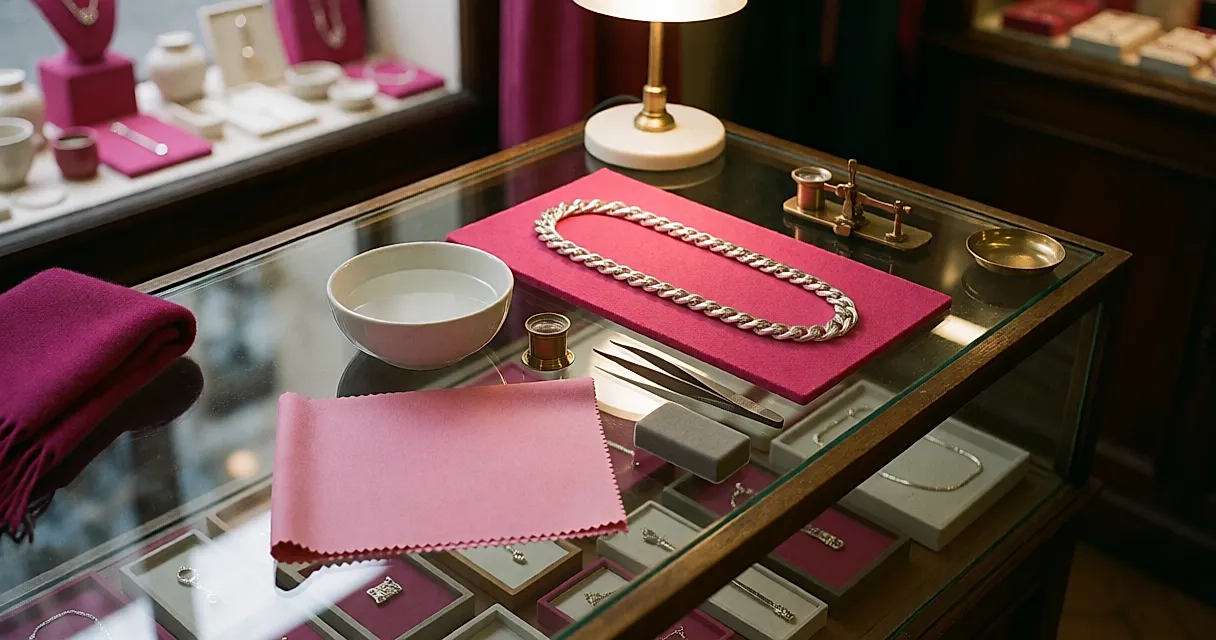
A solid silver necklace and a silver-plated one may differ wildly in price and lifespan, but they share one enemy: air. Leave them in the jewellery box for a few weeks and the shine turns brown, the clasp goes grey, and before you know it you're rubbing everything with the corner of your sleeve. That black film isn't dirt, and the harder you rub, the less it shifts. It does come off with three simple moves — provided you don't confuse gentleness with neglect.
That black film isn't dirt
The dark veil is a thin layer of silver sulphide: silver reacts with sulphur compounds in the air, and the process speeds up with humidity, wool, rubber, cosmetics and sweat. Nothing irreversible, then, on a solid silver piece.
Which leads to a point that changes everything: rubbing away like mad doesn't remove the film — it spreads it and scratches the polish. You need to lift it gently, then keep it at bay. And not all pieces are equal: a 925 silver chain shouldn't be treated like a silver-plated bracelet, where the silver coating is thinner than a sheet of paper.
The impregnated cloth, for everyday care
This is the basic move: one minute, no thinking required. Wipe an impregnated polishing cloth — from jewellers, beauty retailers or supermarkets, expect roughly £5–£12 — over a dry piece without pressing, lingering where the black has settled. It leaves a protective film: let it dry for a minute before wearing the jewellery again.
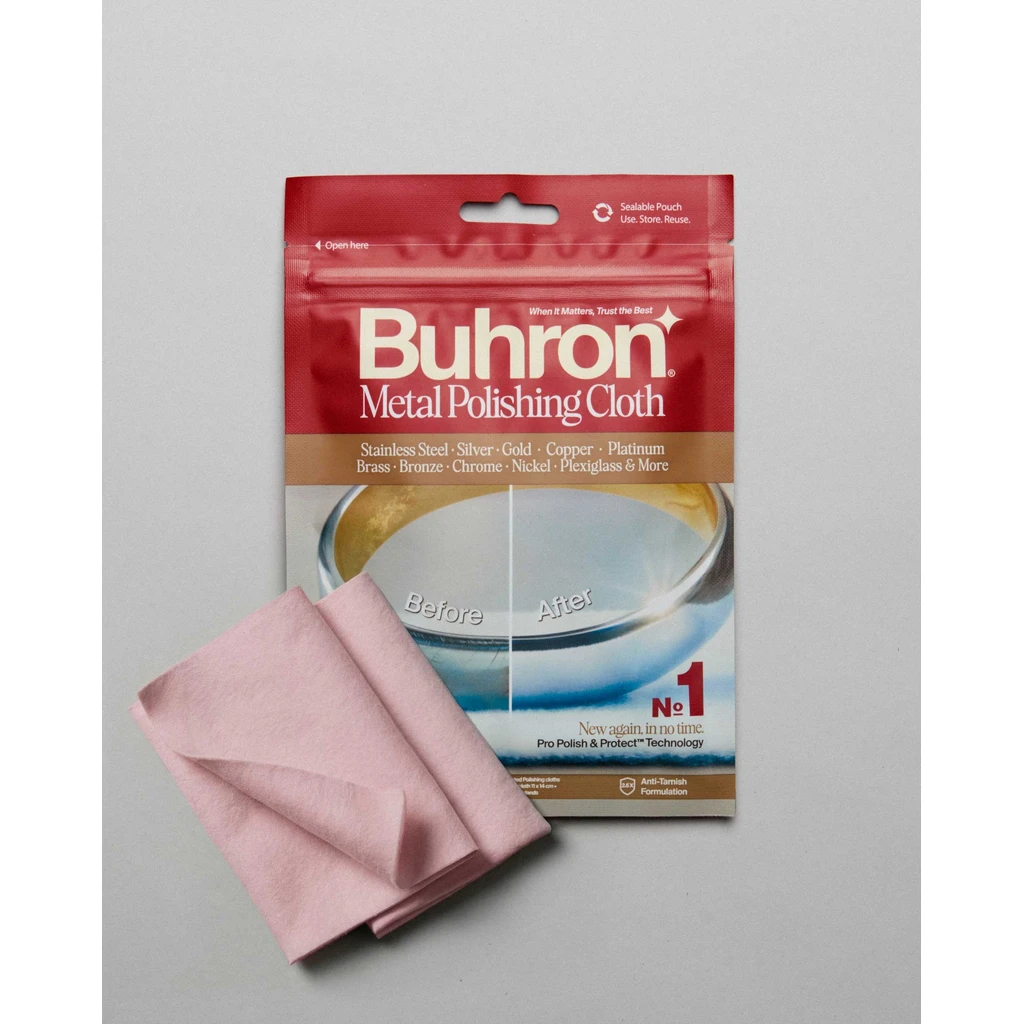
One annoying detail: this cloth isn't washable. It goes black, ends up in shreds, and has to be replaced. If you don't have one to hand, a soft cotton cloth with a little warm soapy water will do for a solid silver piece — rinse, dry straight away with a soft cloth, and keep the hairdryer well away.
The bicarbonate bath, the gentle version
The kitchen classic, as long as you keep it moderate. A tablespoon of bicarbonate of soda in a bowl of tepid water (never hot), the piece immersed for a few minutes, a light brush with a soft toothbrush, rinse with clean water, dry immediately. A mild abrasive, bicarbonate of soda helps loosen the film without being harsh on the metal.
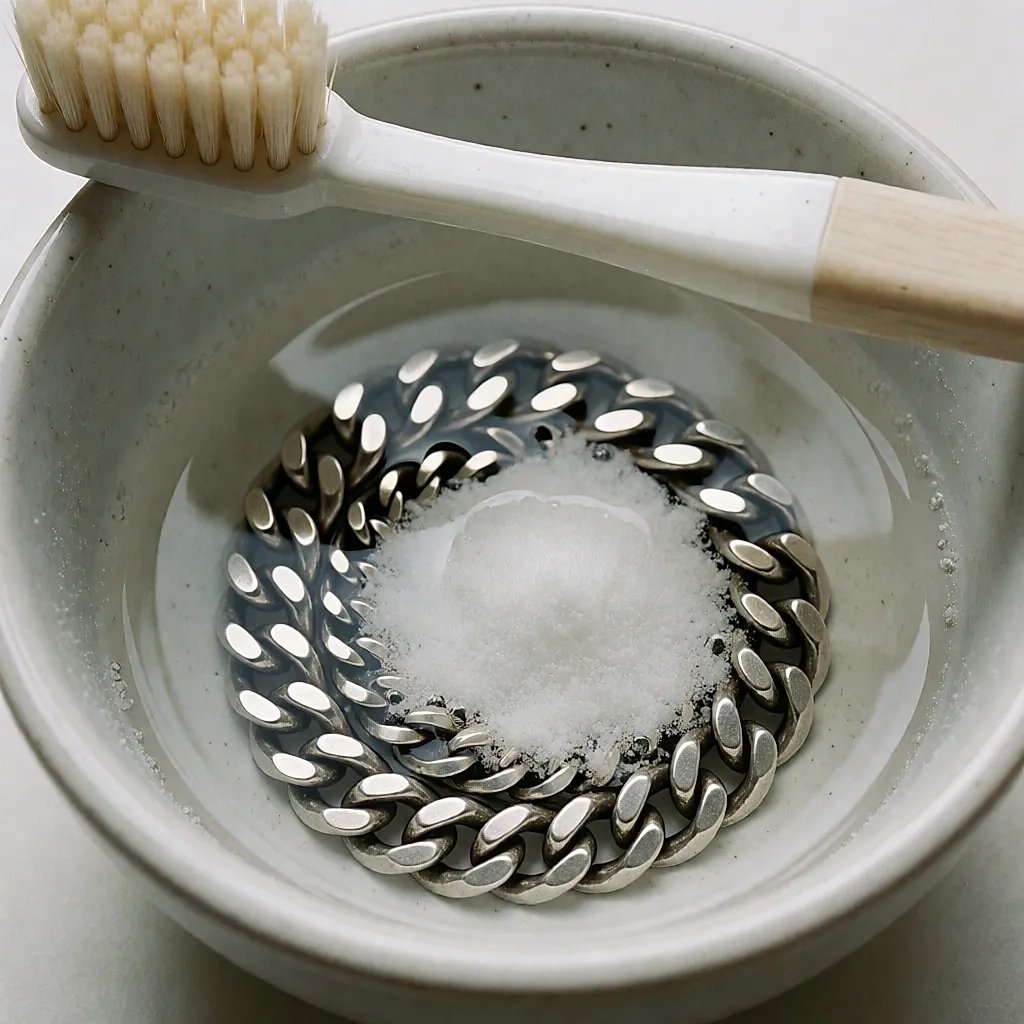
What shouldn't go in the bowl? Pearls, glued stones, pieces with deliberate patina — the oxidation that darkens recesses is a design effect, not a flaw — and anything gold-coloured. As for leaving it to soak all evening, it won't achieve anything more.
The jewellery eraser, best for textured designs
On a chain with intricate links or an engraved motif, neither the cloth nor the bath reaches the bottom of the recesses. That's the territory of the jewellery eraser (£4–£10, from jewellers or specialist craft shops): rub it dry, in small strokes. It goes black as it works, which is normal, and it wears down like a school eraser.
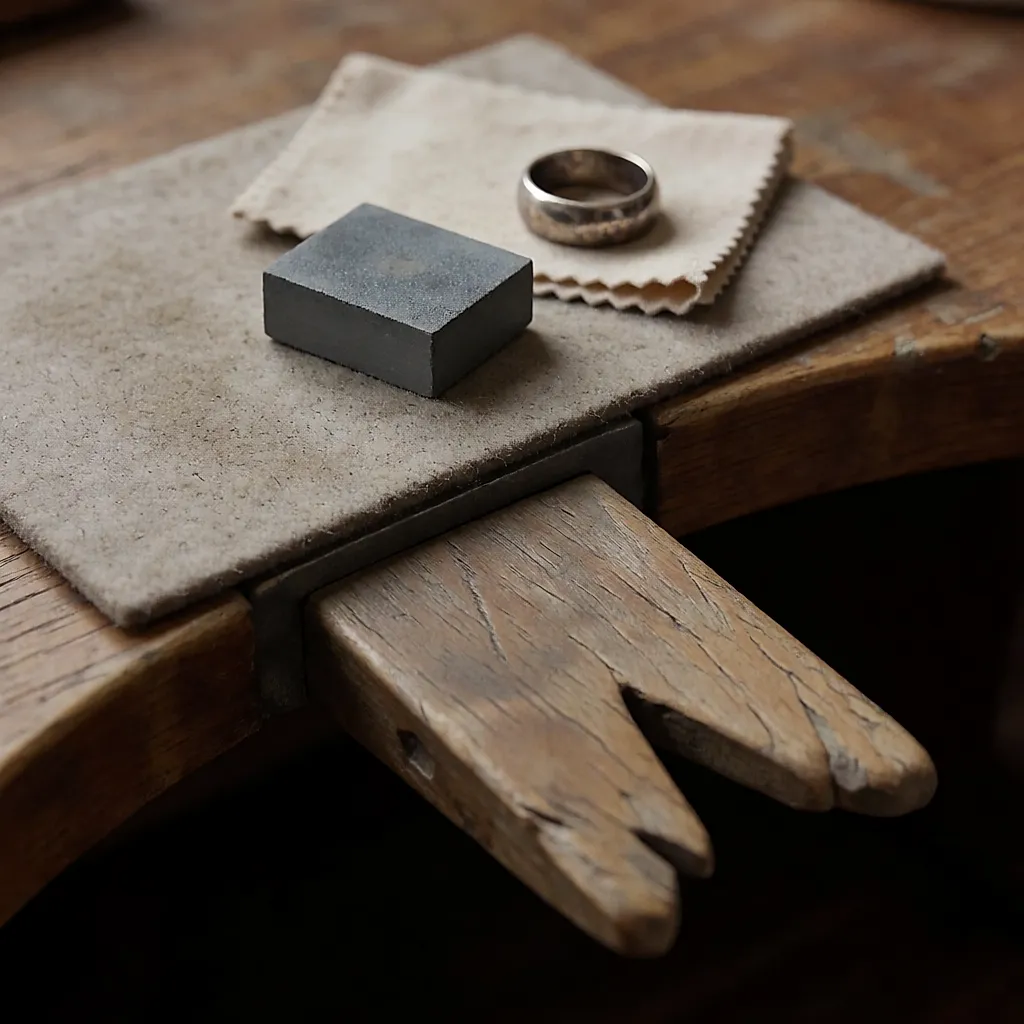
Know its limits: it won't rescue a completely matte piece, won't get into very tight angles and won't remove scratches. For an engraved clasp, though, it's the most satisfying move of the lot.
Three habits to cross off the list
Toothpaste first. It cleans teeth, not jewellery: its micro-abrasives dull the polish and attack the coating on plated pieces.
Prolonged immersion of a gold-coloured piece, second — and here a distinction matters. Gold plating is a layer of gold over a less noble metal; silver plating is a layer of silver over brass or cupronickel. In both cases the coating is thin and doesn't regenerate: eventually the base metal shows through, and no bath will bring it back. Gold-coloured pieces should therefore be cleaned on the surface: a well-wrung damp cloth, immediate drying, and never soaked.
Then there's the clasp, often forgotten in cleaning sessions: a spring-ring clasp traps water inside, and stagnant moisture weakens the mechanism. Hold the piece by the body, don't dip the clasp, and dry the area before closing it.
Store it snugly, wear it often
Tarnish is a story about air. A closed pouch or zip bag, away from light, away from the bathroom and raw wool, slows things down noticeably; an anti-tarnish square slipped into the box does the same job for a collection. Keep each piece separate, too: two chains together mean half an hour of patience lost.
And the paradox is that pieces worn often tend to hold up better than those kept carefully at the back of a drawer. Which is handy: one of the best ways to protect jewellery is still to wear it.
When to hand it over
Three cases where you shouldn't improvise: a stone that moves or a claw that has opened up, a misshapen clasp, or an antique piece whose patina and stones are beyond your skills. The same goes if the black returns very quickly despite the cloth: the plating may be worn, and a professional eye will see it better than you can.
A jeweller can then do what no bicarbonate of soda can: clean according to the stone, polish, tighten claws. Expect roughly £15–£40 for a simple clean, and always ask for a quote before any restoration.
Budget
On the product side, the bill stays modest: £5–£12 for an impregnated cloth (jewellers, beauty retailers, supermarkets), £4–£10 for a jewellery eraser (jewellers, specialist craft shops), £2–£3 for a jar of bicarbonate of soda from the supermarket — the most cost-effective of the three, and it will earn its keep in a cake.
For storage, there's no need to buy anything: a stray zip bag will do, otherwise expect £3–£8 for a cotton pouch. Cloth and eraser are replaced when worn, not on a fixed date; the bath costs nothing more once the jar is bought. The upkeep budget for a piece of jewellery remains minimal.
Before you rub, three checks: is the piece solid or plated (a hallmark or 925 mark indicates solid silver)? Is the black patina in the recesses intentional? Are there pearls or glued stones? If in any doubt, stick to the cloth.
The essentials remain: a cloth, a bowl, an eraser, and a slightly better-organised drawer. The black will come back — that's what silver does — and it will go just as quickly. And if your necklace has been taunting you for three weeks, you know what to do: three minutes, and the look is back.

Comments
Your opinion matters: rate the article, react and reply to comments.
Comments are moderated; AI-assisted comments are flagged. Text emoticons (8-), :-), <3…) are automatically shown as images.