
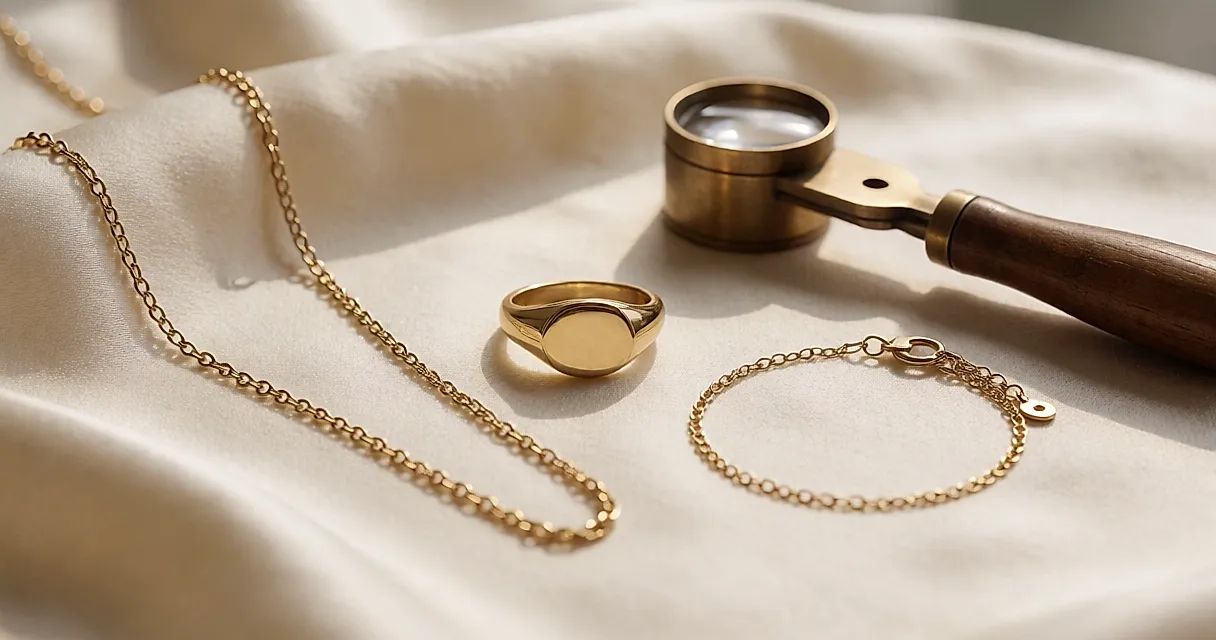
Not all gold-tone jewellery is created equal. And yet we've all skimmed the product page the way we skim a broadband contract. So what should we check before paying next time?
Three labels, three promises
'Gold-tone' tells you nothing about how much gold is involved. It is closer to a colour, or an intention. A gold-tone piece might be a base metal with a coating so thin it disappears at the first rub, or a gold-plated piece that will see you through several seasons. On screen, the two look identical. The difference lies in the technical wording, usually in tiny grey type, which is exactly the bit we skip.
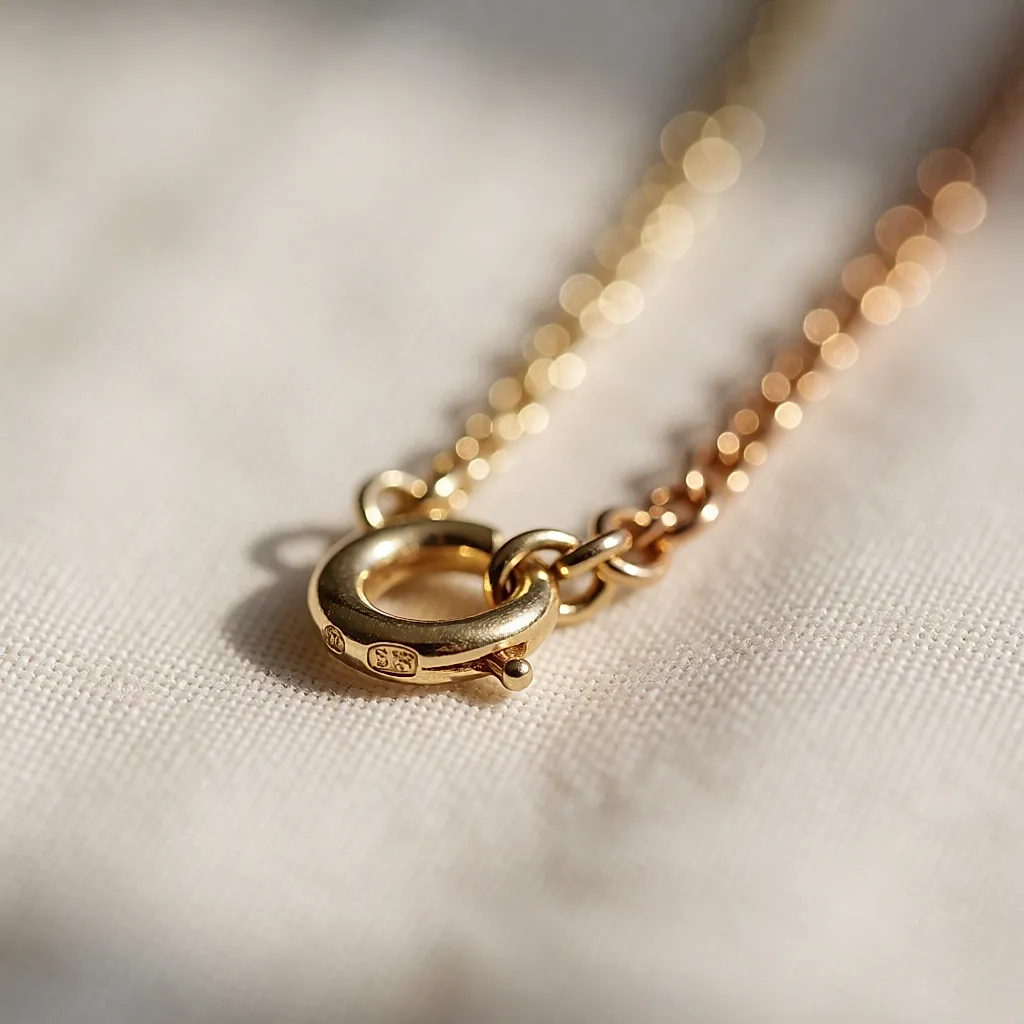
'Gold-plated', by contrast, usually means a base metal in product listings — sometimes brass or copper — covered with a layer of gold of varying thickness. And vermeil? Solid silver, often 925 sterling silver, covered with gold, usually in a thicker layer than standard plating. Always check the seller's exact wording: not all 'gold-plated' pieces are equal. 'Vermeil' sounds grand and a little old-fashioned, but it describes a real category of jewellery, not just a marketing line.
What microns actually change
A micron is one-thousandth of a millimetre. A few microns do not stand much chance against a ring you twist a hundred times a day, a necklace you forget to take off in the shower or perfume sprayed just above your neckline. The gold layer wears away: the question is not whether, but when.
In practice, a piece described simply as gold-tone, with no stated gold content or thickness, is often the most fragile — think two seasons, sometimes less if you wear it every day. Gold plating over brass generally lasts longer, provided you take it off at night. Vermeil is built on solid silver: when the gold thins, a jeweller can clean and replate the piece. That is a piece you can repair — and that makes it a smart buy.
Thickness is not the whole story, though. The quality of the base metal, the clasp, the weight and the way you wear the piece matter just as much. A thick gold-plated piece that is badly looked after will end up looking worse than a well-cared-for vermeil one.
A closer look at the product page
Before you check out, scroll down to the details. Look for the exact words: 'gold-plated', 'vermeil 925', '925 sterling silver, gold-plated', and, if the seller gives it, the thickness of the gold layer. If the listing says only 'gold-tone', 'gold finish' or 'gold-coloured metal', assume you are buying costume jewellery. There is nothing wrong with that — as long as you are not paying vermeil prices for it.
If the brand says nothing about the metal beneath the gold, that tells you something too. A serious seller states what they are selling clearly — and in a way you can read without zooming in like you're decoding a prescription.
Three checks before you pay
- Does the listing clearly say 'gold-plated' or 'vermeil 925'?
- Is the metal beneath the gold clear — brass, copper or silver?
- Does the price match the label, or are you paying for the word 'gold' without the material to back it up?
What each label costs
These are broad UK price guides; they vary by city, brand, weight and whether the piece has a stone.
- Gold-tone costume jewellery: roughly £10 to £40, from supermarkets, market stalls or high-street fashion brands. Best kept for pieces you wear now and then.
- Gold-plated: around £40 to £120, from online designers and jewellers. A good compromise if you want to wear a piece often without paying solid-gold prices.
- Vermeil: from £80 to £250, sometimes more in a jewellery shop. More expensive up front, but it can be replated — often around £30 to £80 for a refurbishment, so ask the jeweller before you buy.
If money is tight, one thicker gold-plated piece is a better buy than three gold-tone necklaces that will look tired before summer. And for the jewellery already in your box, the routine is the same: wear it, clean it, store it. Less glamorous than a new jewellery box, perhaps, but it makes the difference after three years.
Care that helps it last
Jewellery does not wear out on its own: it wears out through contact. Take it off before the shower, the pool and the gym, and store it separately in a pouch or a closed compartment so it does not rub against other pieces. A soft cloth is enough to polish it; abrasive products attack the gold layer faster than they bring back the shine.
One last point, and not the least: perfume. Spray it before you put your necklace on, not on top of it. Your favourite scent deserves better than to act as a stripping agent. And when vermeil loses its shine, a trip to the jeweller is better than a vigorous rub at the bottom of the sink — the piece comes back looking new, or very nearly.
The clear choice
For two seasons, gold-tone is enough — as long as you love it for what it is: a seasonal accessory, not an heirloom. For everyday wear without a second thought, aim for gold-plated jewellery with the thickness clearly stated, and put it away at night. If the piece matters as much for its story as for its shine, and you want to keep it and have it replated over the years, vermeil remains a safe choice: it can be cleaned, replated and passed on.
After all, nobody has ever regretted reading a product page all the way to the end. It is the rushed purchase we regret.

Comments
Your opinion matters: rate the article, react and reply to comments.
Comments are moderated; AI-assisted comments are flagged. Text emoticons (8-), :-), <3…) are automatically shown as images.