
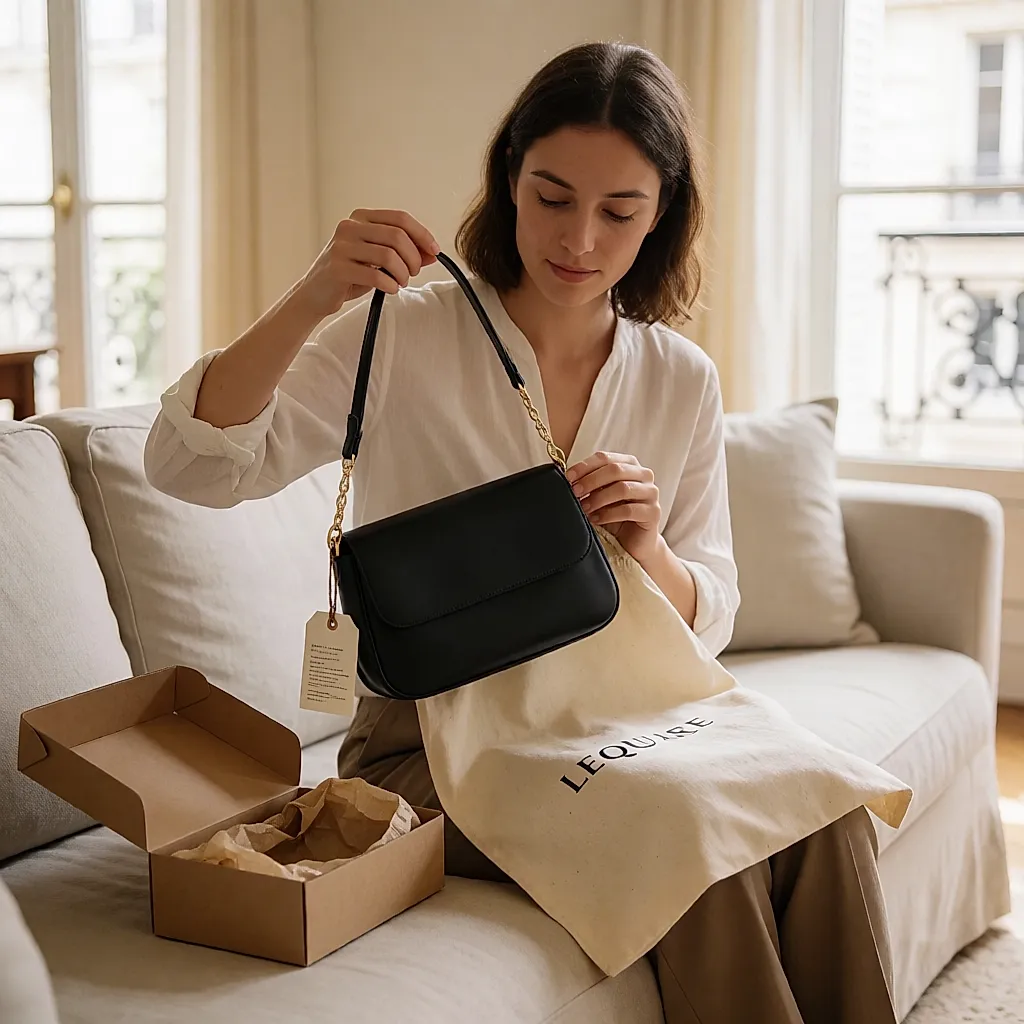
Last Saturday a friend got married. I had the dress, the heels and nothing to carry. The idea of spending half a salary on a bag that would come out three times a year cooled me off fast. And honestly, how often have you actually carried the last bag you bought? So I tried rental—not in a shop window, but for real: parcel opened on the sofa, tag still attached, clasp inspected in daylight.
Since designer bag rental became more mainstream in the UK, the market has changed shape. It is no longer a gimmick for the fashion addict in a hurry: it is a genuine wardrobe option. Here is how it works, what it really costs and where the catches are.
How it works in practice
Three steps: choose a model online, receive it at home within 24 to 72 hours, and send it back in the prepaid return parcel included with the delivery. On some platforms you can even swap it for another piece without going through checkout again.
Book for a weekend, a week or a month. The longer the rental, the lower the daily rate. Expect a deposit—often a pre-authorisation on your card—and check whether theft and damage cover is included in the price or charged separately. Collecting from a showroom, where available, is considerably safer than a courier delivery the day before an event.
Before you book, check three things: the excess if the bag is damaged (a scratch, a marked corner, a clasp that gives way), the actual delivery window—not the one at the top of the page—and whether you can collect from a showroom rather than rely on a courier. That matters if you are leaving the night before and the courier has no idea who you are.
What you actually find in the catalogues
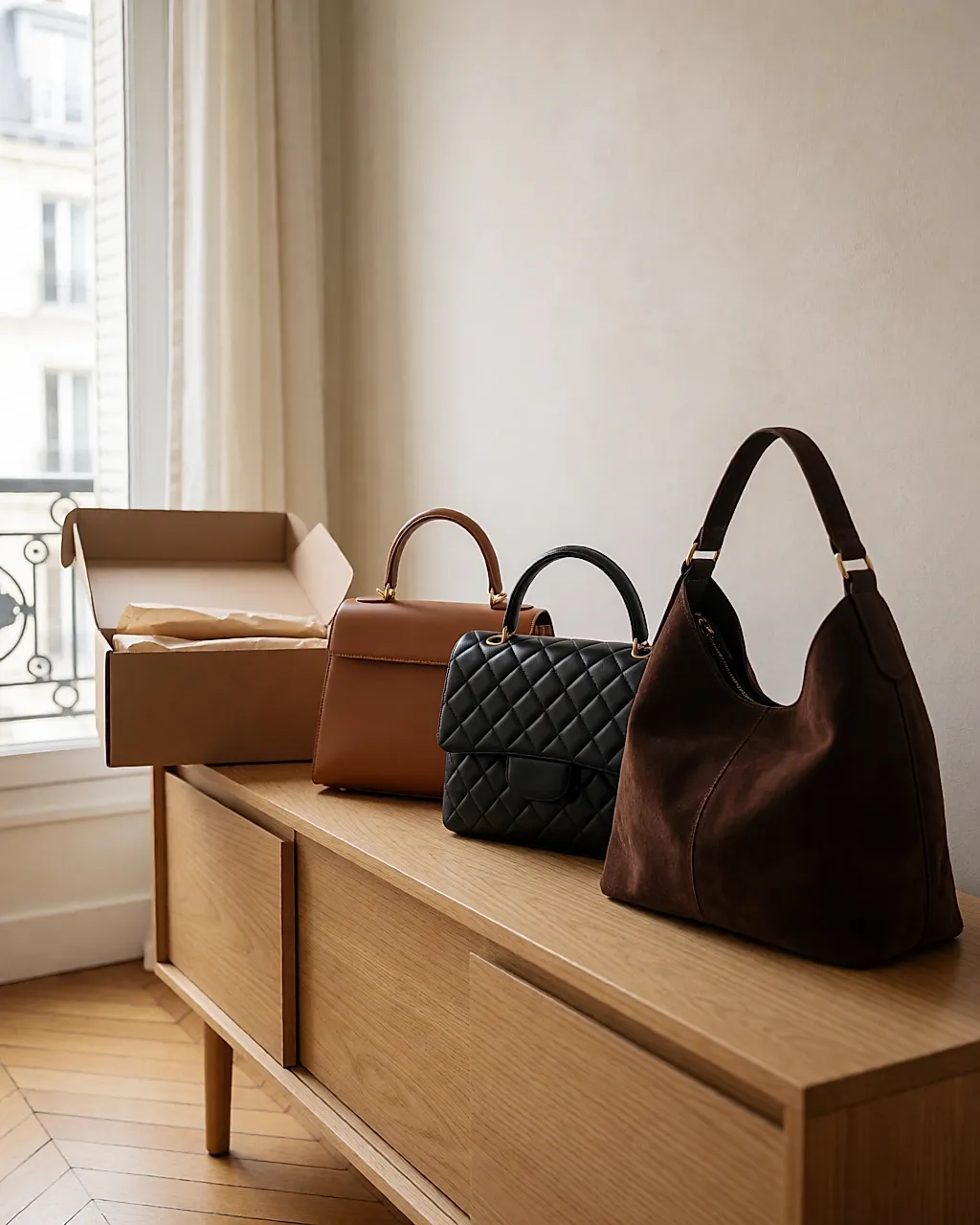
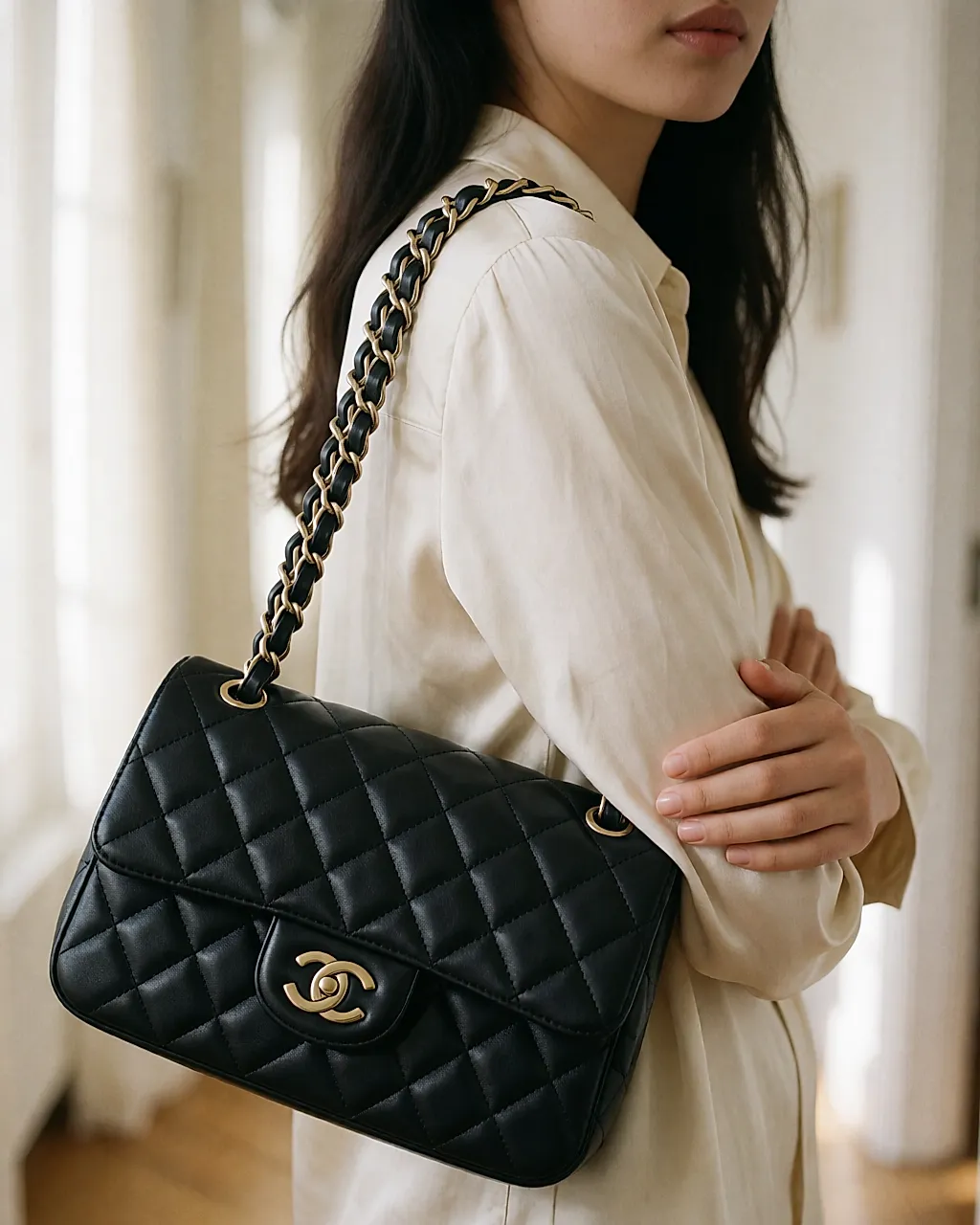
Choice has thickened. You will come across the big houses—Chanel, Hermès, Dior, Louis Vuitton, Gucci, Prada, Bottega Veneta, Loewe, Céline—and newer labels such as Jacquemus and Polène, some of whose shapes are easier to rent than to buy new.
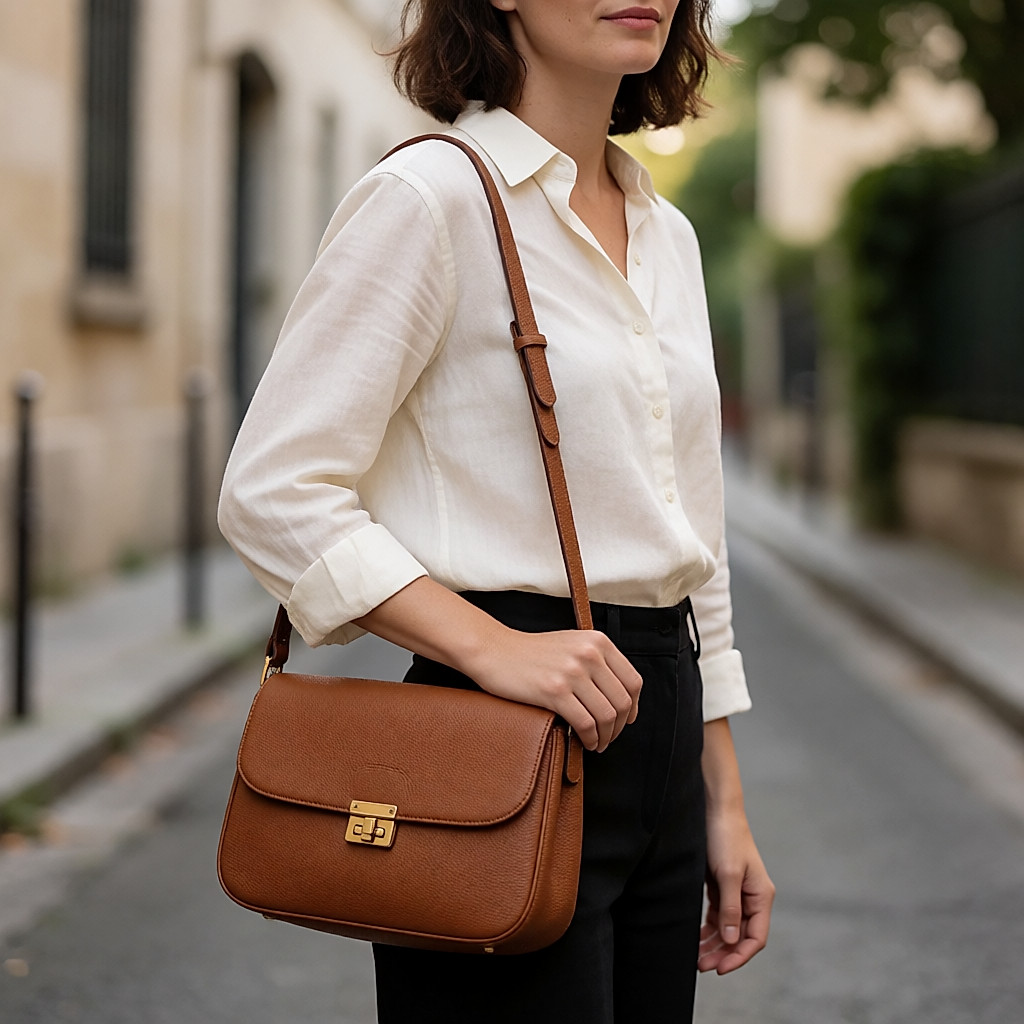
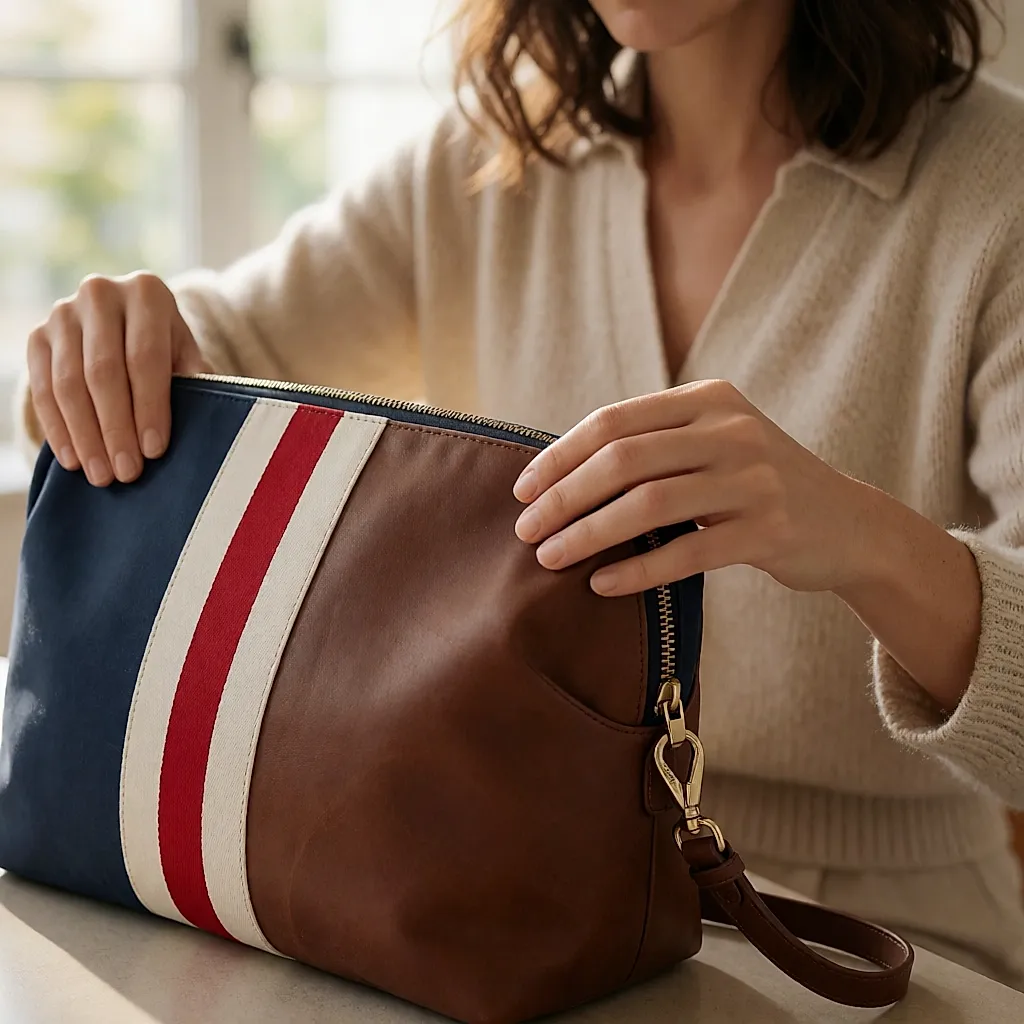
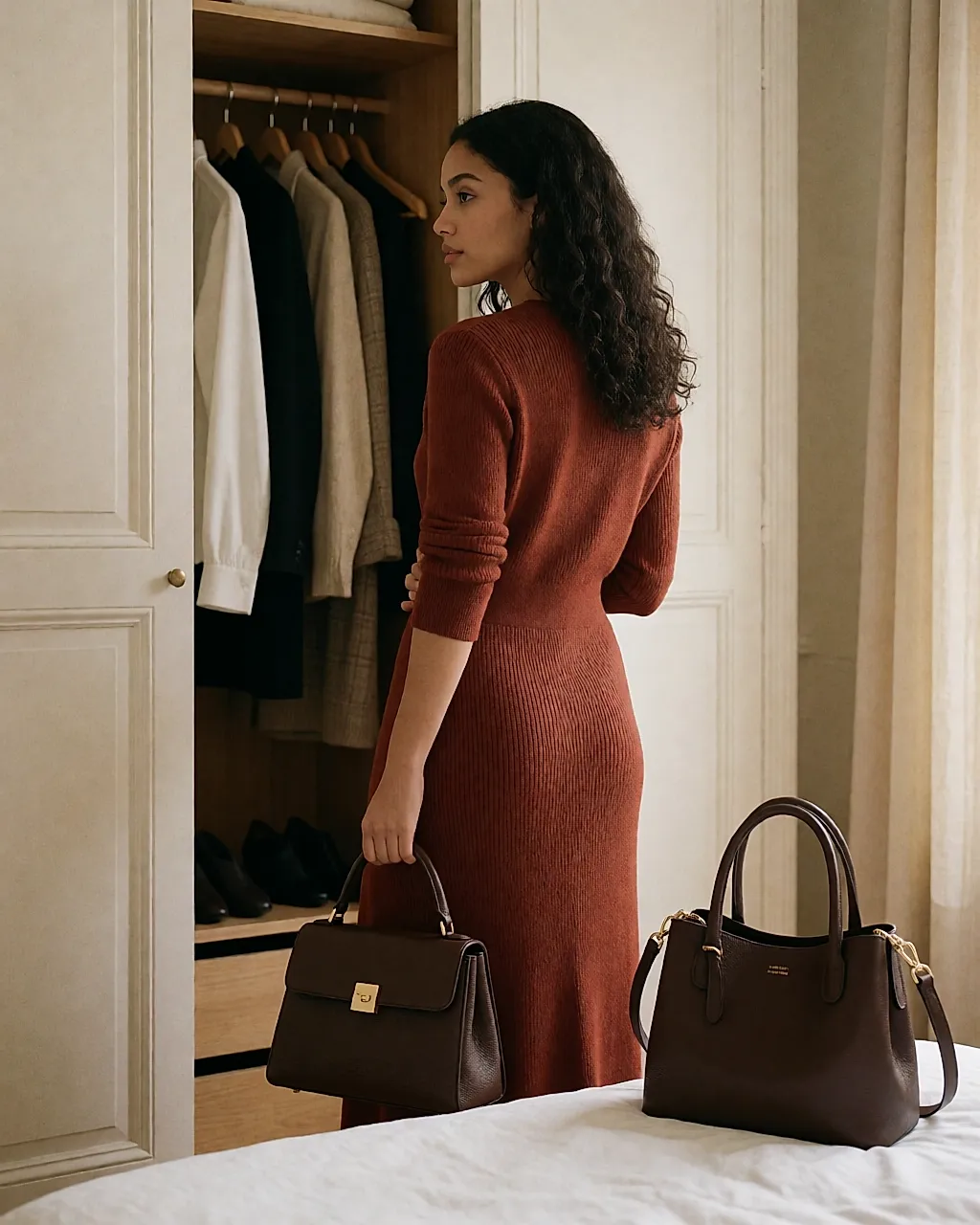
Materials run the full range: grained calfskin, smooth box leather, nubuck, coated canvas. That is where rental earns its keep: you can test how a bag hangs, feels and holds its shape before committing your card for good. A bag that looks sharp on screen may not work on your shoulder, especially if you are petite or layer up heavily in winter. For a statement piece you will wear for one evening, renting is often smarter than an impulse buy.
On the ethics side, rental can be a form of circular fashion: one bag is shared between several wearers, which may help extend its useful life, provided it is well maintained and the logistics are managed sensibly. It is not automatically lower-impact—rental can increase wear, transport and cleaning. Some platforms talk up repair and refurbishment; ask for the exact policy, because it is often less clear than the slogan. Alternative leathers such as Mylo, or grape- and cactus-based materials, have been trialled by a few houses, including Stella McCartney, but they remain rare in rental catalogues. Mylo was paused in 2023 and is not available at scale.

What it costs
These are rough guides; rates vary by platform, model and date.
For an accessible designer bag (Polène, Lancel, Jacquemus): expect around £25–£60 a week, £60–£150 a month.
For a designer-house piece (Gucci, Prada, Loewe, Céline): £80–£200 a week, up to £400–£500 a month depending on how rare the model is.
For a grail (Chanel, Hermès Birkin or Kelly): £250–£600 a week, more for collector or vintage pieces. What moves the price: retail value, demand, rental length, insurance and season. December and May–June are often busy periods, though demand varies by platform, model and market.
Where to rent: specialist online rental platforms such as By Rotation, HURR and My Wardrobe HQ for clothing and accessories, plus dedicated bag-rental services such as Cocoon. Some resale platforms have tried rental through partners, but these arrangements change, so check current terms. There are also a few bricks-and-mortar rental showrooms in London and other UK cities.
Rental or second-hand?
The useful question is not which is more 'eco'—it is which fits how you actually use bags. If you carry a bag twice before going off it, rental is hard to beat on cost per wear. If you plan to keep it for five years, second-hand—often well below retail—remains better value and slots neatly into a capsule wardrobe.
If the aim is a well-made bag without the luxury mark-up, look at independent British workshops and small European ateliers: local manufacturing, leather tanned in Europe, repairability. The useful question is who made the bag and how it can be repaired—not just how it looks on Instagram.
Sources
- WRAP — textiles and circular fashion guidance
- Rental platform terms and current catalogues: By Rotation, HURR, My Wardrobe HQ, Cocoon
- Stella McCartney — alternative materials (Mylo, plant-based leathers)
- Bolt Threads — public updates on the pause to Mylo in 2023

Comments
Your opinion matters: rate the article, react and reply to comments.
Comments are moderated; AI-assisted comments are flagged. Text emoticons (8-), :-), <3…) are automatically shown as images.