
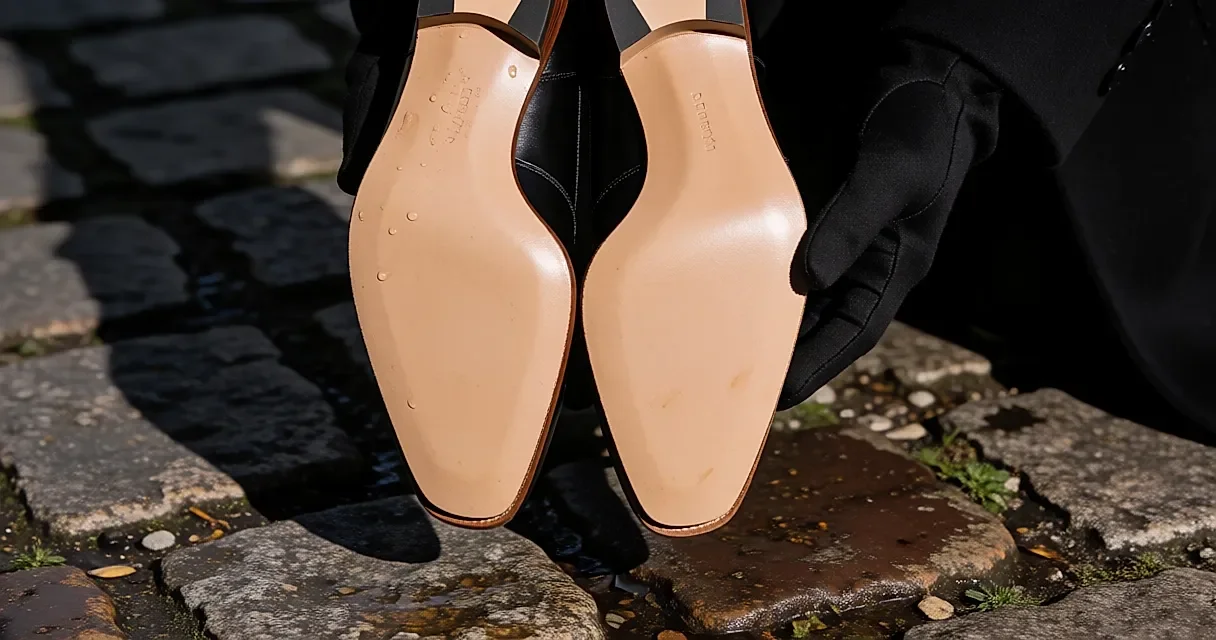
Before a sole looks worn, take a closer look: hold your boots up to eye level. Under the ball of your foot, the leather may have become as smooth as a pebble. Nothing is torn, nothing has worn through, and yet this is where the slipping starts. Leather doesn't wear into a crater; it wears to a mirror finish. First it loses its grain, then its grip, and one morning you find yourself negotiating every paving slab in the Tube station like a cat on polished floorboards.
One detail worth knowing before you panic: a leather sole is smooth by nature. It has no tread to lose, which is exactly why its wear is so discreet. A rubber sole is judged by its pattern: once the tread on the heel strike has disappeared and the underside at the forefoot turns shiny, the diagnosis is already written. The first two areas to check? The outer edge of the heel and the strip under the front of the foot, where your weight actually lands.
A smooth sole isn't necessarily a dead sole
Look at the pair side-on. If the sole still has real thickness and the stitching that joins it to the upper is intact, there is life left — often much more than you think. A stitched shoe is meant to be repaired; that is rather the point. If, on the other hand, the leather under the forefoot has gone as soft as suede, turns translucent at the edges, or you can feel the ground through it, water has already got in.
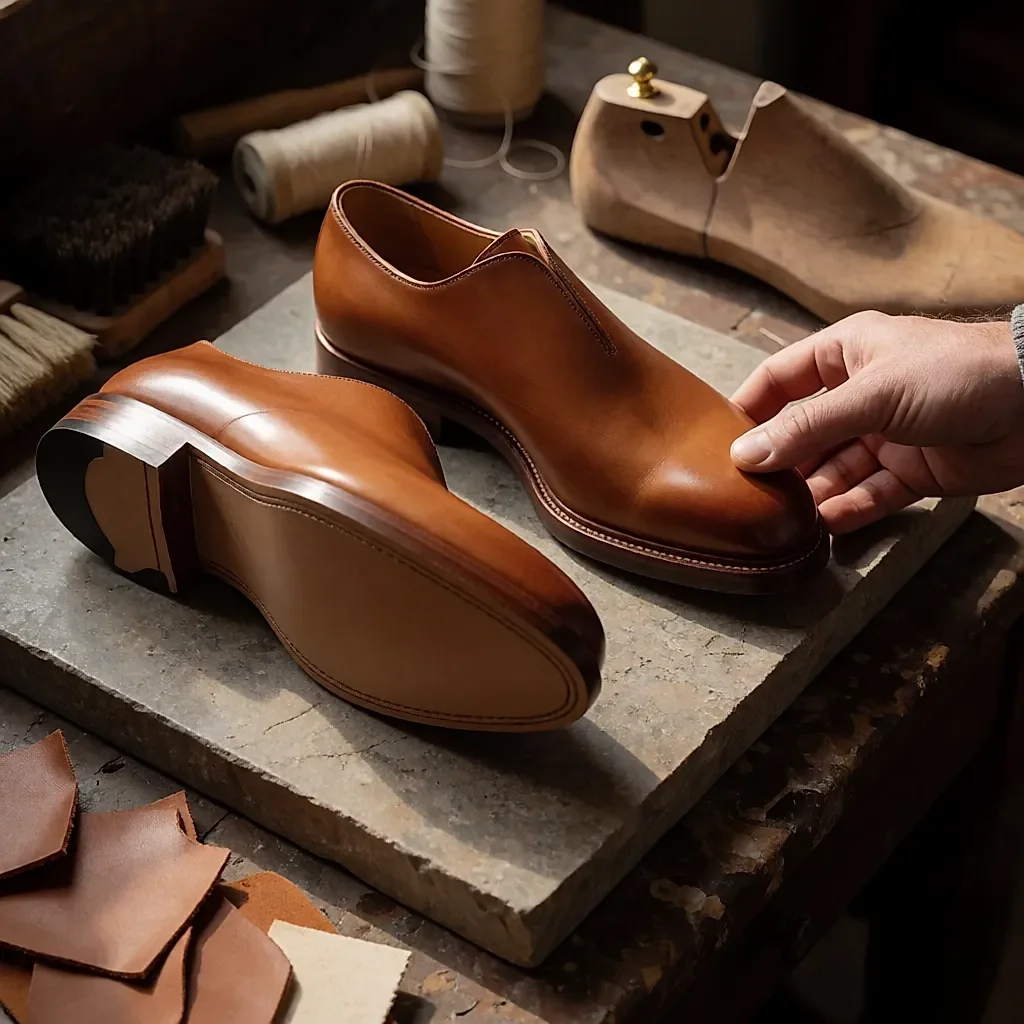
There is also the blind spot at the heel. Once the outer corner has been eaten away, the whole line of the shoe starts to go askew: the heel lands crookedly, the silhouette looks heavier, and the pair stops resembling the shoes you bought. That kind of imbalance will not correct itself if you leave it to run.
The sole protector you fit before things get slippery
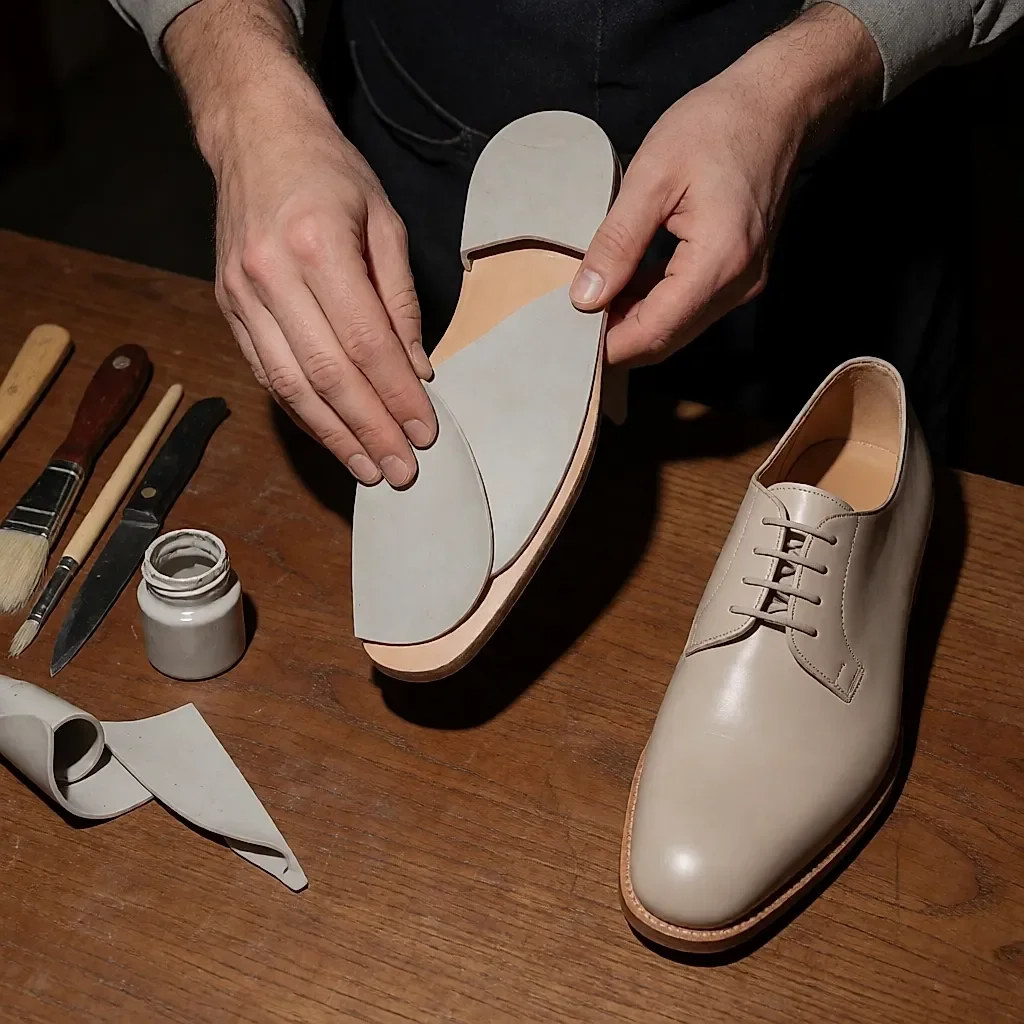
A sole protector is a thin layer of rubber glued under the front of the sole, right where it rubs and gets wet. In practice, a cobbler fits one in minutes: rough up the surface, glue, press, trim to the shape of the shoe. On a leather-soled pair that is going to spend its life on pavements, you can have it done from new; on others, wait a few wears for the sole to soften.
Fitting one to a sole that is already damaged, though, is like putting a plaster on an open wound: it dresses the problem without solving it. And be warned on the look: a sole protector adds visible thickness in profile, a slightly sportier line beneath a slim heel. Some purists prefer a bare sole on formal shoes, even if that means wearing them three times a year. It is a question of how you wear them, not dogma.
When to replace the sole, not the shoe
A full resole — the worn sole is removed and a new one fitted — only makes sense if the upper is still sound. On a stitched shoe, it can be done well, and the shoe will go on for several more winters. On a sole that is simply glued, it is more of a gamble and sometimes impossible, depending on the condition of the structure. That is why it is worth checking this before you buy: a beautiful upper on a non-repairable sole is a bit like buying a coat without a lining.
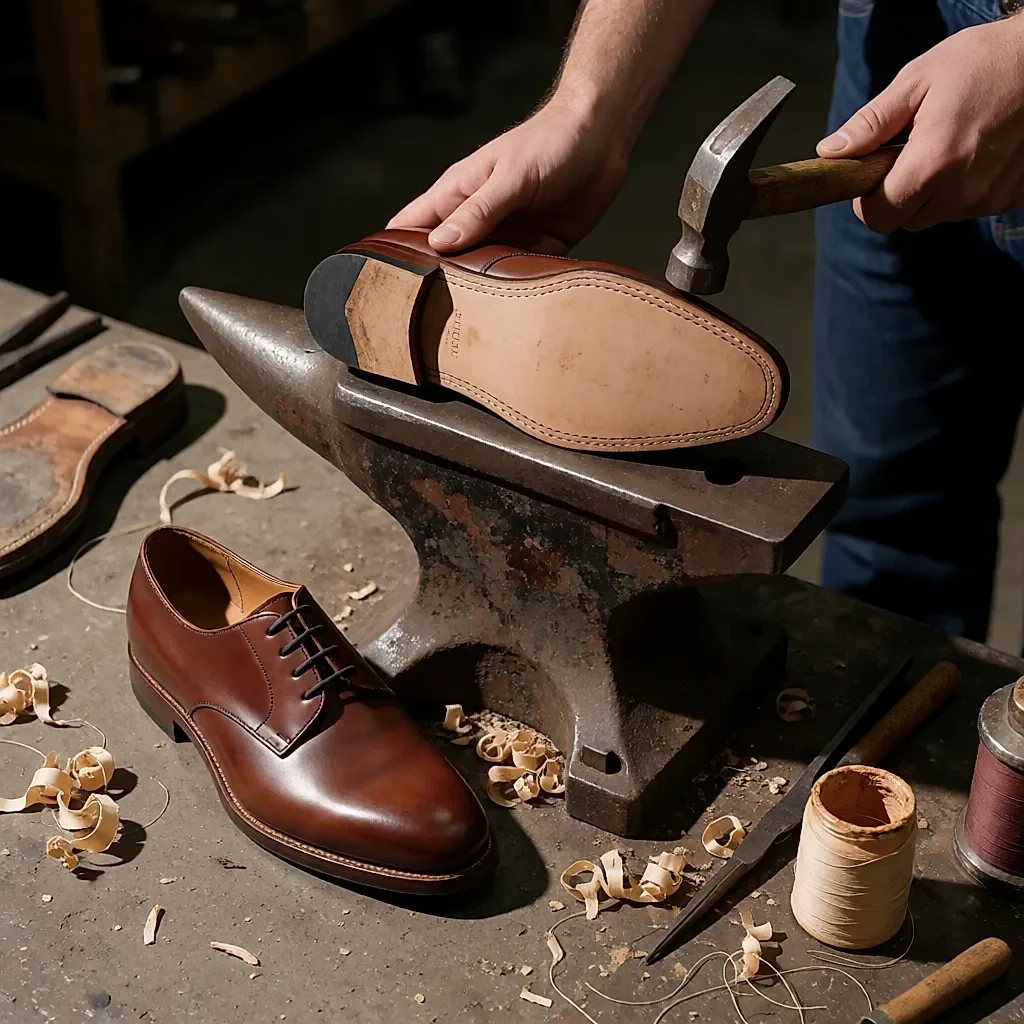
The money side is straightforward. A resole is usually in the region of £50 to £90, depending on where you live, the stitching and the sole you choose: worth it on a pair worn for four winters, absurd on a pair that cost £45. And there comes a point when you stop altogether: leather cracked at the flex point, a torn lining, a heel counter that no longer holds your heel. A new sole under a tired upper is a good shoe that limps.
The three-point check
- Sole in profile, at eye level: is there real thickness, or just a thin sliver?
- Heel seen from above: has the outer corner worn away?
- Stitching between sole and upper: continuous, or broken over two centimetres?
What it costs
Expect to pay around £20 to £35 for a sole protector fitted in a workshop, and £8 to £15 for a heel tip (the small plastic or rubber piece that protects the end of the heel before it wears down to the wood). A wooden shoe tree is roughly £15 to £30, a tin of polish £8 to £15. Prices vary considerably between a local cobbler and a more specialist city-centre workshop.
Where should you have it done? A local high-street or market cobbler is still a good bet for a sole protector and a heel tip, often same day. For a resole, ask first what is technically possible on your pair — some shoes cannot be repaired. Self-adhesive sole grips costing around £8 to £12 will get you out of trouble when travelling, but a home-cut edge is rarely as neat as one done at the bench.
When the time comes to buy again, reverse the usual reflex: look at the sole before the colour. A stitched pair with a vegetable-tanned leather upper is a shoe that can be repaired — and therefore actually worn. Two pairs worn in rotation, with shoe trees and drying away from the radiator, will last longer than one pair worn Monday to Friday in the rain. Which is how to keep your favourite shoes on your feet well beyond the current season.

Comments
Your opinion matters: rate the article, react and reply to comments.
Comments are moderated; AI-assisted comments are flagged. Text emoticons (8-), :-), <3…) are automatically shown as images.