
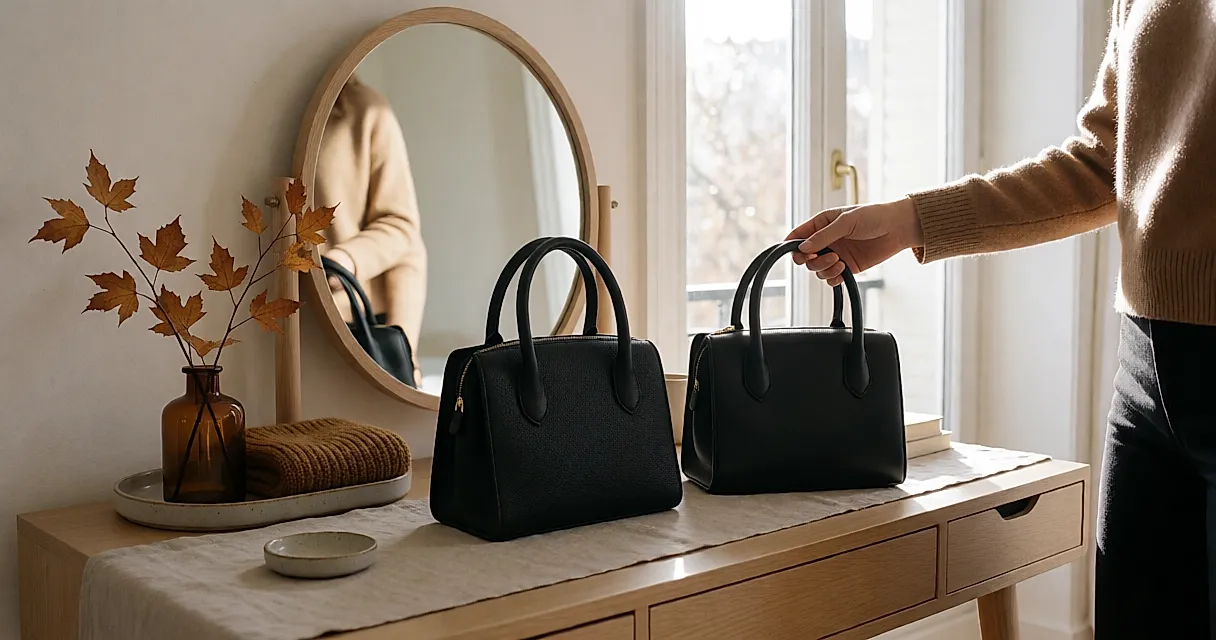
Two black bags, same size, same price tag, side by side. Six months later, one has a constellation of pale scratches; the other still looks shop-fresh. The difference is not down to the brand or to luck: it is down to the surface. Smooth or grained, leather does not hold marks in the same way, and it does not ask for the same care.
What does 'grained' actually mean?
The word 'grained' tells you nothing on its own about the quality of a leather. The grain can be natural: it is the outer layer of the hide, kept as it is, with its pores and irregularities—what the trade calls full-grain. It can also be embossed: a hide whose surface has been lightly sanded to erase imperfections, then textured under a press. Both can look good, but they do not make the same promise.
Smooth leather, by contrast, shows its hand. Smooth calf, box calf, a taut surface that lets light skim across it: there is nothing between your bag and your eyes. That is what makes it so elegant, and so quick to tell tales. A grained leather, even a very good one, reads as texture rather than mirror. The difference lies in the pores, the relief and the tanning: vegetable-tanned leather does not patina like chrome-tanned leather.
What grained leather forgives
On a grained surface, a scratch gets lost in the texture. It is there, but you see it close up and forget it from across the room. The same goes for corners rubbed against the back of a chair or the bottom of a car door: the grain flattens, the area lightens and the bag still looks presentable. This is the classic bag that 'ages well'—not because it does not wear, but because it wears quietly.
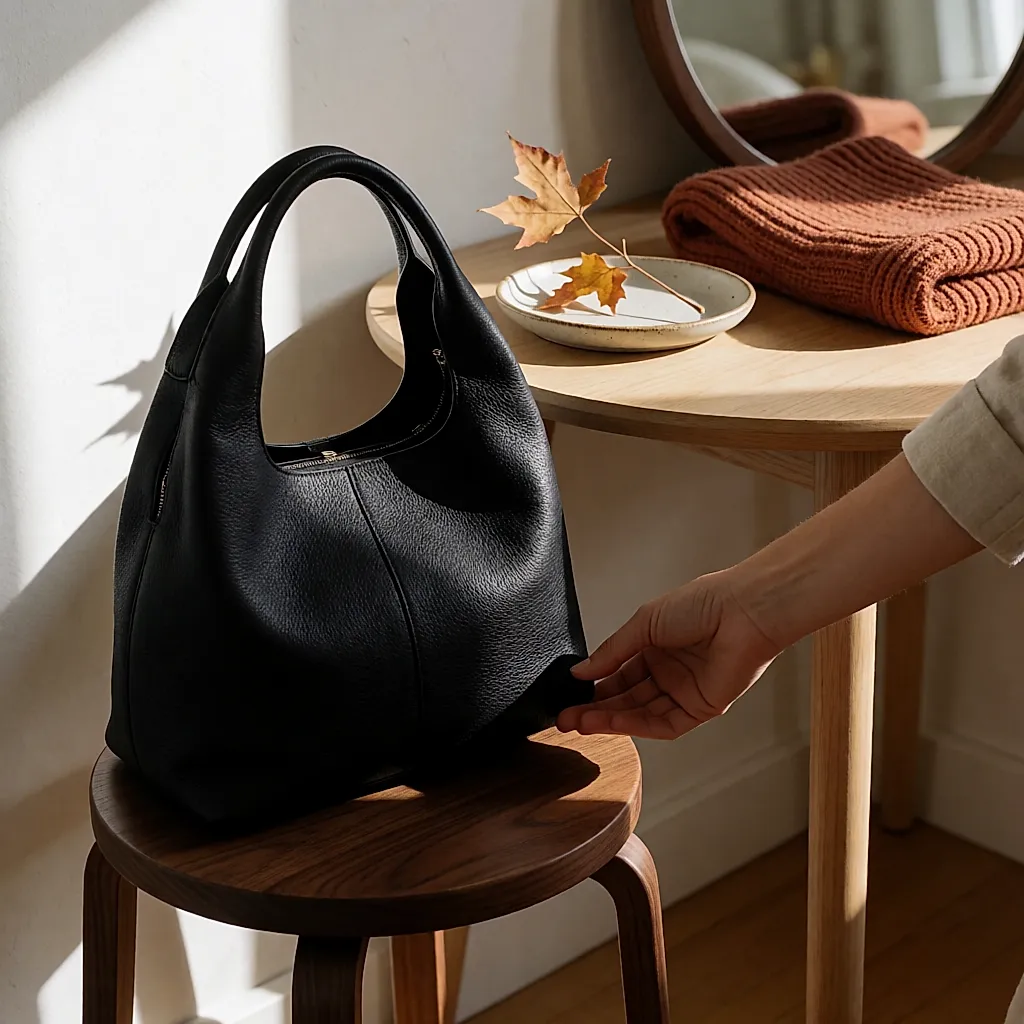
Two caveats, though. Grain traps dust in its crevices, and you need a soft brush to tease it out; otherwise the bag starts to look tired in a way that has nothing to do with age. And on very supple styles, the grain relaxes: the bag starts to slouch. Charming in a tote; less so in a bag you want to carry to the office. Style-wise, grained leather is more casual than it looks: for Monday-to-weekend wear, yes; for dinner, rarely.
Smooth leather is smarter, and quicker to show wear
Smooth leather is beautiful; nobody would argue with that. Carried by hand, with a clean flap and a taut silhouette, it does the job. The downside comes down to one word: visibility. A scratch catches the light; a worn corner shows up like a mark on a white wall. For the first few weeks you inspect it like a perfectionist; after a year, you learn to live with it.
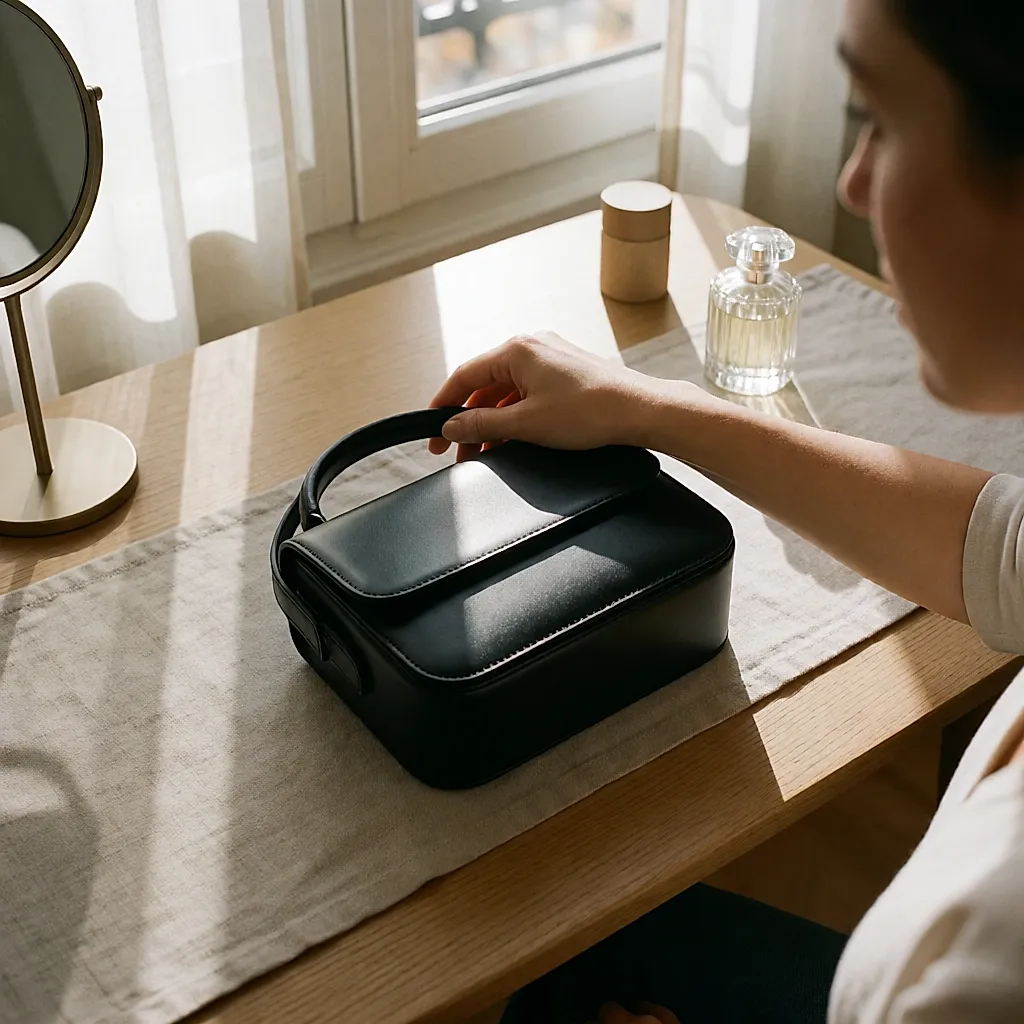
Because smooth leather has an advantage grained leather will never have: patina. A good smooth leather, properly fed, develops a lustre and a colour that really do tell the story of time—provided you like that idea. So: do you want an immaculate bag or one that looks like you? If a single fingernail scratch can ruin your day, keep smooth leather for calm occasions and grained for everyday.
The two leathers need different care
For smooth leather, the routine is simple but regular: a soft cloth, a small amount of nourishing cream, then a clean cloth to buff. In practice, that often means two or three goes a year, plus a waterproofer before winter. Apply in circular motions, without overdoing it: over-fed leather turns tacky and attracts dust.
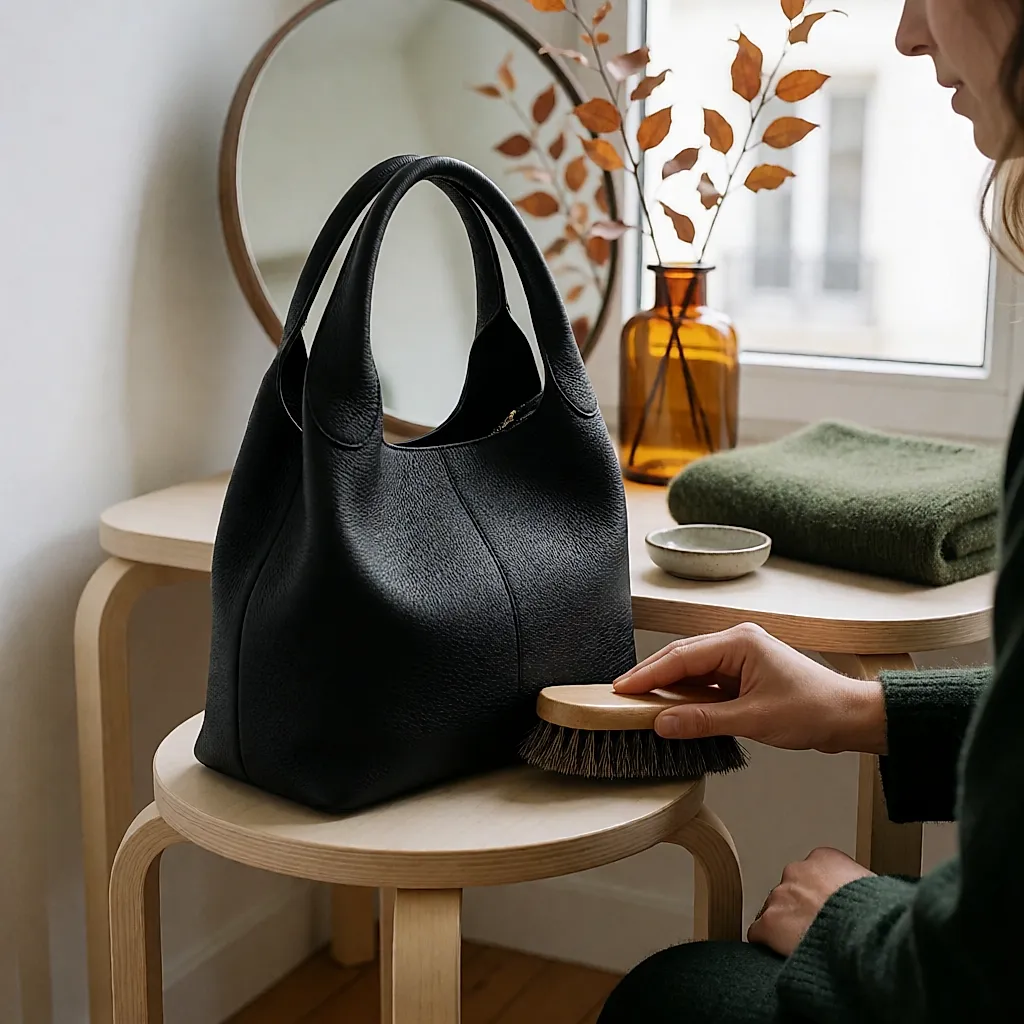
For grained leather, change tools: a soft brush for the crevices, a dry cloth, and cream only when the leather feels tight. Too much product sits in the texture. For both, the same basic rule applies: empty it, stuff it with tissue paper, store it in its dust bag and rotate your bags. A rested bag lasts longer than an overworked one—and the same goes for us.
Budget
Below around £100, many bags are made from corrected-grain or even coated leather. Always ask what kind of leather it is: the word covers very different realities. Between about £120 and £350, you can find good-quality grained leather—supple and well tanned—in most mid-range leather goods departments. For full-grain, vegetable-tanned leather, expect more like £350 to £800—and sometimes less second-hand.
On care, a nourishing cream costs £7 to £18, a waterproofer £8 to £22 and a soft brush £4 to £12: three buys that last for years. A full professional clean at a specialist leather cleaner costs around £25 to £70, depending on the condition of the bag. And if the budget is tight, vintage is a good bet: a smooth bag that is already scratched will cost less, and its story is already written.
Before you pay, run a fingernail over a less visible area, under the handle or inside the flap. On embossed grain, the pattern is regular and repeats; on full grain, the irregularities are there and differ from one centimetre to the next. Also ask about the tanning method and what lines the bag: leather or textile.
Which bag will you actually carry? For a first buy around £170, a structured grained bag will show dirt less quickly and go everywhere with you. For a treat, a well-fed smooth leather will develop a patina no one else will have. And if in doubt, turn the bag inside out: it is often the lining, the stitching and the edge finishing that tell the truth about the years ahead.


Comments
Your opinion matters: rate the article, react and reply to comments.
Comments are moderated; AI-assisted comments are flagged. Text emoticons (8-), :-), <3…) are automatically shown as images.