
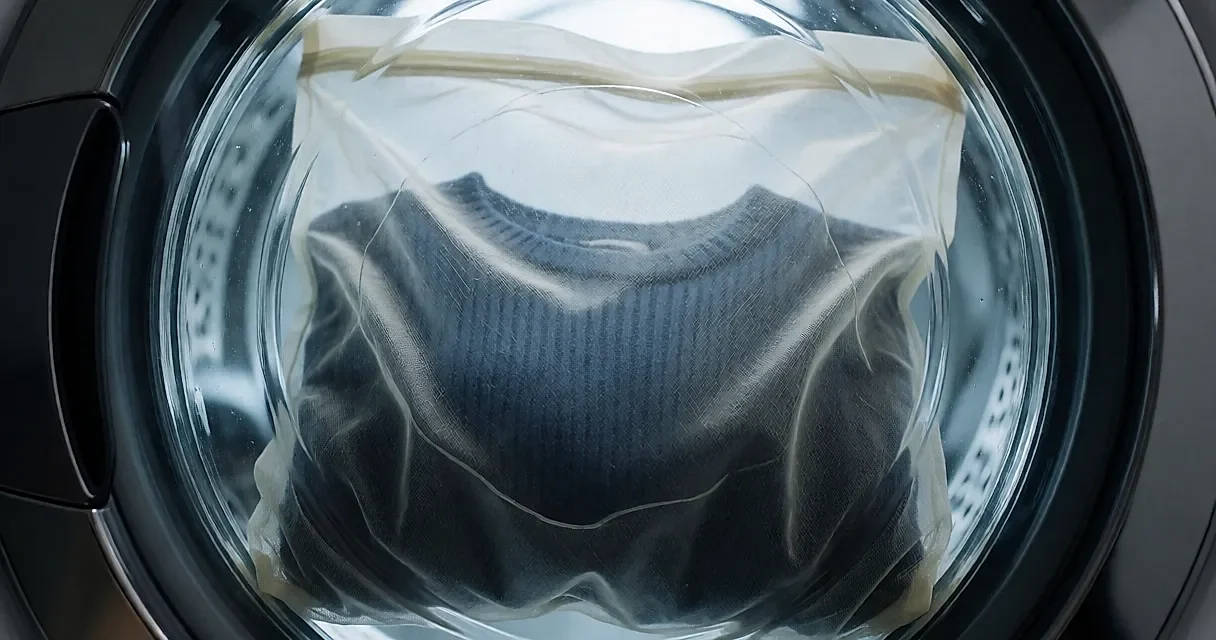
The polyester jumper is hard-wearing, but it sheds a little more with every wash. Many of its fibres leave with the washing water, too fine to be caught along the way, and carry on into rivers. The simplest defence is a polyamide bag popped into the drum, which catches some of that fluff before it reaches the drain. No sermon about replacing your wardrobe: this is about what you do in practice, not guilt.
Why the drum is the problem
A textile sheds fibres as you wear it, but the wash is where the count really climbs: water, movement, cycle length, friction with other clothes. Longer fibres clump into little pills, shorter ones are rinsed away — and the finest are exactly the ones most likely to pass through the screens at wastewater treatment works. Where does that fluff go? Into the water, a long way from your machine.
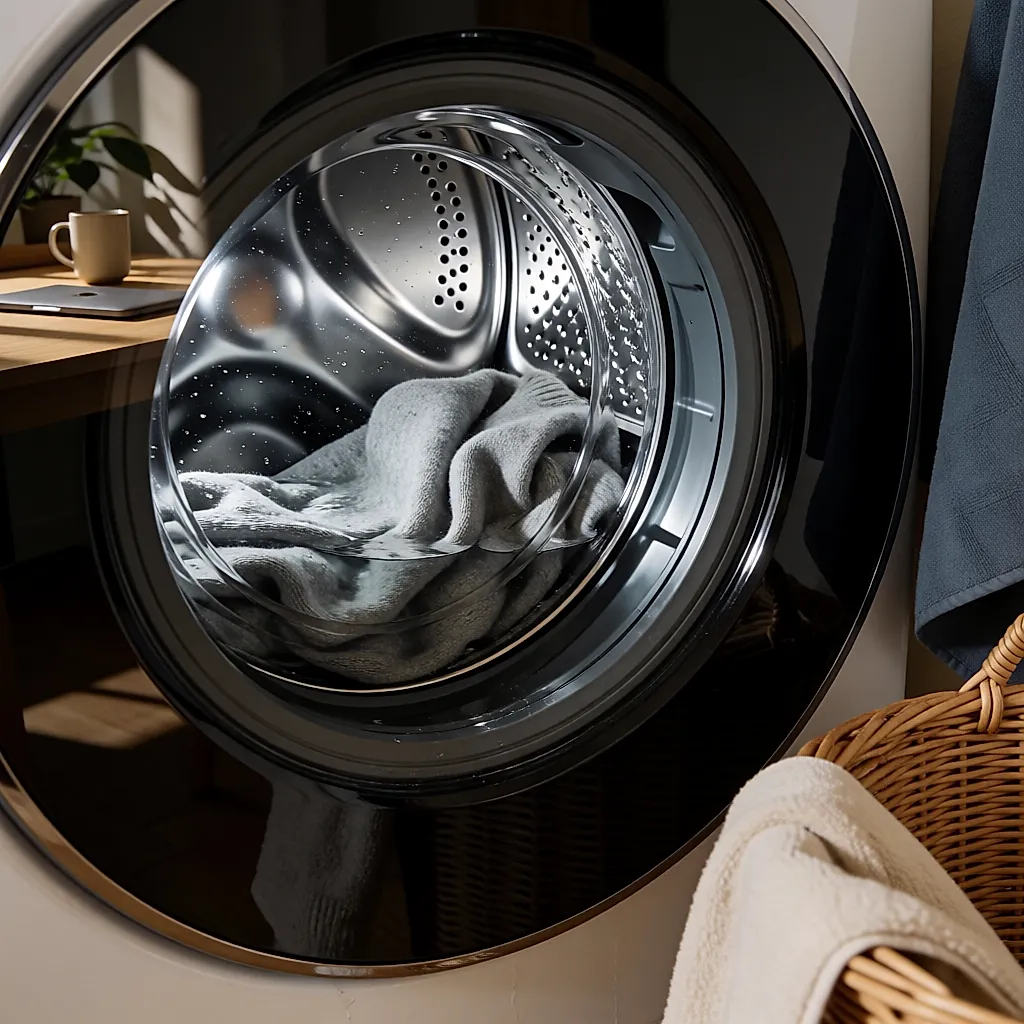
Which is why the bag exists. You are not being asked to replace your jumpers: keeping and wearing what you already own remains the most economical choice, and when buying, a glance at the synthetic content on the label costs nothing. Once the jumper is in the drawer, there is still one precise place to take action: the drum.
Mesh, closure and capacity: the three things that matter
The mesh decides everything. Too loose, it lets through the fibres you wanted to stop; too tight, water circulates poorly and the jumper comes out feeling less than fresh. In practice, look for a dense but supple fabric that lets light through but is not transparent. If a bag doesn’t state its material or mesh size, put it back on the shelf.
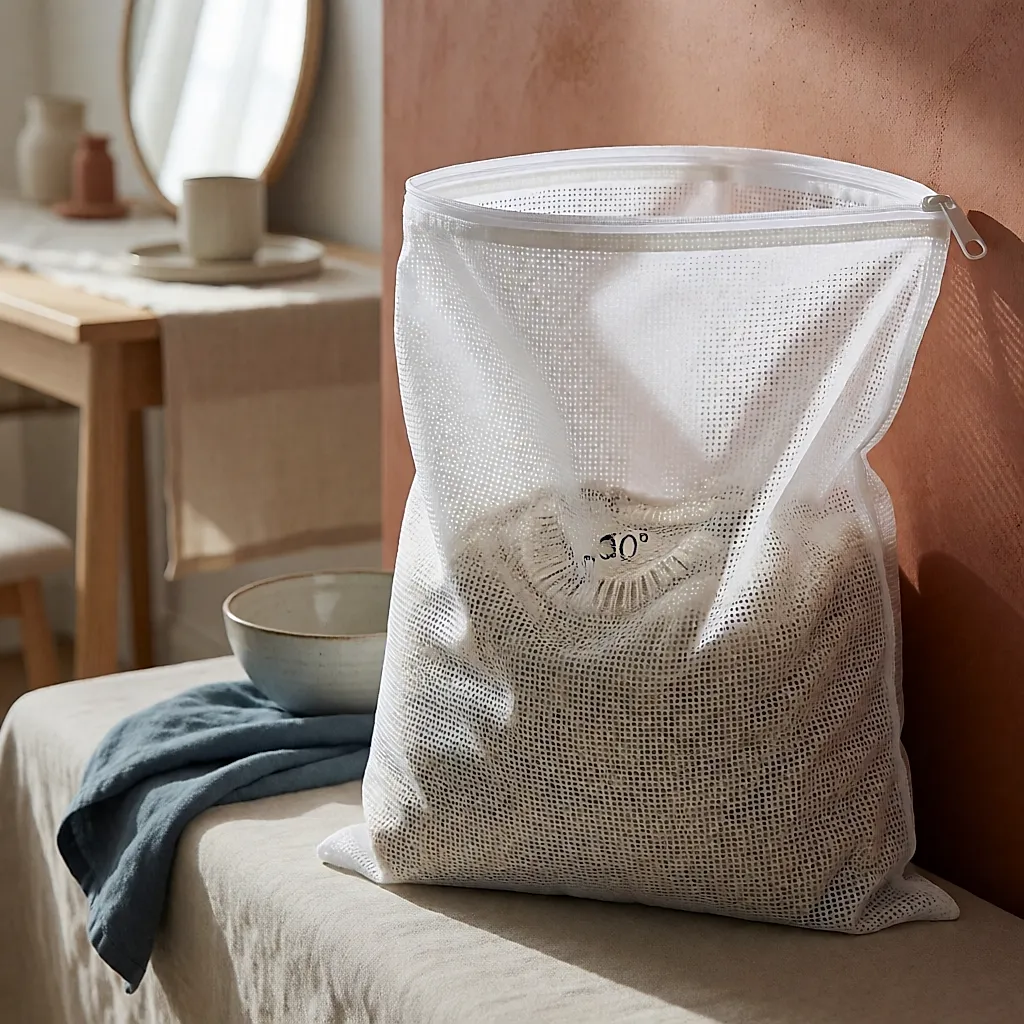
The closure is the second trap: a zip with a locking pull stops it opening mid-cycle, while a hook-and-loop fastening only catches extra bobbles. As for capacity, leave room for the water to circulate; avoid cramming clothes into the bag — an overfilled bag rubs, so it releases more fibres, exactly the opposite of the point.
Care is the part nobody talks about: clean the bag regularly: turn it inside out after a wash, remove the fluff trapped in the seams and put it in the bin. Not down the sink, or you’ve only moved the problem two metres.
Put in only a few items and leave room, and close the bag before it goes in the drum. A bag with room to spare is better than a stuffed one: friction between clothes breaks fibres, and an overloaded bag lets through what it is meant to catch.
What it catches and what it lets through
Let’s be clear about the deal: the bag mainly catches longer fibres, the ones that form visible fluff. Finer fibres partly pass through the mesh. A bag is not an industrial filter, and the efficiency figures you see quoted vary too much from one testing method to another to be treated as promises.
Does that mean it’s not worth it? No — but you should know what you’re buying. The bag doesn’t wash better, doesn’t remove stains better and doesn’t save you from sorting the laundry: it adds only a moment to something you already do. If you want to go further, there are filters fitted to the drain hose, but they cost more and need replacement cartridges.
Wash less often and fill the machine
The best filter is still a full load. A half-empty drum uses water, detergent and time for just a few items — so you may end up running an extra cycle in the week and sending more fibres down the pipes. Gather the washing, wait until you have enough for a full load, and run a quick cycle when clothes aren’t properly dirty.

In the wardrobe, a little restraint does the rest: a wool or cotton jumper aired overnight on a chair doesn’t need the machine, and a stain dealt with promptly avoids a precautionary big wash. You can enjoy doing the laundry and hate running the machine for nothing — the two sit together perfectly well.
Budget
Expect to pay roughly £15–£45 for a filter bag, depending on size, mesh fineness and brand. Whatever the price, check the mesh fineness and the closure on the product page. You’ll find them in zero-waste shops, homeware retailers, department stores and online.
A filter fitted to the washing machine’s drain hose is a different category: expect broadly £80–£150 including the first cartridges, plus ongoing maintenance. It is best reserved for people who do a lot of washing; for a low-volume household, the bag is generally enough.
A £30 bag won’t save the ocean, and nobody is asking you to believe it will. It changes one weekly habit, asking nothing more than pushing a jumper into a bag — the kind of resolution that is still going in February.



Comments
Your opinion matters: rate the article, react and reply to comments.
Comments are moderated; AI-assisted comments are flagged. Text emoticons (8-), :-), <3…) are automatically shown as images.