
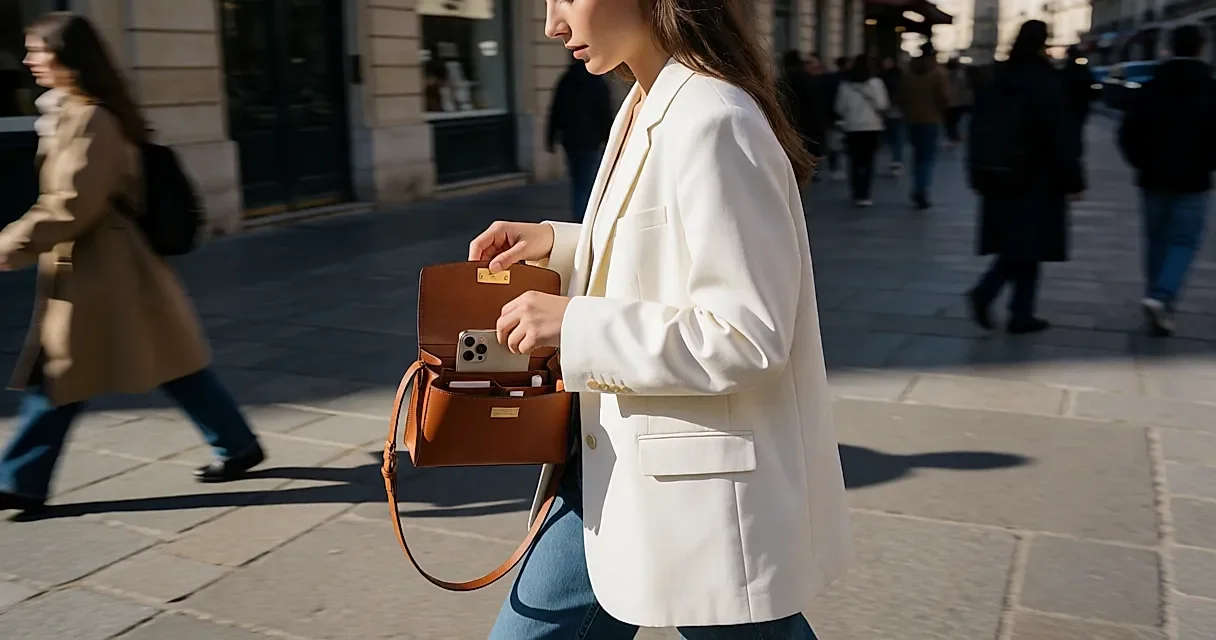
Two bags, both 20cm wide, and one swallows a phone while the other flatly refuses. The difference isn't on the outside; it's in the bag's belly: the depth, the shape of the opening, and that flap that never lifts far enough. This is how you fall for a beautiful little bag and then spend three weeks wrestling with it.
Width tells you nothing
We often choose a bag as we choose a dress: by eye, from the front. Except that a 20 x 15cm bag can be a box of tricks or a mousetrap—which one are you holding? What matters is the depth, the gusset, the side panel that opens out. Below 5cm, a phone gets wedged; at around 6 or 7cm, you can pull it out one-handed without putting the bag down.
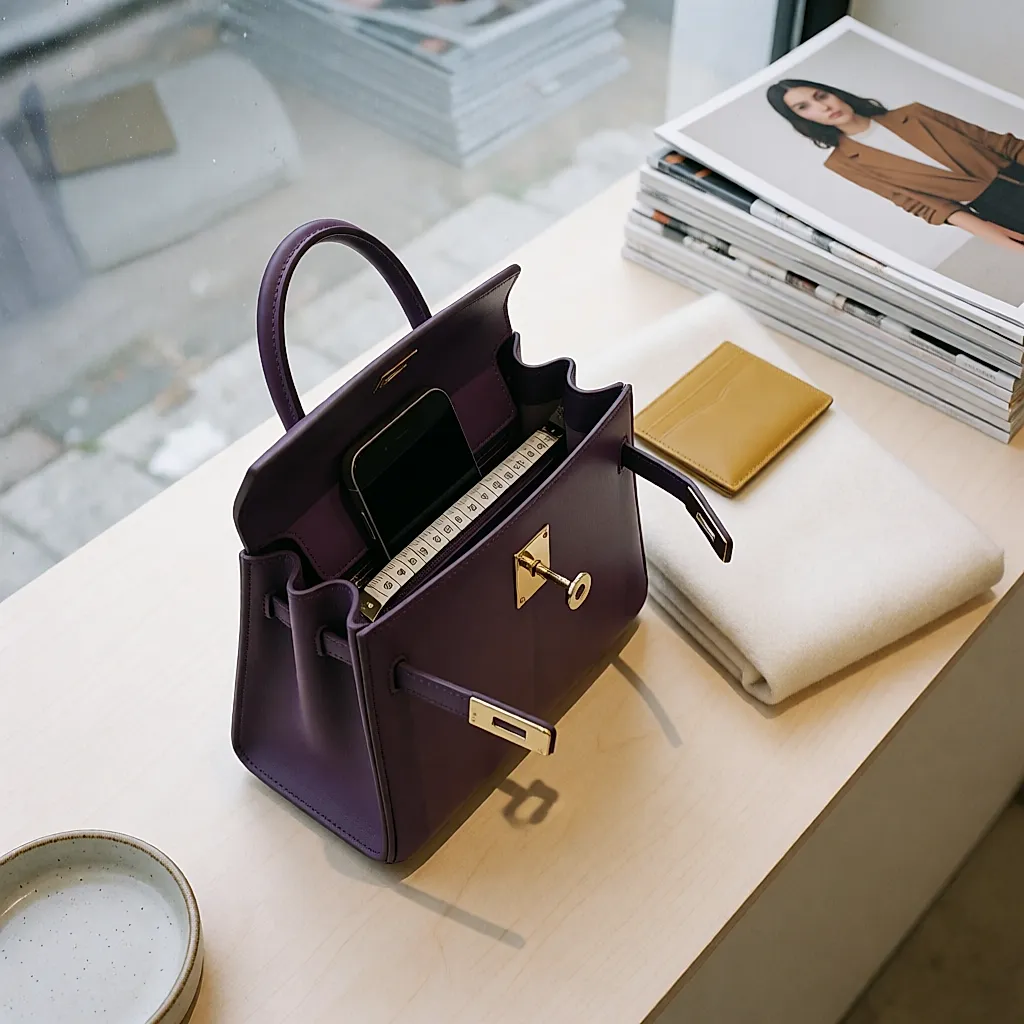
Open it flat and measure the opening: that is what decides everything, not the front. Check too whether the body keeps the bag open. A soft side panel collapses as soon as you let go of the flap, and then you have to prise the bag open like a tote—charming, except in the queue at a café. A flat base, finally, lets the bag stand upright on a restaurant table instead of collapsing onto the tablecloth.
The closure decides how your day goes
The magnetic closure is the everyday fastener: it snaps, closes itself, opens with a thumb. In return, it doesn't really secure anything—a magnetic flap protects against dust, not a jostle on the Tube. A zip secures everything but eats into the opening: with 2cm of teeth, your hand only goes in at an angle. Turn-locks and press studs are lovely and need both hands, which is perfect for dinner and exhausting on a Monday.
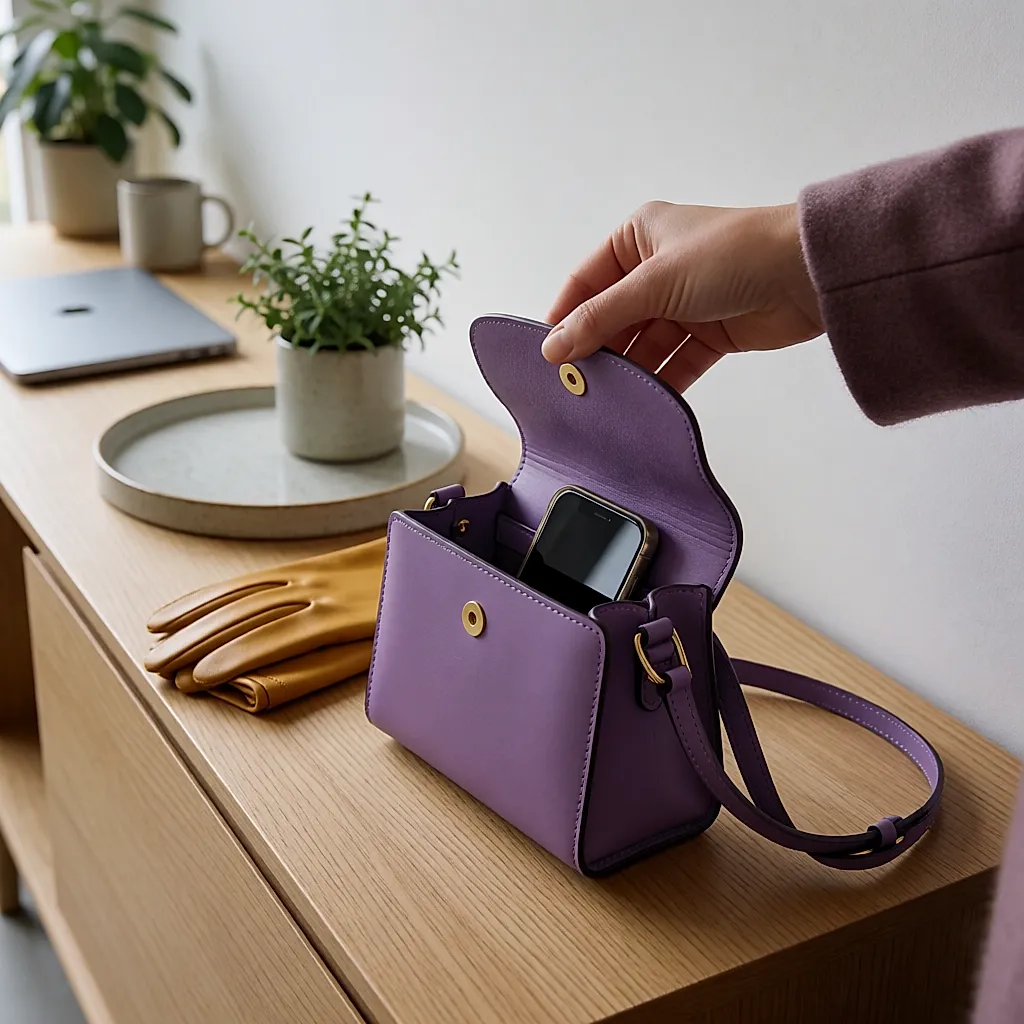
Then there's the flap that is too stiff. Unbroken leather that stands up like a board has to be lifted every time, by which point the thing you wanted has fallen back to the bottom. The test is one movement: open it, let go. If the flap drops, who is going to hold the bag while you rummage?
Rigid or soft?
A structured body has an underrated virtue: it protects. Glasses in a soft bag sometimes come out with a bent arm; in a body that holds its shape, they travel safely. The downside is that a rigid bag at capacity refuses to close, whereas a soft one will let itself bulge to indecent proportions. If your daily life involves a laptop and a packed lunch, a small rigid bag is not a day bag: it is an evening bag pretending to be practical.
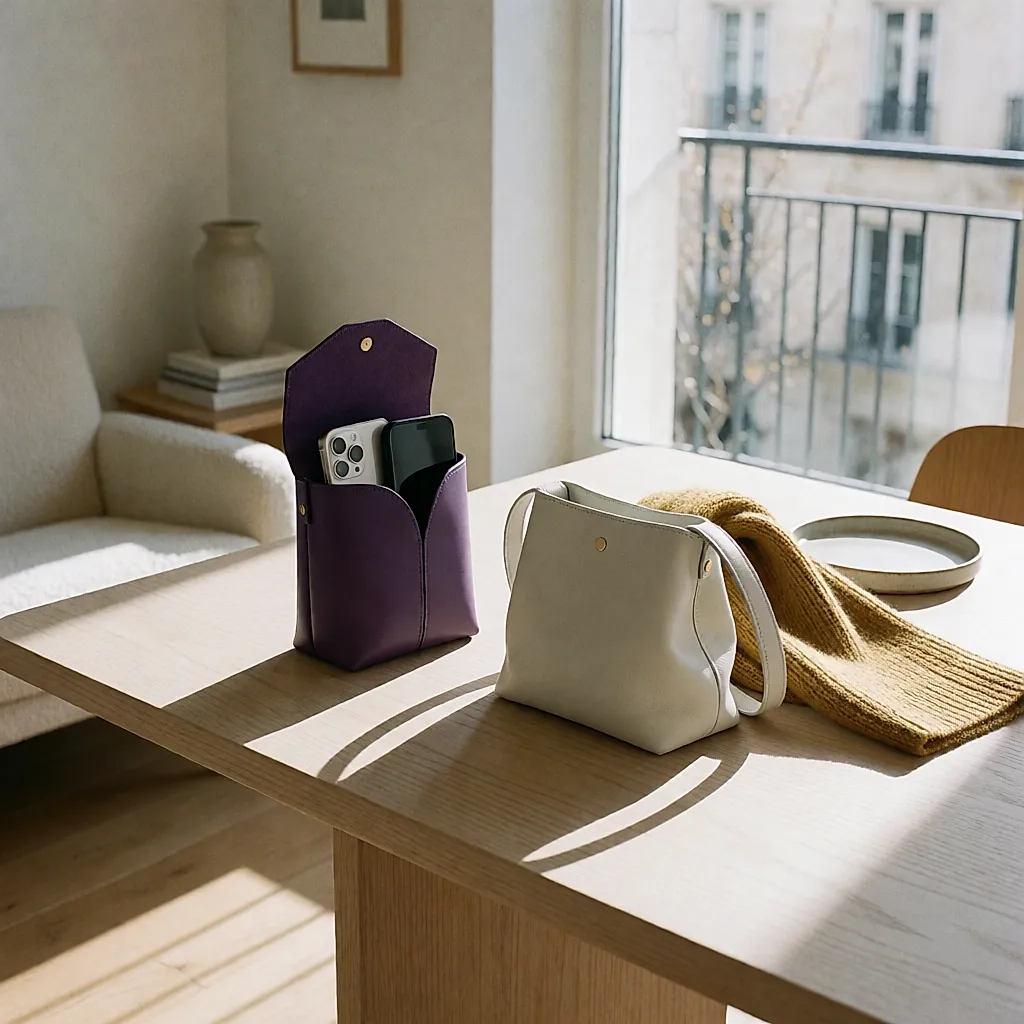
Next, the thumb test: press the side. If it gives easily, the bag will sag when open—handy for cramming everything in, annoying when you're trying to find something. On materials, full-grain leather develops a patina and can be repaired; corrected-grain leathers with a coating look better at first and mark more quickly. For faux leather, one warning: check the composition, because the coating often cracks at the flap fold within a season or two.
Why the strap matters more than it looks
A detachable strap turns a small bag into three: on the shoulder for work, cross-body for the market, and without a strap for dinner. But the attachment points matter as much as the strap. Fixed to the two top corners, it makes the bag tip forward as soon as you lean; fixed to the sides, it keeps the bag flat. And if it isn't adjustable, you end up with a bag that hangs at the hip when you wanted it under your arm.
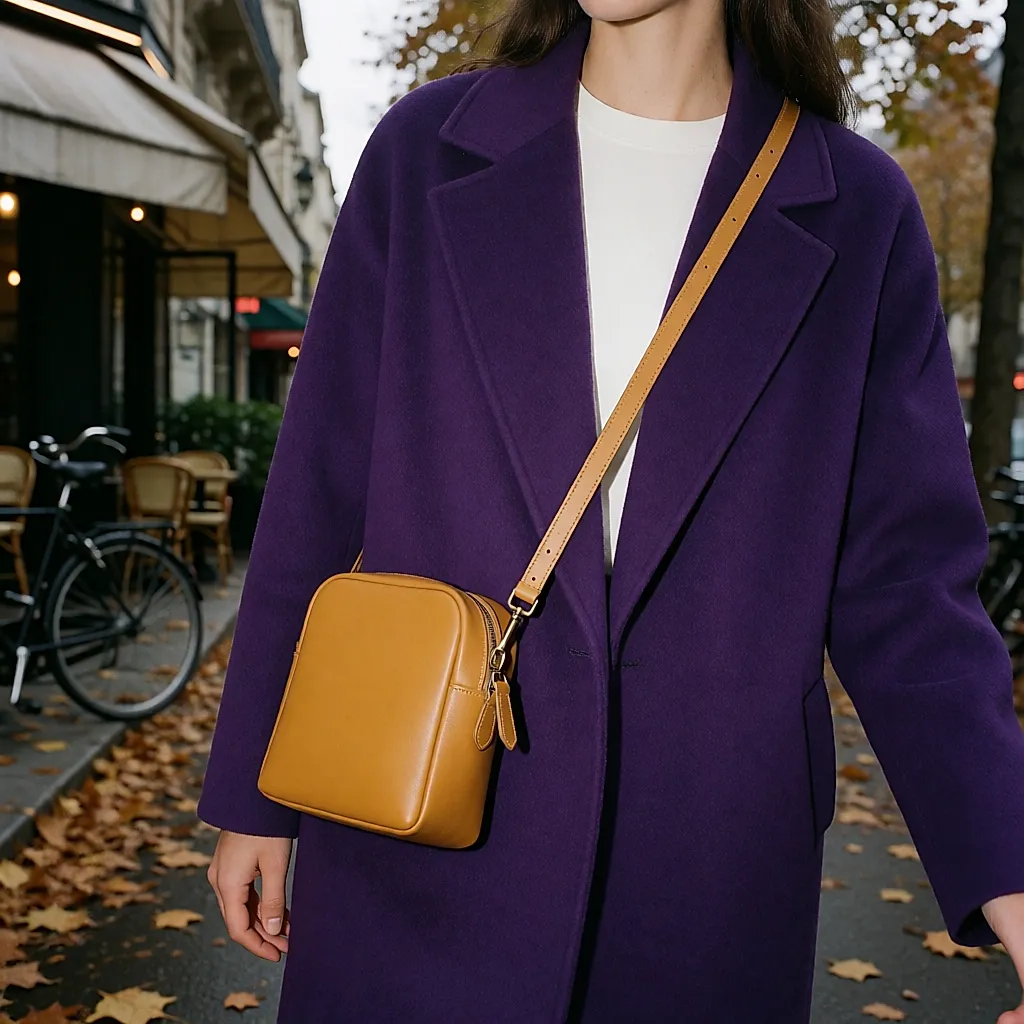
Comfort doesn't show in photos either: a thin strap cuts into the shoulder, a chain pulls at hair and weighs more than you think. The test is slightly ridiculous and very effective: fill it, put it on cross-body, bend down as if picking up a coin. If it twists, gapes or feels like a dead weight, you know. Three seconds that are better than posting it back!
What actually fits
Let's do the maths: a recent phone is about 15cm tall, a hard glasses case around 16 x 7cm, and a set of five keys a small, bulky bunch. In a bag 20cm wide and 6cm deep, a phone and keys coexist very happily; a glasses case, much less so. Hence our house rule: one rigid object, two soft ones, and everything else is a negotiation.
And what stays at home? The water bottle, the paperback, the full makeup bag and the charger. That isn't a punishment; it is the whole point of a small bag. If you change bags as often as shoes, a zip pouch you can move from one to the next saves you fishing around for mascara every morning.
What pushes the price up
As a rough guide, expect around £130–£300 in full-grain leather from small European labels, and £350–£800 from established houses, sometimes considerably more. In faux leather, the range is around £25–£80, with the durability compromise already mentioned. Second-hand, a well-known model often sells for around £70–£220; with highly recognisable pieces, caution rises along with the price.
What actually makes the difference: the tanning (vegetable tanning is slower and more expensive), whether the lining is leather or textile, whether the hardware tarnishes, interior pockets and the country of manufacture. On the second-hand market, two places tell you most: the corners and the strap attachments. A corner can be sorted by a cobbler; a torn attachment is another story.
The three-object test. Take your phone, keys and glasses case into the shop. Put them in, close the bag, open it one-handed without putting it down. If you have to try twice, the bag is lovely—but it isn't yours.
A good small structured bag isn't the one that takes the best photo: it is the one you can grab without looking and rummage through one-handed, standing up, on a crowded Tube carriage. The rest is decoration—and you are perfectly entitled to love decoration, as long as it leaves room for your phone.

Comments
Your opinion matters: rate the article, react and reply to comments.
Comments are moderated; AI-assisted comments are flagged. Text emoticons (8-), :-), <3…) are automatically shown as images.