

Two fleeces can feel identical on the rail and behave like two completely unrelated garments once they are under a coat. What separates them is neither the colour nor the brand, but a number the product page buries between the composition and the size guide: the fabric weight. Once you know where to look, the whole rail suddenly makes sense, and you stop buying the same mistake three times over.
Around 200 g/m², the layer you forget you're wearing
Fabric weight is simply how much a square metre of the material weighs. The higher the number, the denser the knit usually is, the more warmth it tends to hold and the more space it takes up. In practice, plenty of mid-season fleeces sit around 200 g/m², while the heavier weights are usually designed for standing about outdoors. At that sort of weight you get a layer thick enough to take the edge off the wind on a draughty Tube platform and thin enough to slide under a jacket without turning your silhouette into a ski suit.

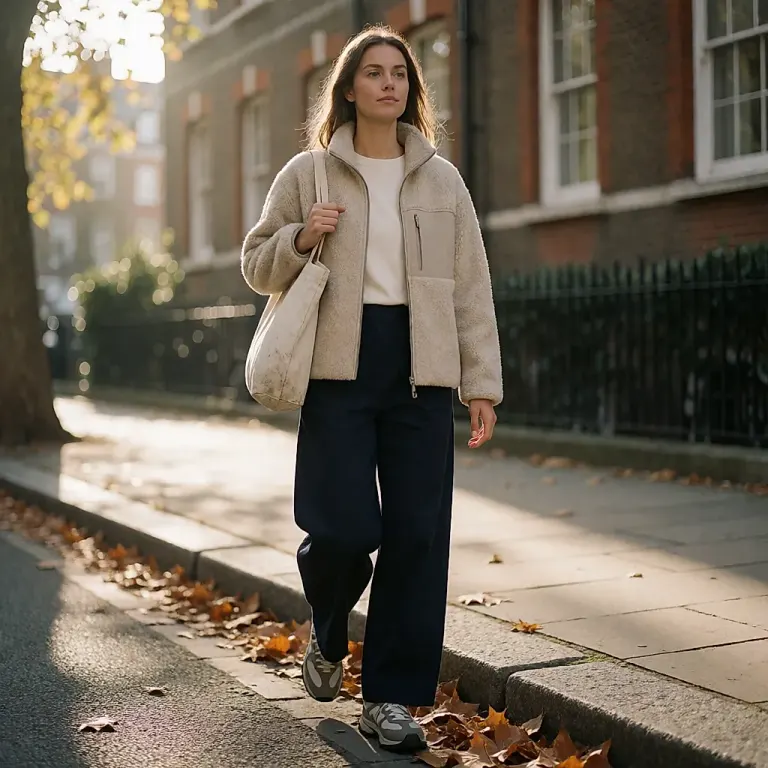
That is where layering gets easy. A fleece of this weight under a cotton trench, an oversized blazer or a mid-length wool coat: the fleece supplies the warmth, the outer layer keeps its drape. Nothing strains at the armholes, and you can take it off when you arrive without your arms going cold. The real test? Bulk. Does it fold small enough to fit in a weekend bag? A fleece at this weight usually does. A noticeably thicker one, far less often.
Why heavier fleeces end up over the back of a chair
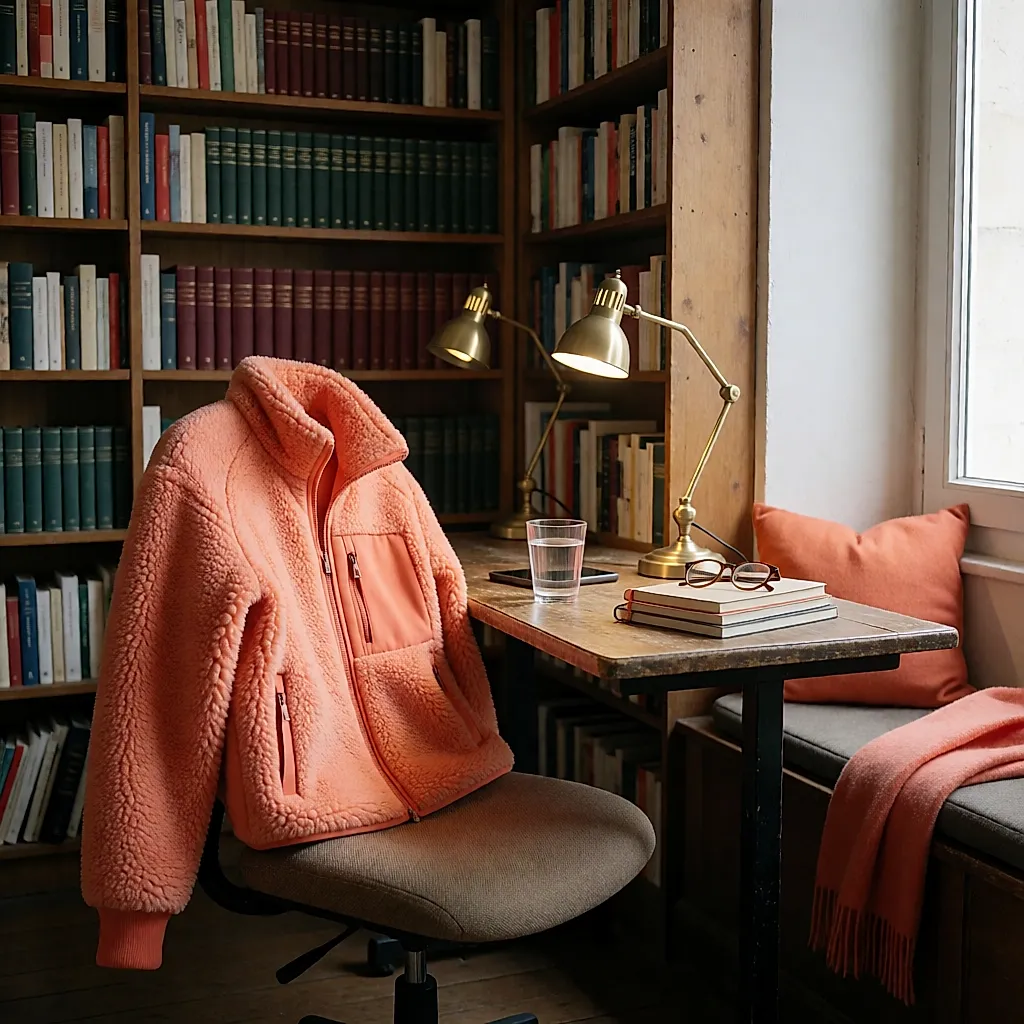
A high-grammage fleece is not a bad piece: it is usually an outdoor piece, built for cold air and standing still — a beer garden, the touchline, a long winter walk. In a heated office it quickly becomes a portable blanket: on it goes, you are too warm within ten minutes, off it comes, back on when you head out. All day you are running a lift service for your own fleece.
The result: it stays at the office or ends up bundled in the car, and you buy a thinner one anyway. So the question to ask before you pay is simple: will you wear this standing still outdoors, or moving about indoors? Tube, desk, canteen? A fleece around 200 g/m² is usually the right call for the city. Three hours outside barely moving? A heavier weight will do the job better.
The details that separate a good fleece from a guessing game
Start with the stand collar. It keeps the wind off your neck, provided it is cut properly: too wide and it gapes, too tight and it presses, so you end up folding it down constantly. Look for a collar that reaches your chin without swallowing it.

Next, elasticated cuffs: they stop air creeping up your sleeve, which really matters when you wear the fleece on its own, without a jacket. Check that they spring back properly and do not leave a mark on your wrist.
Then the zip. A zip garage — a fabric flap behind the pull — at chin height stops the metal sawing at your skin when the collar is up. Look, too, for flatlock seams, which are more comfortable under a bag strap, and a two-way zip, handy for sitting down without undoing the whole thing.
In the shop, put the fleece on, zip it to the top and drop your chin. If the collar gets in the way, it is a no. Second test: bend your arm at the elbow; if you feel a ridge pulling, the cut is too close for layering.
What if you'd rather wear wool?
Let's be honest: most classic fleeces are synthetic, usually polyester. If the thought of adding another oil-derived piece to your wardrobe bothers you, there are credible alternatives — merino wool fleece, recycled wool fleece, brushed cotton jersey. They keep you warm in a different way, usually age better, cost more and ask a little more care in the wash.
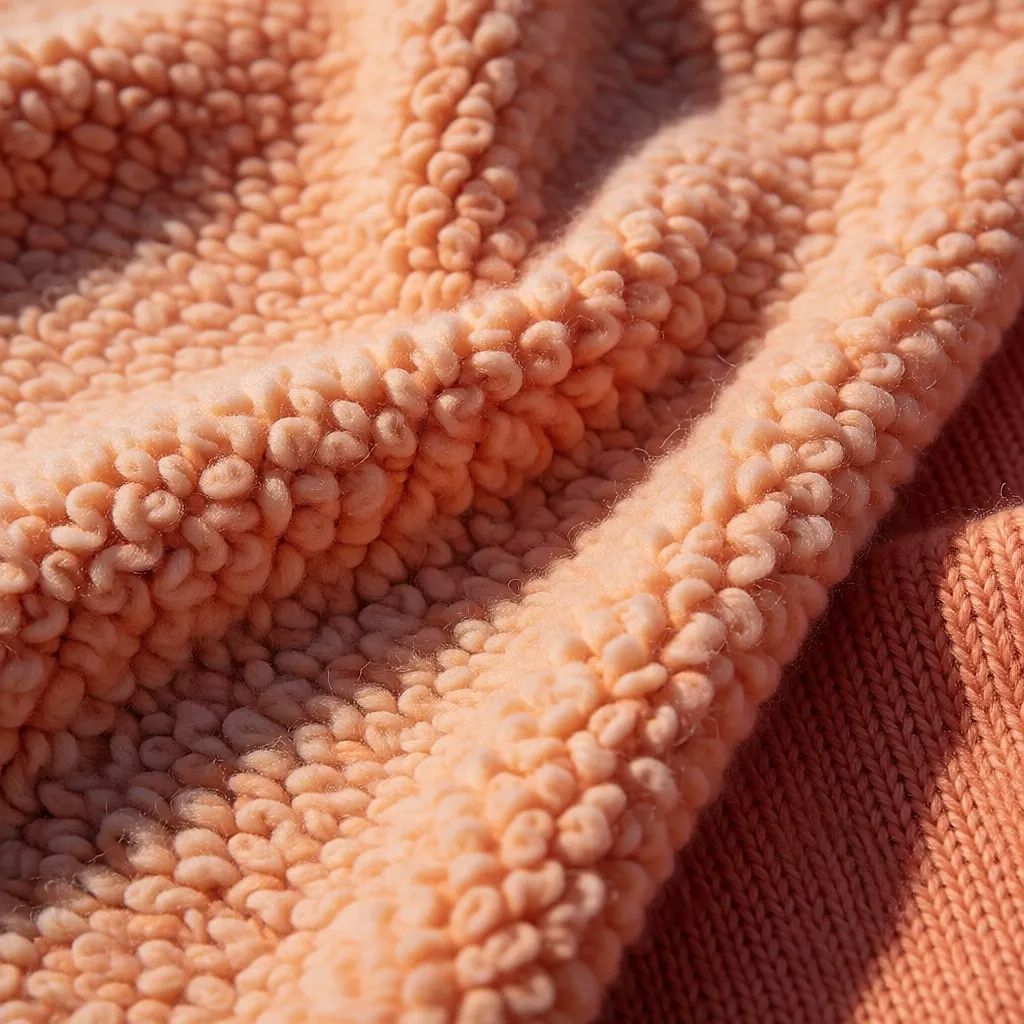
The right instinct is to ignore the packaging and read the composition label. How much of it is natural or certified recycled fibre? And if you do go synthetic, keep it for years: what counts is not year one, it is year three. Cold wash, no fabric softener — it clogs the brushed knit — and dry in the air.
What to spend
Expect £20 to £40 for a basic 200-weight fleece from a value high-street chain or an entry-level sports retailer. The cut holds up, the finishing is more of a lottery, and the collar is usually the first thing to go. For a piece you wear every day, that is a gamble.
Between £50 and £90 you are into outdoor brands: a sturdier zip, flatlock seams, cuffs that do not stretch out, and a fabric weight that is usually stated on the product page. This is often the best value for everyday wear. From £100 to £200 you are into wool and European-made pieces. Save that for people who wear the fleece as a main layer rather than a base layer.
Second-hand, finally, is an excellent shout for this kind of garment: barely worn fleeces are everywhere, and the weight is often listed in the ad. Not sure? Ask for a photo of the composition label — it says more than three pictures of a model.
The right fleece is not the softest one on the rail: it is the one whose fabric weight you have forgotten about three weeks later, under your coat, never too warm and never too cold. No label can tell you that for you.


Comments
Your opinion matters: rate the article, react and reply to comments.
Comments are moderated; AI-assisted comments are flagged. Text emoticons (8-), :-), <3…) are automatically shown as images.