
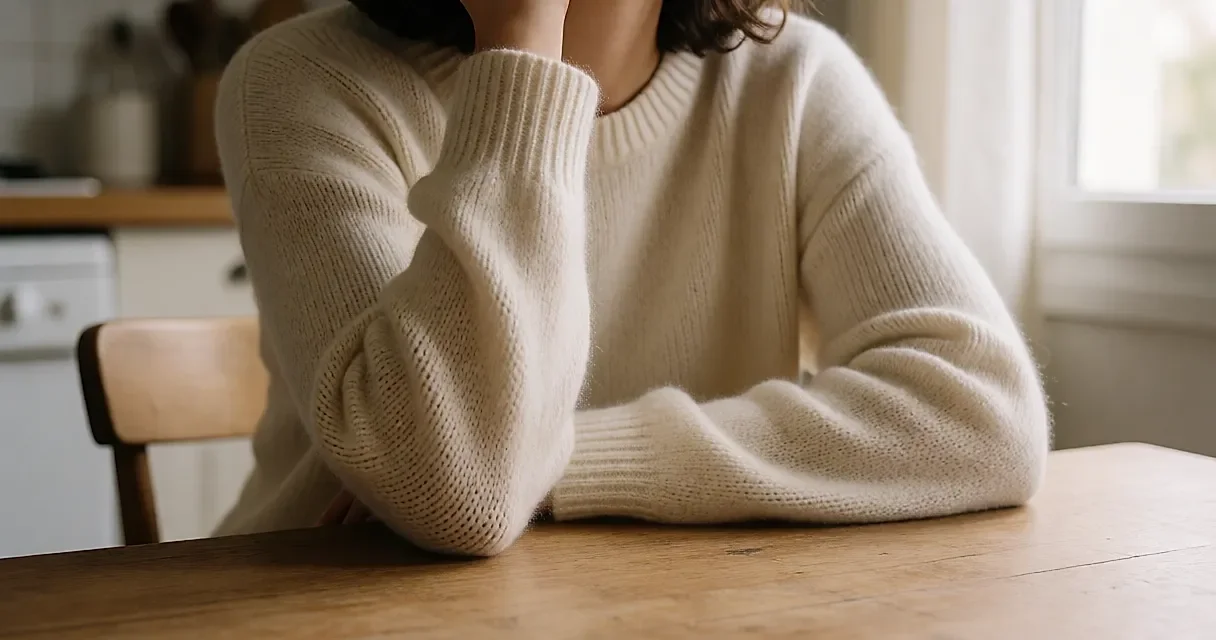
Put two jumpers labelled 100% wool side by side, one at around £35, the other at around £200. Under your fingers, the difference isn't obvious; by the third winter, it is unmistakable. The first droops at the elbows like a badly wrung dishcloth; the second has kept its shape. There is no manufacturing secret between them: just a knit that is tighter or looser.
Shape comes from density, not the fibre percentage
A knit is just a series of loops. The bigger the loop and the thicker the yarn, the more play the knit has—and the more it stretches where your body pulls: elbows, cuffs and sleeve hems. A piece with room to move ends up moving, and a stretched elbow rarely returns exactly to shape.
Why does a 100% wool jumper stretch anyway? Because the label tells you the fibre, not how it was knitted. Gauge (the number of stitches and rows per square centimetre), the twist of the yarn and whether it is plied all decide how well a knit holds up. A fine yarn knitted tightly will often wear better than a lofty chunky wool knitted loosely, which looks great in the fitting room and comes back to haunt you by February. Chunky knit isn't the enemy, though: it just needs to be a proper indoor jumper, not a whole day squashed under a coat with a bag hooked over your elbow.
Three checks, 30 seconds in store
Pinch the knit between thumb and forefinger, then spread them apart: if the stitches open into big holes and take a while to close, the knit is loose. It's a reliable test, and it's worth more than any patter from a rushed sales assistant.

The second check costs nothing: hold the piece up to the light. A very open knit does breathe, of course, but it has further to travel under strain—you can see in real time what your elbow will see in six months. Third: gently pull a rib at the hem and at the cuff, then let go. Anything that doesn't spring back is already tired; anything that ripples is a sign of a knit that's too soft. Take a look inside, at the seams, and you'll have your verdict. Thirty seconds—you can manage that, can't you?
What polyamide really changes
Wool-polyamide blends are everywhere, and not without reason: the synthetic fibre adds strength and a little elasticity, which helps the knit cope with friction. But it won't tighten loops that have been knitted wide. So a proportion of polyamide limits wear, without correcting a knit that is too loose.
Look at density first, composition second, and treat the synthetic content as a detail, not a reason to buy. On the sustainability front, the best jumper is still the one you wear for years—and wash rarely.
Washing: cold water, flat drying and no hangers
A jumper doesn't only stretch when you wear it. Water that's too hot, a vigorous spin and a hanger at the end can do almost more damage than a winter at a desk. Use a wool cycle or hand wash, at a cool temperature as shown on the care label, with minimal spinning, and skip fabric conditioner: it coats the fibre rather than helping it spring back.
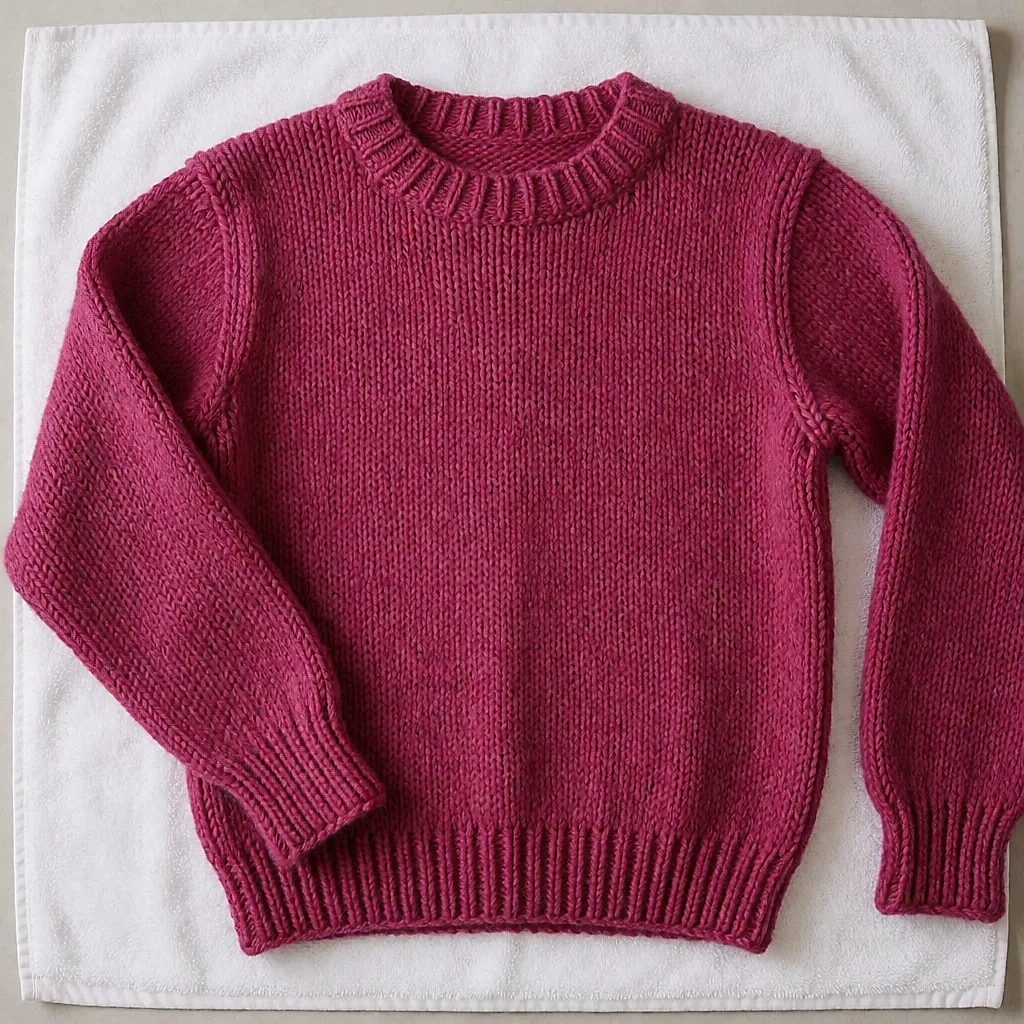
Drying is the moment of truth. Dry flat on a bath towel, reshaping the sleeves and ribbing by hand, well away from the radiator. A hanger works against you: the weight of the water pulls at the shoulders and lengthens the sleeves for hours. Once dry, fold it, and air it between wears rather than washing it every week.
Already stretched? Soak the jumper in cold water with a little mild shampoo, squeeze out the water by hand without wringing, then dry it flat, pinching the ribbing back into shape with your fingertips. It will give a tired knit a little more body—but it won't bring a too-loose knit back to life.
What to spend
Expect to pay around £20–£60 on the high street and in supermarkets, often for blends; £80–£160 at knitwear labels for a tightly knitted merino or recycled wool; £180–£350 and up for cashmere or a very well-finished knit. Second-hand, £15–£45 depending on condition—plenty of excellent finds, provided you look closely at the elbows.
What makes the price? The fibre, the density of the knit, the finishing, where it was made—not the name on the label. So look on the high street, in an independent boutique or in a charity shop with the three checks in mind, and put back without guilt any jumper that doesn't spring back.
Ultimately, a jumper that holds its shape is one you forget about: no rescue bath in February, no sleeves that reach your knees. Next time your hand hesitates between two knits, squeeze, stretch, hold it up to the light. Thirty seconds, and your elbow will thank you.
Comments
Your opinion matters: rate the article, react and reply to comments.
Comments are moderated; AI-assisted comments are flagged. Text emoticons (8-), :-), <3…) are automatically shown as images.