
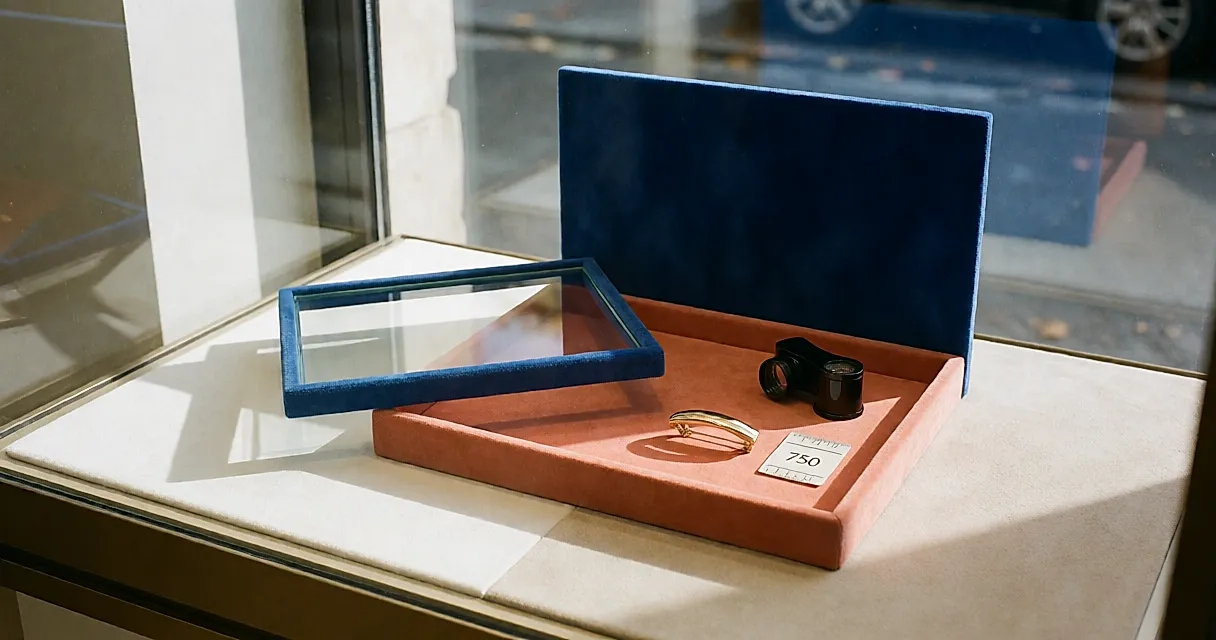
The underside of a ring gives more away than its top. In a shop, pick the piece up, turn it over, run a finger across the setting: the claws filed one by one, the metal brushed where nobody looks, the tiny mark struck inside the band — that is what separates a piece you keep from a purchase you regret. And you can take away a way of reading a piece of jewellery that costs nothing.
Start by turning it over
In a shop, little is laid flat: pieces are raised, angled, lit from below. Take the time to walk around a brooch, to work out how a bracelet articulates, to watch a clasp close — things that a window display, with its flattering lighting and a sales assistant in a hurry, doesn't always let you see.
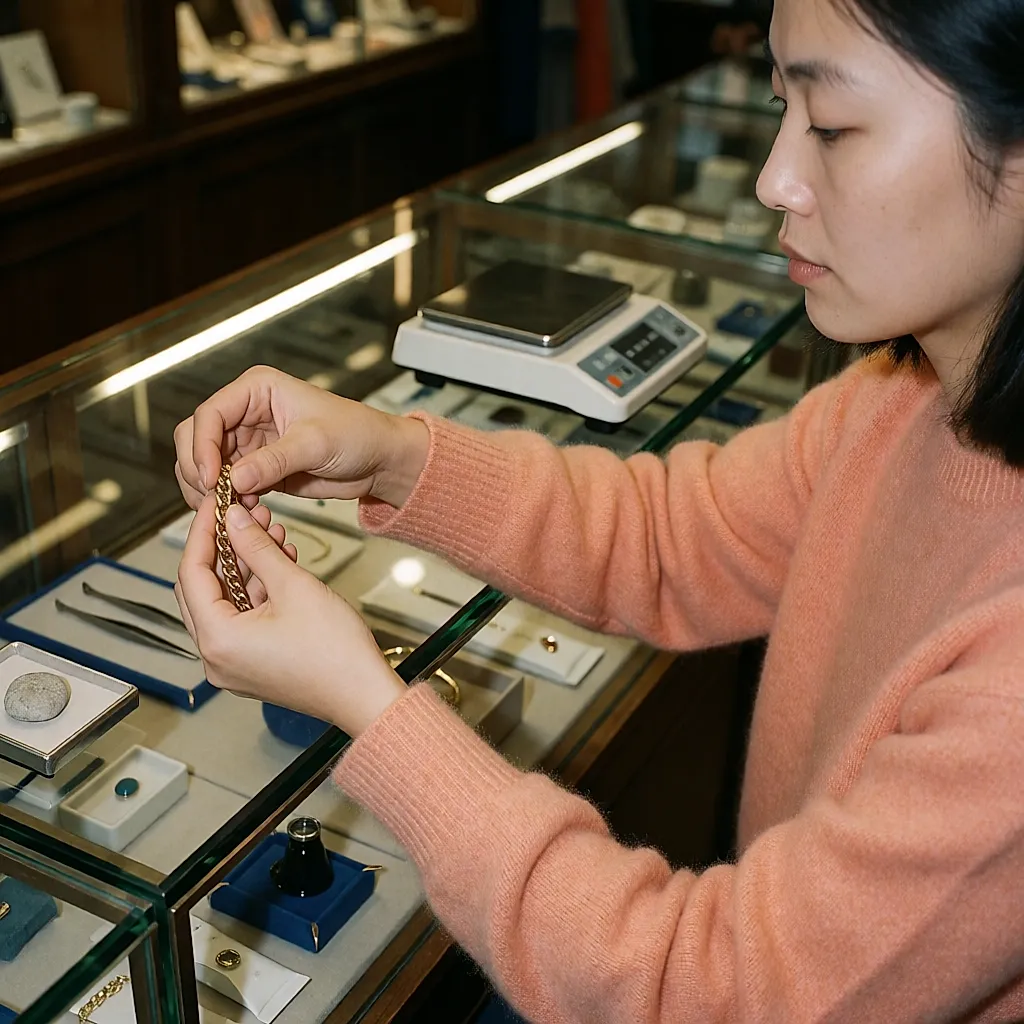
You soon realise that a piece of jewellery is a three-dimensional object with a front and a back. The front is the stone that sparkles, the side you compare online. The back is the work: metal that has to stay comfortable, a clasp that has to hold, claws that mustn't catch on a jumper. That's the side that decides whether you'll wear the piece every day or whether it ends up in the button tin.
The back is where the money goes
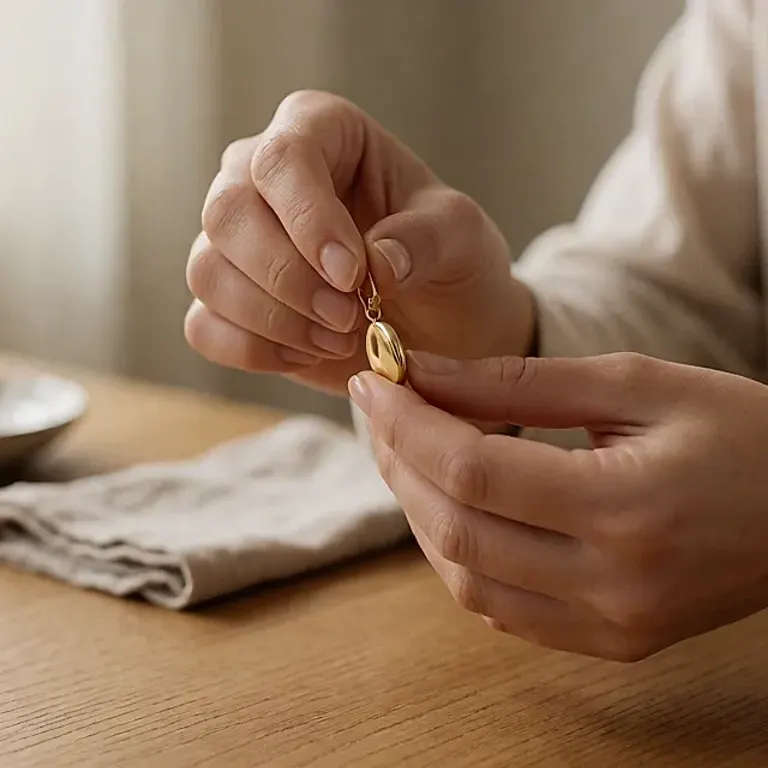
Get into the habit of turning over whatever you try on, without embarrassment. Run a finger over the setting, then drag a strand of silk thread across it: if it snags, the claws are badly finished and will catch on the wool of your coat — and then, one day, on the stone. A clean setting can be felt before it is seen.
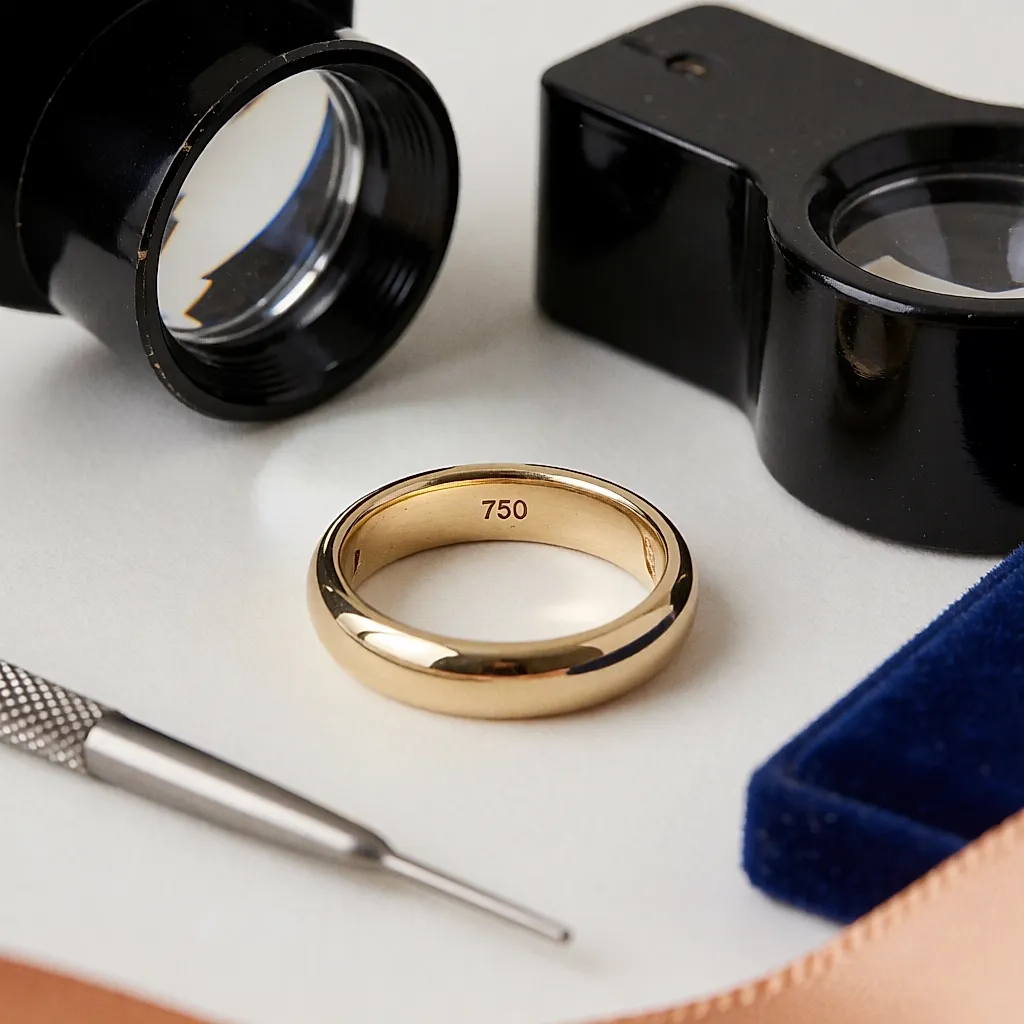
Then look inside the band. "750" means 18-carat gold, or 750 parts of pure gold per thousand. If a piece sold as gold carries no hallmark at all, that is a question worth asking out loud.
Clasps, finally, are often the first place where you can see that money has been saved. A loose lobster clasp, a chain that springs open when you take off your scarf: the piece is pretty, but it won't survive daily wear. Test it twice in the shop and give it a gentle shake. How many pieces have you stopped wearing because of a temperamental clasp?
A stone doesn't make a piece of jewellery
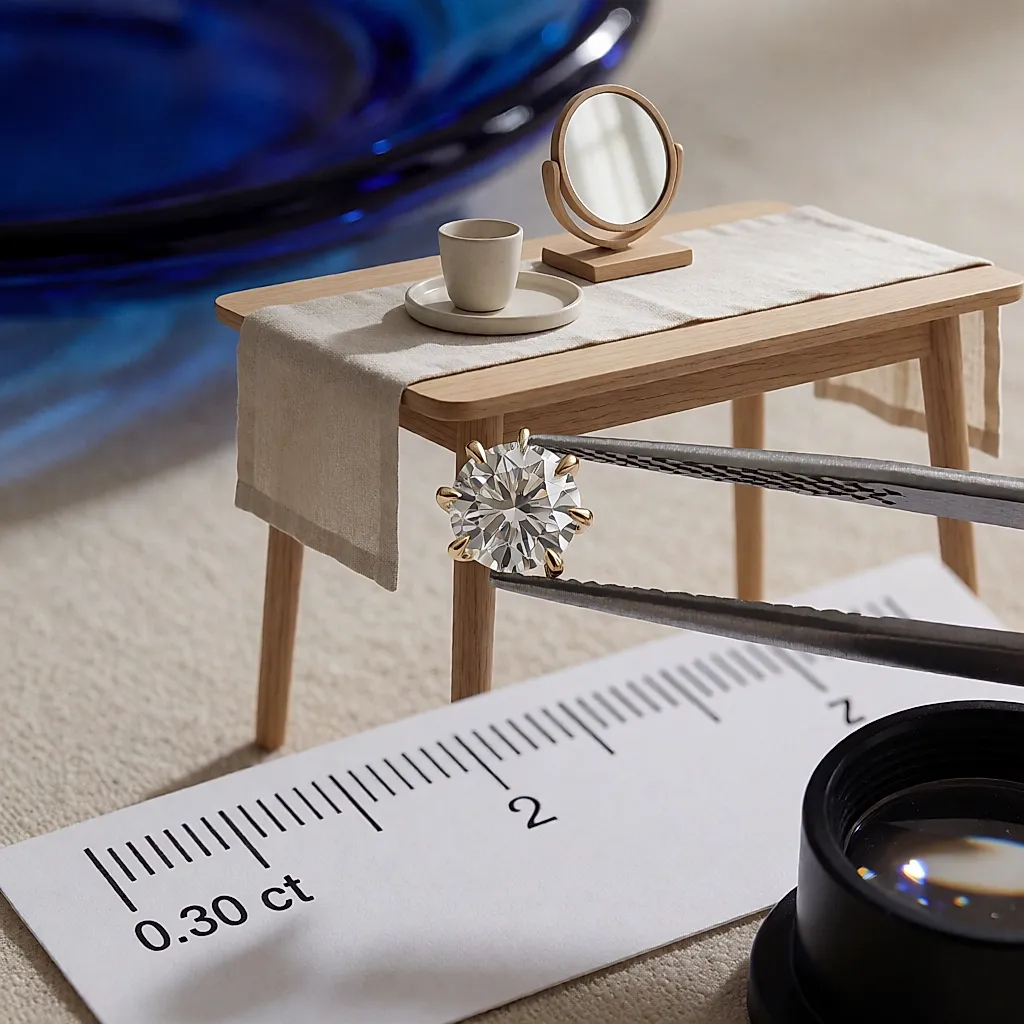
In exhibitions, pieces are not always arranged by the size of the stone. You see tiny diamonds set with obsessive care, and bigger stones mounted without any grace. A stone on its own does not make a piece of jewellery: what counts is how it is cut, oriented and held.
One very simple detail for pearls: a strand in which each pearl is knotted to the next — you can see a dot of silk in the gap — can be repaired pearl by pearl. Without knotting, if the thread breaks, everything falls to the floor. That care doesn't always appear on the price tag.
What an exhibition is really for
Why would a jewellery house fund an exhibition, a school, a contemporary art foundation? Because its name gains something advertising cannot manufacture: a demonstration of craft.
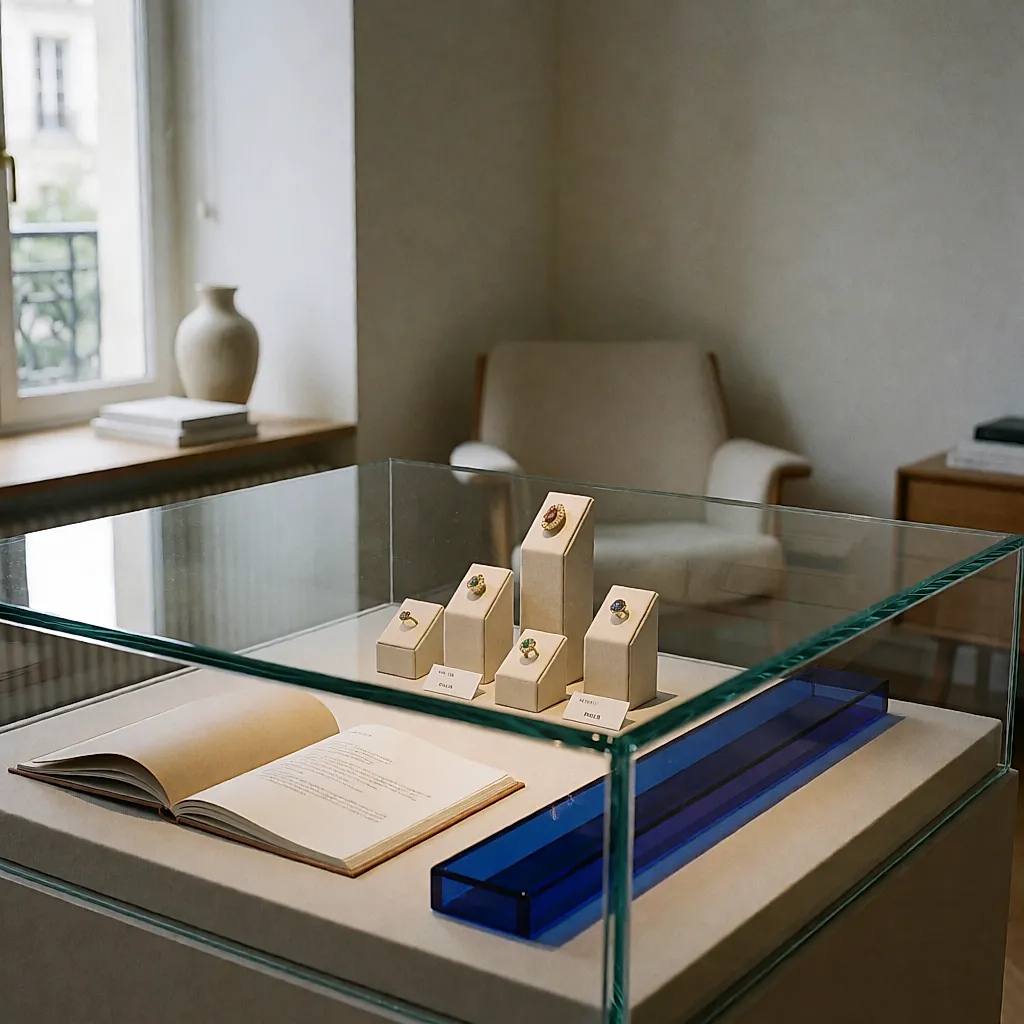
We are not naive: a house that shows off its workbenches is also polishing its story, and an exhibition is still a shop window. But the side effect suits us. When a piece is judged on its work, the carat count loses a little of its monopoly — and you dare to ask who made it, and how.
What to budget
How much should you spend? The hierarchy comes down to material and labour. A gold-plated or gilt-brass piece usually sits somewhere between £25 and £100. Be careful: a "gold-tone" or "gold-finished" label does not mean gold-plated — the layer is thinner and wears through faster.
Vermeil — silver covered with a layer of gold — tends to come in at £70 to £220 depending on size and finish: the sweet spot on a mid-range budget. For 18-carat gold, expect from around £220 for a small piece with no stone, and often £800 to £2,600 once a significant stone is set. Beyond that, you are paying for workshop hours rather than material. Local jewellers and independent workshops are good places to have a clasp tightened and to ask the awkward questions.
Three checks before you pay Turn the piece over and run a finger across the setting. Look for the hallmark inside, then on the clasp. Finally, ask whether the ring can be resized — a thin band that is fully pavé-set, for example, cannot be altered indefinitely.
There is something reassuring in all this: learning to look at a piece of jewellery needs no diploma and no budget. Just the urge to turn it over. Next time you hesitate in front of a window, start with the underside: if the back is clean, the front only has to sparkle.
Comments
Your opinion matters: rate the article, react and reply to comments.
Comments are moderated; AI-assisted comments are flagged. Text emoticons (8-), :-), <3…) are automatically shown as images.