
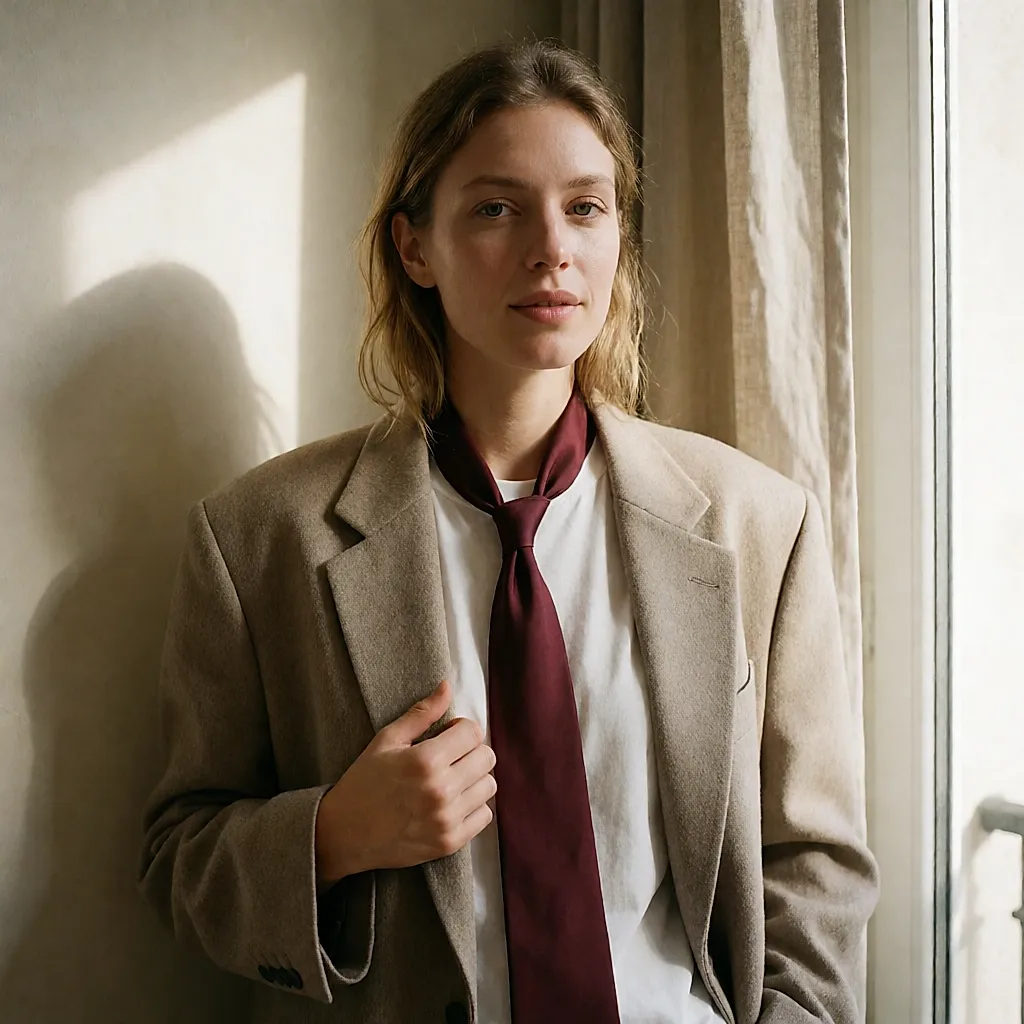
The tie walked out of menswear one Saturday morning, thrown over a white T-shirt, and nobody has asked it to go back. Since then it turns up in cafés, at gallery openings and in offices that like to think of themselves as casual. It no longer turns up to sign a contract. It turns up to unsettle an otherwise tidy silhouette. So how do you knot one without looking like you're dressed for an interview? That's the whole question.
Worn against the grain
The cravat, ancestor of the modern tie, comes from the 17th-century Croatian horsemen whose knotted neckerchief the French court copied — in other words, the tie started life as a ribbon, long before it became a uniform. The three-piece-suit chapter lasted only a few decades, and that's the chapter we're closing. Worn today, a tie doesn't finish an outfit. It argues with it.
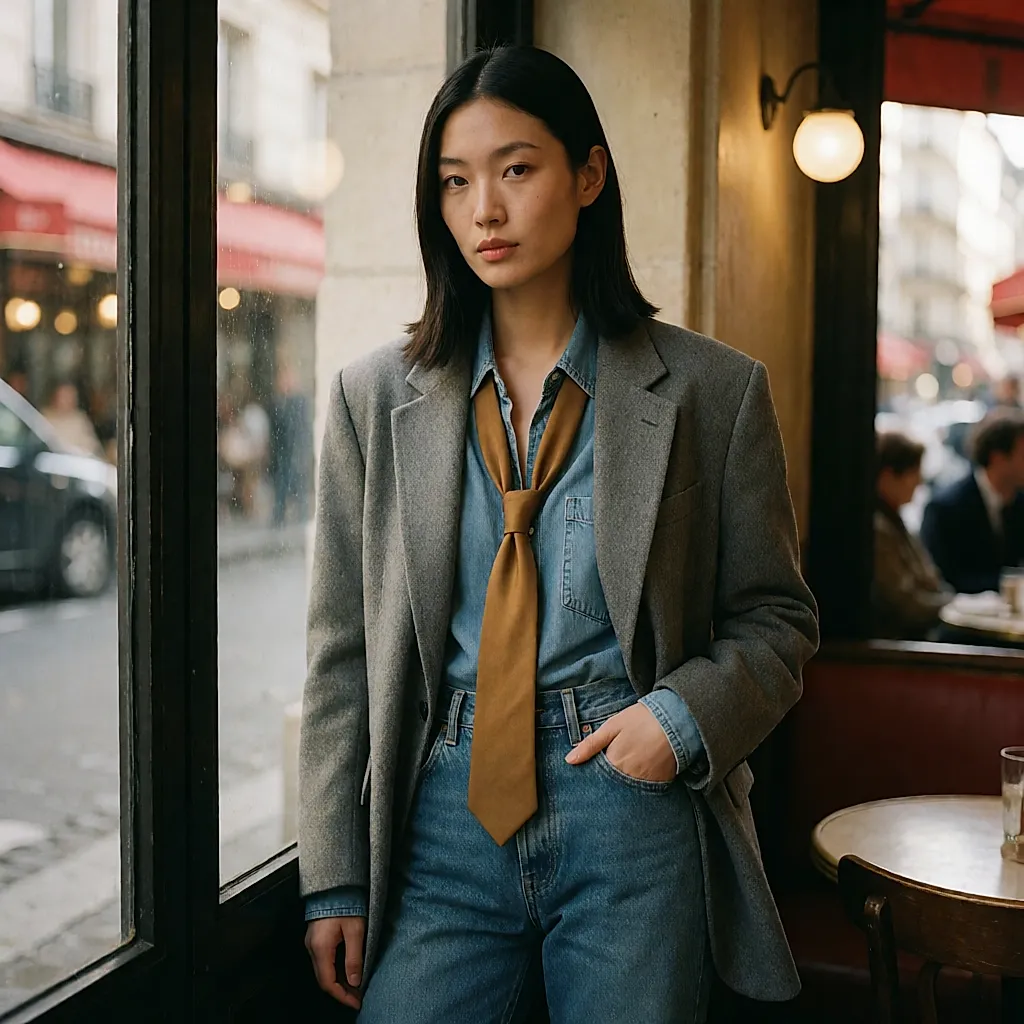
That friction is the whole point. Matched with the suit it was designed for, it files you under a category; with raw denim, a shirt whose collar gapes open or an oversized blazer, it says something else entirely. The drape does the rest: in silk, it slides, creases and accepts an imperfect knot. A heavier tie stands to attention and looks serious — your call, on a Monday at 7.50am. It's a genuine question.
Where it works, and when to leave it at home
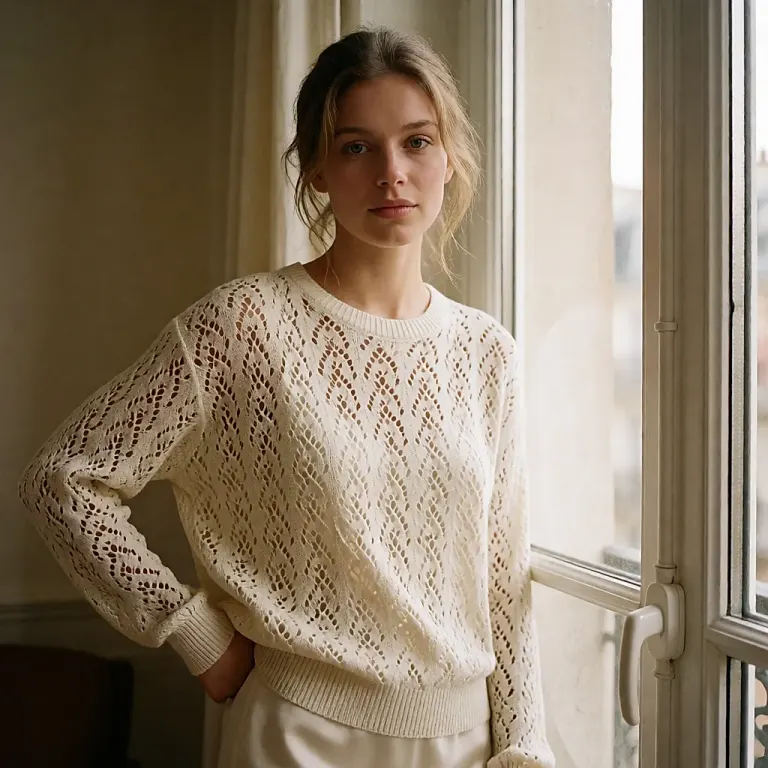
Three combinations land almost every time. Over an open shirt, two buttons undone, collar spread: the tie goes underneath, fairly loose, point stopping short. Under a fine knit — crew neck, small roll neck — knot it over the wool and it draws a clean line; with a chunky roll neck, though, it gets suffocating. And over a white T-shirt slipped under a blazer, it takes the place of a necklace with a sharper edge.
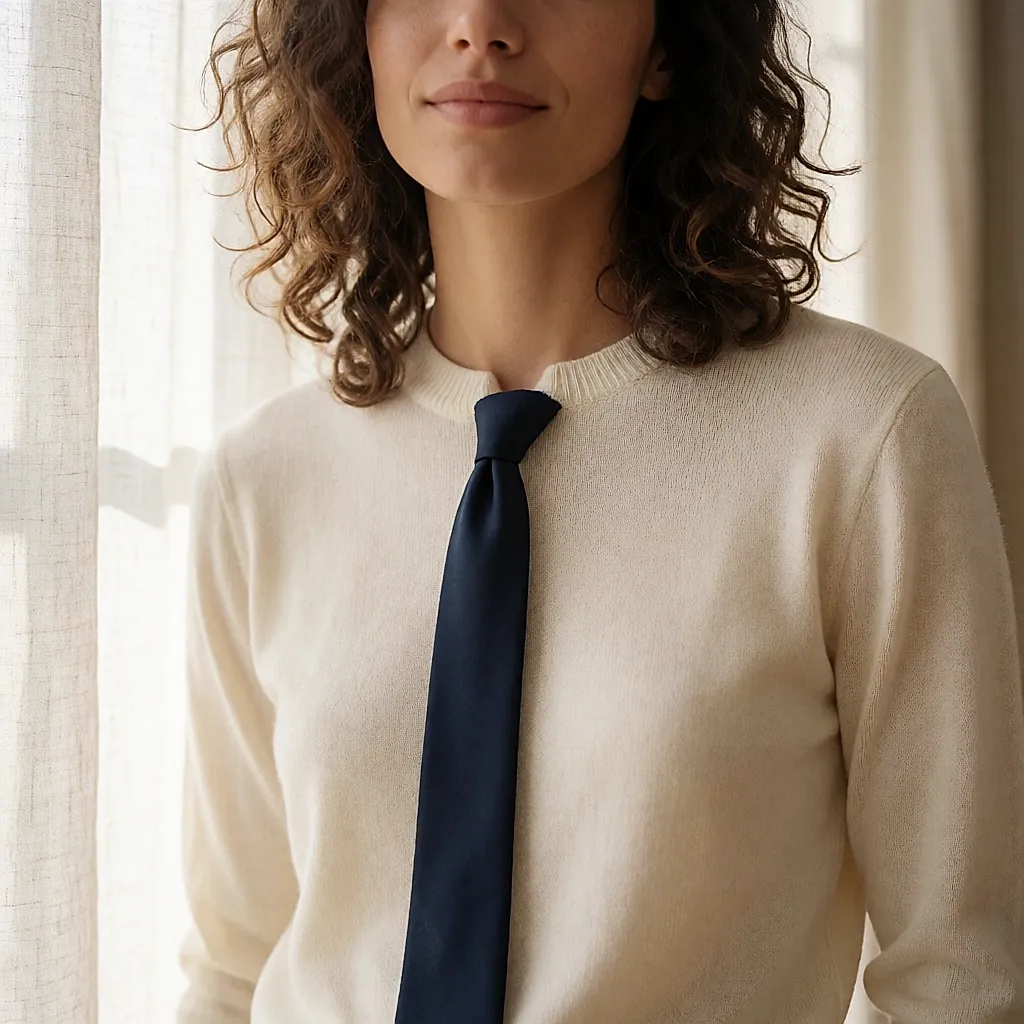
There's also the skin version, knotted on a bare neckline for dinner or a gig. Beautiful on some, tricky on others: if in doubt, save it for the evening.
Because a tie has its limits, and it's worth saying so. For an interview in a very formal field, wear the full suit — without it, a tie can read as a small act of defiance, which isn't always the message you want to send. And if you're petite with a fuller bust, a wide tie takes up all the space: go for a slim width and a soft fabric. In short, it's not a universal basic — more a very good find when the context plays along.
The knot, in practice
Two knots will see you through a lifetime. The four-in-hand for narrow collars and heavier fabrics: it's meant to sit slightly off-centre, and that's when it looks good. The half-Windsor, wider and more symmetrical, for a big open collar that needs some body. Tighten without throttling, then ease it back a notch: the knot looks better for it and the day goes down easier.
On length, the tip should land at the waist. Lower and you'll be standing on it getting on the bus; higher and it's a cropped effect you've chosen on purpose, and it works very well with a high waist.
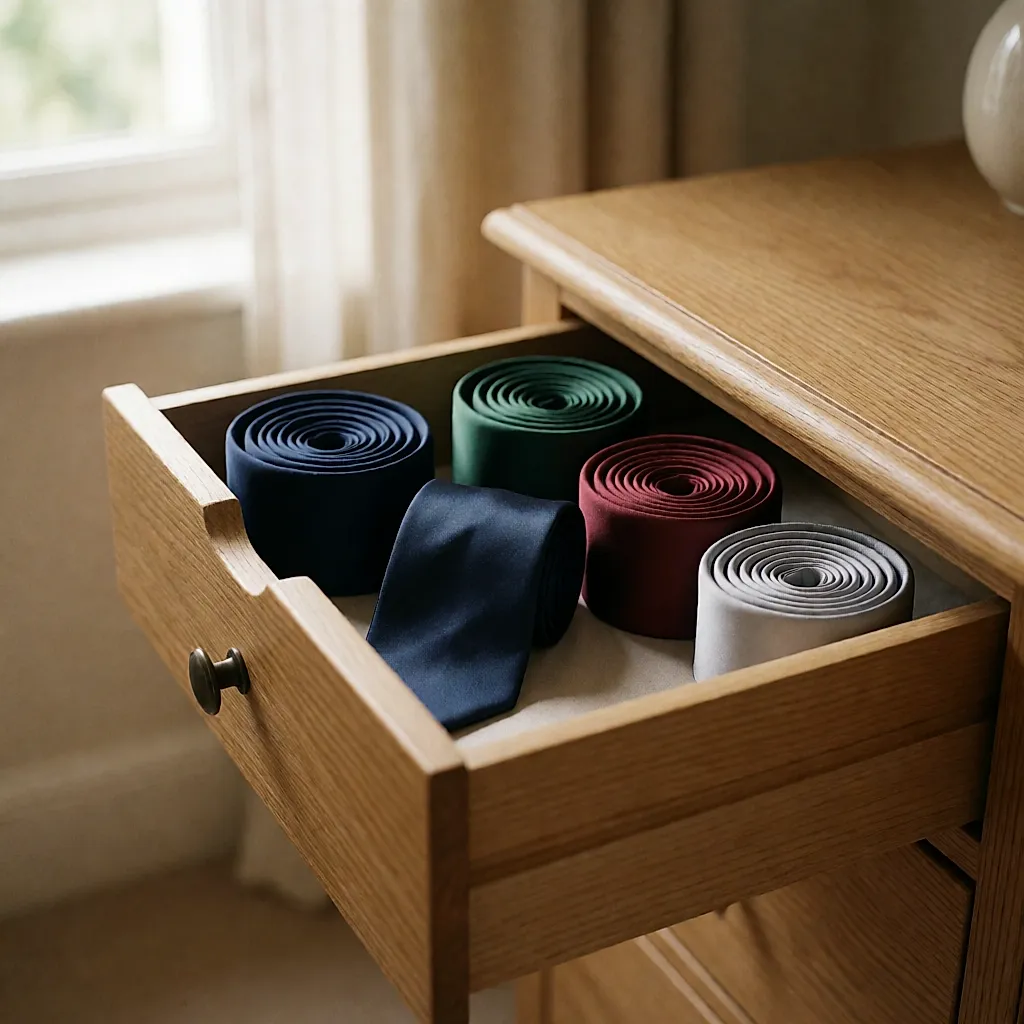
In the evening, untie it. Silk holds the memory of every crease, and a pinched hanger leaves marks that are hard to get out. Rolled in a drawer or hung from the middle, your tie will thank you for not leaving it knotted until the weekend.
The fabric decides everything
On materials, silk remains the safe bet: fluid, bright without being shiny, it knots softly and holds all day. For winter, a knitted wool tie knots rounder, sits over a jumper or a flannel shirt, and forgives the creases of a long evening. In summer, a linen blend or a heavy cotton gives a more rustic knot, happy to look crumpled — that's the charm, not a fault.
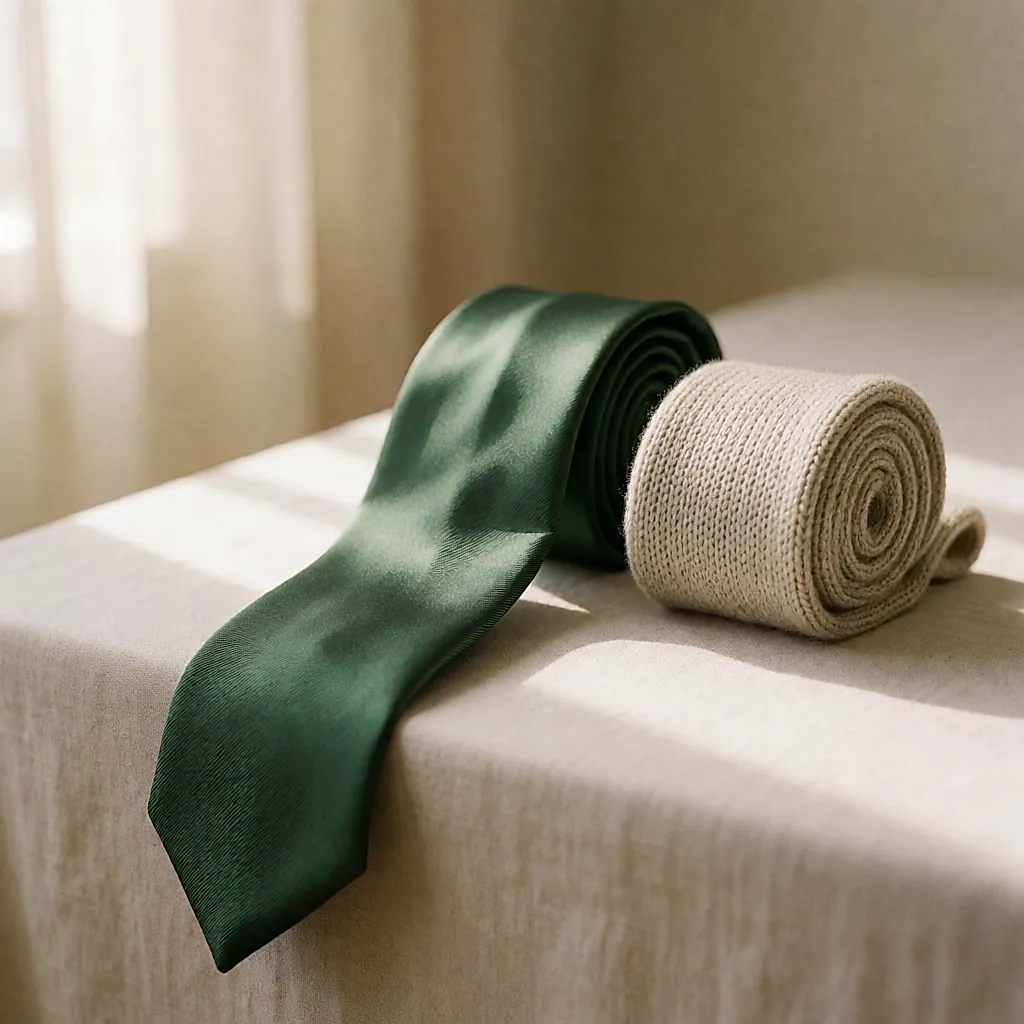
Second-hand is ideal hunting ground: silk ties from decades past turn up in charity shops and vintage stores for a few pounds, often in patterns that are rarely made today. Check the edges and the spot where the knot forms — that's where silk gives out first — and take a look at the length: some very old pieces are shorter than today's average. A quick glance at the label matters too: too many synthetic fibres and the knot will slip, glinting in a way that flatters nobody.
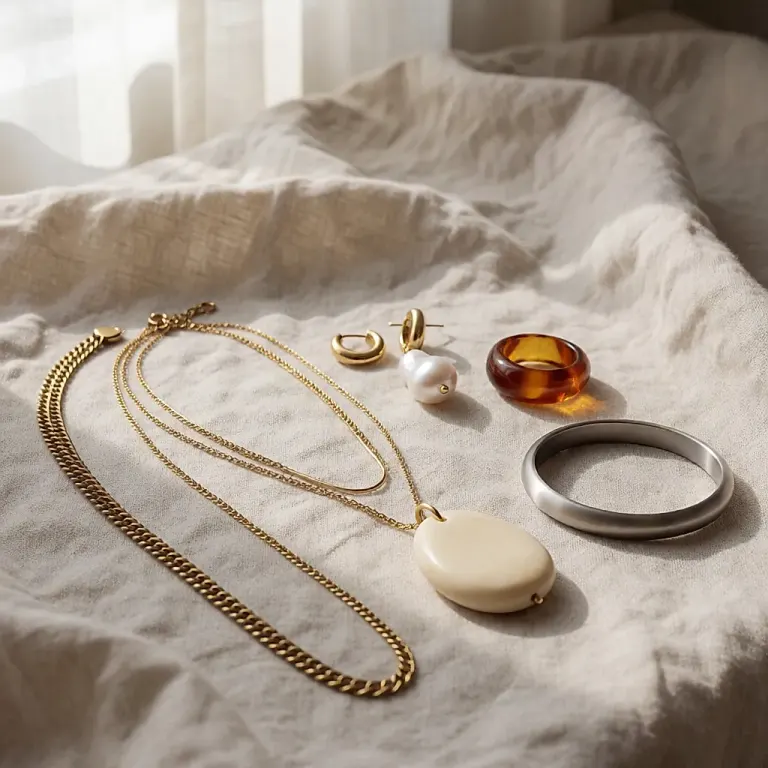
The three-second mirror test. Knot eased back a notch, tip landing at the waist, and one single thing pulling the eye: the tie. If a print, a necklace and a pair of earrings are all fighting for attention, take one off — the rest of the outfit doesn't need a commentary.
Budget
In charity shops and on resale platforms, expect £5 to £25 for a pre-owned silk tie, with condition setting the price. On the high street, a new tie usually sits between £25 and £60, in a silk blend or knitted wool, in the accessories departments of department stores and chains. At specialist makers, you're starting at around £100 and can go up to £250 depending on the quality of the silk and the pattern — woven or printed — in store and online. For a first try, second-hand has a real advantage: you can test the width, the pattern and the feel of the knot with nothing at stake.
Sources
- Hermès — Ties and silk accessories, official site, accessed 11 October 2026.
- Drake's — Silk and knitted ties, official site, accessed 11 October 2026.

Comments
Your opinion matters: rate the article, react and reply to comments.
Comments are moderated; AI-assisted comments are flagged. Text emoticons (8-), :-), <3…) are automatically shown as images.