
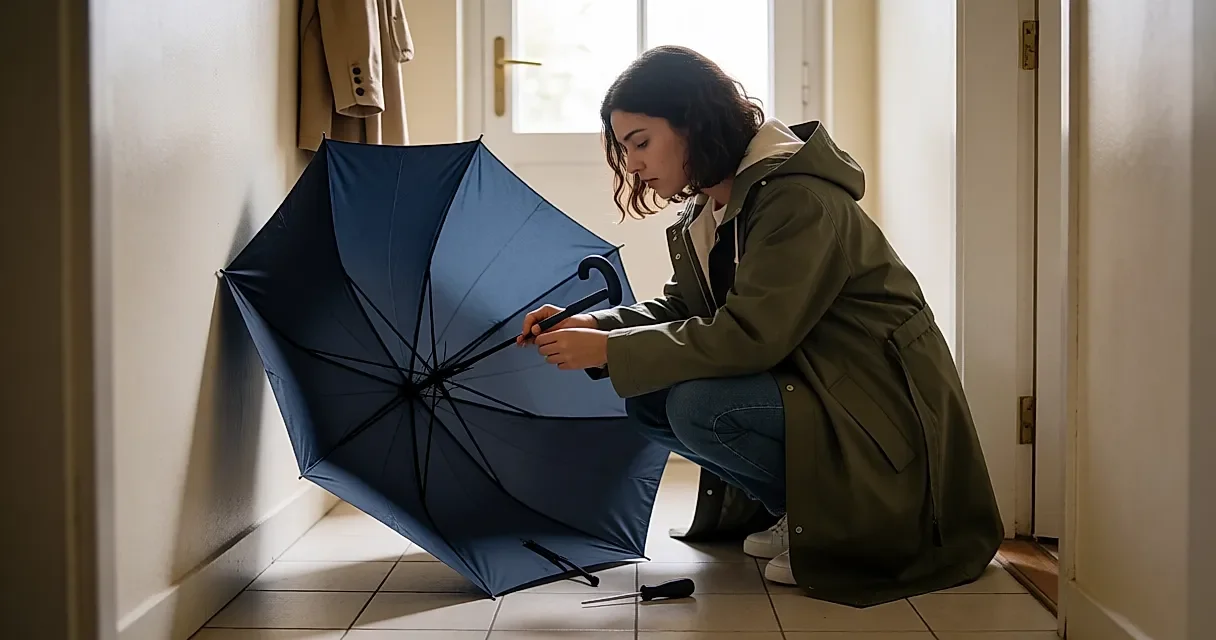
The umbrella died on a Tuesday, at 8.47am, between the bakery and the Tube exit. A gust, a sharp crack, one rib pointing at the sky like an aerial of bad news — and there you are with an upturned tulip on your arm, walking as if you meant it. The culprit? Almost never the canopy. Almost always the frame, that little skeleton you don’t think to check in the shop.
The frame before the print
In the shop, the eye does what it wants: it goes straight to the print, the polished wooden handle, the mustard colour that would go so well with your coat. It’s human, and it’s exactly the order in which the object breaks. An umbrella stays upright thanks to an invisible frame — ribs, stretchers, runner, fittings — and that is where its second season is decided.
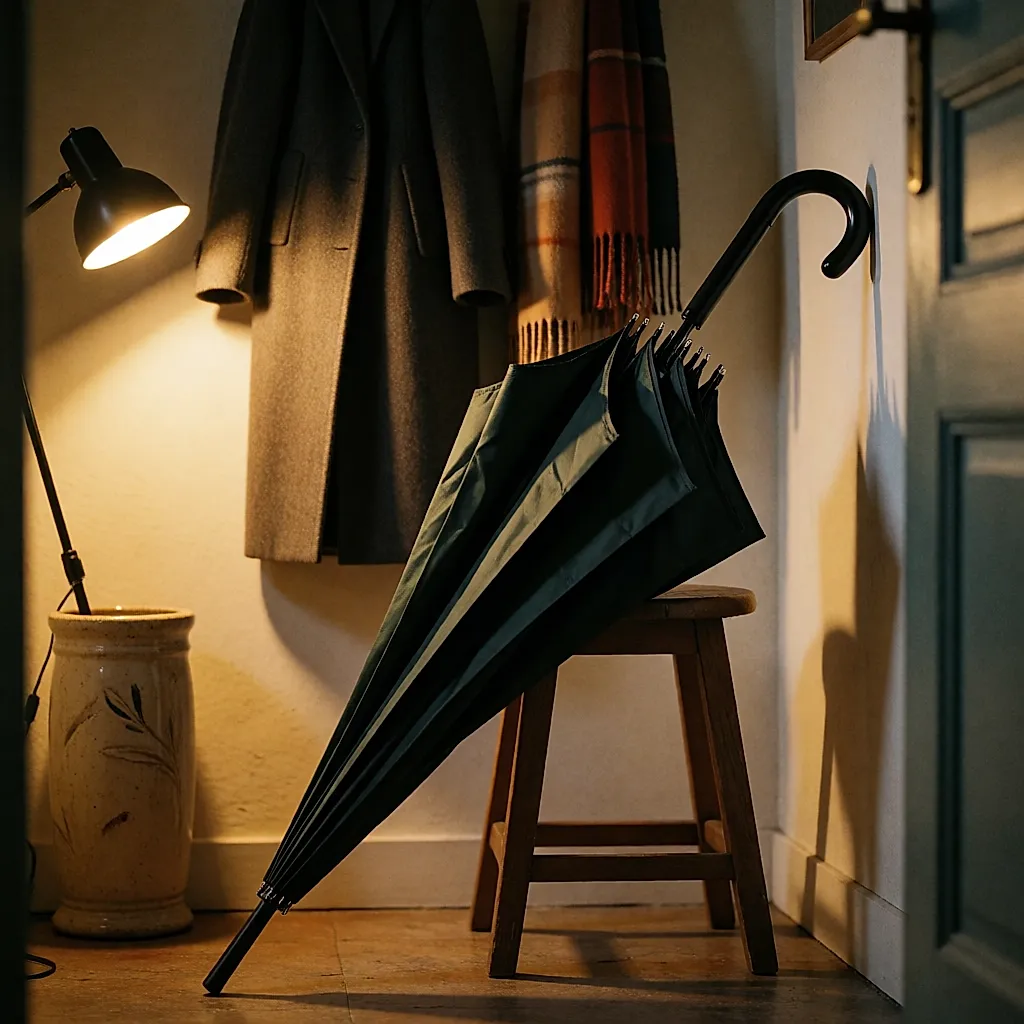
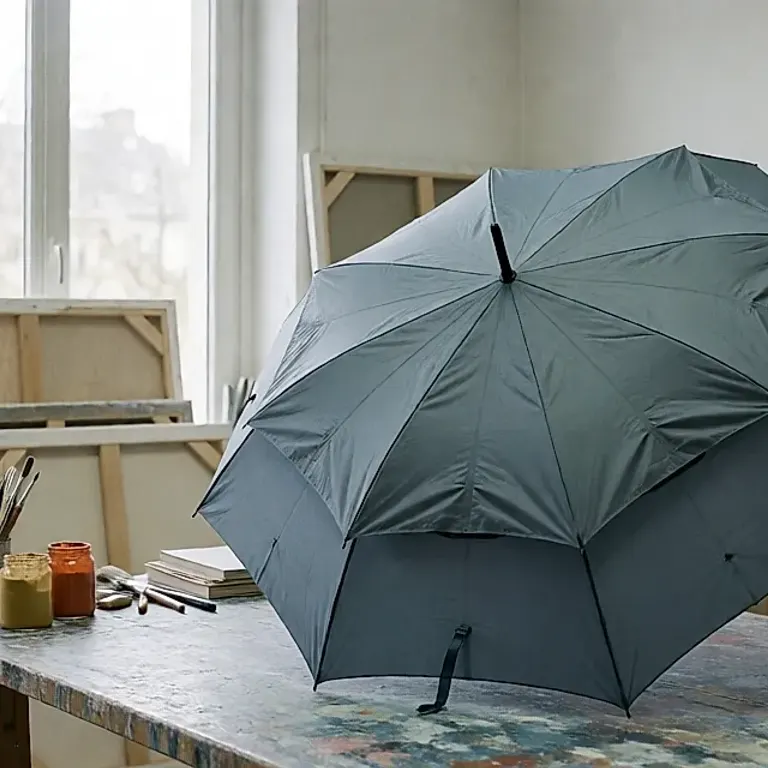
Turn the thing upside down before you fall for it, and look under the canopy, from the runner to the rib tips. A flexible rib that returns to position when you twist it gently is a good sign; a rib that keeps the bend you’ve just given it much less so. Ask how many ribs the model has: six for compact sizes, eight for a classic town umbrella, more on wide canopies. It isn’t a quality marker in itself, but it tells you about the overall strength.
Screwed or riveted joints — what to check
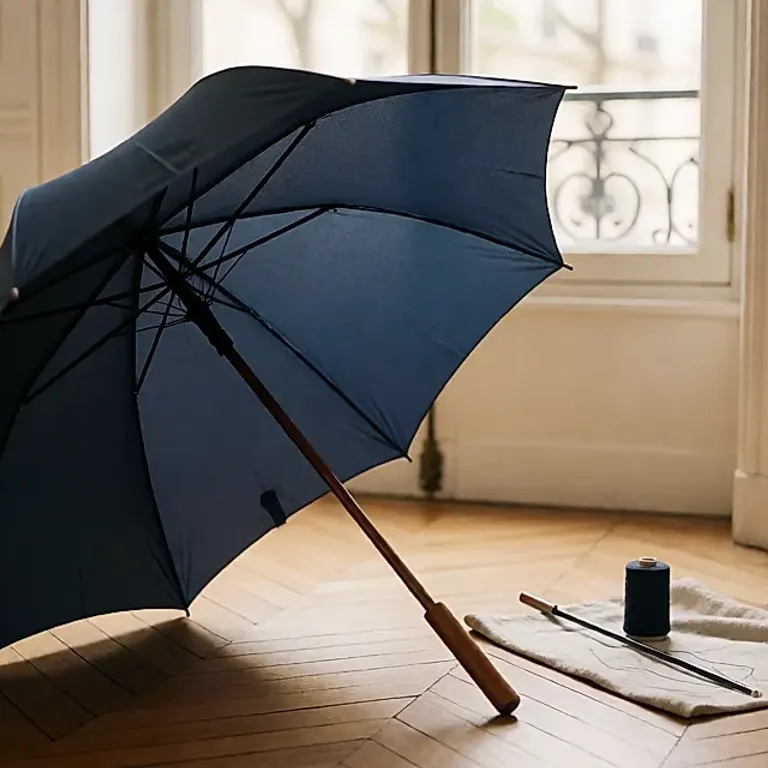
Everything hinges first on one small joint: the one joining the stretcher to the runner, and the way the rib is fixed to the stretcher. Screwed fittings are preferable, but not in every case — the main thing is to check the type of fixing. When these fittings are screwed, they often undo with a small screwdriver; the part comes apart, you can replace the rib or stretcher, and the umbrella can carry on. When they are riveted or crimped into the frame, dismantling is harder, sometimes impossible without a workshop or replacing the part. It isn’t an absolute rule: everything depends on the design and whether parts are available. It’s not just a difference in price but a difference in fate — though you have to check case by case.
Even then, the part has to exist. Ask without embarrassment: ‘Do you sell replacement ribs?’ The seller’s silence is an answer. Some repair workshops and leather-goods shops keep ribs, tips and runners; elsewhere you may be told to send it back to the brand, which assumes the brand still repairs. A repairable umbrella isn’t one you repair yourself: it’s one where someone, somewhere, still has the parts.
In the shop, three moves are enough — and none requires a qualification. Open and close it twice to listen to the mechanism, turn it over to inspect the fittings, then ask whether replacement ribs are available. If any of the three makes you uneasy, move on: an umbrella is not an impulse buy that forgives.
The canopy comes next — and what can still be saved
The canopy is the part you see and judge, yet it is the most replaceable: some workshops re-cover umbrellas, removing the old canopy and fitting a new one to a frame that is still sound. On a high-end model this changes everything — ask before you buy, not after.
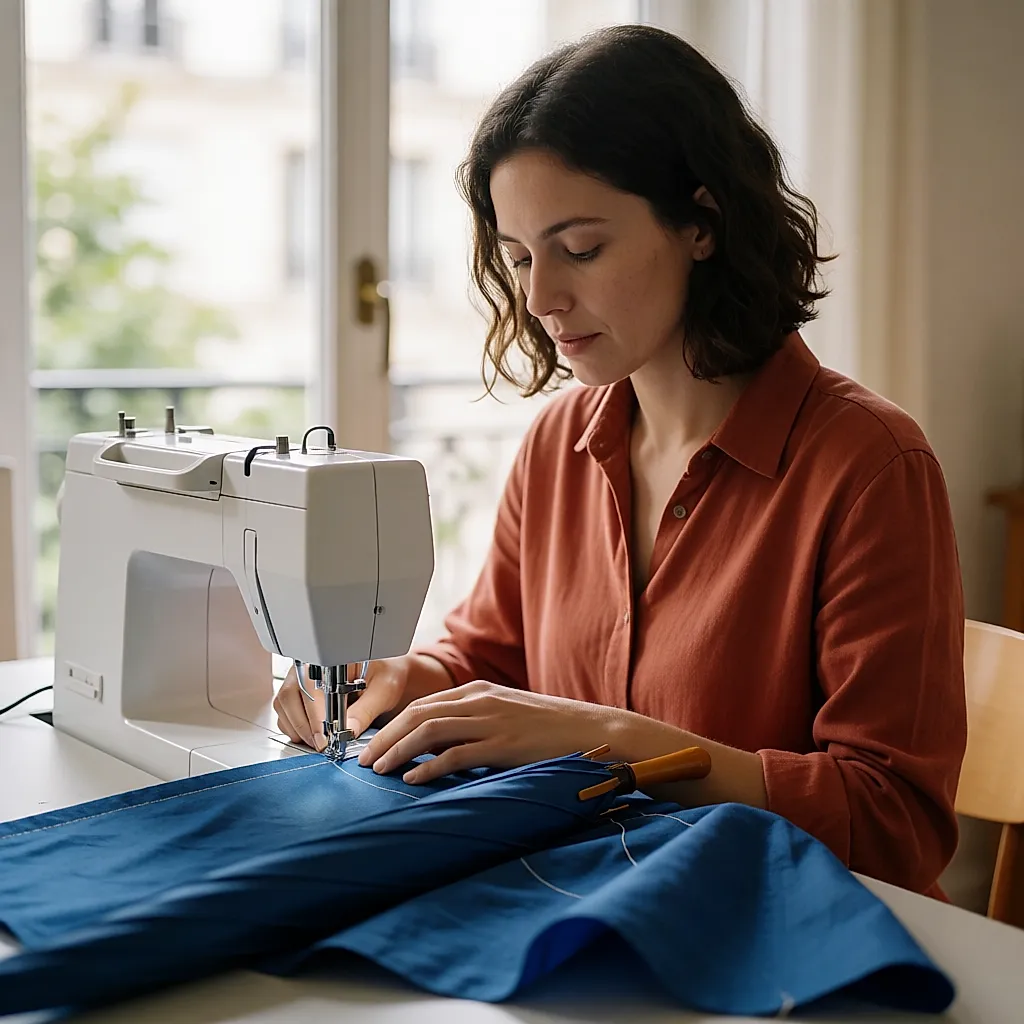
On a new canopy, check the seams and tension. A canopy that snaps taut when you open it is a good sign; if it flaps between two ribs, water will run off badly and it will give way in the first gust. The water-repellent finish wears with the seasons and friction inside a bag: it can be reproofed with a suitable product without replacing the umbrella.
The tempting but flawed options
Auto-opening: one button, a snap, and it springs open. Handy when your hands are full of shopping, less so when it needs repairing — every automatic mechanism adds a spring, a cable, a point of failure. It is up to you whether the convenience is worth the likely breakdown on a November evening.
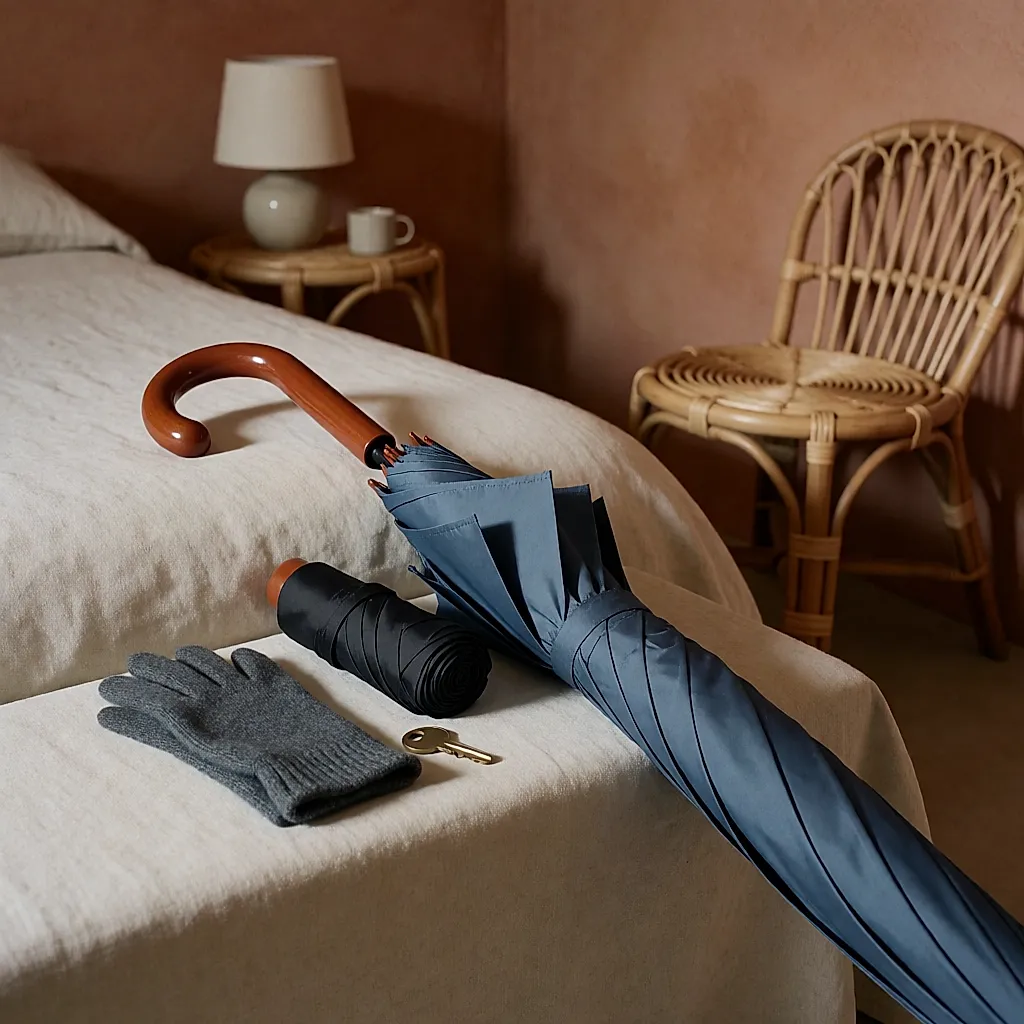
Then there is the mini bag umbrella. It saves an evening, not a storm: short ribs, a canopy stretched over a small area, and it turns inside out quickly when the wind gets involved. Keep it for city showers without gusts, and save a long curved-handle model for daily journeys — that is the one that really protects your legs and collar.
Budget
Prices vary widely, and the sweet spot is rarely where you expect it. As a rough guide, expect to pay around £8–£20 for a basic supermarket or market-stall umbrella, the sort you replace every autumn without thinking; £30–£60 in accessories shops and leather-goods retailers, often with sturdier frames; £80–£180, sometimes more, for French or artisanal manufacture, with spare parts and repair available.
A repair — rib, seam or mechanism — often costs £10–£30 depending on the part and the workshop; get a quote first. You will find repairs at cobblers and umbrella specialists; buy from leather-goods shops, specialist shops or directly from makers’ websites. And if the budget is tight, charity shops and flea markets can still be a good find: an old umbrella with a frame that can be dismantled, a reproofed canopy, and it is good for several more seasons.
In the end, the choice comes down to three scenarios. Tight budget: a manual umbrella, detachable fittings (screwed where possible), a decent canopy, and a repair contact found before winter. Mid budget: the same thing, better finished. Comfortable budget: an artisanal piece whose repairer you know before you have even been caught in the first shower. Next time the sky darkens, you will know where to look — and it will not be at the print.
Comments
Your opinion matters: rate the article, react and reply to comments.
Comments are moderated; AI-assisted comments are flagged. Text emoticons (8-), :-), <3…) are automatically shown as images.