
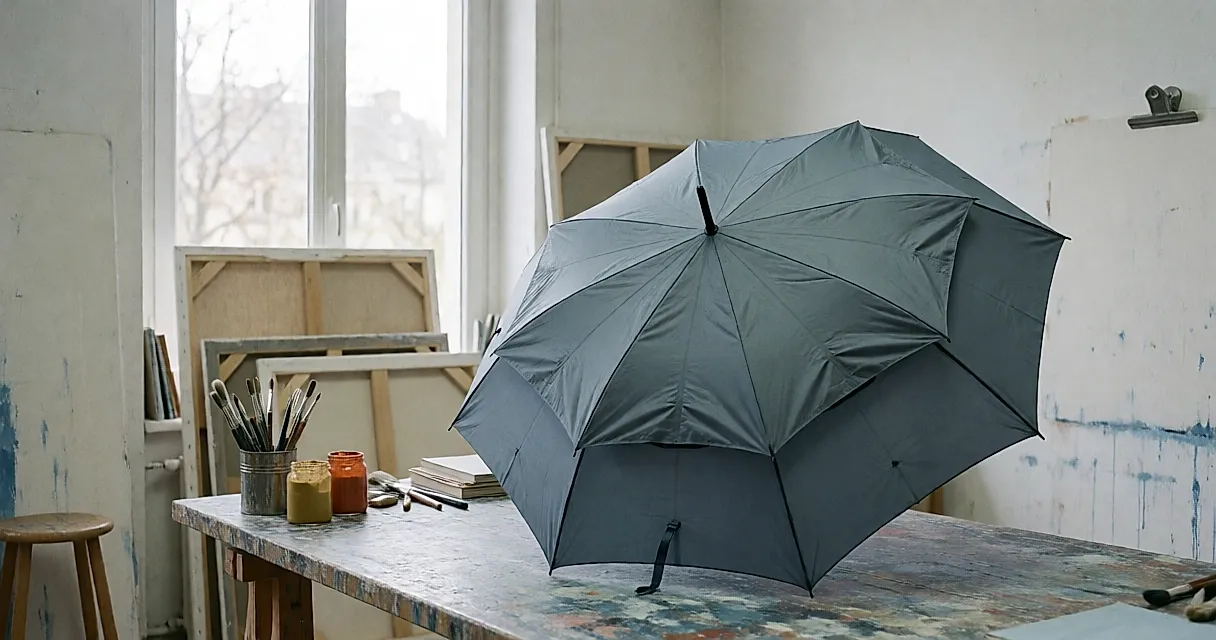
There's a gap in the fabric of a winter umbrella. Two panels overlap, a few centimetres of opening, and the wind slips out through it instead of slamming into the canopy. You won't see it while the thing is zipped in its sleeve — yet it's the detail that decides whether you arrive with your head down or holding a flipped-out shell.
The vent you never notice
"Double canopy" means two layers of fabric laid one over the other, separated by one or more air vents: sometimes a simple opening, sometimes a proper mesh window stitched into the top panel. The principle takes one sentence: the wind goes through rather than pushing. The upshot is that the canopy distorts less in the gusts that funnel between buildings just as the bus pulls in. An umbrella is still an umbrella — a double canopy cuts down the flipping, it doesn't turn a squall into a light breeze.
The trade-off: a bit more bulk and a bit more weight. Two layers fold thicker and cost you a few grams. On a 300 g model you won't notice; on a micro umbrella it changes everything. Hence the question to ask before buying: does this umbrella live in a handbag all day, or does it mostly work outdoors?
The frame: what bends and what stays bent
When a gust twists an umbrella, the ribs take the strain. Fibreglass ribs flex and spring back — exactly what you want from a compact you open and close ten times a day. Steel is stiffer, often heavier, and when it bends… it stays bent, with a nice dent in the fabric as a souvenir.
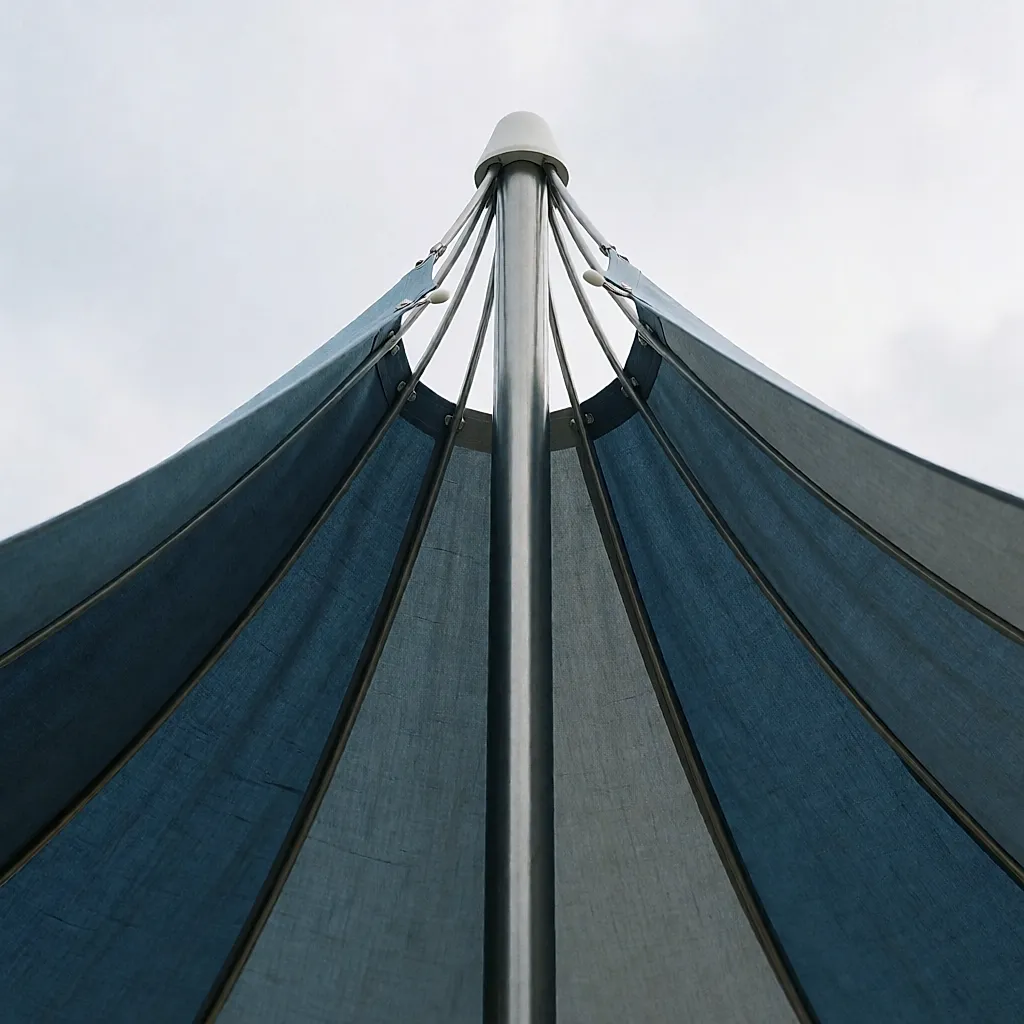
How to check in three minutes, in a shop or over a parcel open on the bed? Open it, close it, do it again. Count the ribs — any half-serious model claims eight to ten — and look closely at the joints where the ribs meet the shaft: metal is better than plastic that goes white at the stress points. Unsure about fibreglass? A broken rib can be replaced; it can't be glued.
How short does it pack down?
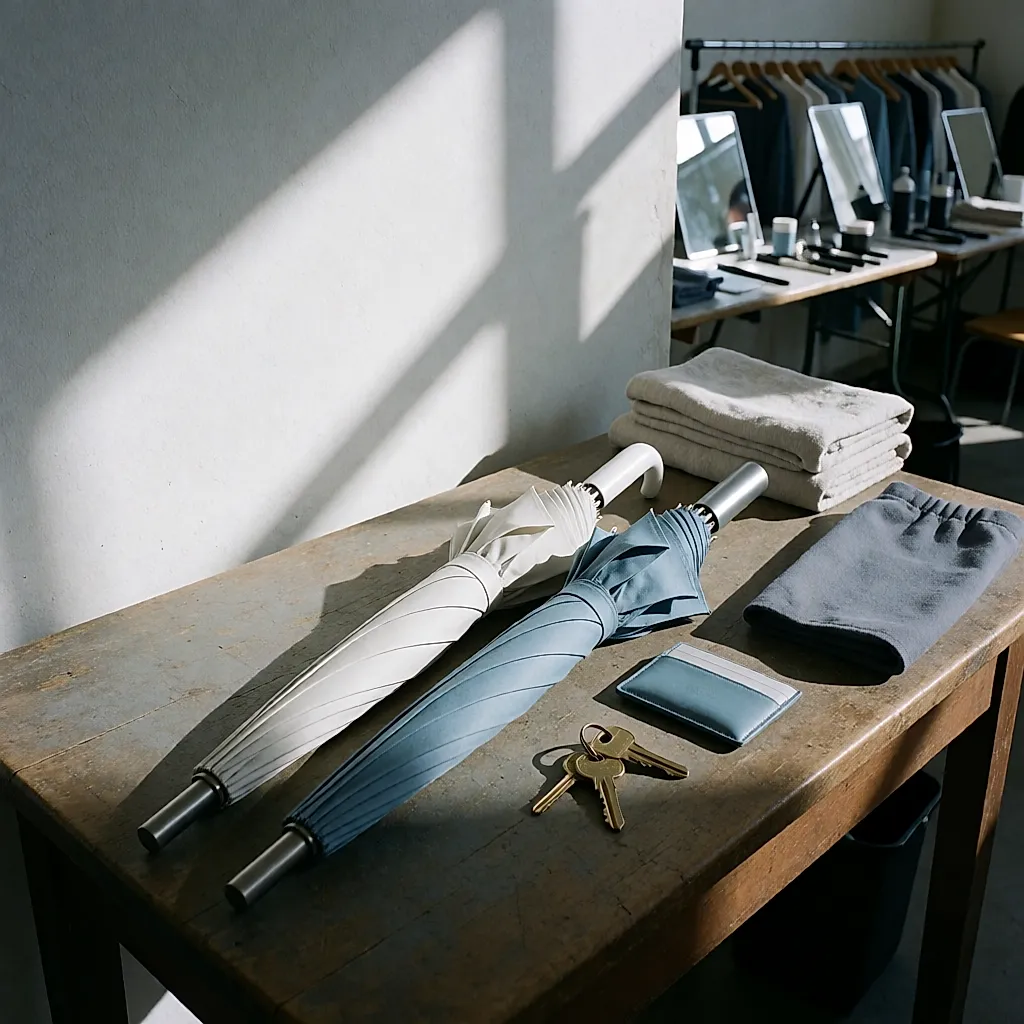
This is the measurement everyone forgets and it decides everything: the folded length. A micro model runs 15–20 cm, a compact double canopy more like 25–30 cm, a long-handled town umbrella goes up towards 80–90 cm. The micro wins the handbag but loses on drying: once you're home, where do you hang it? In its sleeve, dripping, at the bottom of a tote bag, next to the leather purse and the paperback.
A full-size town umbrella opens wide, often around a metre across, and that's where it wins: you open it out in the hallway, the fabric is taut, air moves round it, and it's dry by the morning. The micro stays crumpled in its case, and damp fabric soon picks up that cellar smell no scented candle will cover. You can picture it.
Budget: £20 to £140, and what the money buys
Expect to pay £20–£40 for a compact double canopy with fibreglass ribs, from a department store, an accessories shop or online. Between £45 and £80 you're into umbrella specialists and leather-goods shops: neater stitching, a wooden handle, metal joints. At the top end, £70–£140, you get the town models and long handles that last several winters.
What pushes the price up: the number of ribs, the second canopy, the handle, where it's made, and whether it can be repaired. What brings it down without nasty surprises: buying out of season. Buying from a street seller in the rain is at your own risk. And if a rib goes on a good umbrella, plenty of specialists will replace the part or recover the canopy — usually wiser than starting over.
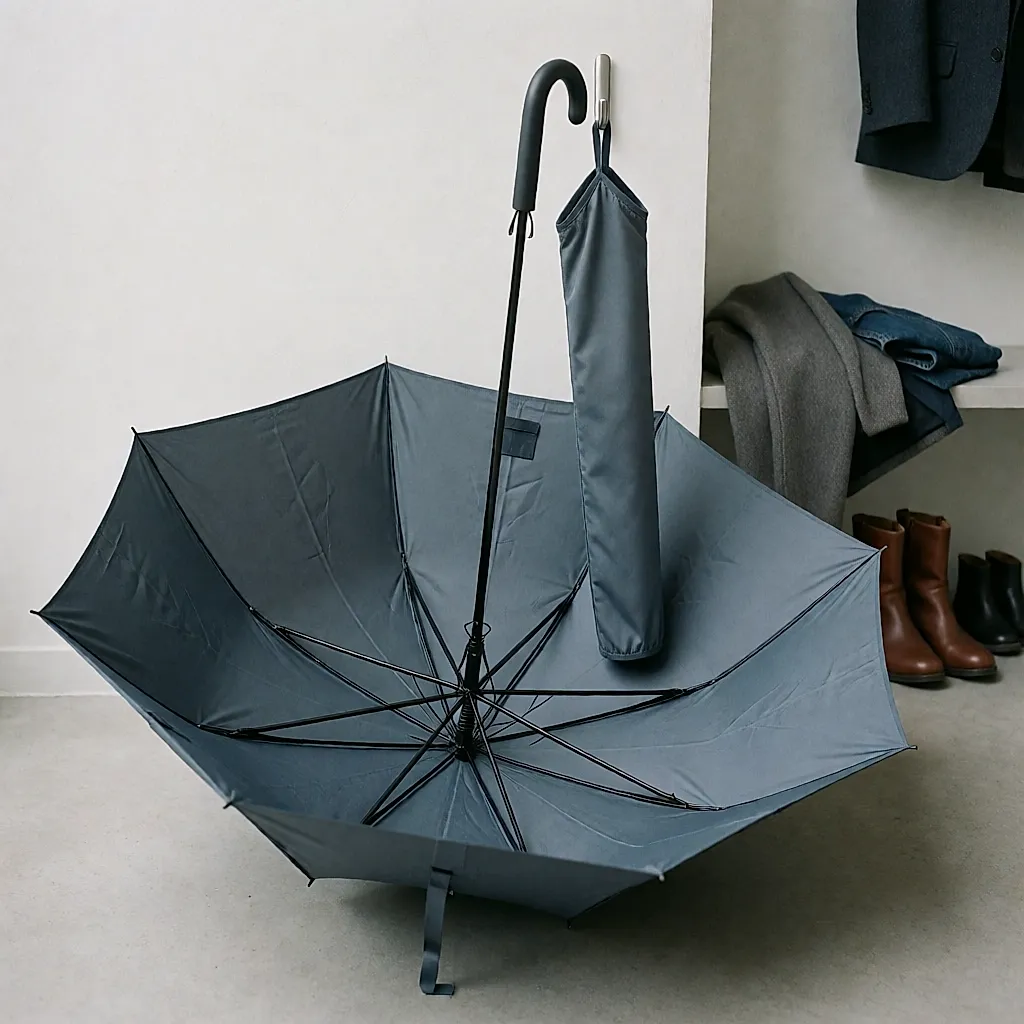
The drying move. Back home, open the umbrella fully, handle up, and leave it to dry in the air, well away from a radiator — heat weakens the fabric. Only close it once it's dry, and store the sleeve separately: that's what holds the damp in.
The shortlist
Tight budget, everyday bag: a compact double canopy at £20–£40, provided you're happy to dry it open on a towel in the hall. Daily commute: a compact around 28 cm, fibreglass, £45–£80 — the best balance between pack size and decent shoulder coverage. And if you have room for a long-handled umbrella by the door, that's the one that dries best, gets repaired and survives winters — £70–£140, but spread over five years.
The real rule is a domestic one: where will you dry it? If the answer is "nowhere", no model will save you. If you have a spot in the hallway, treat yourself to the double canopy and the length that goes with it.


Comments
Your opinion matters: rate the article, react and reply to comments.
Comments are moderated; AI-assisted comments are flagged. Text emoticons (8-), :-), <3…) are automatically shown as images.