
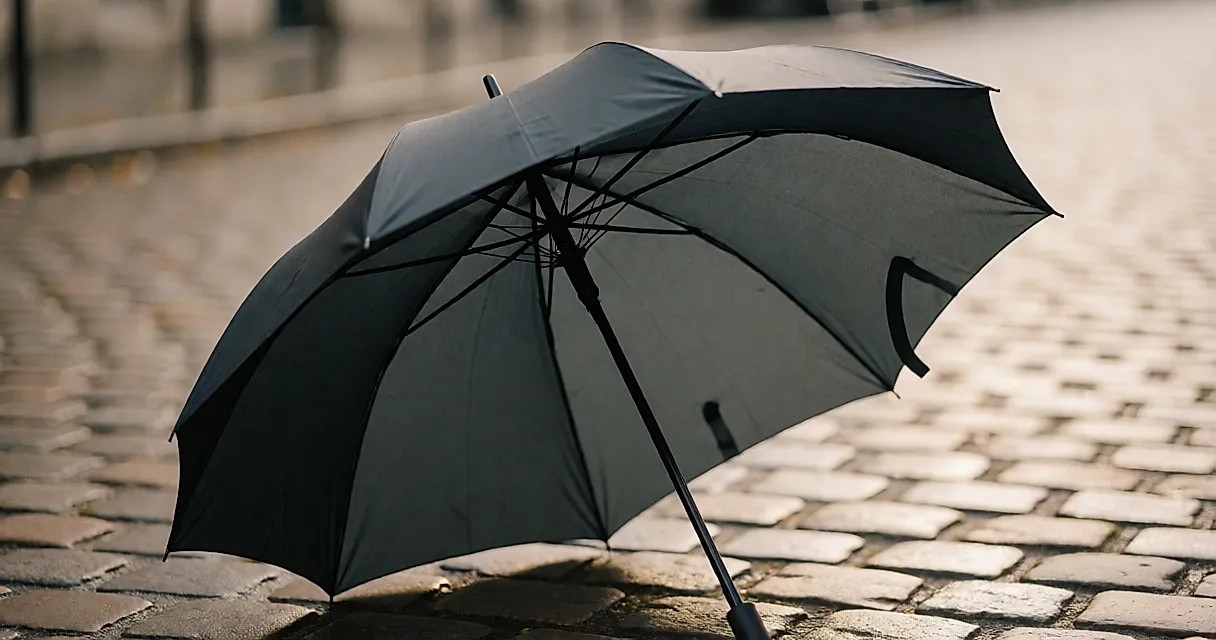
Monday, 8.12am, on the corner of the high street. The wind funnels through, your umbrella flips inside out, and there you are exposed to November rain with an object that has become useless in two seconds. You know how it goes: it dries in the hallway, gets forgotten, and you buy another at the supermarket checkout without a second thought. But before writing it off, it is worth asking what actually gave way.
The rib is the backbone
A rib is the flexible strut that stretches the fabric and gives an open umbrella its shape. In steel, a rib can twist at the first gust and end up rusting in the back of a wardrobe; in fibreglass, it bends, takes the strain and returns to shape. That is what separates an umbrella that lasts several seasons from an accessory that dies young.
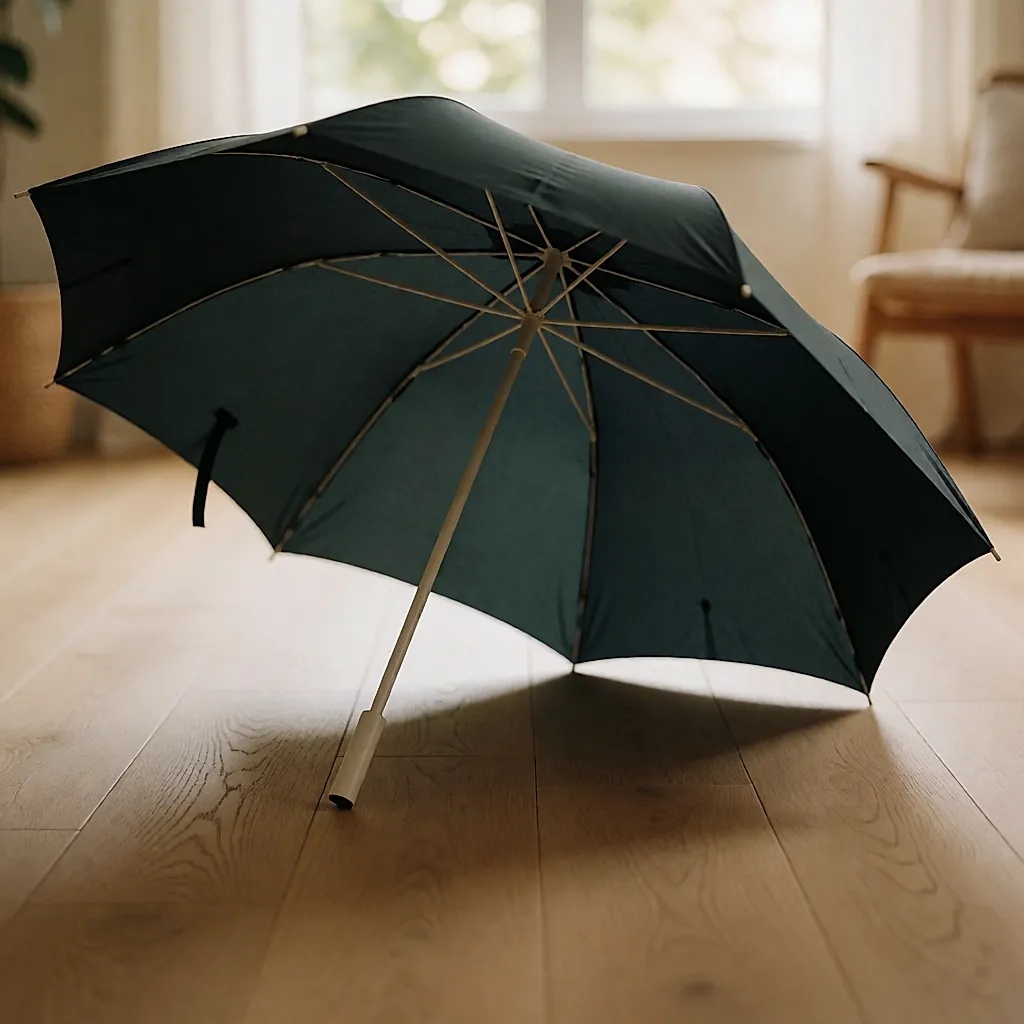
Another detail we never check in store: the double frame, where the ribs are doubled to spread the load over two points instead of one. Depending on the model, a higher number of ribs can give a wider canopy, with weight and strength varying according to how it is built. It is not about status; it is about use: crowded pavements and high wind are not the same kind of morning.
What can be repaired, and what seals its fate
A broken rib, a lost ferrule at the end of a rib, a closure that has come undone: three simple repairs that are often overlooked. That closure — whether a hook-and-loop tab or a press stud — is often the first part to fail, and usually the cheapest to replace. A split handle or a pommel that spins can also be changed, provided the shaft is sound.
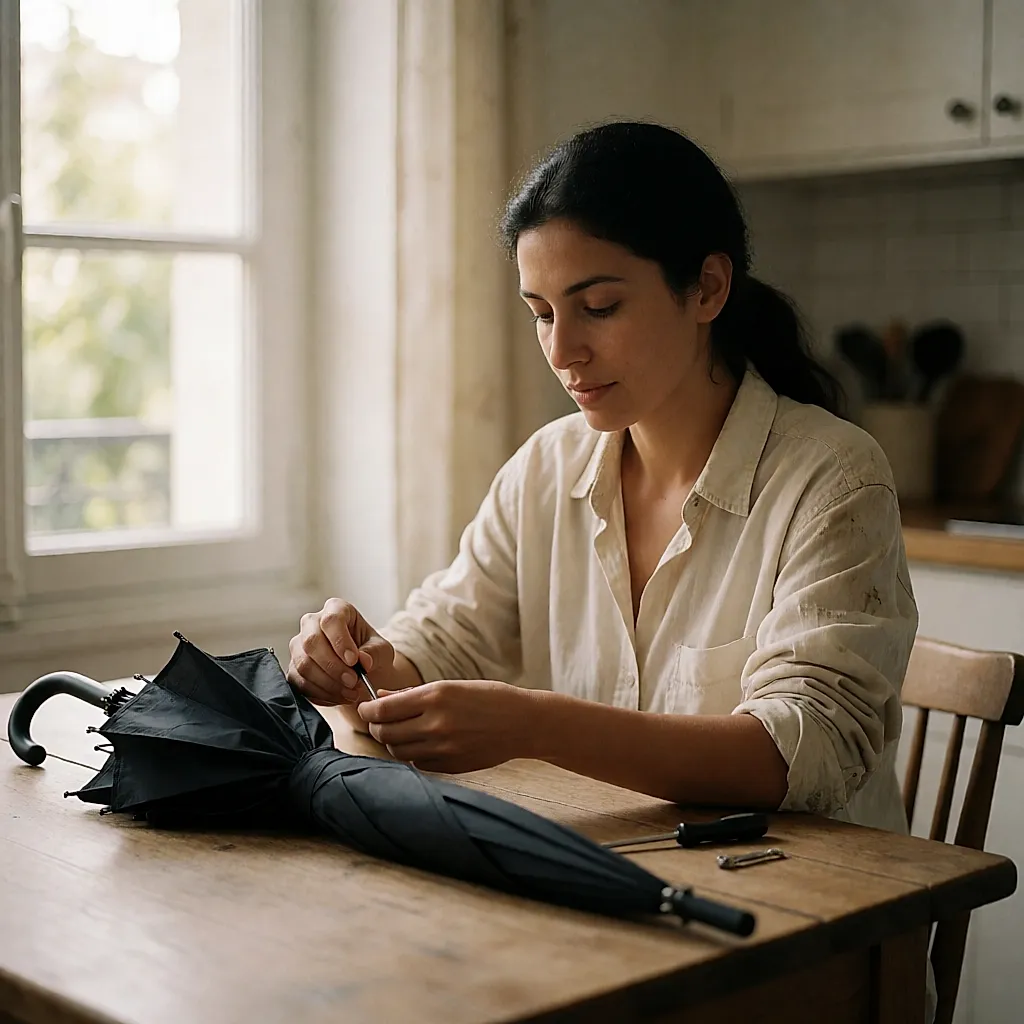
By contrast, some faults spell the end. A jammed runner (the mechanism that slides the canopy up and down), rivets rusted so badly that the hinge has seized solid, or fabric torn exactly where the ribs press: at this point, you may still love the print, but the structure will not forgive it. A cobbler or alterations shop can often replace a rib; for the rest, ask the manufacturer or retailer whether a repair is possible — worth knowing before you spend.
The pattern is the last thing to check
Let us be honest: we have all fallen for a polka-dot print on a June day, and that is fine. But the print tells you nothing about how the umbrella will last. A dark, matte fabric with a little weight hides rain marks and creases better than a shiny, pale fabric that can go chalky with use. The real test is the texture between your fingers and the way the canopy hangs when you open it: if the fabric puckers now, it will pucker more once wet.
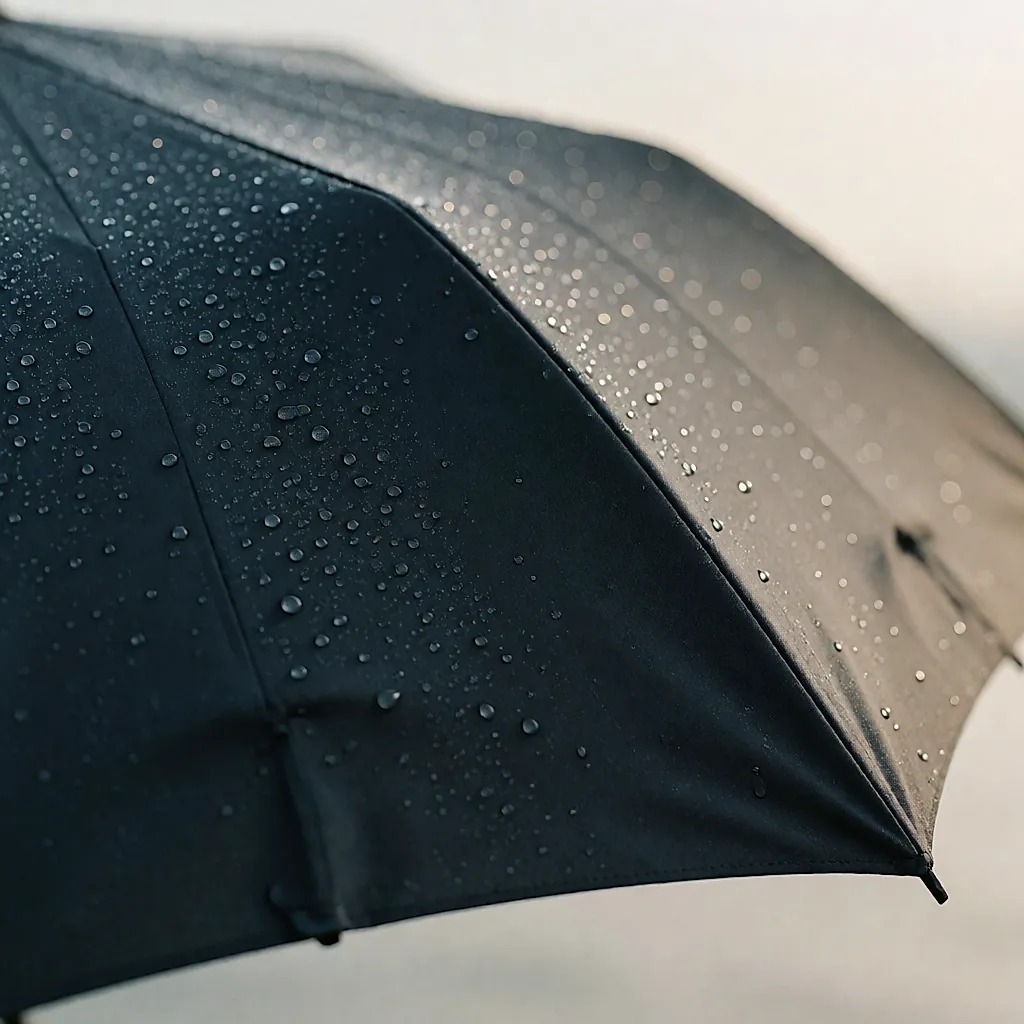
And drying? A closed umbrella dripping in the corner of a bathroom keeps moisture deep in the folds, where metal quietly deteriorates. Open it in the air, let it breathe overnight, and only then put it away. A tiny habit that adds seasons to its life.
What should you spend?
In practice, you can find umbrellas for around £10–£20 in supermarkets and high-street chains: they do the job for a season, sometimes two, and the frame is usually the first thing sacrificed. Between about £30 and £70, in accessory shops or online, you can get fibreglass ribs and denser fabrics — the most sensible price bracket for daily use.
Beyond that, £90–£200 for an artisan-made model: you are paying for materials, assembly and, often, the fact that it can be repaired. Is it worth it? If you take public transport every day, yes, without hesitation; if the umbrella lives in the glovebox and comes out three times a year, the mid-range version is plenty. As for repairs, expect a bill that often runs into the tens of pounds for a rib or closure — sensible on an £80 umbrella, less so on a £12 one.
Before you pay, open and close the umbrella three times. Check that the ribs are not rubbing against the fabric, that the closure fastens securely without forcing, and weigh it in your hand: a very light model rarely hides a sturdy frame. The real test — a gust on the pavement — will happen anyway.
Then there is the uncomfortable question: how many umbrellas have you used without ever really looking at them? Next time an umbrella flips inside out, turn it over and look for the faulty part before writing it off. For daily use, favour fibreglass and a double-rib frame; beyond that, something repairable is often better than repeated replacement. Rain will fall anyway; it may as well fall on something solid.



Comments
Your opinion matters: rate the article, react and reply to comments.
Comments are moderated; AI-assisted comments are flagged. Text emoticons (8-), :-), <3…) are automatically shown as images.