
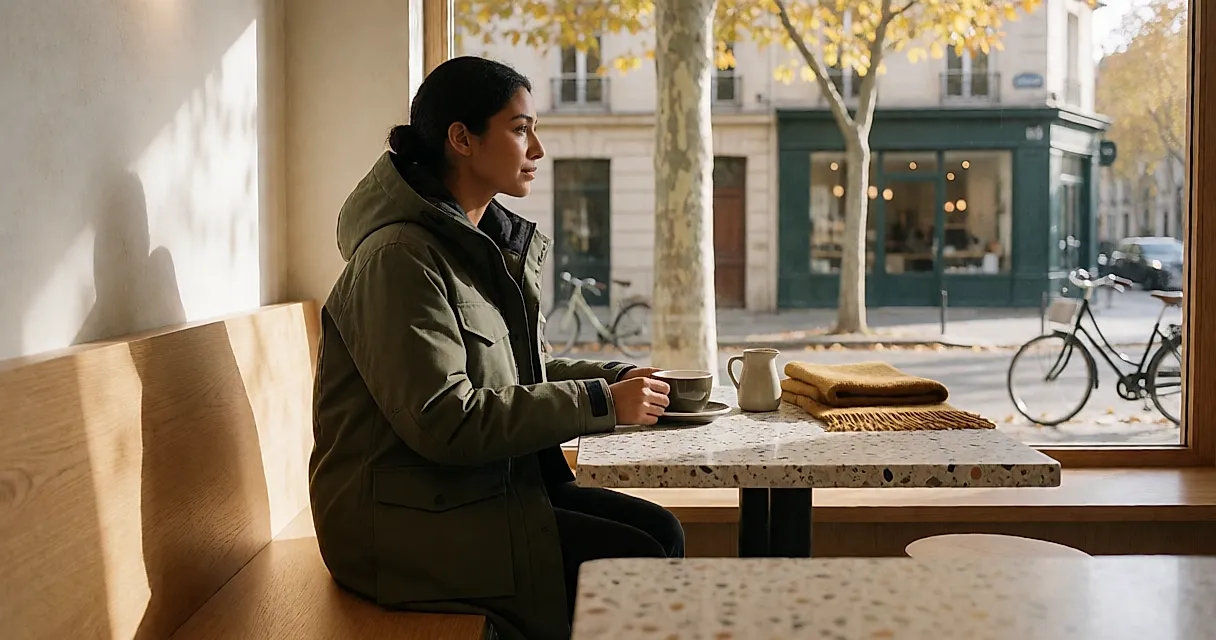
An expedition parka and a city puffer jacket promise exactly the same thing: get through winter without chattering teeth. Everything else separates them. One was designed to let you raise your arms, carry a rucksack and sit down in the snow; the other to walk into a café without looking like a duvet. This winter, the first is stepping out of its own archives — same pattern, same seams — and quietly settling into the city wardrobe.
The idea may sound odd: why on earth buy a piece of field kit for the office? Because a parka cut for polar stations doesn't flinch at a packed train or a wet pavement — and because its cut is honest.
The hood does the heavy lifting (really)
On an expedition parka, the hood isn't decoration: it is built to be worn closed, over a beanie, with two or three adjustment points — a cord around the edge, sometimes a strap at the back. Once adjusted, it stays put, so you don't have to hold it with one hand while running for the bus. In town, it frames the face and gives real shelter when the wind funnels between buildings. And when you step off a packed train, that can genuinely make your day.
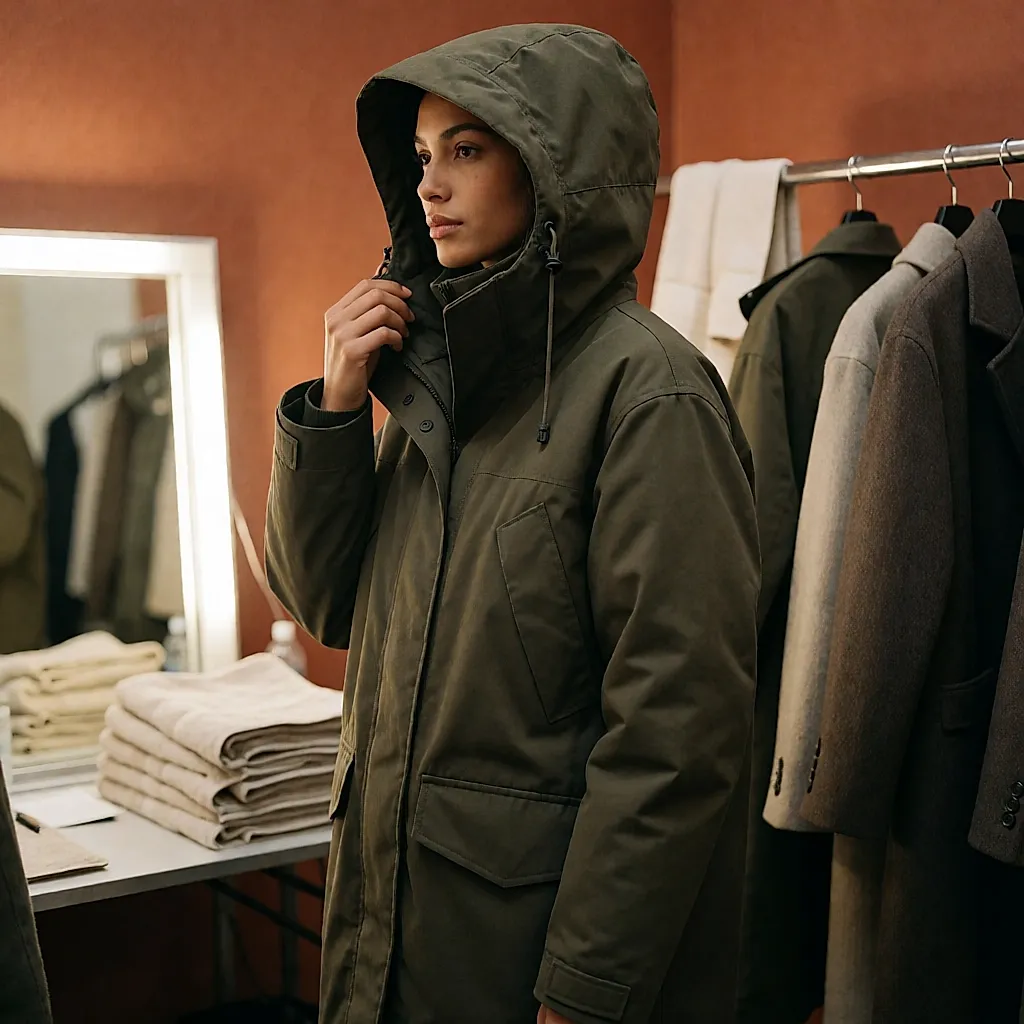
The downside is the volume. On a fine face or petite frame, an oversized hood can turn the most elegant person into a spacesuit. The test is simple: with the hood closed, look at yourself from three-quarters on — if you can no longer see your cheekbones, it's too wide for you. And if you're attached to your earrings, be aware that they won't survive a quick dash under this tent.
Length and seams do the rest
An archive parka usually falls to mid-thigh, sometimes lower, with a two-way zip that opens from the bottom. That detail, inherited from the field, makes a real difference: you can sit down, drive or get on a bike without the coat bunching up. The seams aren't there to look pretty either: slightly dropped shoulders, elbow gussets, a high chest pocket — details designed to let the garment follow your movement rather than fight it.
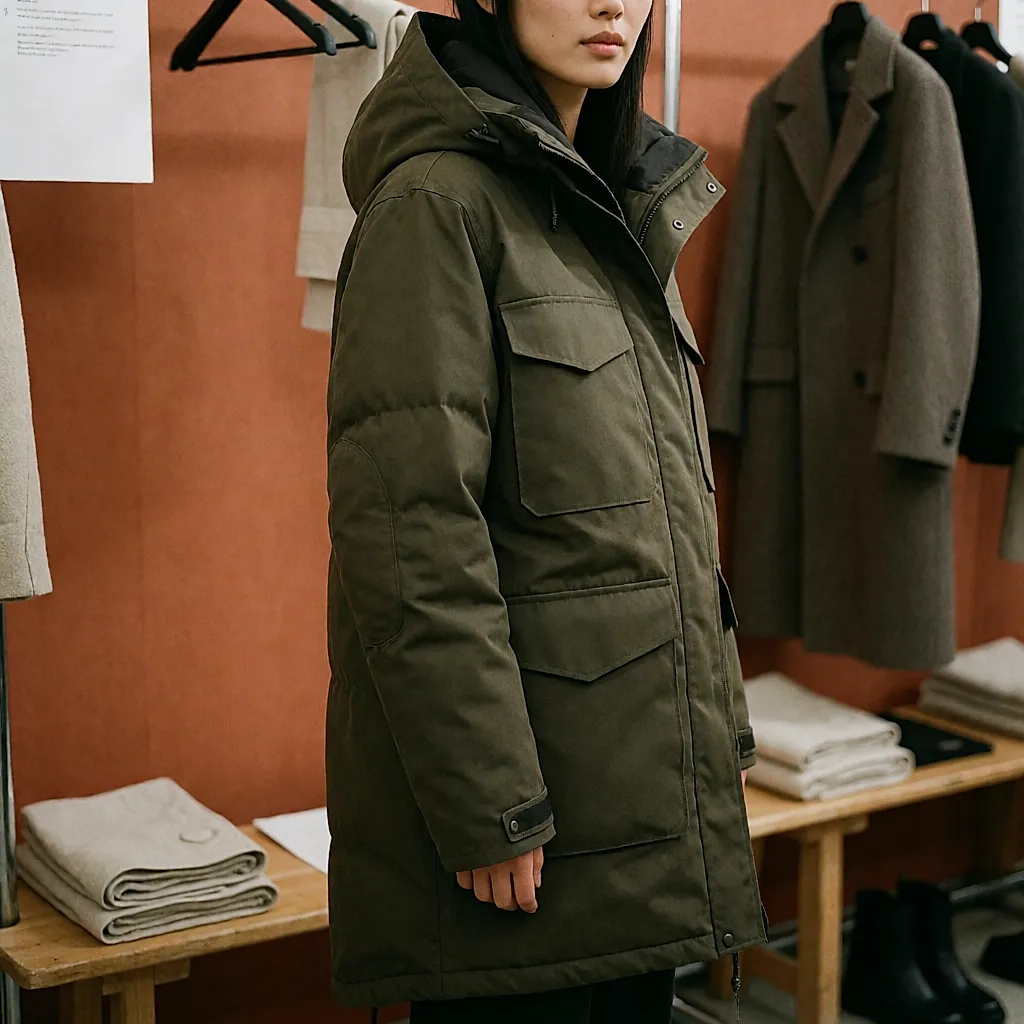
Compared with a short, matte, belted puffer, the parka creates a vertical line. Subtle quilting, dense canvas that holds its shape, hip-height pockets: the result is a longer, straighter silhouette that lengthens rather than rounds. It's also a forgiving piece for layering — wear a chunky jumper underneath and no one will notice; try the same under a fitted puffer and you'll look like an accordion.
Who it won't work for (let's be honest)
Let's be honest: an expedition parka is not an office piece. It has volume at the shoulders, a length that gets in the way on public transport, and a fabric that won't slip under a tailored coat: it belongs outdoors, for commutes, weekends and long walks. On a petite frame, styles that fall below the knee swamp the silhouette — which is why shorter versions or more fitted women's cuts are worth considering; they keep the spirit without the visual weight.
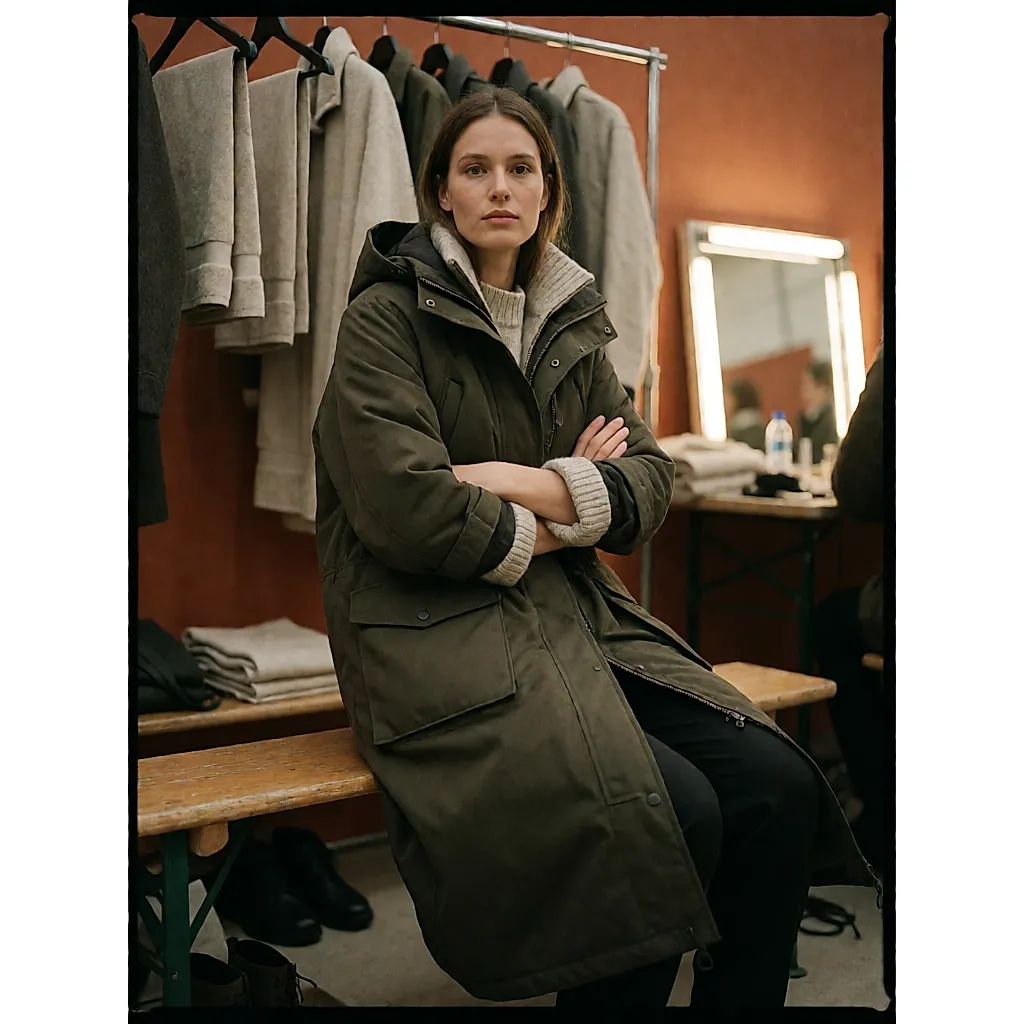
The second thing to watch is sizing. It's tempting to size up 'to fit a jumper', only to end up with a piece that's too wide at the shoulders, where air circulates more than it needs to. In practice, try it on with the chunky jumper in question and check that you can cross your arms without fighting the seams. If you want something that works with everything from jeans to wide-leg trousers, the long matte version remains the most versatile.
What to spend
Price is where the gap really shows. Expect to pay in the region of £220 to £400 for an entry-level expedition parka, often a simplified reissue or military surplus in good condition. Archive pieces from houses that kit out polar expeditions — the Canada Goose Expedition Parka, the Woolrich Arctic Parka — tend to sit between £600 and £1,300 depending on filling and length.
Between the two is second-hand. A field parka is built to last: a used piece in good condition, around £100 to £350, is often already broken in and just as warm if the filling and zip are intact. Where to look? Outdoor shops, multi-brand retailers, brands' own websites and resale platforms — and always ask for a photo of the shoulder seams and the zip.
Three checks before you buy: the two-way zip (it should glide smoothly in both directions), the shoulder and elbow seams (no pulled threads) and the filling stated on the label. Also look at the canvas composition and the proportion of synthetic fibres. Unsure about the fur trim on the hood? Check where it comes from — or choose a version without it.
Ultimately, the expedition parka isn't a revival for looks alone: it's a piece that owns its volume and function, and it often ages better than impulse buys. Three budgets, one approach: £220 to £400 for entry level, £600 to £1,300 as an investment, or £100 to £350 second-hand. In every case, try it on with your thickest jumpers, raise your arms and sit down. If the cut follows you, you won't want to take it off until March.

Comments
Your opinion matters: rate the article, react and reply to comments.
Comments are moderated; AI-assisted comments are flagged. Text emoticons (8-), :-), <3…) are automatically shown as images.