

There are wet Saturdays when you go into BHV in Paris for a lightbulb and come out with a coat. On the Rue de Rivoli, the shopping bags look much the same, the windows change, and once the escalator has carried you up, the question follows: who is making whose reputation here? Because a department store doesn't just sell clothes. It sells an edit, and that edit is supplied by the guest brands.
A bazaar that became a stage
Founded in 1856 as the Bazar de l'Hôtel de Ville, BHV long traded on a cave-of-treasures reputation: DIY in the basement, haberdashery, crockery, lightbulbs and screws sold singly. Then fashion and beauty moved upstairs, the store became BHV Marais, and the place changed character: people still come for a tap washer, but they also head upstairs for a trench coat. For years part of the Galeries Lafayette group, the store changed hands and now belongs to Société des Grands Magasins. A change of owner brings back an old question: how do you stay desirable when you are neither the most luxurious nor the most discounted?
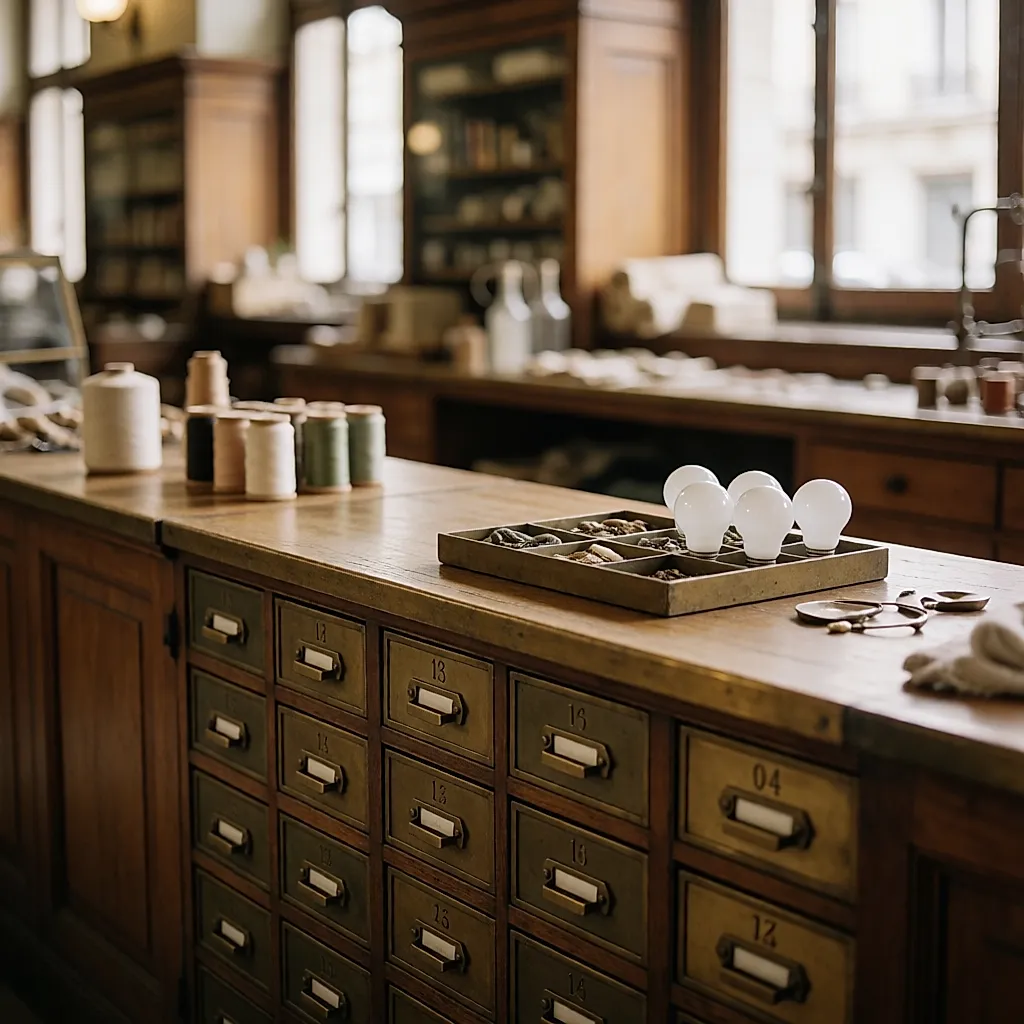
Because that is the point. When you push open the door, it isn't the building that makes you want to climb the stairs; it's the names on the rails. A department store is a stage, and its programmer is the brands it invites. A young label that lands a concession gets a Paris address, daylight and a fitting room — a Marais location without the lease. Who gains more, the space or the label? The answer shifts from season to season.
When a brand would rather have its own front door
The trouble with a stage is that the best performers eventually want a theatre of their own. A brand that fills its rail, wins customers and sells through its sizes can eventually afford its own rent a few streets away. Why would it stay a guest? A store's selection may make its reputation, but it won't keep it.
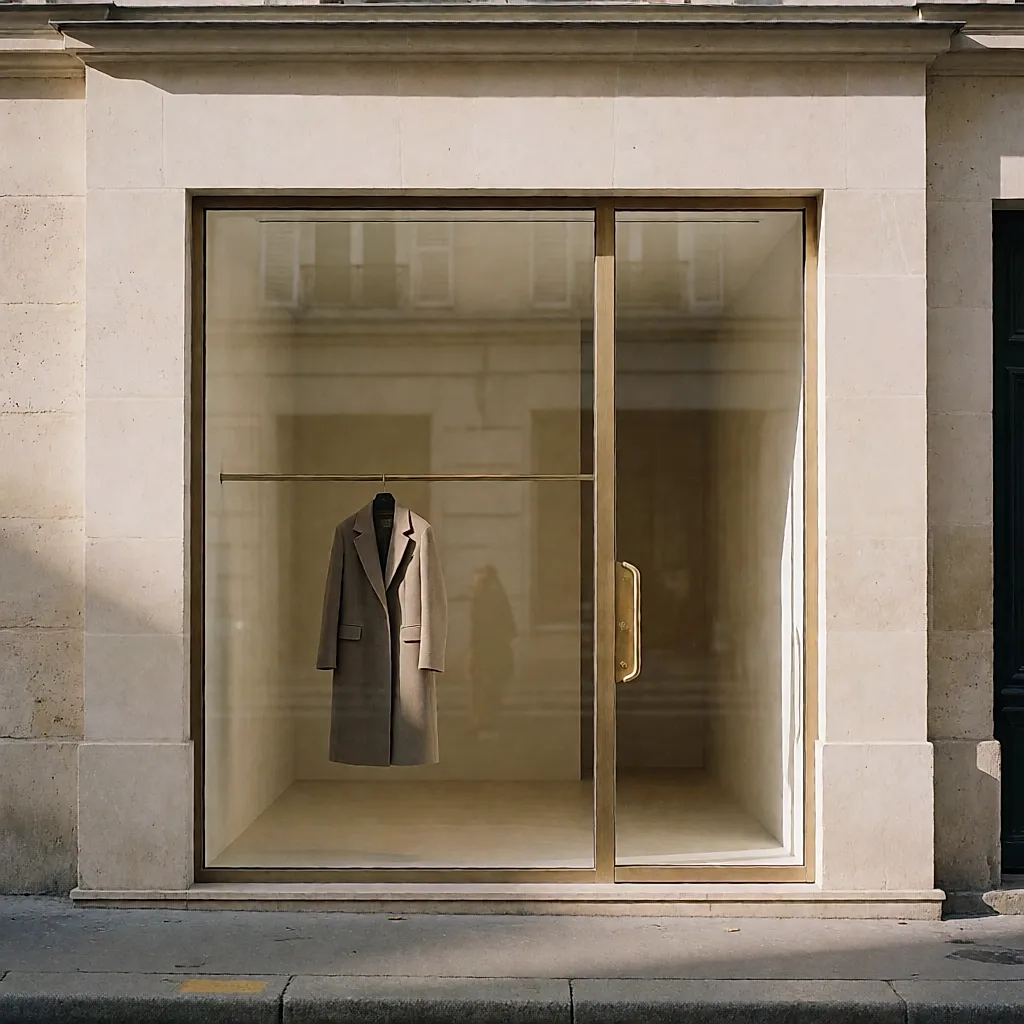
The temptation is even stronger in luxury. Rather than be a guest, a house could move in for itself. Rather than be stocked, it might prefer to invest in its own address, and that would not be a whim. In a shop bearing its name, it controls the setting, the lighting, the number of pieces on the rail and the story that comes with the price. In a department store, it shares the floor with accessible labels, perfume and food processors. That co-mingling is part of the place's charm — and, seen from the house, a good part of the problem.
What this means for our wardrobes
In practice, the address affects both price and what you find. The same family of pieces — a cotton shirt, a wool jumper, a trench coat — does not cost the same in a multi-brand department store as in a single-brand shop. On one side, you pay for the work of selection and the convenience of trying five brands on the same floor; on the other, you pay for the setting, the service and the feeling of stepping into a world. The fabric explains only part of the difference.

Is it worth going out of your way? It depends what you are looking for. If you want to test a cut without knowing who makes it, the department store remains hard to beat. For a piece you intend to keep for ten years, the point of sale is only one criterion among others: you are also buying an edit and a setting. And if you already know the piece will last only two winters, investing in a big house makes little sense — a well-cut basic will do the job.
Before you pay, check what you are paying for: look at the price first. A department store lives on its selection, not necessarily on the best price; a single-brand shop makes you pay for its address and its setting. The same piece can therefore change price depending on which door you walk through.

Budget
In price terms, expect roughly €50 to €150 for a cotton shirt or a wool jumper in a multi-brand department store, with differences according to fabric, brand and city; for a properly lined wool coat, budget more like €170 to €380. These are ballpark figures, not promises: sales and end-of-line stock can change the picture considerably.
In a shop bearing its own name, the same family of pieces often starts at several hundred euros, with no very clear ceiling — you are no longer paying only for the wool, but for the address and the silence. Nothing obliges you to go down that route: online or at an outlet, it is sometimes possible to find the same cut or fabric without the setting.
The real luxury is choice
What this shift reveals is a question of balance: a place is desirable only because of what it hosts, and a brand becomes truly powerful only when it can do without it. As long as the gap holds, the department store remains a chance for young labels — and a convenient shortcut for us.
So the next time you go up to BHV for a lightbulb and come back down with a coat — it happens, no judgement — look at the names above the rails. You will know who is inviting whom. And if the wool is good, the cut right and the drape flattering, it hardly matters which door the piece came through.



Comments
Your opinion matters: rate the article, react and reply to comments.
Comments are moderated; AI-assisted comments are flagged. Text emoticons (8-), :-), <3…) are automatically shown as images.