
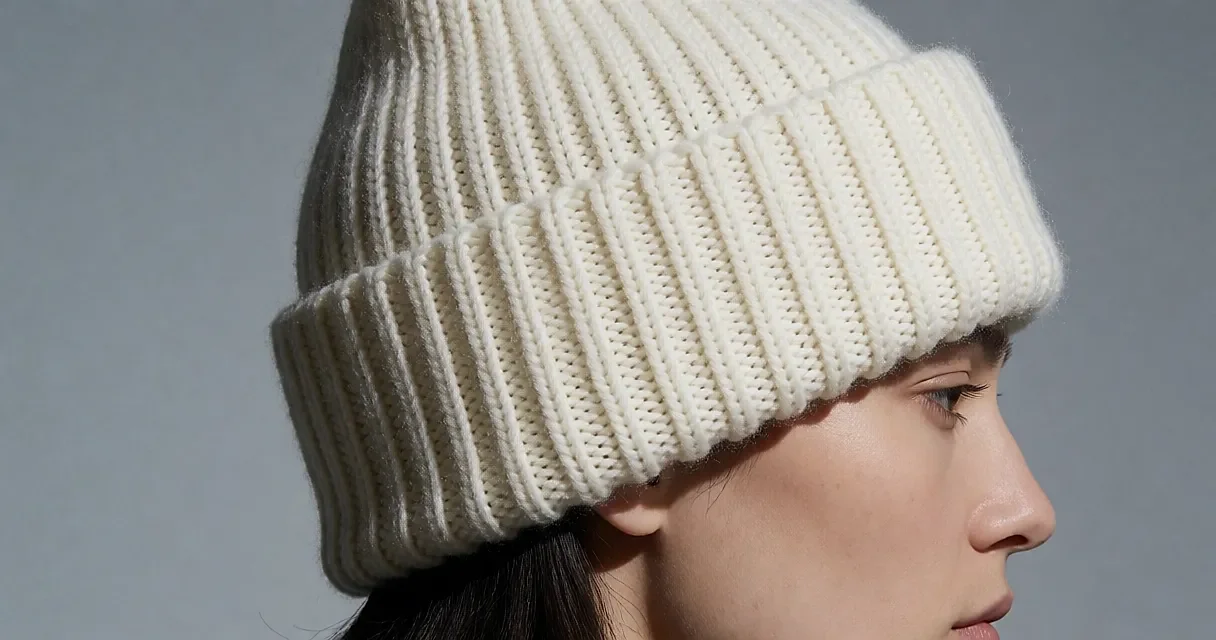
A long, uncuffed beanie and a short cuffed one in a good dense knit are not in the same league. The first looks more generous on the shelf; the second stays put from morning to night. And it's usually the third time you've tugged it back up in a day that you realise which one you actually bought.
The knit matters more than the height of the hat
We assume a tall beanie covers you better. In reality, a tall beanie without structure sags at the back, lifts away from your ears and ends in a soft point above your skull. A long, very soft style is lovely in theory — until you bend down to tie a shoe and it slips off in one go. You pull it up, it slides down again. You know the drill.
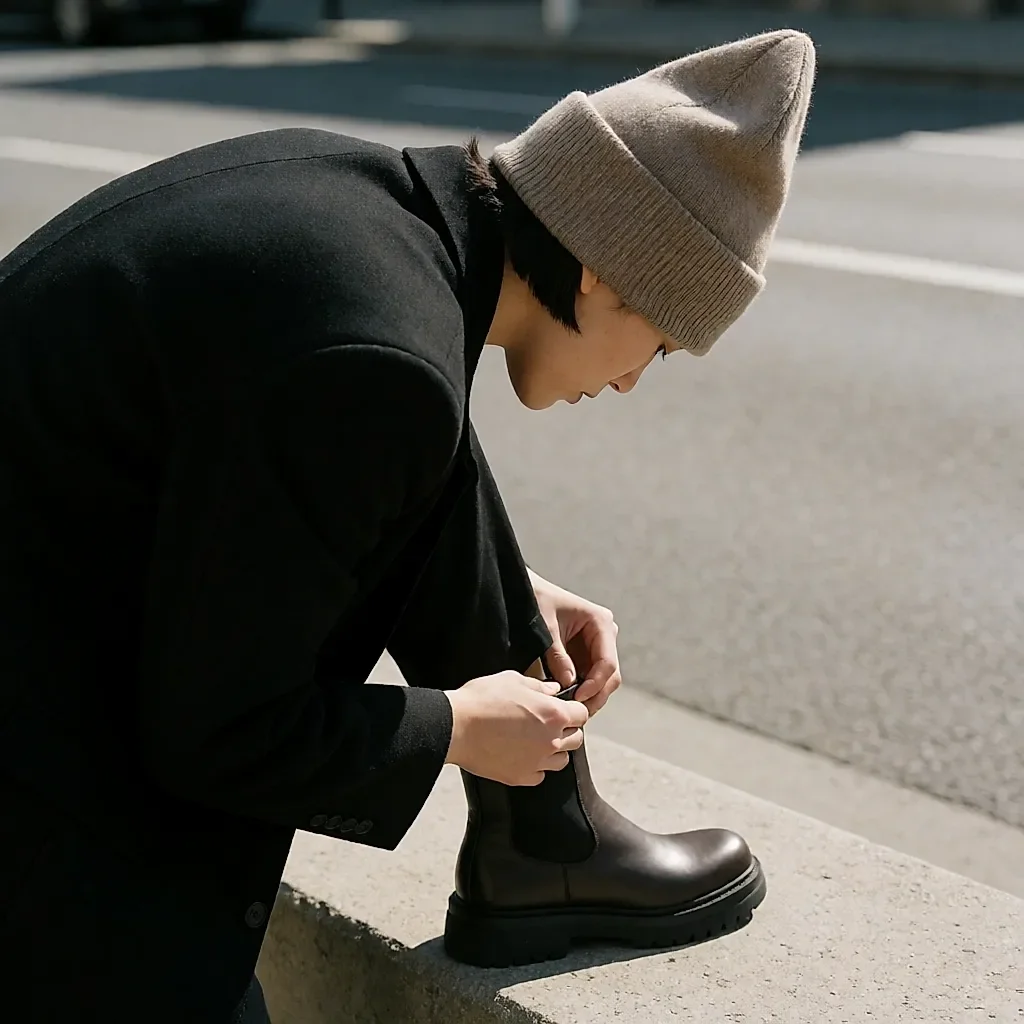
What makes a beanie stay on is the density of the knit: tight, with a bit of stretch, and able to spring back when you stretch it. A 1x1 or 2x2 rib holds far better than loose jersey knit, which moulds to your skull and then stretches out. On size, a useful rule of thumb: go for a circumference 2–4cm smaller than your head so it stays put without pressing too hard. A hat with no grip at all is a hat that will do its own thing.
The cuff isn't just decorative
It really isn't. The cuff creates a double layer exactly where the cold bites: your forehead and ears. In practice, many people recommend a cuff of around 6–8cm: folded, it gives the beanie weight and therefore structure, and puts a warm band in the right place. Any thinner and it does nothing; any thicker and it presses and leaves a mark above your eyebrows for two hours.
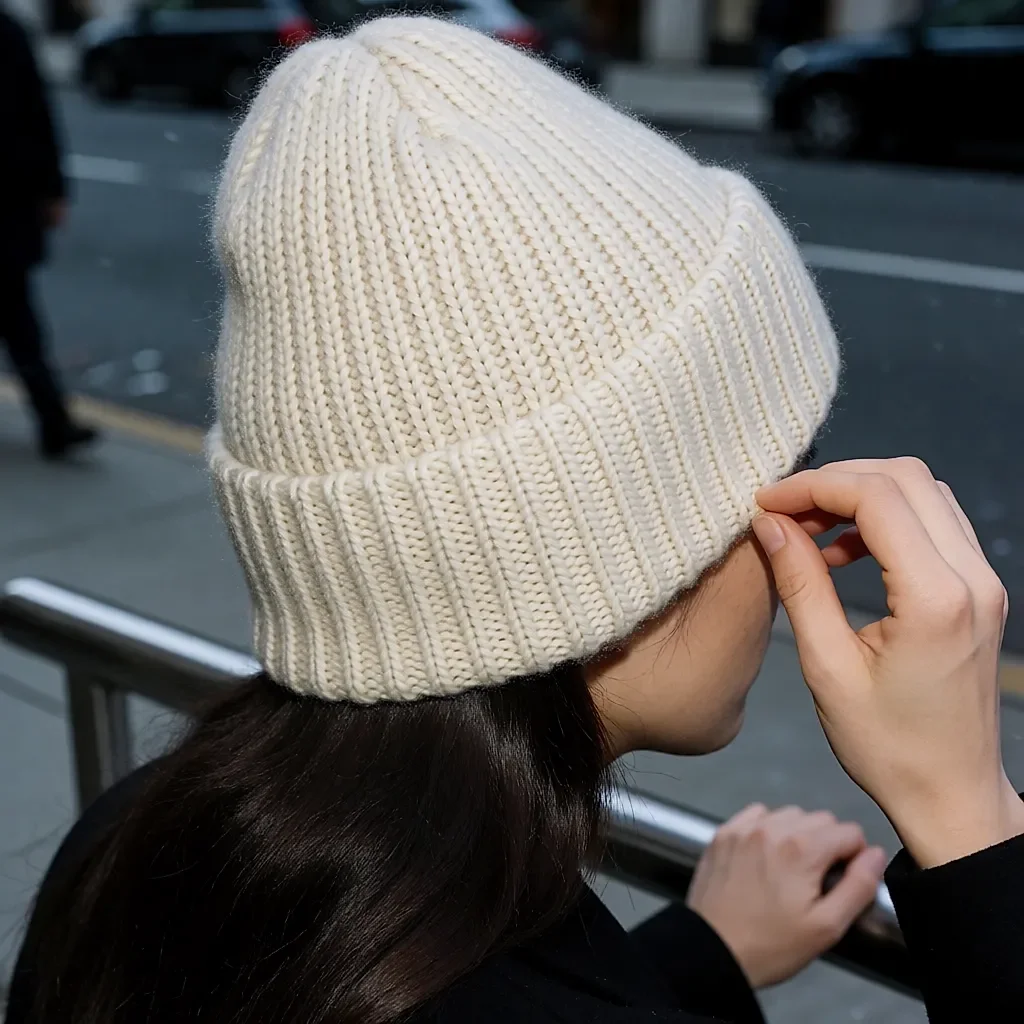
Look at how it's made, too. A simple rolled edge slips more easily than a proper double-thickness turn-up, which settles on the forehead and stays there. And if the cuff stops above your earlobes, you haven't bought a winter hat; you've bought a hat that messes up your hair and leaves your ears out in the cold. The question to ask in the changing room is this: can I go outside for ten minutes without wanting to touch it?
Your forehead, your ears and everything you layer on top
Under a hood, a beanie turns into a helmet if you pile two layers over your ears. The answer isn't to give up one or the other: choose a fine, soft beanie for hood days, and save the big cuff for days when you're properly outside. Under a high collar or a polo neck, it's the opposite — a very thick cuff rides up the back of your neck and creates a lump. A short, slightly thinner beanie sits better underneath.

Then there's your hair, which is easy to forget. Curls, waves, volume: a beanie that's too tight compresses, flattens and leaves a mark. Go for a comfortable size and a soft material — merino wool is far less itchy than rough, rustic wool. And check the label: look at how much synthetic fibre is in the mix. Synthetics keep you warm but make you sweat quickly and tend to bobble with washing.
Where to spend your money
At high-street retailers and affordable brands, expect to pay around £15–£40, often for a fibre blend. For quality knitwear — merino, recycled wool or French-made pieces — you're more likely looking at £60–£120. And second-hand, from charity shops or resale apps, £5–£25 for wool that has already proved itself and won't lose its shape.
What moves the price, in order: the proportion of real wool, the density of the knit and the finish of the cuff. The trade-off is simple. A short cuffed beanie in a good dense knit will last the season, rarely needs washing and stays in your wardrobe for years. A long one without a turn-up slips, rides up and ends up at the back of a drawer — the most common false economy of winter. If you really want the volume of a long beanie, choose one with a cuff and size down.
The changing-room test, in three moves. Put the beanie on and shake your head three times: if it shifts, it will slip all day. Check that the edge comes below your earlobe, not above it. Finally, fold the cuff and see if it stays down — a cuff that springs back up is too short.
In the end, the height of a beanie tells you nothing about its warmth or how well it stays on; it's the knit and the turn-up doing the work. A short, dense beanie that covers your ears thanks to its cuff, and costs a little less than the long one you'd been dreaming of: that's the one to go for. And if the urge for volume comes back in February, you'll know exactly where to look.

Comments
Your opinion matters: rate the article, react and reply to comments.
Comments are moderated; AI-assisted comments are flagged. Text emoticons (8-), :-), <3…) are automatically shown as images.