
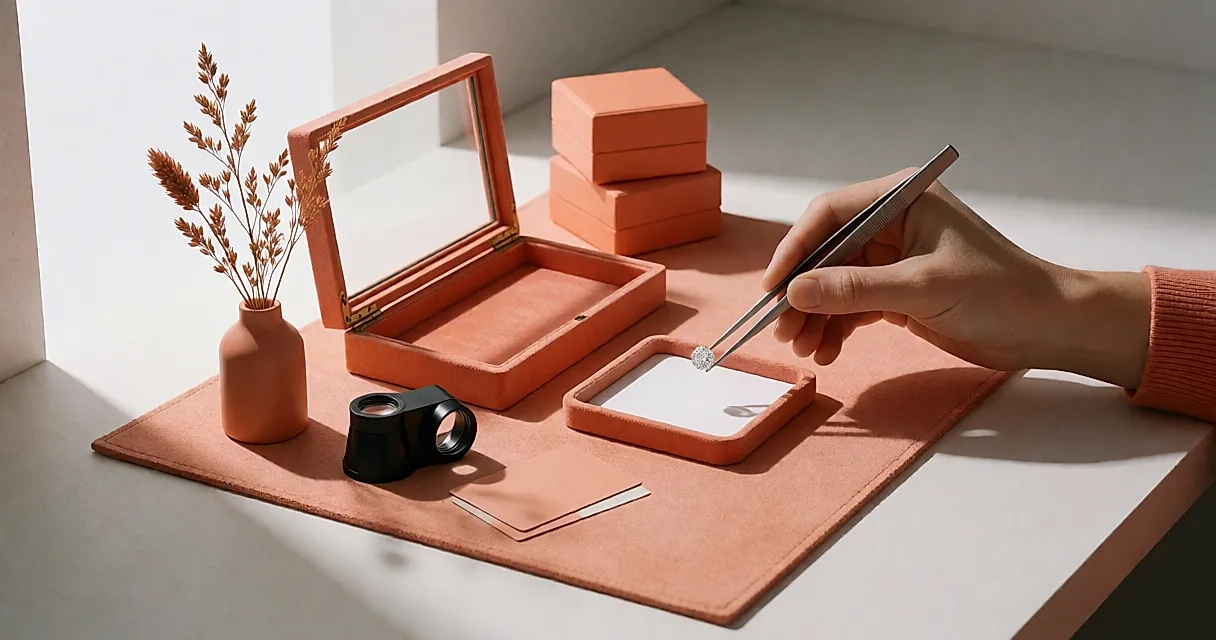
A diamond doesn't come with a passport. It comes with a certificate, sometimes; an invoice, often; and a salesperson whose voice shifts a fraction when they say the word "ethical". Now that origin has become a shop-window selling point, we're being sold proof — the trick is knowing which proof to ask for, and which kind still stands up once it's on the counter.
Because a piece of jewellery is three layers of promise: a stone, a metal, a setting. Each comes with its own level of checkability, and the gap between the three is exactly where your budget can disappear. The good news: a few well-placed questions are enough to separate the evidence from the patter.
The stone: what the paperwork says, and what it leaves out
A grading report — GIA, HRD, IGI, the labs you'll often come across in a jeweller's — describes the stone using the famous 4Cs: carat, colour, clarity, cut. That's genuinely useful for comparing two diamonds, and it's a shared language from one shop to the next. It's also silent on geography: most of these reports don't state the country where the stone was mined. In other words, the paper tells you how fine the stone is, not where it came from.
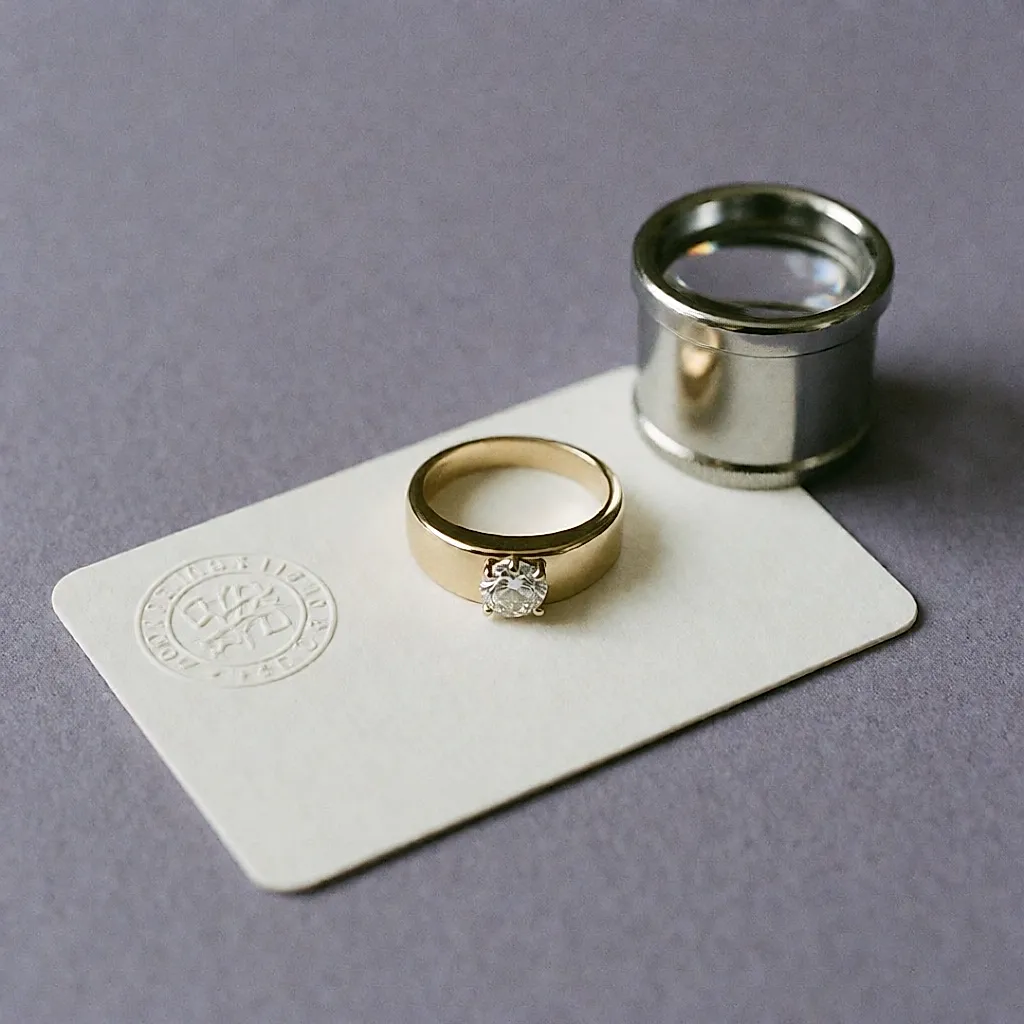
On origin, the most common reference is still the Kimberley Process, which has regulated rough diamonds since 2003 and is supposed to name the country of origin for each shipment, but guarantees neither working conditions nor full traceability through to the shop window. Its aim is to keep out stones linked to armed conflict — which is not nothing. So a Kimberley certificate indicates a declared origin, not guaranteed traceability: more a permission slip than an ID card.
Which leaves the question that changes everything, and needs asking straight: natural or lab-grown? Both are diamonds in the physical sense, with the same hardness and the same brilliance; the difference lies in rarity, and therefore in resale value, which is generally far lower for a lab-grown stone. Ask for it in writing on the invoice — not a vague aside while you're trying the ring on.
The gold: the hallmark doesn't lie, the rest tells a story
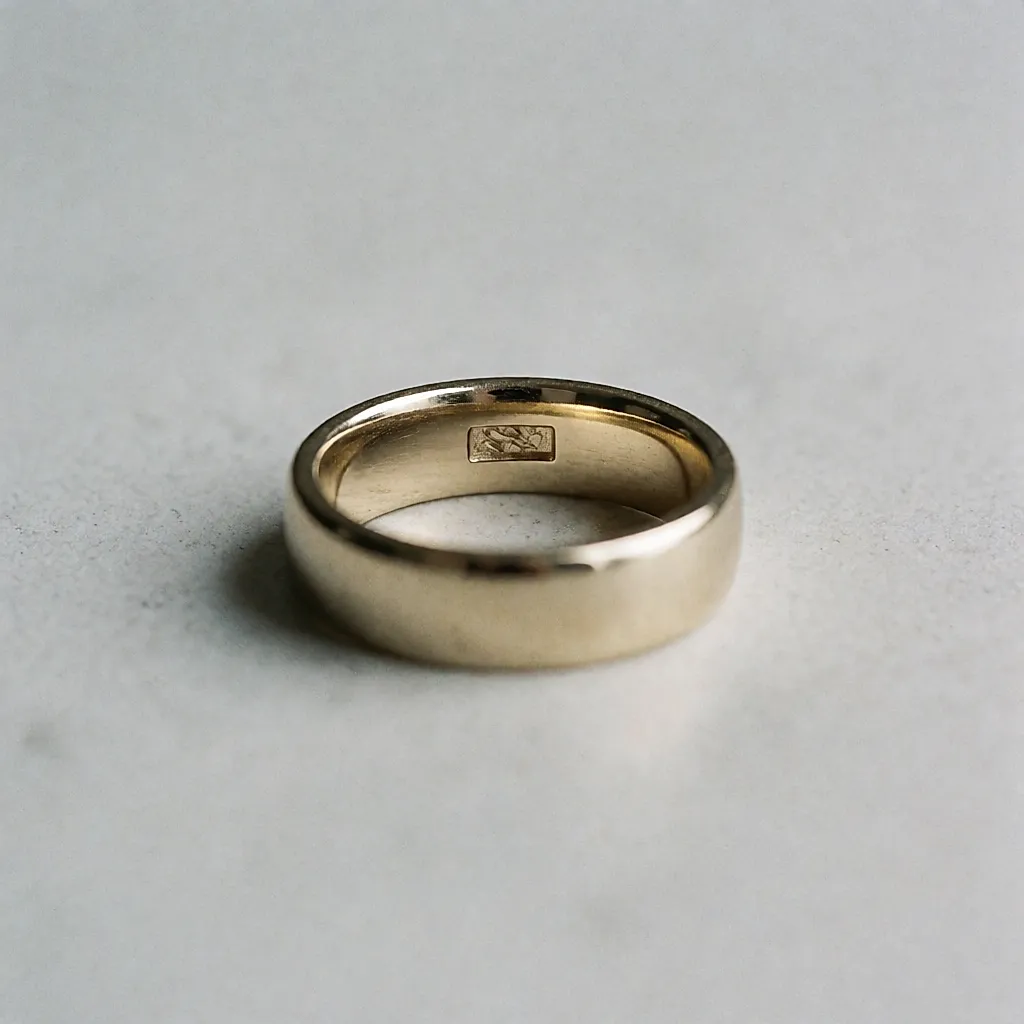
The metal is where you're on much firmer ground. The hallmark stamped into the piece gives you the fineness: 750, meaning 18 carat, so 75% gold; 375 for 9 carat. An 18 carat scratches more easily but polishes up beautifully; a 9 carat is tougher and considerably cheaper, with a slightly paler colour. It comes down to what you're after: an everyday piece or something to hand on.
Recycled gold is a genuinely good option, as long as you understand what it does and doesn't say. Chemically identical to newly mined gold, it avoids extracting more newly mined ore — but it guarantees nothing about social conditions in the supply chain. If that matters to you, look for Fairmined certification, designed for artisanal and small-scale mining, or a maker certified by the Responsible Jewellery Council. And for white gold, factor in the rhodium plating: that bath is what gives it the silver colour, and it needs redoing regularly — an upkeep cost to factor in at a jeweller.
The setting: the real blind spot
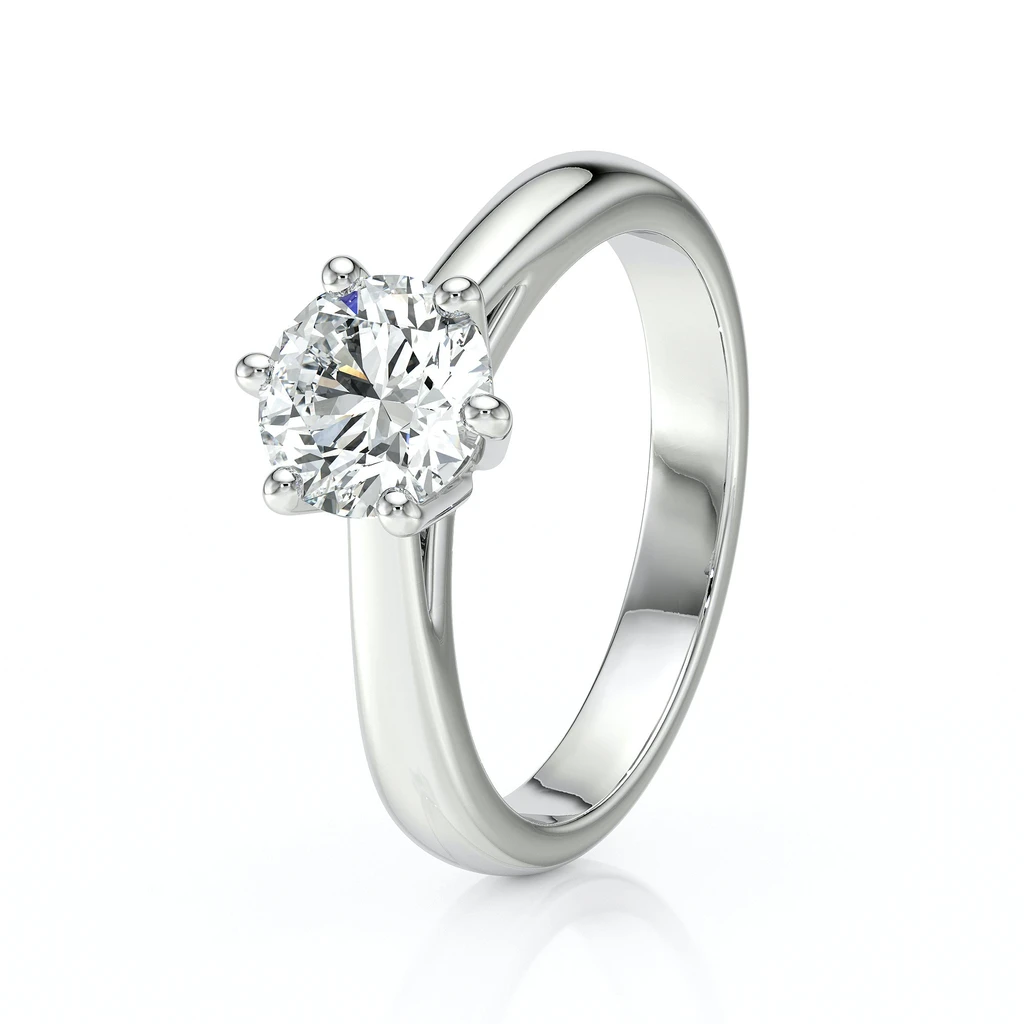
This is the part that rarely gets mentioned in the window, and yet it often decides whether your ring survives ten years. Who set the stone? In which workshop? Fine claws are lovely and fragile; a rail setting protects the stone better but swallows a little light. Ask to see the piece turned upside down in daylight, and have the setting checked in front of you.
The document worth its weight here is the invoice: it should state the metal and its fineness, the stone's carat weight, its nature (natural or lab-grown) and an itemised price. The house's little "certificate of guarantee" card looks nice in a drawer, but it doesn't carry the weight of an independent lab report. And if a seller dodges the question, that's already an answer.
What to budget
On price, it all depends on size and quality. As a rough guide to UK prices at the time of writing, a plain 18 carat wedding band usually sits between £300 and £700. A solitaire of 0.20 to 0.30 carat starts around £1,200 and can reach £3,000 depending on colour and clarity; at 0.50 carat, expect more like £2,500 to £6,000, and at a full carat the range opens out from £5,000 to £15,000. A lab-grown stone generally costs far less at a comparable size — often half, sometimes less.
Where to buy? Your local jeweller is still hard to beat for advice and resizing; the bigger names can reassure on aftercare. And don't overlook vintage or second-hand: that's where the best finds hide, provided you accept a stone that sometimes comes without a recent certificate.
The questions to ask at the counter
- Is the stone natural or lab-grown, and is that written on the invoice?
- What's the gold fineness (750 or 375), and is the hallmark visible?
- Which workshop set the stone?
- What does the guarantee cover: rhodium plating, tightening the claws, cleaning?
In the end, origin doesn't replace falling for a piece — it makes that choice safer. A slightly smaller stone with proper paperwork beats a lovely rock wrapped in fog. And if the budget is tight, the smarter buy isn't always the obvious one: a simple setting, a well-hallmarked 18 carat band and an honestly labelled lab-grown stone will go the distance far better than a spectacular solitaire on fragile claws. The rest is up to you: what do you want to be able to talk about in ten years?



Comments
Your opinion matters: rate the article, react and reply to comments.
Comments are moderated; AI-assisted comments are flagged. Text emoticons (8-), :-), <3…) are automatically shown as images.