
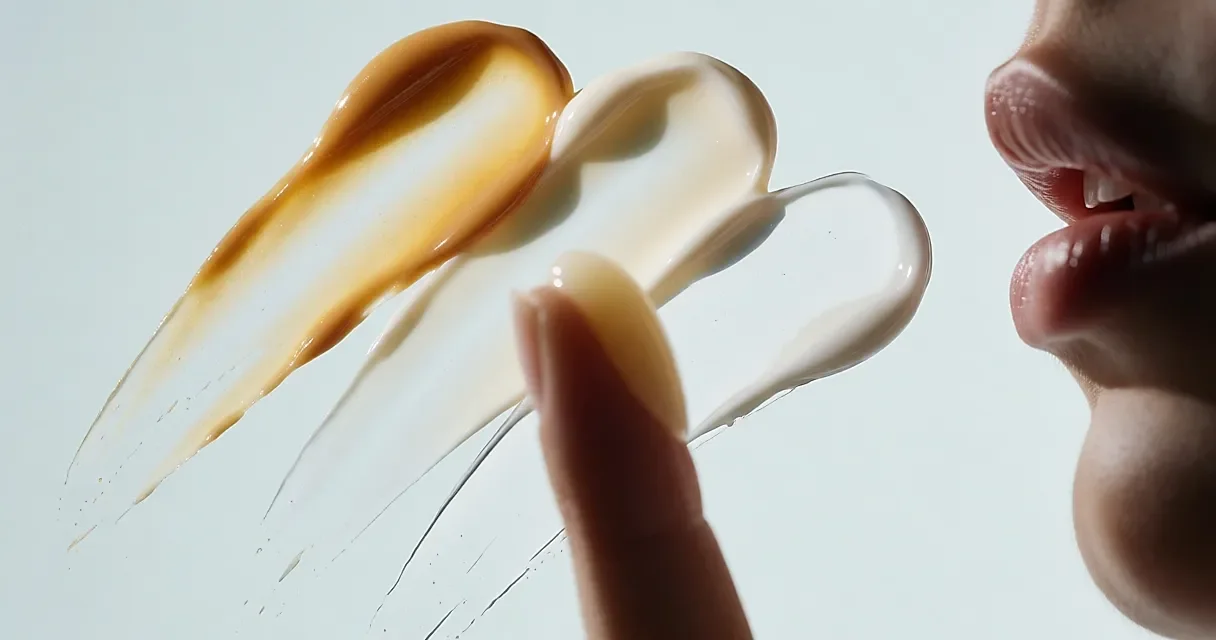
Two balms side by side, the same "intense nourishment" promise on both, and two ingredient lists that tell completely different stories. In one, wax comes first. In the other, it's water. That tiny detail, printed in six-point type on the tube, decides what will still be on your lips when you come up out of the Tube.
How to read the first three lines
On a cosmetic, the ingredient list is generally read in descending order of concentration, at least among the main ingredients. Under UK and EU rules, anything present at less than 1 per cent can be listed in any order. So the end of the list is no guarantee of ranking by concentration, and it isn't necessarily only traces. Three lines are usually enough to tell you what you're about to spread on.
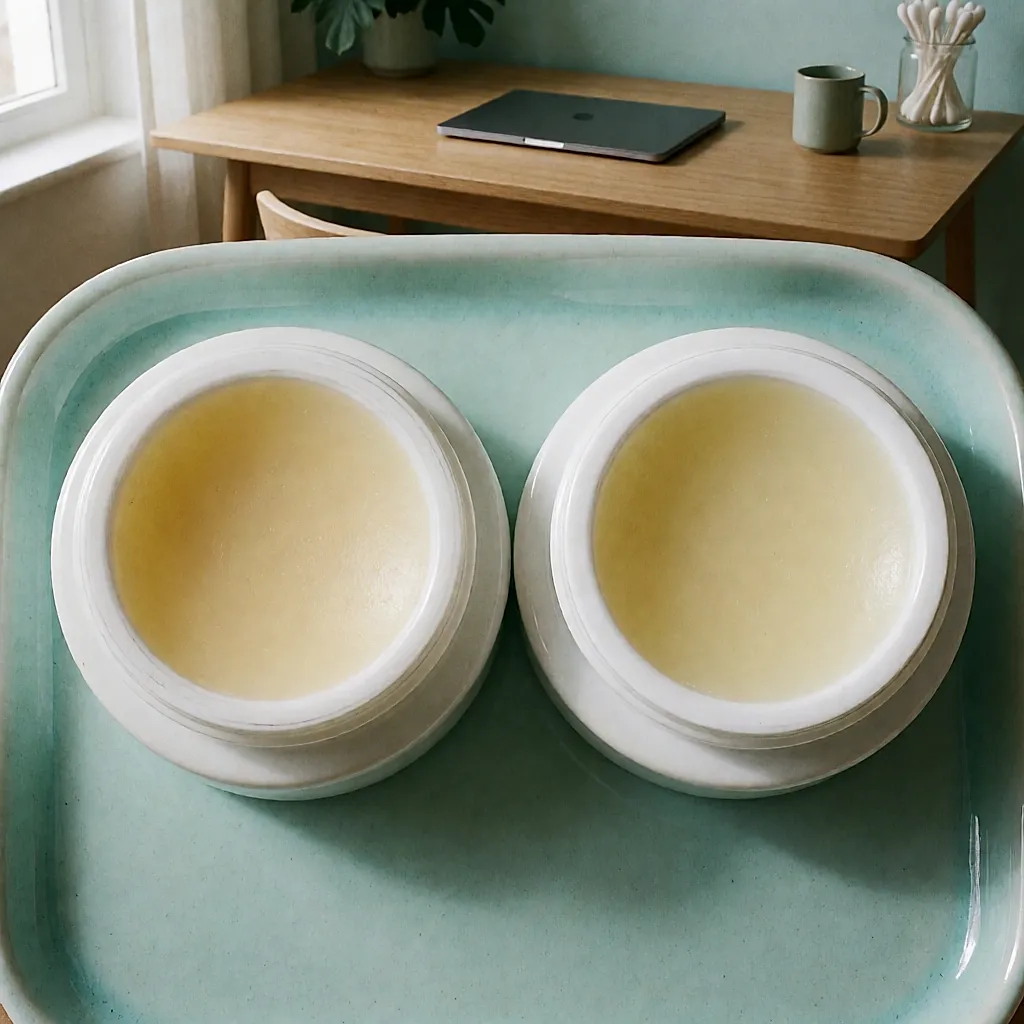
If wax (beeswax, carnauba, rice bran) and an oil or butter (castor, shea, jojoba) open the list, you're holding a balm that lays down an occlusive film: it stays on the surface, cuts the wind, and lasts more or less until your next meal. If water comes first and glycerin straight after, the formula is more fluid: glycerin holds on to water, the balm glides on quickly, and you'll be reapplying after a glass of water, a cup of tea or three sentences said out in the cold.
Does that mean one is better than the other? No — and that's precisely where the shelves lose us. A water-based balm is more comfortable under lipstick, with no greasy film; a waxy balm holds up better outdoors, but leaves that slightly tacky layer you either love or hate. In practice, plenty of formulas split the difference: a bit of water, some glycerin, then wax in third or fourth place.
Stick, pot, tube: three formats, three ways of using them
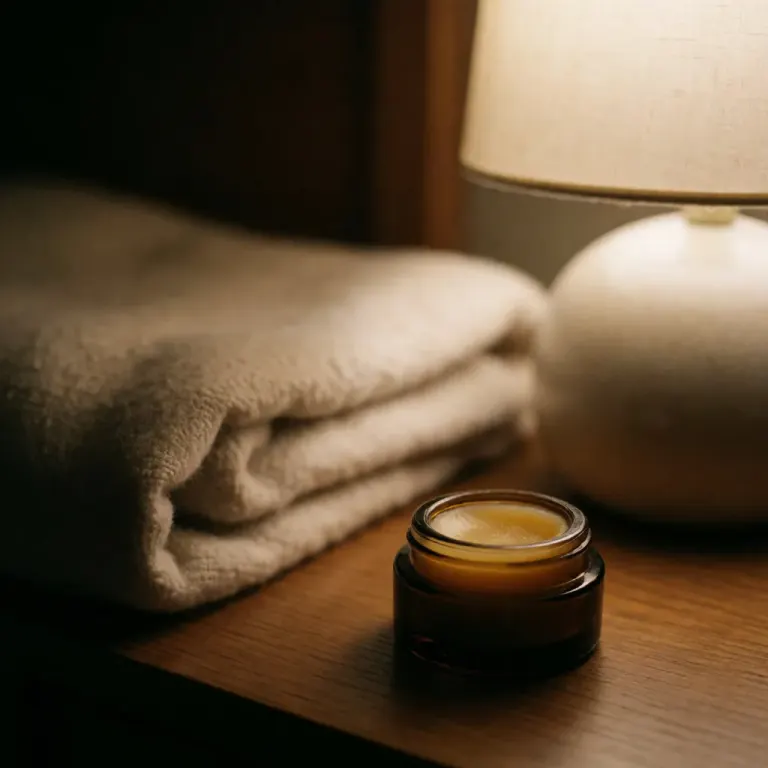
Format isn't just about coat-pocket logistics. A stick stands up because its formula contains enough wax to set solid: so it's mechanically more film-forming, quicker to apply without a mirror, and it survives being rattled around with your car keys. A pot allows softer, richer textures — perfect at night, less practical when you've got a toddler in one hand and a bunch of keys in the other.
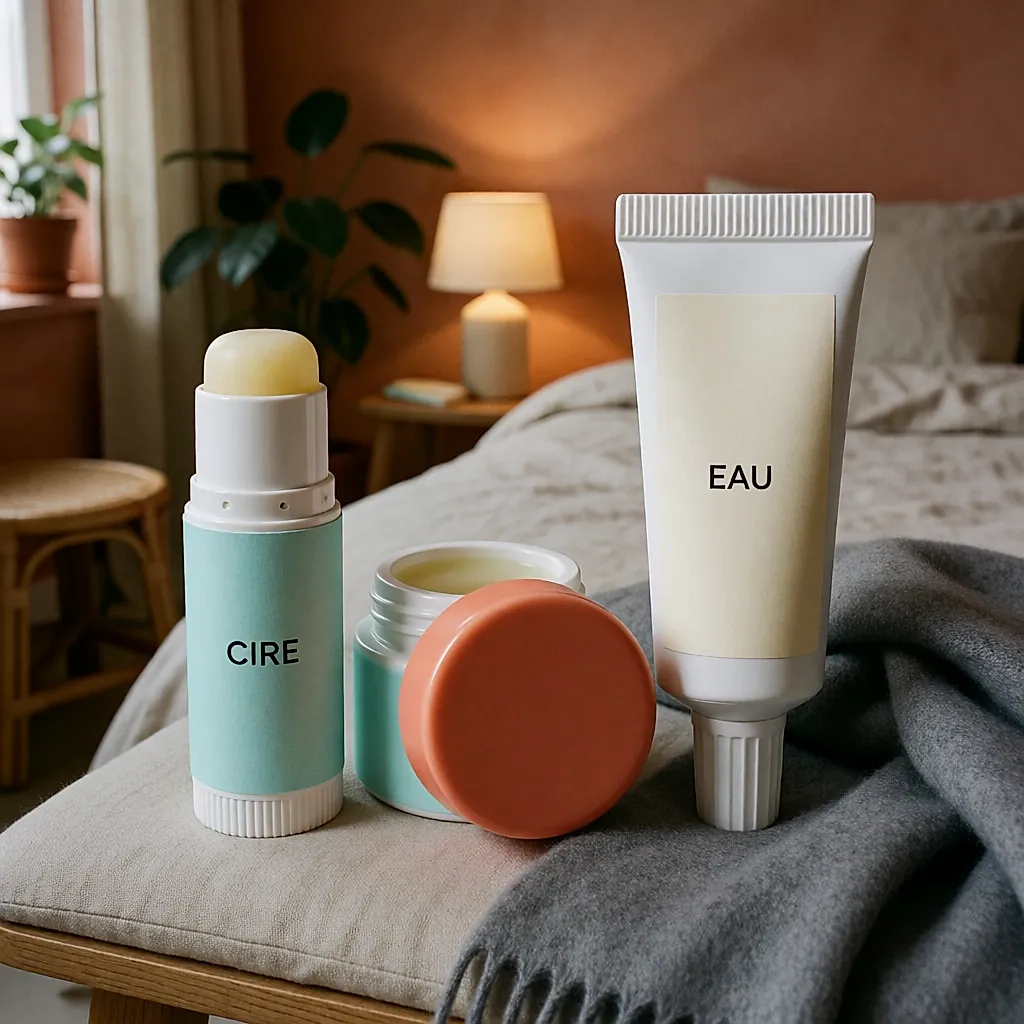
The tube with an applicator sits somewhere between the two and bets on dosage: you squeeze, you smooth, you can go easy. It's the format that best forgives a generous hand.
Then there's the question nobody asks: how long do you actually give this gesture? A stick takes three seconds, a pot asks for a clean finger and a minute of attention — and in winter, a clean finger in a handbag is pure fiction. The right balm is the one whose gesture fits your real life, not a magazine routine.
What a label says and what it doesn't
A label can give you pointers, but it won't tell you whether the formula will suit your lips. A balm heavy on essential oils can sting a cracked lip; a very plain conventional balm built on paraffin often protects extremely well. The logo isn't a verdict — your skin decides.
On the packaging side, the cardboard stick and the glass jar get better press than the plastic tube, which is hard to recycle once it's greasy. A refill, where a brand offers one, lightens both the bill and the waste. Solid balm with no packaging goes further still, as long as you accept that it will melt in an over-warm pocket. You gain on one side and give up a little comfort on the other: that's the deal.
What to pay
As a rough guide, a basic stick from a supermarket or chemist costs around £4–8, a certified organic balm from a specialist shop or beauty hall around £8–20, and the most elaborate textures and gift sets £30–40. Night-care pots usually sit between £15 and £30, with far more product inside.
Price doesn't follow protection automatically: a well-formulated £4 stick will see you through a day of cold, while a £35 balm ends up at the back of a drawer if you can't stand the scent. For buying, the pharmacy and health-and-beauty retailer remain the safe bets, the supermarket will tide you over, and organic shops and online brands are the most reliable for refills and packaging-free options.
The three-line test, in the aisle — Turn the tube over and read. Wax or oil first? Keep it for cold days and heading out. Water and glycerin first? Save it for daytime, under lipstick, and plan to reapply. If the list opens with a fragrance or alcohol, put it gently back.
A winter balm is neither a promise on a bottle nor a three-figure budget: it's a three-line list and a gesture repeated without thinking about it. A thick layer of waxy balm at night, a bit of whatever's left in the morning, and the tube in your pocket rather than your bag. And if a lip stays cracked for weeks despite all that, show it to a healthcare professional: no balm replaces advice.

Comments
Your opinion matters: rate the article, react and reply to comments.
Comments are moderated; AI-assisted comments are flagged. Text emoticons (8-), :-), <3…) are automatically shown as images.