
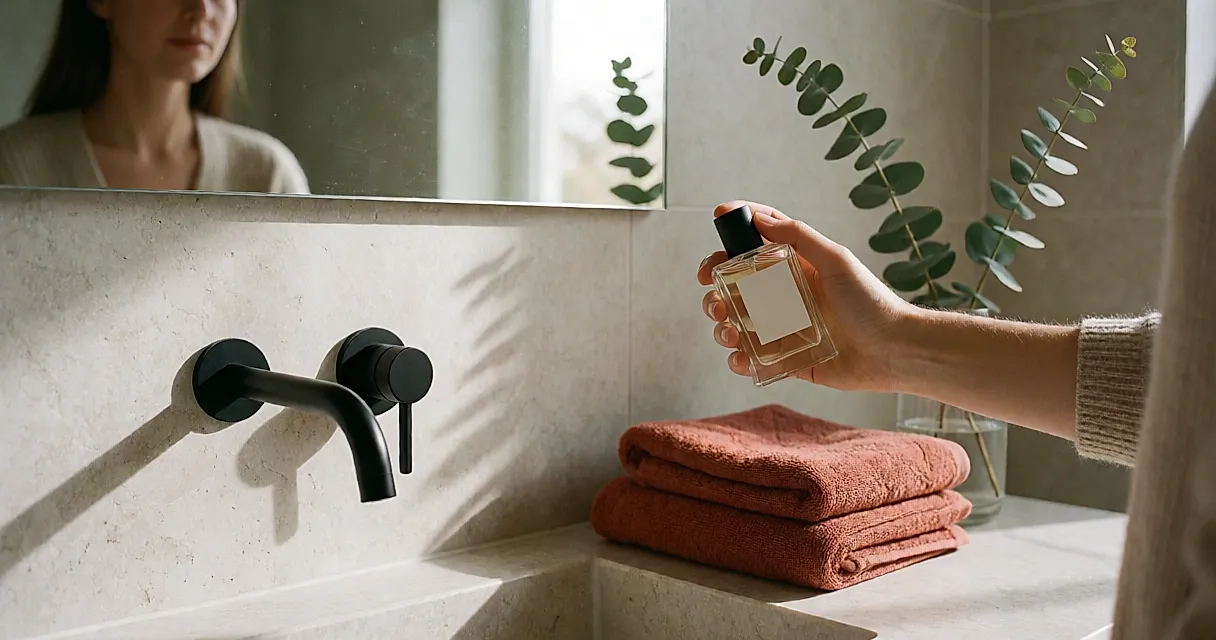
The bag made the name; the bottle makes the margin. Walk into a boutique where you came to pick out a tote and someone hands you a 50 ml spray in a bag smaller than your wallet. That is no accident of merchandising: for plenty of accessories houses, fragrance has become the line that balances the books.
A bag only sells once
A bag sells once, then gets carried, repaired and handed on. Excellent for your wardrobe, less so for a turnover figure. Accessories come with limits: two collections a year, stock to shift, a price that cannot climb for ever, and competition running all the way from resale to fast fashion.
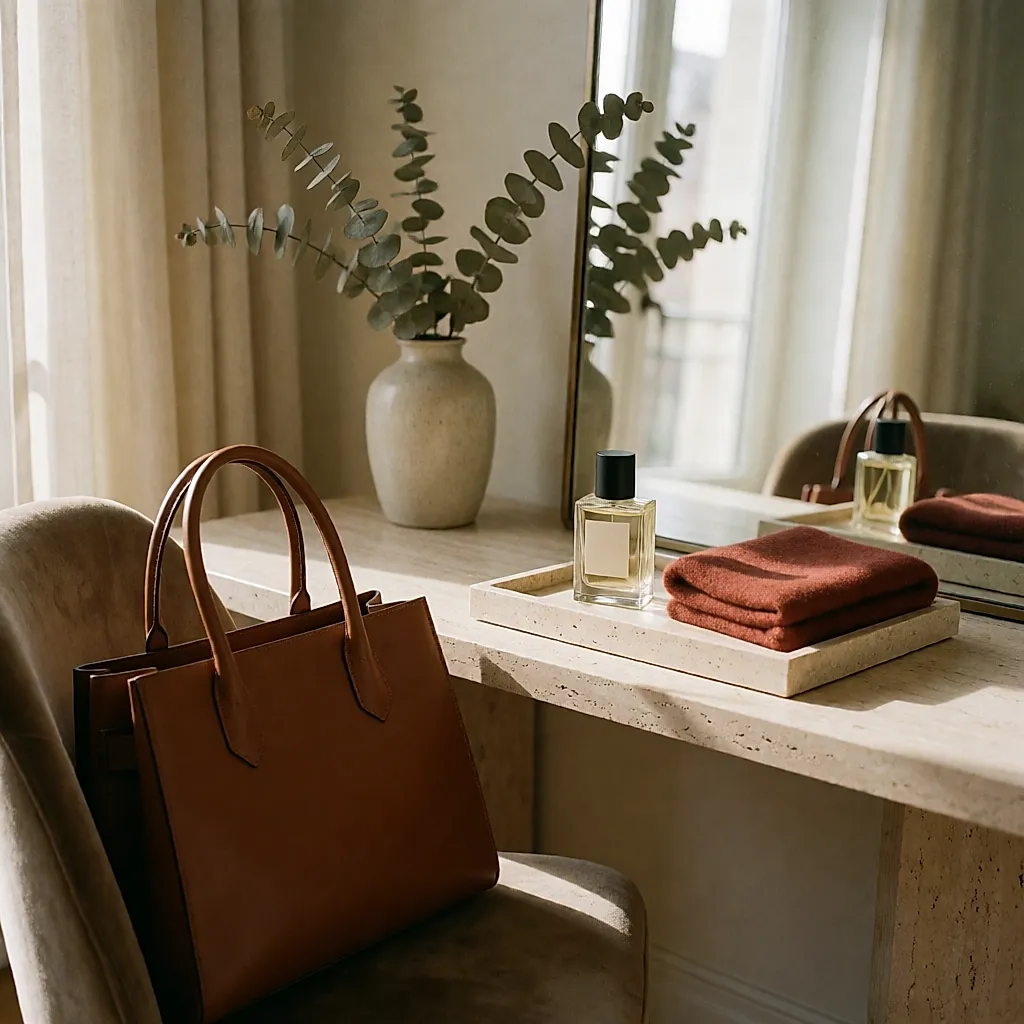
Perfume does not do sizes. No missing size, no leather sold out, no collection to slash in the January sales. It gets rebought — an empty bottle is a customer who comes back — it gets given as a gift, and it brings into the shop someone who had no intention of spending £400 that day. Several accessories houses, Coach, Michael Kors and Jimmy Choo among them, have added fragrance to the line-up, and not out of sentiment.
Licensing, the word to know
Most of the time the house does not make its own perfume. It lends its name to a fragrance group that formulates, produces and distributes it; in return it collects royalties, a cut of the sales. No factory to build, no glass stock to warehouse: the risk is shared and the margin arrives without any machinery.
The direct consequence: the nose behind the bottle is a perfumer, not a leatherworker, and the same composition house sometimes works for several brands at once. Your favourite scent and your neighbour's may come out of the same lab. That is not a flaw in itself, but it shifts the question — you are not buying leather craft poured into alcohol, you are buying an interpretation of the brand's world, sometimes a very good one.
What it means for you at the till
Price first. You are paying for the juice, the glass, the cap, the ad campaign, the shelf space in the beauty hall and the name on the box. A leather house's perfume is neither better nor worse, in principle, than one from a fragrance house: it comes down to formula and skin. The real question, and it is slightly cheeky: are you buying a scent, or a logo that looks good on the dressing table?
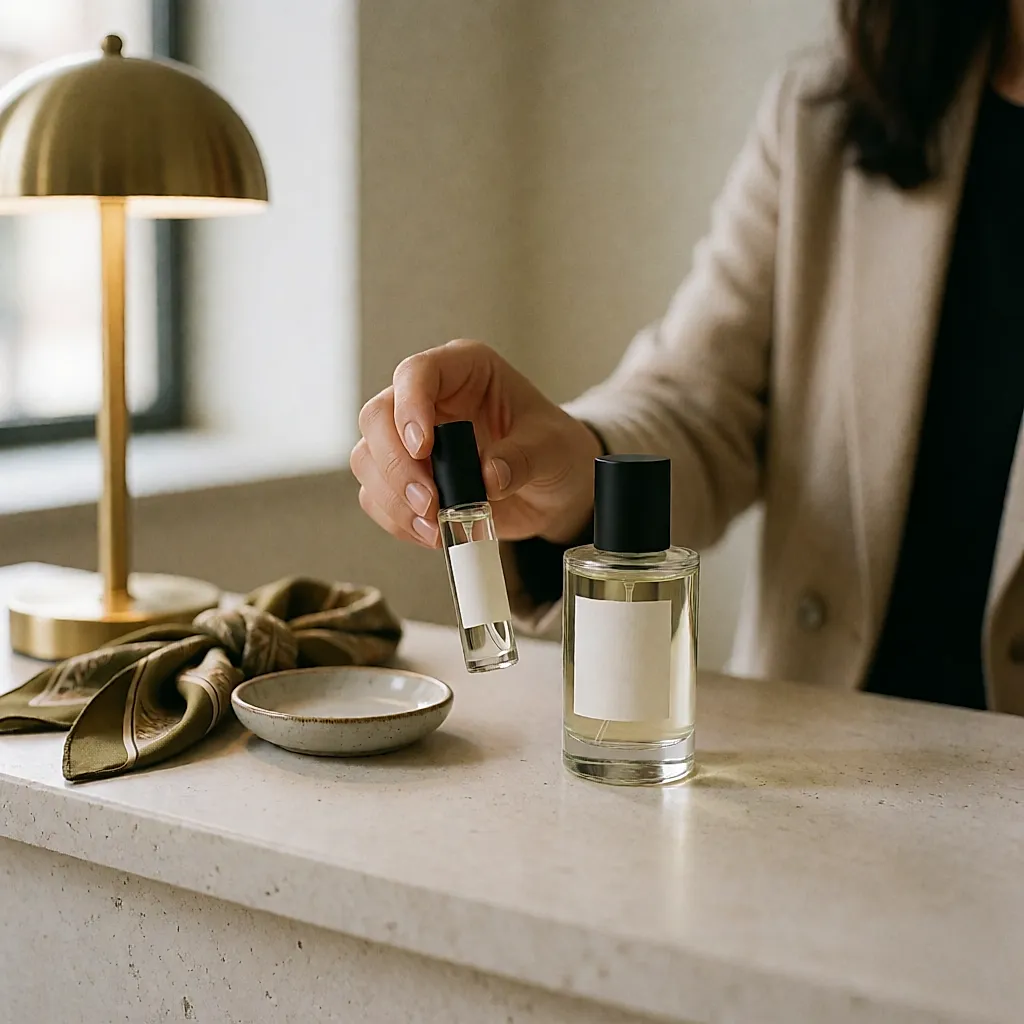
Then be suspicious of shortcuts in both directions. Some licensed juices last for years and are worth the money; others mostly smell of the marketing budget. You cannot call it in advance: only wearing it decides, on your skin, in your life.
The bit that actually matters
Do not judge a perfume on a paper blotter: give it a few minutes. Spray lightly on skin, wrist first, then the inside of the elbow; then go out, walk, get on with your day. The base notes — woods, musk, vanilla — only arrive after a while, and they are what decides whether you can live with that bottle for six months.
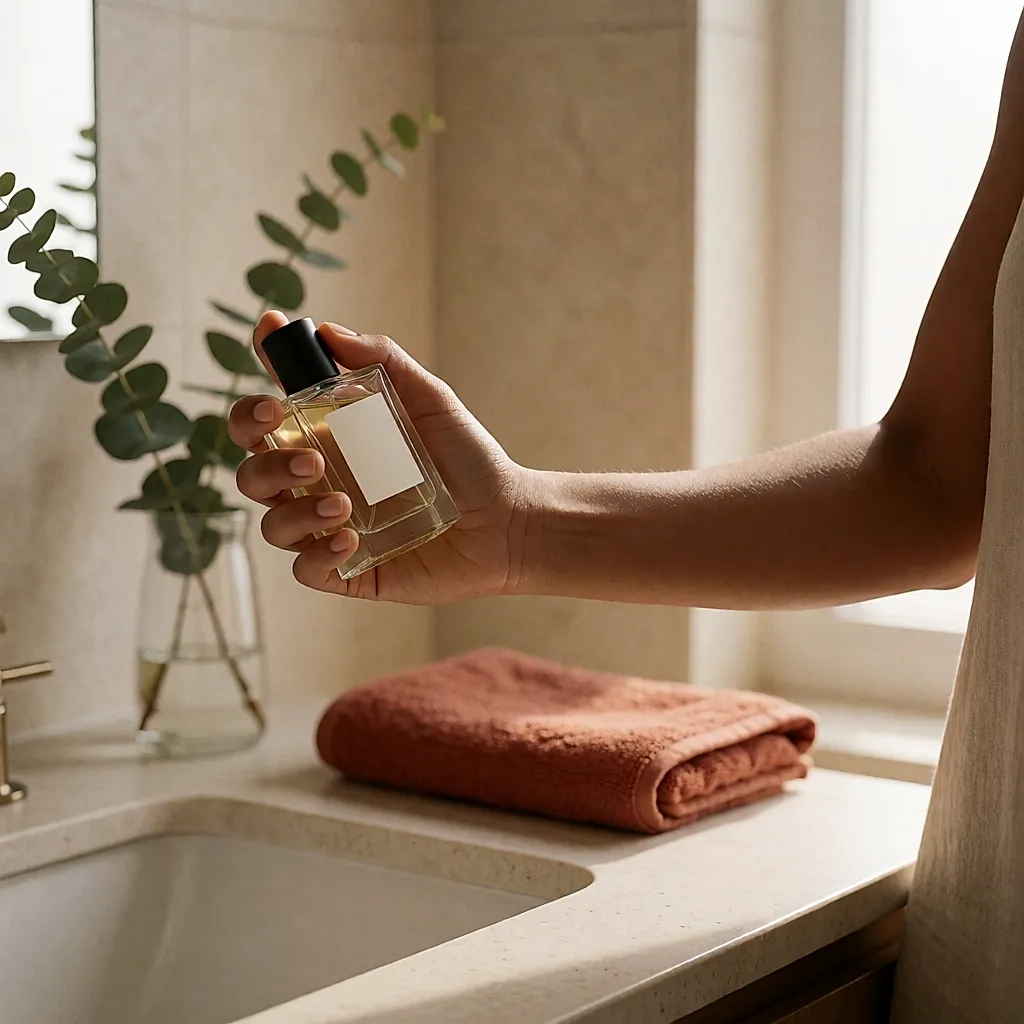
Ask for a sample when the brand offers one, and compare like for like. Check the concentration: eau de toilette, eau de parfum, extrait — different budget, different staying power. One last reflex: the refill, where it exists. Less glass, less money, same pleasure.
Three questions before you reach for your card
- Do I love the smell, or the idea of that bottle on my shelf?
- Can I still smell it at 6pm, or has it gone by lunchtime?
- Does it come in a discovery size, so I am not buying blind?
Budget
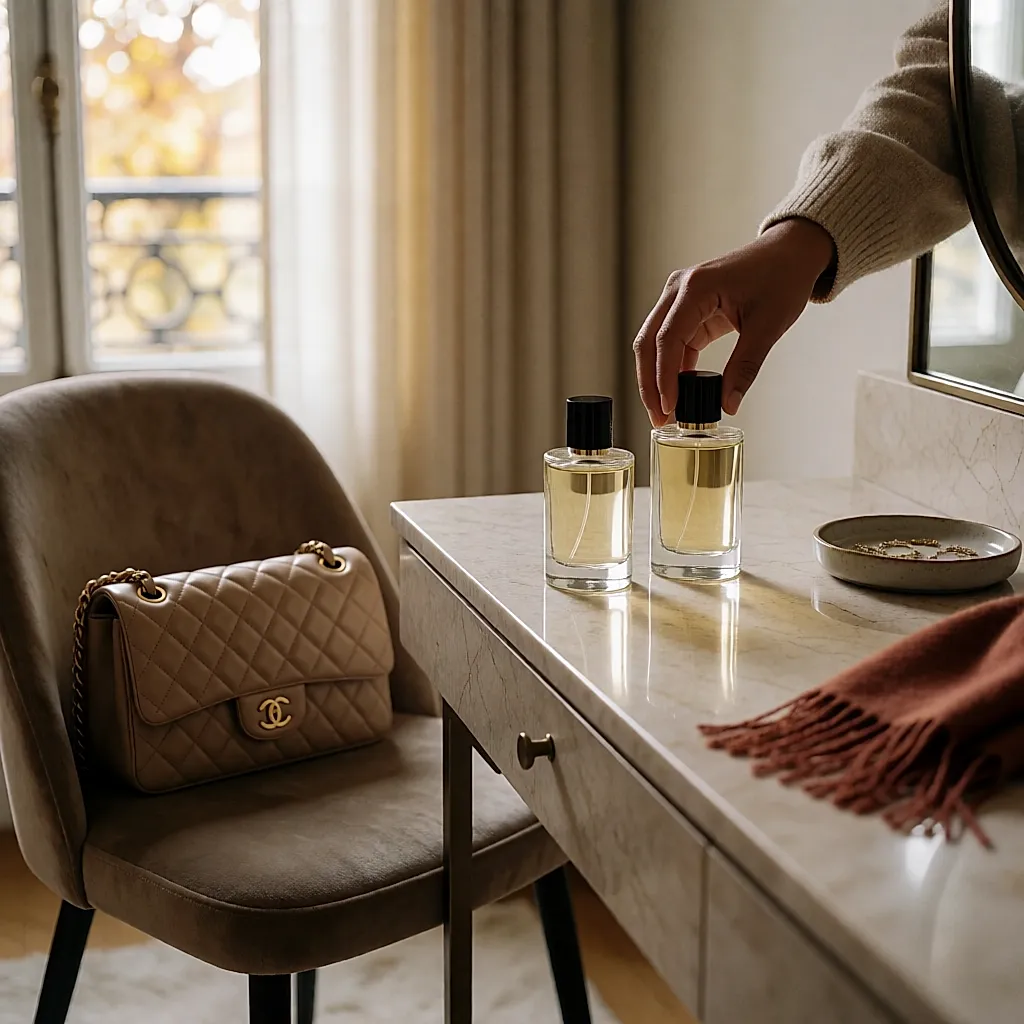
Expect roughly £20 to £40 for a 10 ml travel size, £70 to £130 for 50 ml from an accessories house, and £150 and up for niche collections. You will find them in the brand's own boutiques, at beauty retailers such as Boots and Superdrug, in department stores including John Lewis and Selfridges, and on official websites.
A useful calculation: work everything back to price per millilitre, and remember that a 10 ml discovery size lets you check before you commit. Nobody is going to ask you to swear a lifetime vow. As for how long it lasts, in practice a 50 ml worn every day will see you through a few months — enough to know where you stand.
Does the bottle tell the truth about the house?
Not necessarily. A lovely perfume does not guarantee lovely leather, and a sturdy bag does not guarantee a scent that feels like you. They are two different trades, brought together under one name for reasons that have as much to do with the accounts as with elegance.
The rule stays simple, and it is on your side: buy the perfume you like, not the one that completes the set. If the bottle stays with you for six months without you having to think about it, the house has won more than a margin — it has won a customer. No profit-and-loss account plans for that, which is all to the good.

Comments
Your opinion matters: rate the article, react and reply to comments.
Comments are moderated; AI-assisted comments are flagged. Text emoticons (8-), :-), <3…) are automatically shown as images.