
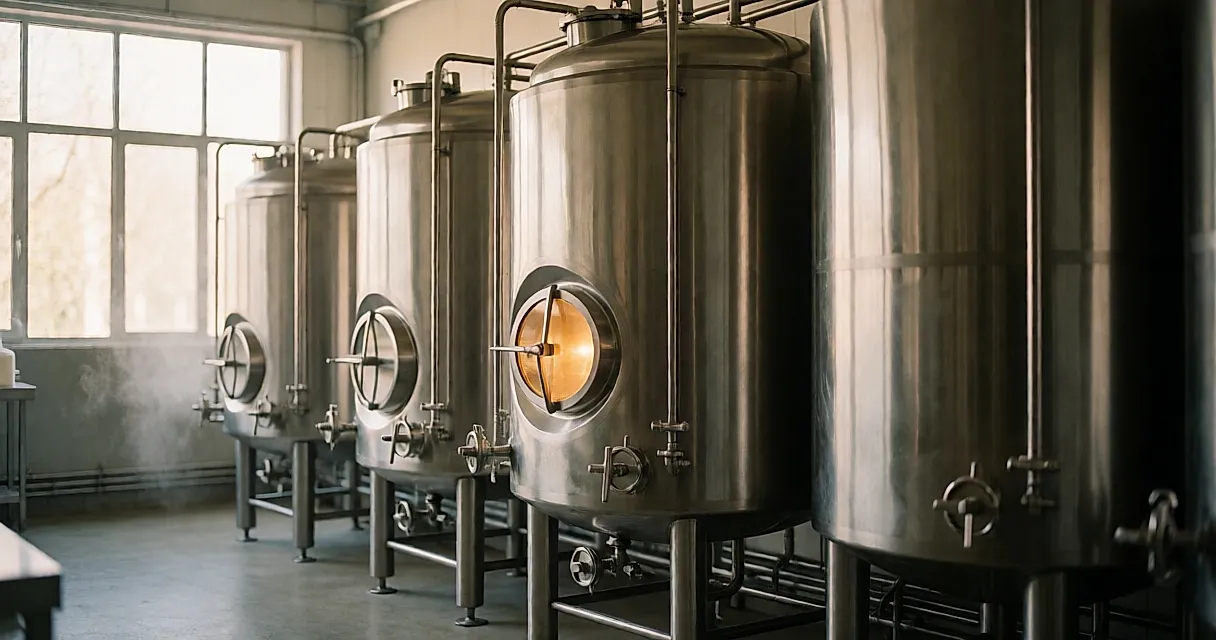
Push open the door of a cosmetics factory and forget the postcard image: no model under a spotlight, no bottle under a glass dome, but stainless-steel tanks taller than you, the hum of a pump and a yoghurt smell in the corridor. Beside you, someone in a lab coat scribbles a number in a notebook — a pH, most likely. This is French beauty's new showcase: no longer what the cream promises, but the place where it was born.
The cellar takes over from the bottle
The comparison with wine is so handy that the industry doesn't hold back. A winery opens its cellars to visitors, talks you through the harvest, lets you smell a barrel; a skincare brand opens its workshop, shows off its tanks and lets you see inside. Except here there's no tasting: what you come to sample is transparency.
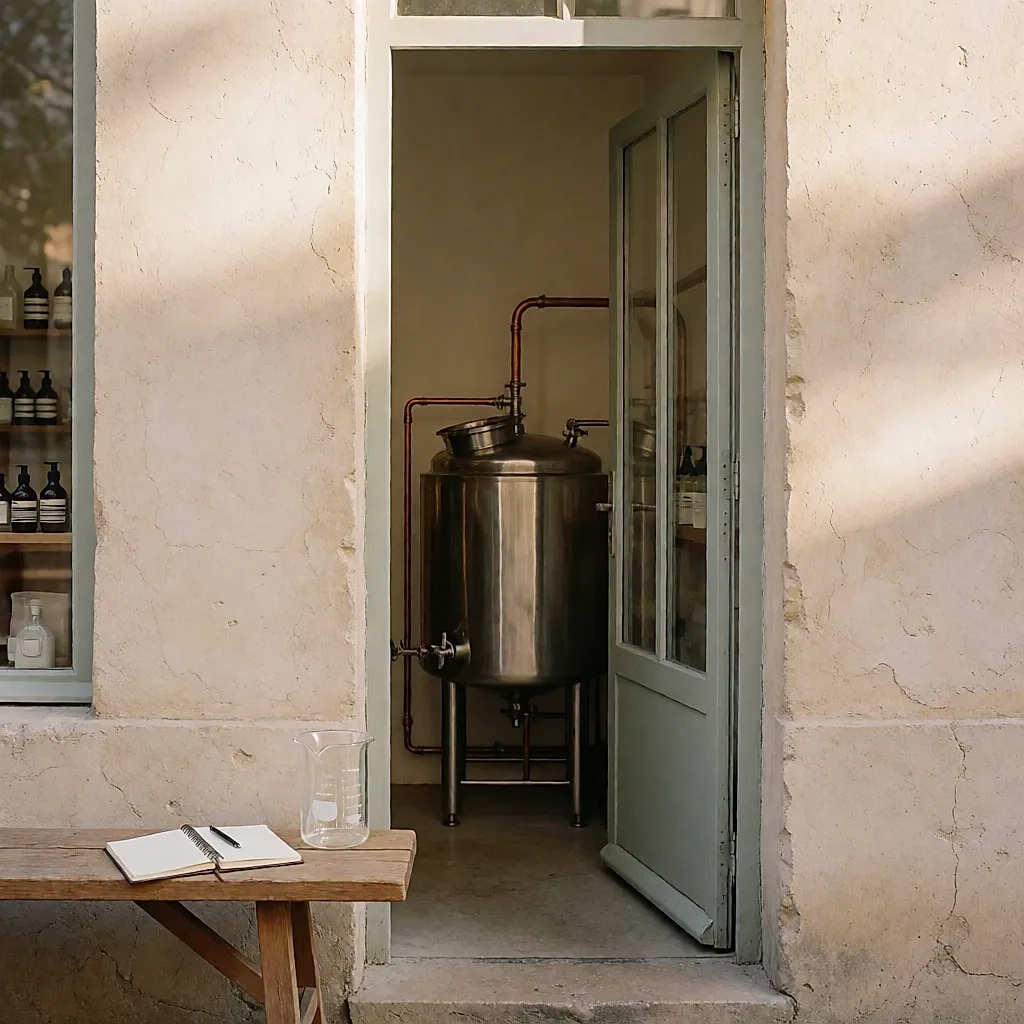
Why now? Because every word on a label has become suspect. "Natural", "clean", "patented active": we've learned to raise an eyebrow. A tank, though, doesn't invent itself. Showing how something is made moves the proof to a place you can visit and question. Clever — and pretty healthy.
Grasse has been opening its doors for years
In the land of Grasse this staging is nothing new: Fragonard, Molinard and Galimard have been letting curious visitors into their workshops for decades. Copper alembics, rose fields in May, "noses" bent over their perfume organs — the perfumery know-how of the Grasse region has been on UNESCO's Intangible Cultural Heritage list since 2018.
What's changing is the scope. For a long time it was perfume you visited: pretty, spectacular, a bit postcard. Today it's skincare that's opening up. Where an alembic was once on show, now it's a fermenter. The decor is less glamorous. So what? That's exactly why it's becoming interesting.
Meet the fermenter
A sealed tank, a maintained temperature, micro-organisms at work, a sugar serving as their meal, and someone monitoring acidity the way you'd keep an eye on the weather over a vegetable patch. That's what you'll see. The process is nothing exotic: fermentation is an old human habit, from bread to wine by way of yoghurt.
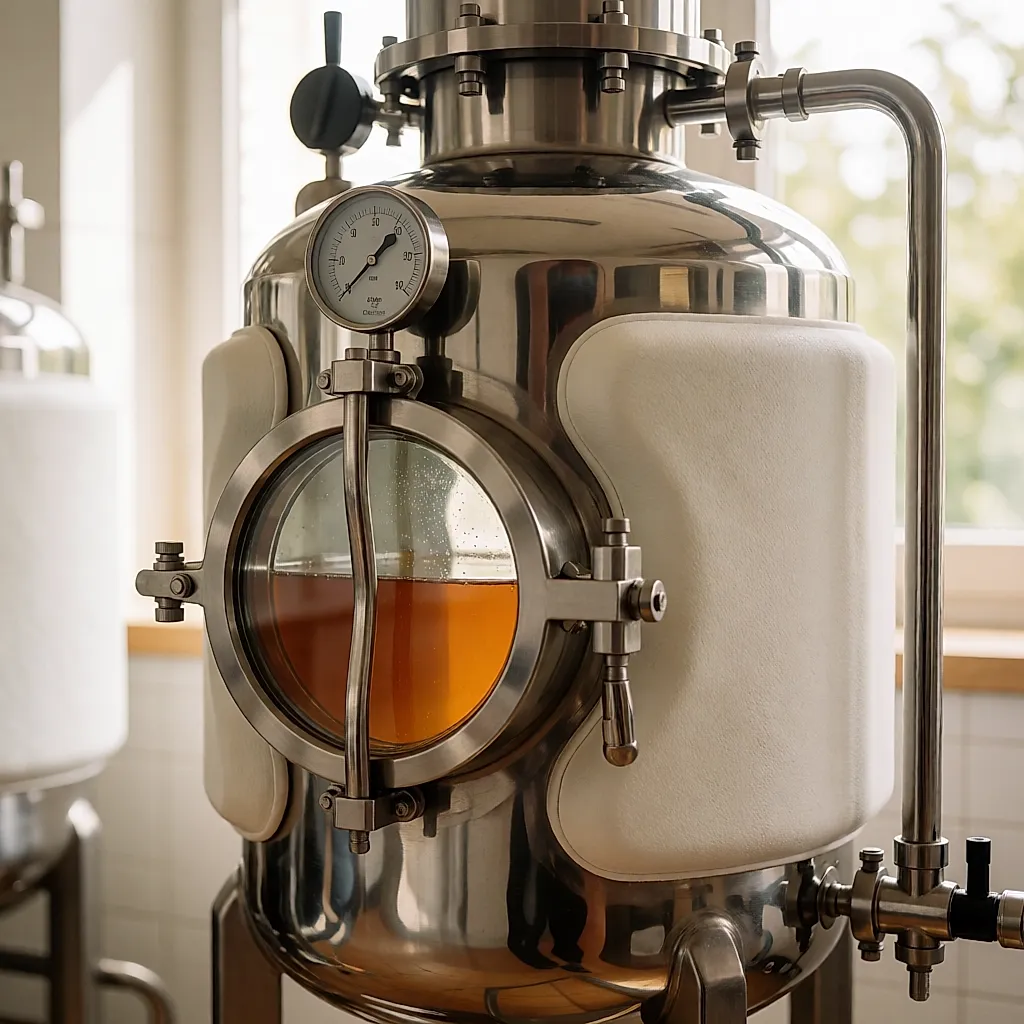
Does it make a cream more effective? Here we stop: a guided tour is not a scientific dossier, and nobody is going to show you a graph in a corridor. What you can say is that "fermented" is having a moment on labels, and that a tank at work makes a better photo than an ingredients table.
The new star in a lab coat
The other star of these tours is the formulator. Precision scales, beakers, a gently humming stirrer: their job is to make water and oil coexist, two neighbours with no desire to mix. You heat, you stir, you cool, you start again. The galenic art — the craft of texture, consistency, feel — is decided here, long before the packaging.
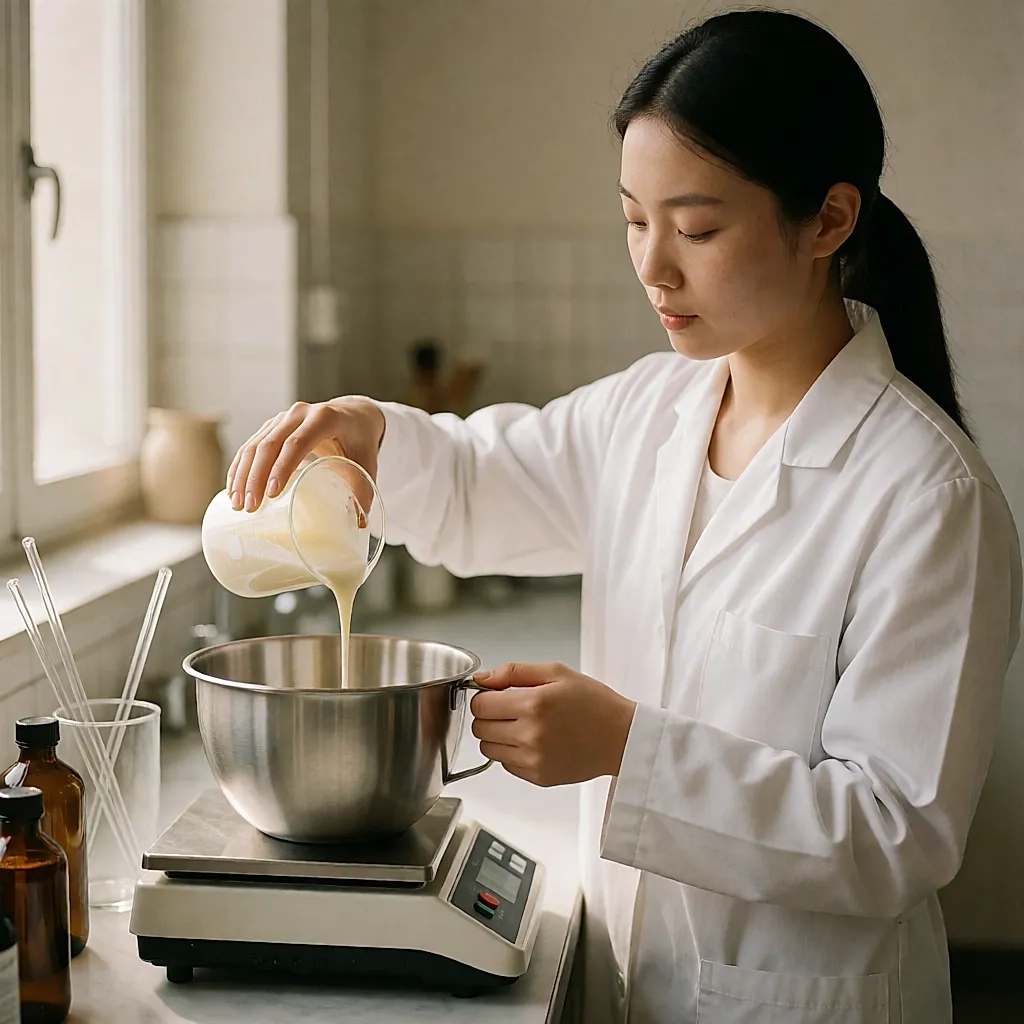
You'll also see the failures: the emulsion that splits like a forgotten vinaigrette, the texture that drags, the fragrance that turns. The gesture that matters in those cases is to pick it up — and start again! Less photogenic than a success, and yet this is where the real making happens.
What the tour leaves out
A clean factory and gleaming tanks tell you about hygiene and seriousness, not efficacy. A tour won't tell you whether the product keeps its promises, or where the actives come from — some cross the planet before landing in the tank — or what happens to the bottle once it's empty. Yet those are the questions that matter.
All the more so because a nice claim can be misleading: in practice, "made in France" tells you where the product is made, not where each of its ingredients comes from. It's not a lie, it's a missing detail. And it's exactly the kind of vagueness a well-run tour can help clear up — provided you dare to ask.
Three questions to ask on your way out
- Where do the main actives come from, and are they processed on site?
- What percentage of the ingredients is naturally derived, and which certification really backs that up?
- Is the packaging refillable or recyclable, and where?
What it costs
On price, expect anything from free entry up to around €15 for a tour of a historic perfume house, depending on the venue and the format — and check before you book: the terms change. Then add travel: Grasse isn't on every station's doorstep.
For a perfume-creation workshop or an introduction to formulating, budget more like €30 to €60 depending on length and group size. It's the price of an afternoon that will teach you mainly one thing: smelling, formulating and making are three different jobs.
You leave with images in your head and a useful doubt. The next time you turn a jar over, you might read the label differently. And if you've only got five minutes, the gesture that stays with you comes down to three questions: who, where, with what.
Comments
Your opinion matters: rate the article, react and reply to comments.
Comments are moderated; AI-assisted comments are flagged. Text emoticons (8-), :-), <3…) are automatically shown as images.