
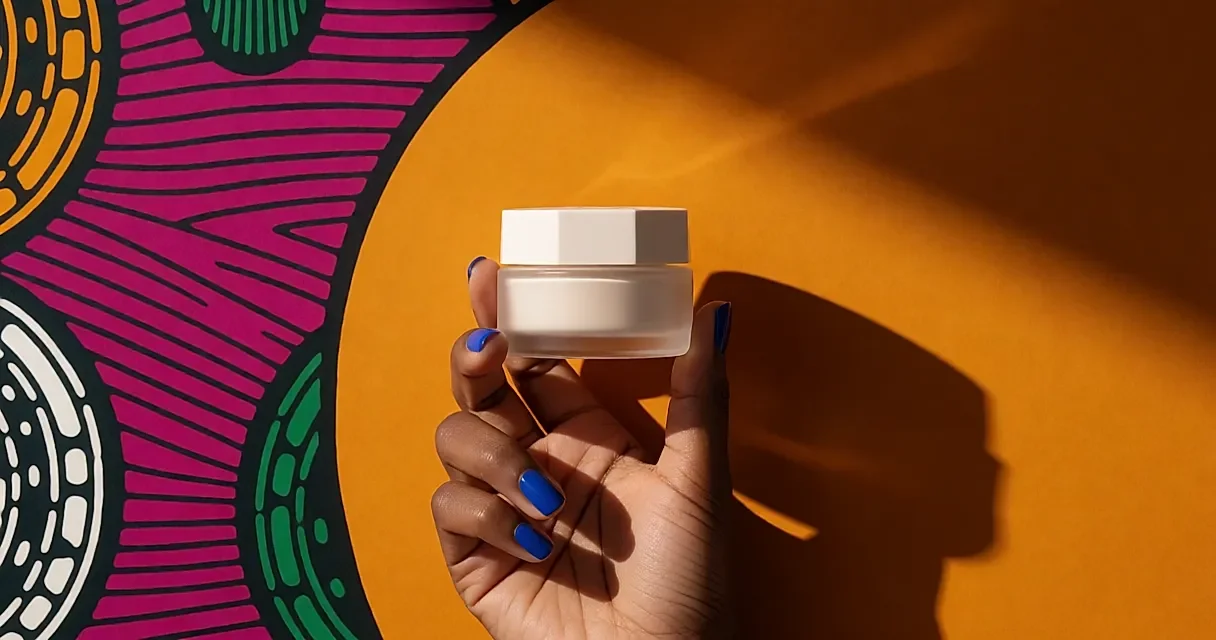
A shampoo sachet the size of a business card, with a serrated corner and a price scribbled in marker at the kiosk. No pump, no heavy glass, no gift set: a few dozen millilitres that fit in a pocket and can be bought singly. West Africa has been using this format for years without marketing it as an innovation that will save the planet.
Meanwhile, our cupboards fill up with bottles we keep just in case. And it may be there, in cities where glass is poorly collected, that the packaging Europe is starting to look at is taking shape. Not as a trend, but out of necessity.
The much-maligned sachet that got dosing right
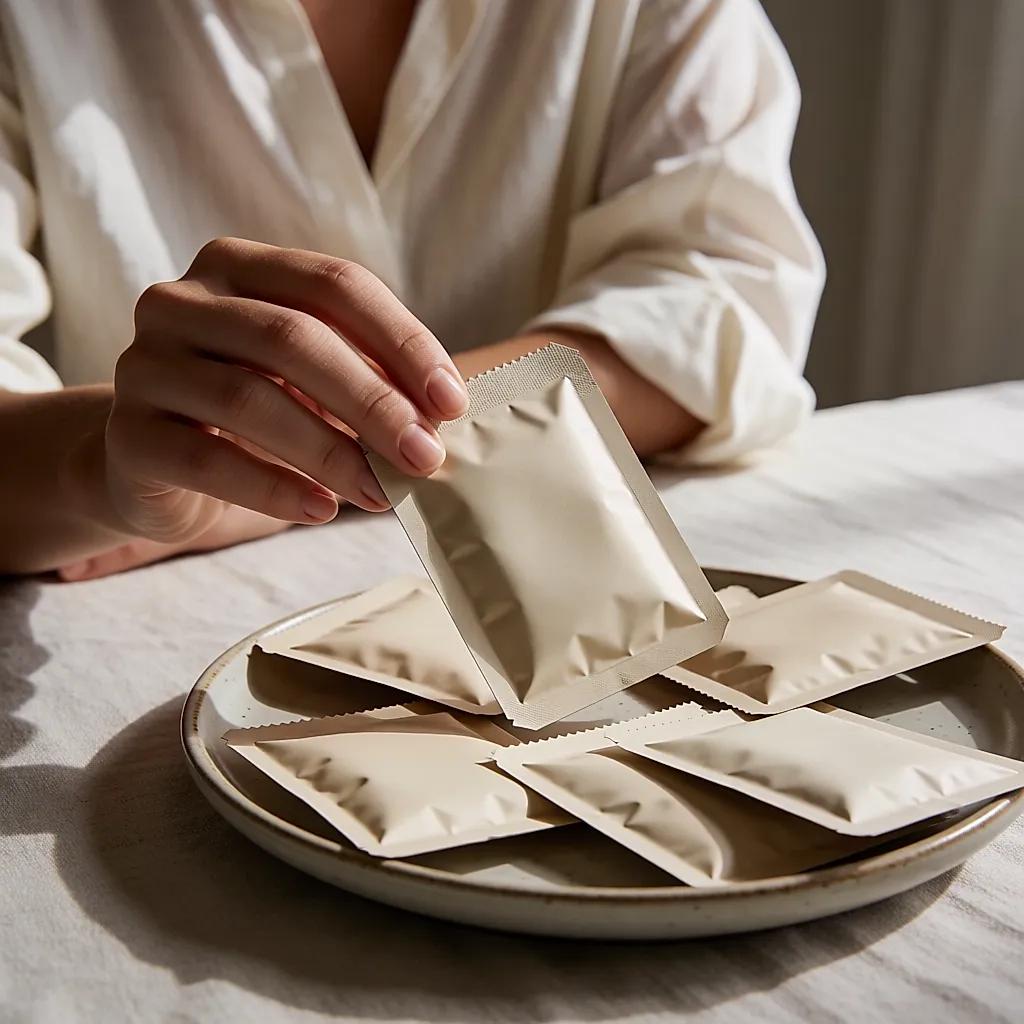
In many West African cities, skincare is bought by the dose. A shampoo, a body lotion, a toothpaste: you take what you will use in the week, not the month's bottle. That day-by-day logic answers two very concrete realities: a budget that has to be managed from one day to the next, and glass collection systems that do not exist everywhere.
The problem is the material. These sachets are most often multilayer films, very difficult to recycle, and too often they end up in drains and gutters. No one is going to sell you this as an eco-friendly model, and a good thing too. What can be borrowed isn't the plastic: it's the right dose and the tiny upfront price. Would a European brand dare sell a product singly rather than in a 200ml bottle? It is worth asking.
Buying loose was normal long before the zero-waste trend
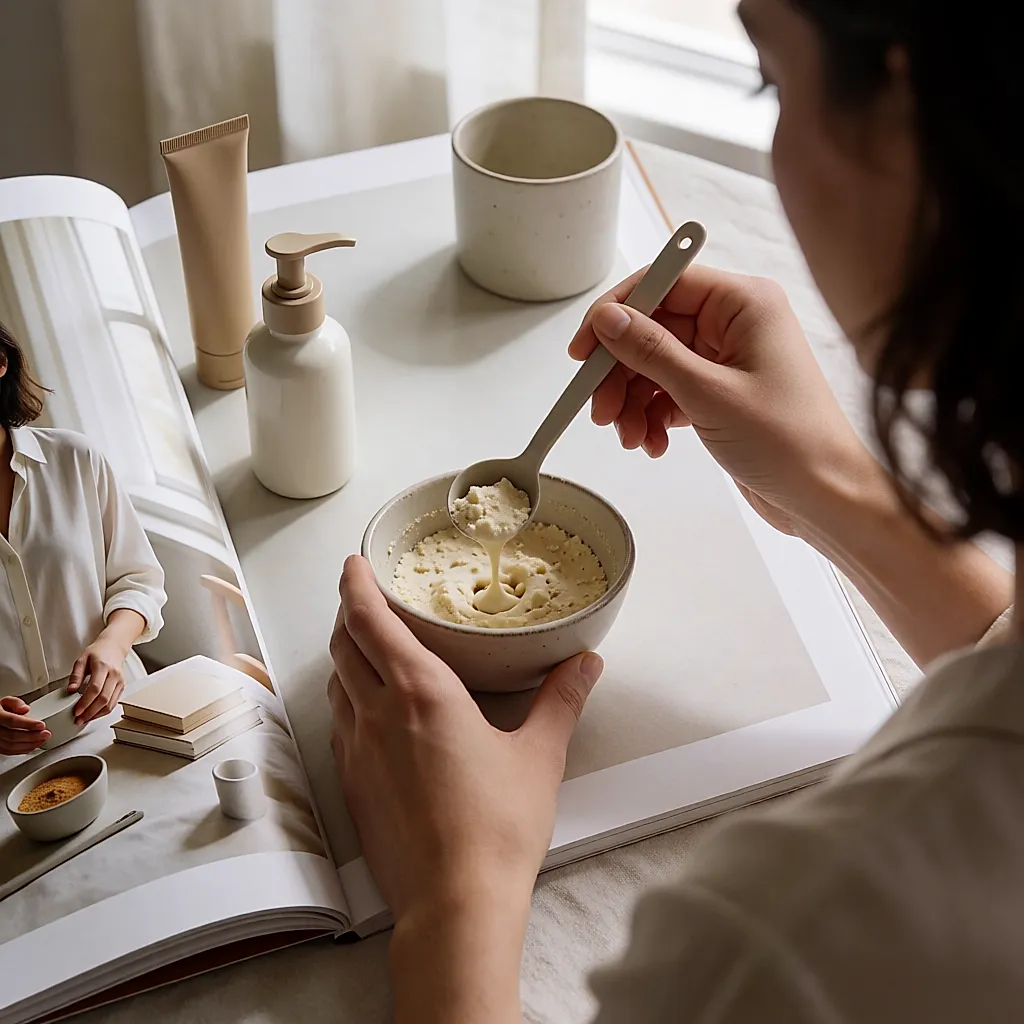
On a market, shea is ladled out, black soap is cut with a knife, oil is poured into the pot you brought. Buying loose here isn't a chic aisle with stainless-steel dispensers: it is simply how things work. You bring your own container because the container costs money, quite simply.
Here in the UK, we've restaged the gesture as a display: rows of jars, handwritten labels, a scale on screen. Except that skincare doesn't behave like lentils: a cream left open oxidises, collects dust and loses its texture. Hence the appeal of a closed, refillable container that you fill and keep for months. The African market has the logic; Europe has added the formulation know-how. The trick is keeping both.
Glass is not always the good guy
The textbook reflex is to cast glass as noble and plastic as guilty. But glass is heavy, so expensive to transport, and melts at very high temperatures. It only becomes truly worthwhile if it is collected and melted down near you. In cities where collection is irregular, an HDPE bottle plugged into a local recycling stream may fare better than a glass jar travelling hundreds of kilometres.
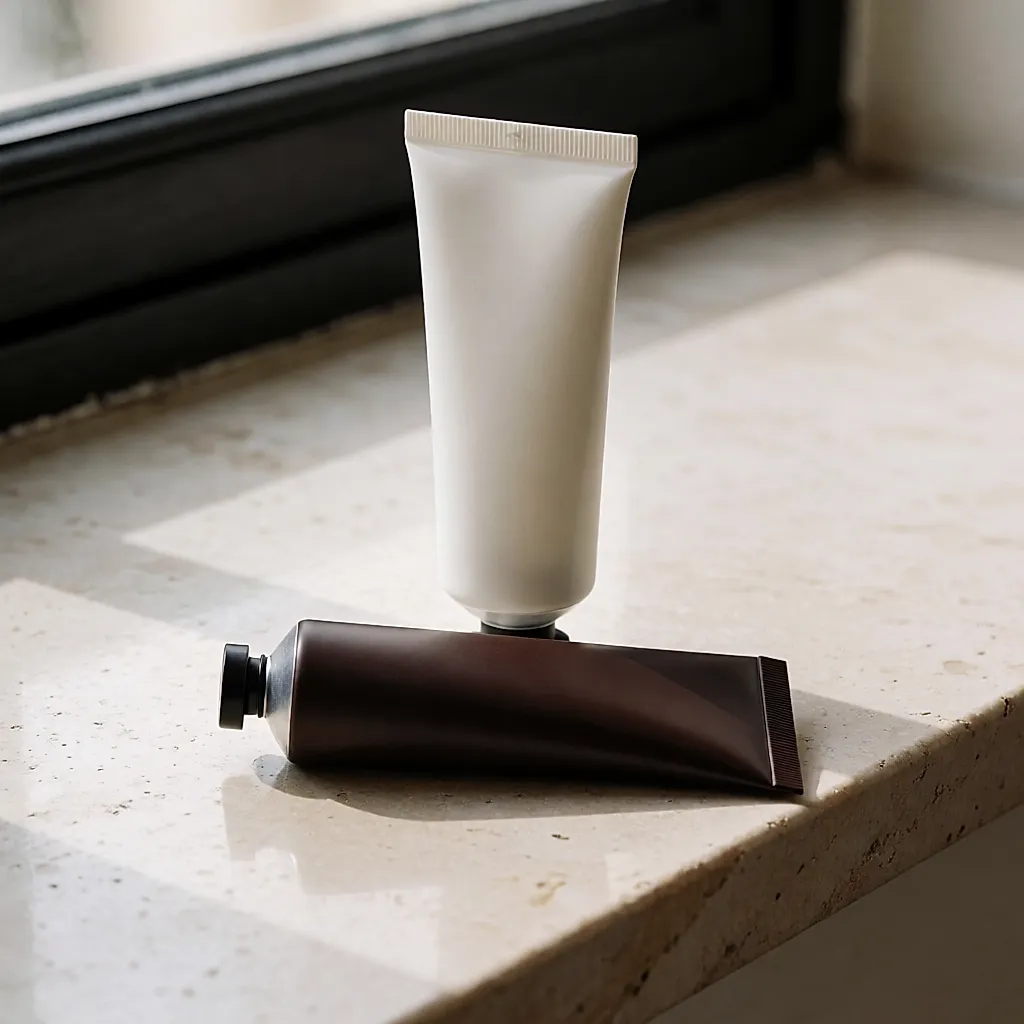
What changes the picture is mono-material: a tube and its cap in the same resin, a label that peels off, no multimaterial pump that cannot be dismantled. The detail that matters is not the material chosen but where it ends up. And what actually happens to each sachet sold on a street corner, I couldn't tell you.
What Europe is starting to borrow
Here in the UK, refill has become the visible eco-gesture. Some retailers offer it on part of their ranges, often in a flexible pouch or a bottle lighter than the original. The idea is good; the execution isn't always. If the refill is itself a non-recyclable plastic film, all you've really done is move the problem from one drawer to another.
So attention is turning to concentrated formulas, waterless or nearly so, that reduce the volume to be transported. Nothing magic there: less water often means more effort at home and a texture to get used to. That is exactly the sachet's lesson: a format is never good in the abstract. It is good for a given use, budget and waste stream.
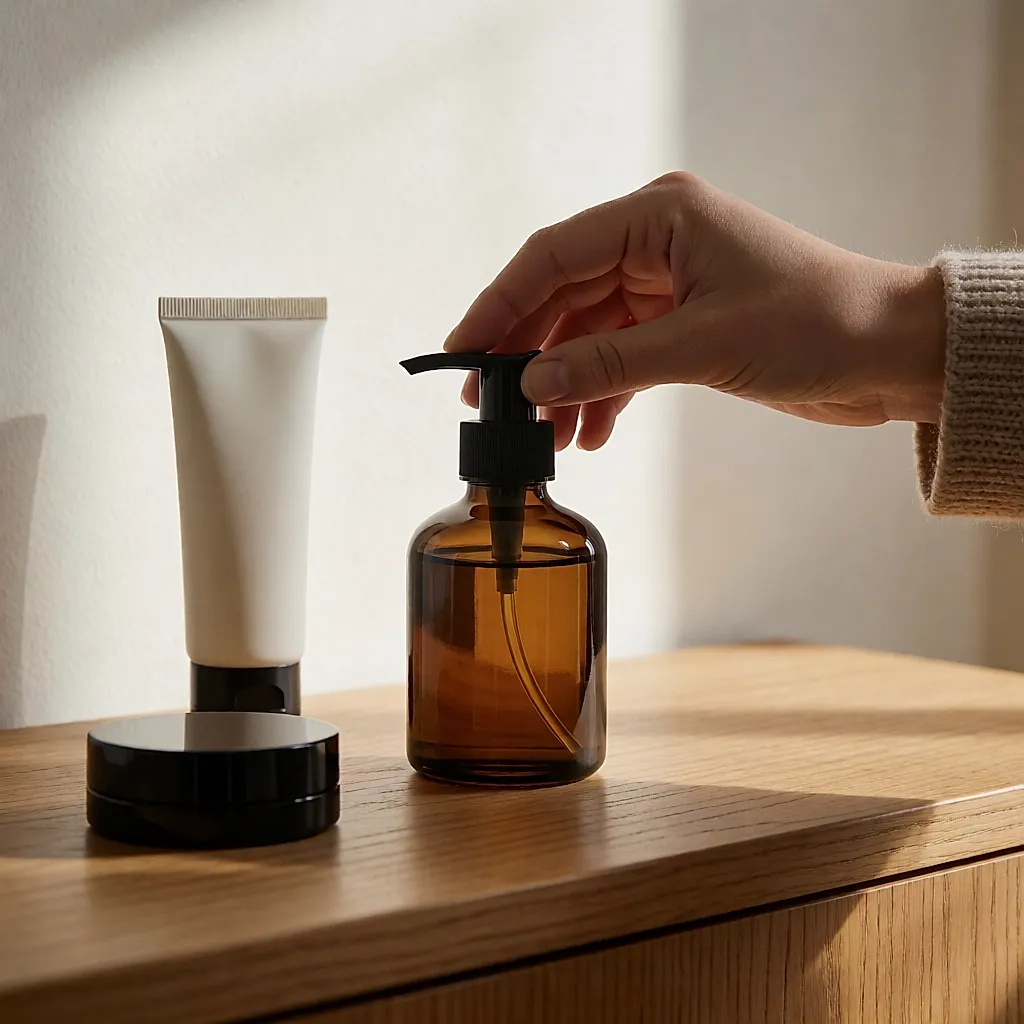
A sachet is not ecological by nature. Multilayer films remain very hard to recycle, and their spread in the environment is a real problem. The format's appeal is economic and practical: the right dose, a low upfront price. Virtue lies elsewhere: in collection and in the material.
Budget
When it comes to price, refills remain the simplest lever in the UK: in practice, expect them to cost 15–30% less than the version with a pump or original pot. On a face product costing £30–£40, the difference almost pays for a cleanser, provided you keep the bottle long enough for the system to make sense. If not, you've simply bought two packages.
Buying loose, meanwhile, remains the realm of simple ingredients: African black soap, raw shea butter, oils. Expect to pay around £10 for 250g of shea in a health-food shop, often less in an African grocery or market, more in a specialist beauty retailer. This is where the oldest format in the world remains the most cost-effective: your own jar, filled, with no packaging to throw away. Ultimately, the real question isn't which container looks prettiest on the shelf, but which one you'll agree to keep, refill and bring back. Start with one: that's already one fewer bottle in the cupboard.

Comments
Your opinion matters: rate the article, react and reply to comments.
Comments are moderated; AI-assisted comments are flagged. Text emoticons (8-), :-), <3…) are automatically shown as images.