

On stage, makeup has to hold until the final encore, through lighting changes and the heat of the spotlights: waterproof mascara, glitter, long-wear shadow. By Monday morning, most of us struggle to keep a mascara going until lunch. So how does skin recover from an evening of taking all that?
What spotlights do to makeup
A stage makeup that lasts for hours is not just a layer of colour. It is foundation, powder, sometimes a sunscreen, a waterproof mascara, a glitter eyeshadow or a long-wear lipstick — plus that thin film of sebum and sweat that creeps in as the evening wears on. Under the lights the heat really does build up, and the makeup mixes with all of it. By the end of the night you are not dealing with “a bit of makeup”: you have a film that has been through something.

Hence the temptation of the single, slightly military cleanse. You rub, you go over it again, you keep at it until the cotton pad comes away white. With stage makeup that is the quickest way to exhaust yourself — and to spread glitter rather than remove it. What makes the difference is the order: dissolve first, cleanse second.
Oil first, cleanser second
A cleansing oil on dry skin is step one. A pea-sized amount is enough; massage gently for a few moments, working round the whole face. No rubbing — as if you were lifting a sauce stain out of a white T-shirt. The oil dissolves pigments and sunscreens, but also long-wear colour and waterproof mascara: on glitter, leave it to sit for a moment. Then add a little water to turn it into a milk and rinse. That emulsion is what lifts the makeup off, and it is also what separates a proper cleanse after stubborn makeup from a quick swipe of cotton wool.
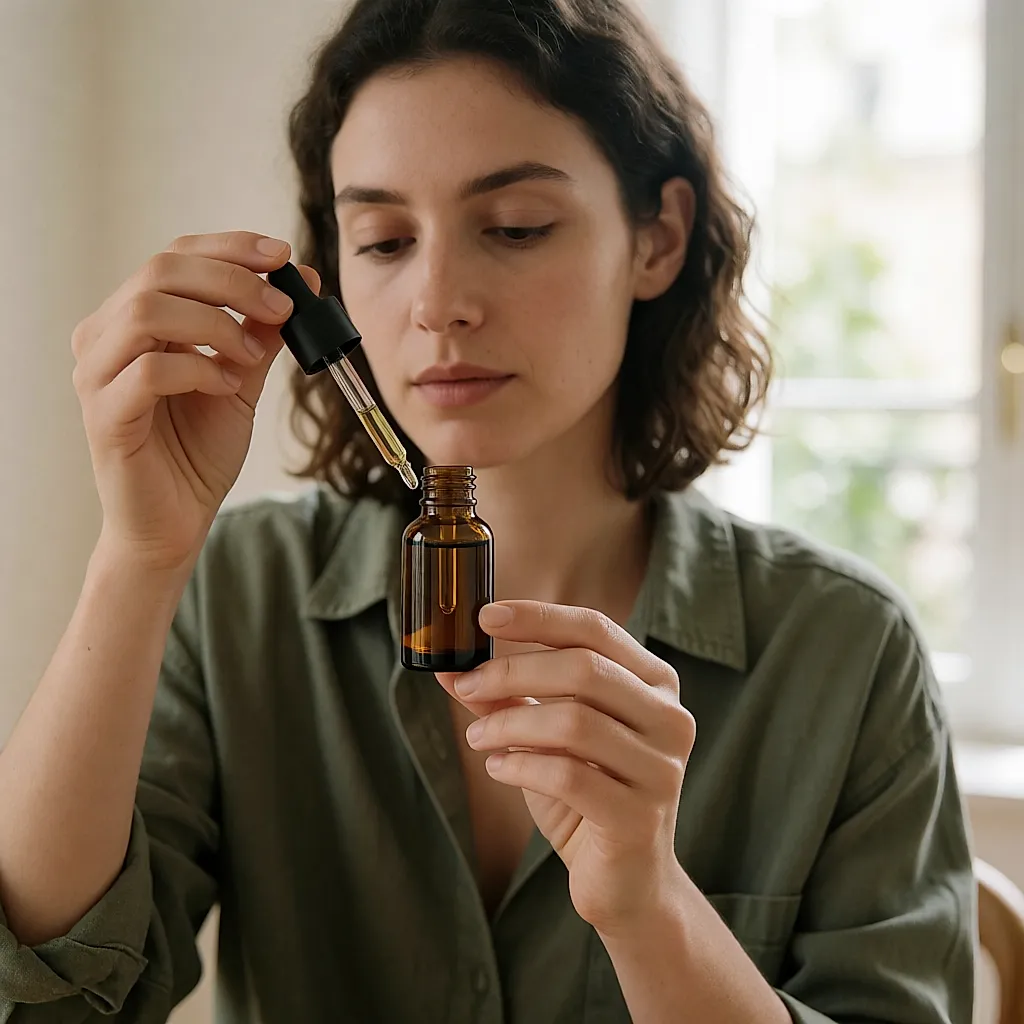
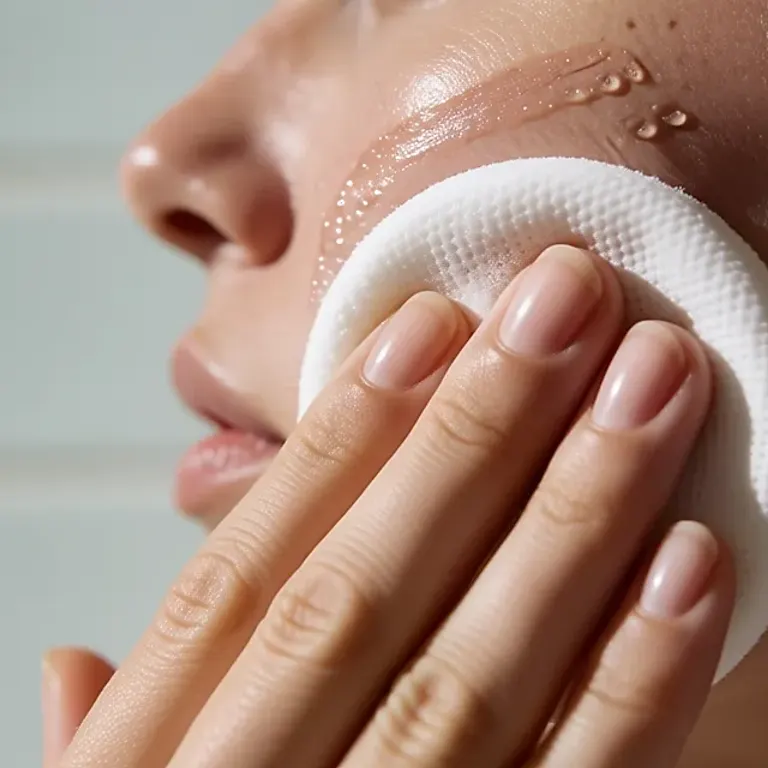
Next comes a gentle cleanser. Apply to damp skin in circular movements, then rinse with lukewarm water. Again, no rubbing: the aim is to remove the residue of oil, not to go over the skin a second time. Two steps, not three — your face is not a saucepan.
The evening marker: with stage makeup, give the oil time to sit rather than rubbing at it. It needs a moment to dissolve the waterproof formulas and the glitter; after that, water turns it into a milk and the rinse carries off the rest.
I do not claim to know every oil on the market — the principle stays the same. And on nights when you are wiped out, keep it to the minimum: oil, emulsion, gentle cleanser. In practice it is five minutes, no cotton wool lying around, and no promise of brand-new skin in the morning. Just clean, comfortable skin. Which is plenty.
What it costs
At the budget end, expect to pay somewhere in the region of £7–15 for a cleansing oil on the high street, £12–25 in a pharmacy, and £25–45 at a beauty retailer or department store depending on the size. A gentle cleanser usually comes in at around £5–12 on the high street, £10–20 in a pharmacy, and £20–35 for some premium brands.
Prices vary with size, location and range. For a more eco-conscious option, look for a refill, a glass bottle, a solid format or a certified formula (Cosmos Organic, Ecocert). Certification does not tell you everything, but it makes things easier to read. And if the perfect product is not already in your bathroom, start by finishing what you have: that is usually the greenest move.
The real luxury, after a stage night or a dinner that drags on, is not waking up with skin begging for mercy. Oil, gentle cleanser: the routine comes down to two steps. The rest is makeup.


Comments
Your opinion matters: rate the article, react and reply to comments.
Comments are moderated; AI-assisted comments are flagged. Text emoticons (8-), :-), <3…) are automatically shown as images.