
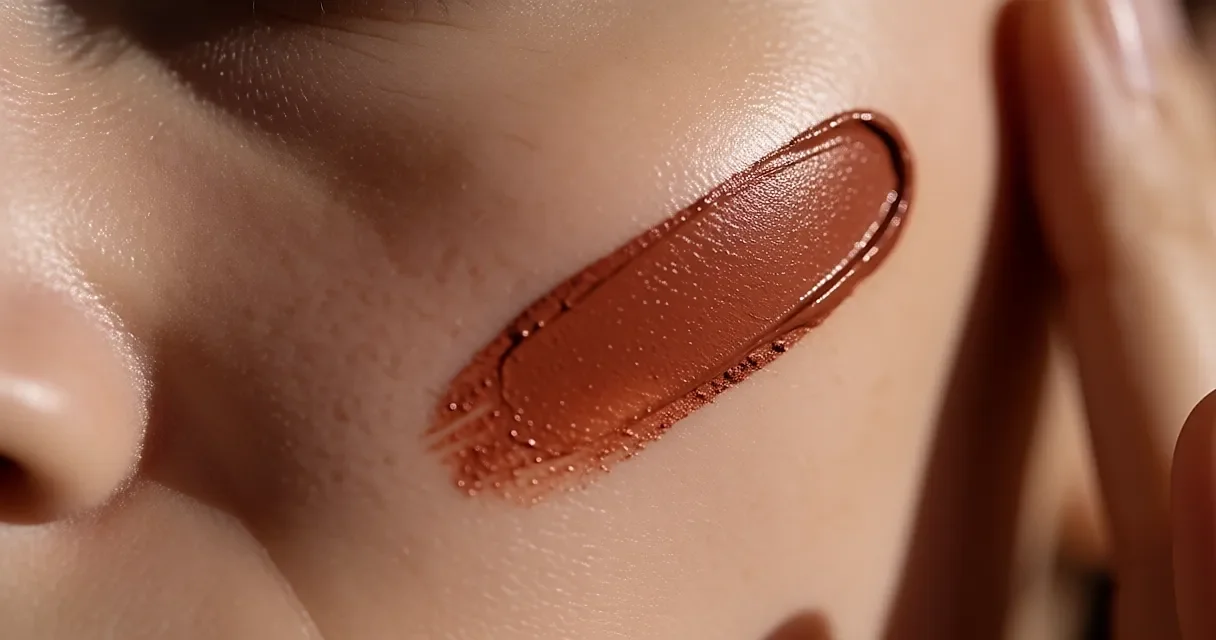
An eyeshadow stick fits in a coat pocket and promises a finished eye look in less time than it takes to find your keys. On a smooth lid, it blends like a cream; on a hooded eyelid, it quickly retreats into the crease. The difference is not the product but the technique — and a layer of powder that is too often skipped.
Finger warmth is handy, but it can work against you
The fingertip is the most tempting tool: it is there, it is warm, it spreads. In reality, that finger warmth softens the stick's texture, makes it slide and leaves a soft, almost melted veil. To the naked eye it looks charming; for crisp coverage it is trickier. The more you rub, the more the colour stretches and sheers out.
The finger is excellent for an emergency make-up job, not for drawing a precise line right at the lash line. If you want to keep the colour without the feel of product, tap rather than sweep. And if the result looks too light, build it in small touches: the next layer holds better than one thick stroke. Finger or brush? Both, but not for the same job.
Hooded or smooth: two techniques, not two products
On a hooded eyelid, the crease practically eats the product. The moment you load it on, the stick gathers in the hollow and the colour disappears when the eye opens. The technique that makes the difference: a thin layer, blended upwards, with the colour kept close to the lashes and just above the crease. Two light passes are better than one generous stroke.

On a smooth eyelid, the texture sits more easily. You can layer it, play with a gradient and take the shade up towards the brow bone. But do not confuse smooth with anything goes: a layer that is too thick will eventually mark the crease too. The rule stays the same; only the amount changes. Why does the crease win so quickly? Because it catches what the eyelid does not hold.
Why powder under the stick acts like a safety belt
A fine layer of powder eyeshadow applied before the stick changes how the make-up behaves. The powder gives a dry finish for the cream to grip, so the stick glides less and deposits more evenly. You do not need a thick layer. A simple veil is enough, especially if your crease tends to mark easily.
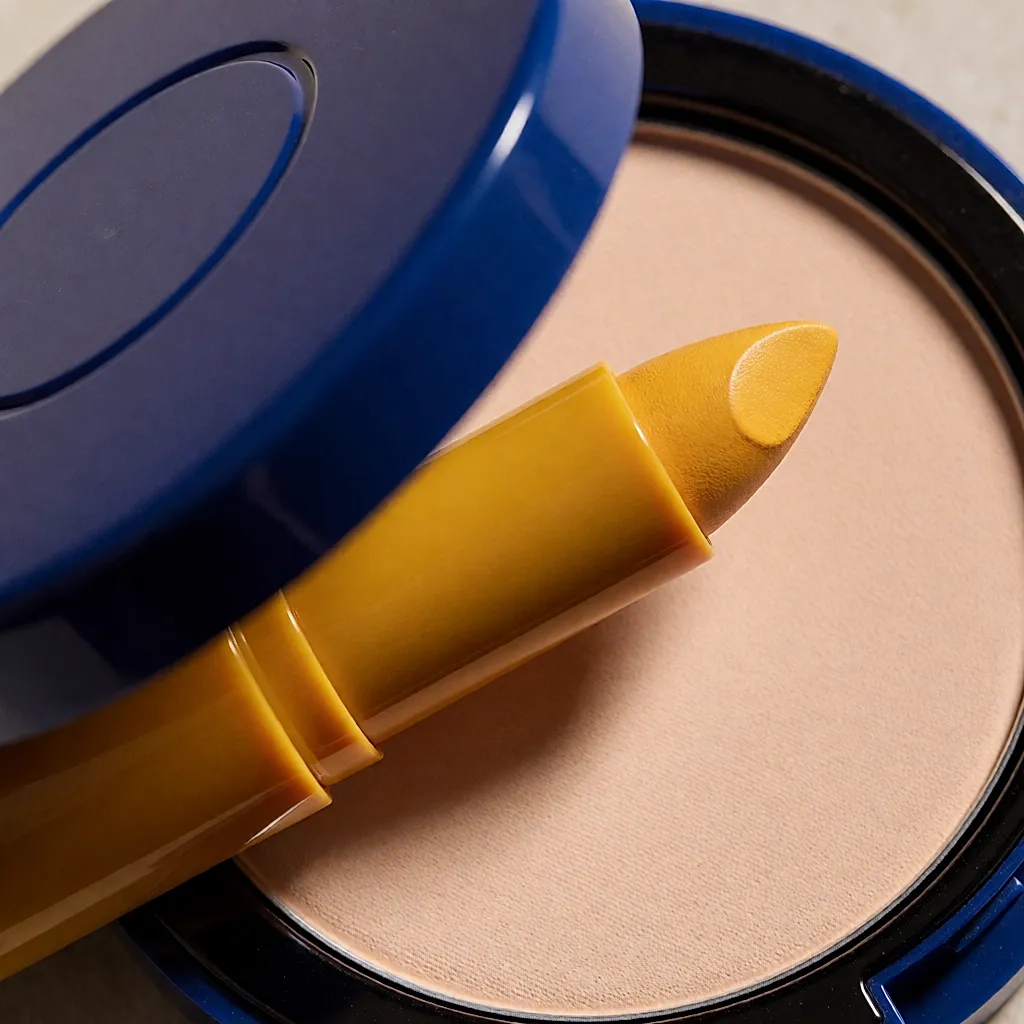
The order matters: powder, stick, then a light pass of powder again if needed. On a hooded eyelid, keep the powder very fine so it does not weigh the lid down. On a smooth eyelid, it can act as a base for a sharper gradient. I do not have a reliable figure for wear time: heat and your eyelid change the picture from day to day. In practice, this small layer often helps eyeshadow stay in place without slipping into the crease.
The right order in five minutes: a veil of powder, a stroke of the stick, a tap of the finger, then a light dusting of powder over the crease. If you have nothing else, that is already better than stick alone.
What it costs
On price, expect roughly £7-£18 for an eyeshadow stick from a high-street or pharmacy brand, £13-£30 at a beauty retailer, and £3-£10 for a powder eyeshadow. A decent flat brush costs around £7-£18. Prices vary depending on where you shop, the range and the packaging; there is no need to go for the most expensive option to start with.
Where to buy? Supermarkets, beauty retailers, health-and-beauty retailers, organic shops or online. For a more responsible choice, look for powder eyeshadows in cardboard or glass packaging, refills where the brand offers them, and check certifications rather than marketing promises. A conventional stick is often the easiest to carry; the trade-off is plastic packaging. It is up to you to decide what matters most in your bag.
The technique worth keeping
When time is short, you do not need a full kit: a powder eyeshadow, a stick and a clean finger. The powder stabilises, the stick adds colour, the finger blends. On a hooded eyelid, go lighter; on a smooth eyelid, have fun with it. And if the crease marks by the end of the day, a simple tap is enough to put the colour back in place.
The make-up is not a promise to last twelve hours; it is a technique you adapt. Start with a thin layer, see what your eyelid does during the day, then adjust. It is less spectacular than a new product, but it is what really works.



Comments
Your opinion matters: rate the article, react and reply to comments.
Comments are moderated; AI-assisted comments are flagged. Text emoticons (8-), :-), <3…) are automatically shown as images.