

Well, smile: it's now possible without UV thanks to the latest arrival in beauty salons — the self-tan shower, also known as spray tanning.
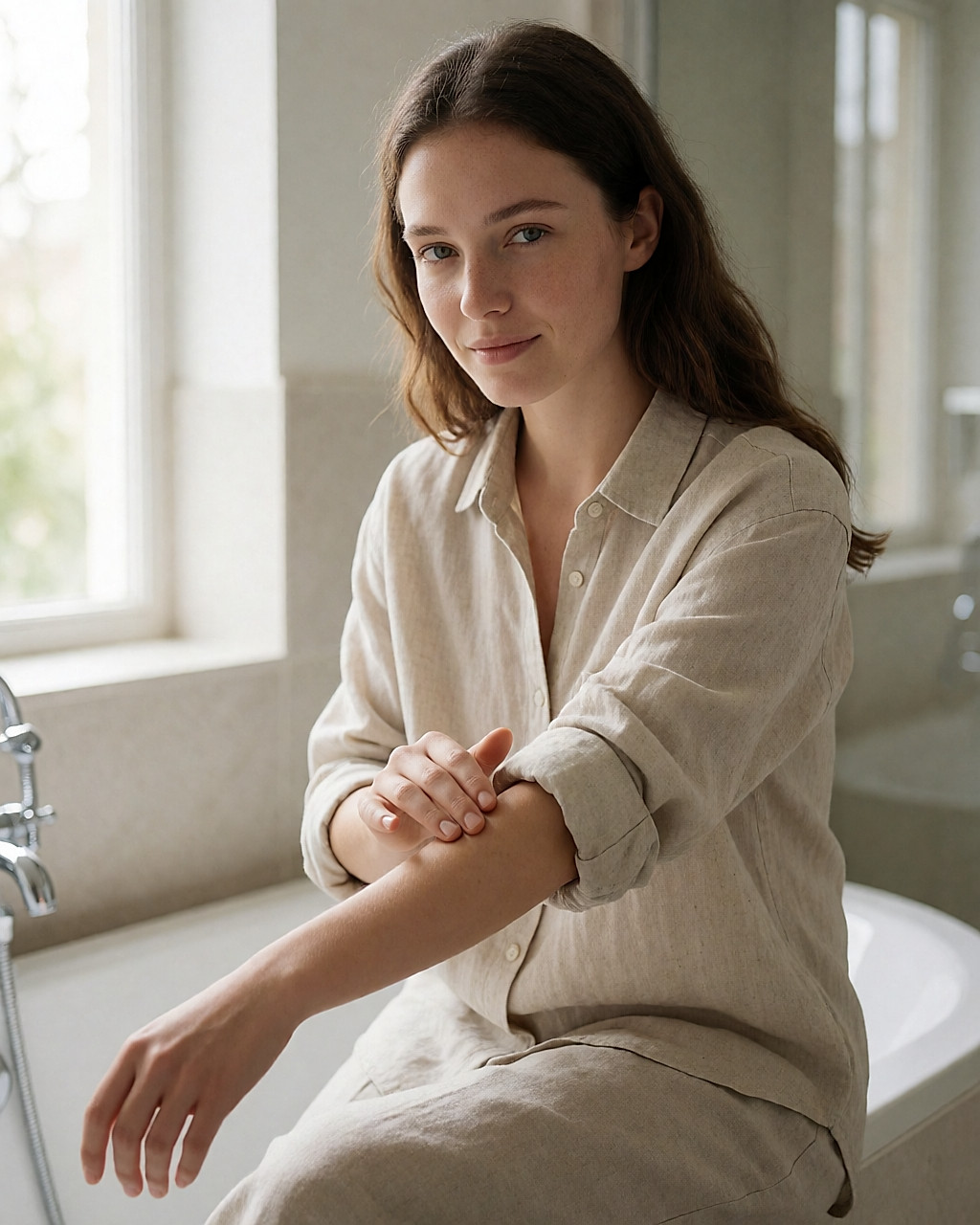
It's no secret that UV is bad for us. Premature ageing, skin spots and cancer — none of it exactly cheerful. And yet, a lovely bronzed glow, skin the colour of gingerbread and a soft finish under the tan: there's nothing quite like it!
The principle? Not complicated: you already know the self-tan lotions and sprays you buy on the high street and apply yourself? Well, here it's the same idea: a shower cubicle fitted with jets that distribute the self-tan all over the body, although how even the result looks depends on your skin, your preparation and the equipment. You go in naked and simply follow the movements the booth prompts you to do (yes, it talks!), such as lifting your arms, lifting your legs, turning around — nothing too complicated!
Inside the booth, DHA does all the work. Nothing to do with pigment: this molecule reacts with dead cells on the skin's surface and turns them brown. So your tan doesn't come from your melanocytes; it sits on the surface and goes when the outer layer of skin sheds.

Self-tan can also be applied by the beauty therapist herself using a spray gun.
The colour develops gradually, then really shows between four and eight hours after your appointment; it's normal to see nothing when you leave, as the reaction just needs time.
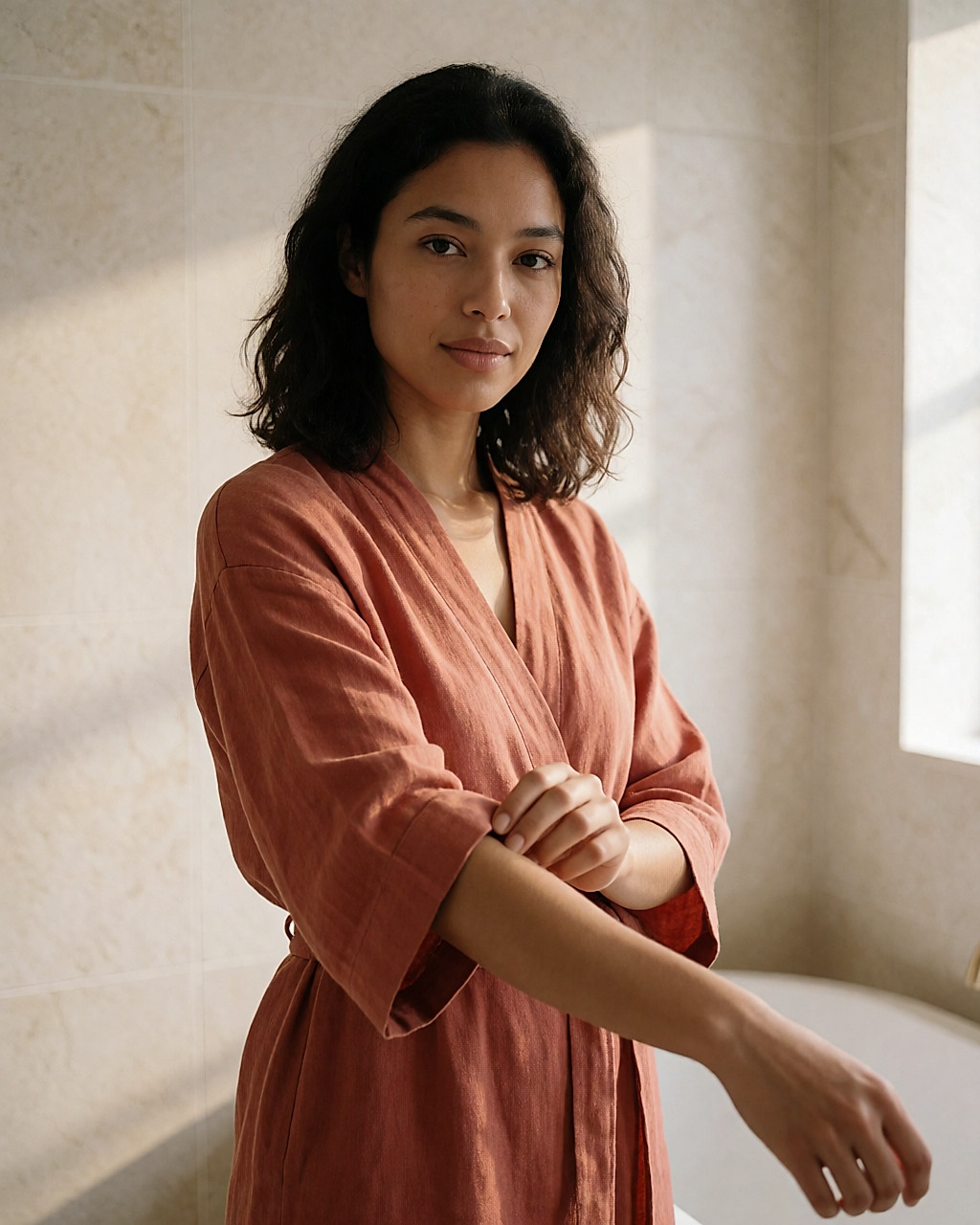
First, the most important thing: a self-tan does not protect you from the sun. No SPF, no protection, not even a little! If you're heading to the beach the following week, sun cream is still essential.
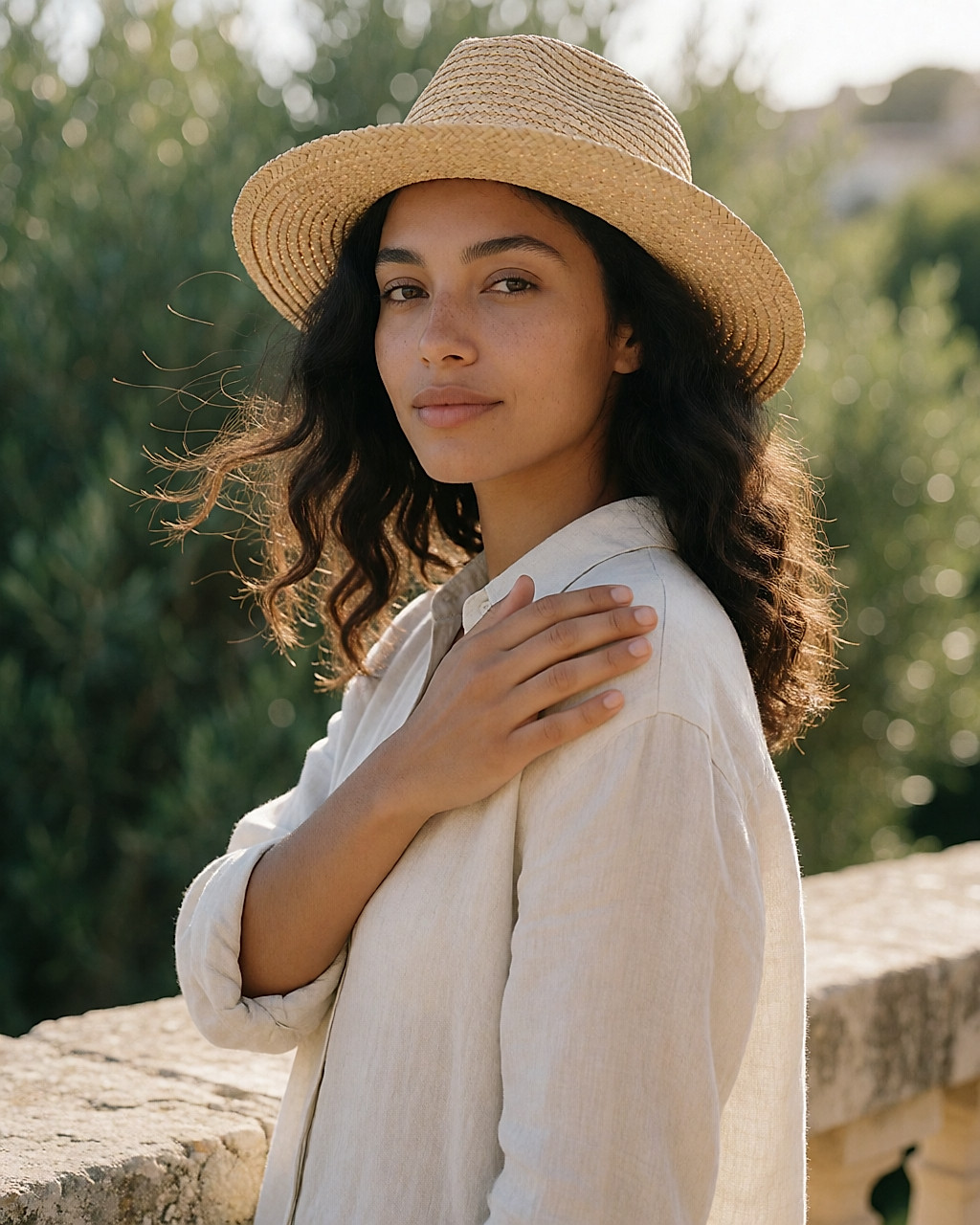
Do bear in mind, though, that this technique can have a few small drawbacks:
For a start, the product takes around six hours to reveal its colour, so on the day, avoid light-coloured or tight clothing.
Self-tan doesn't react the same way on every skin type, so the result isn't always the same: yes, on some people it looks excellent, on others far less natural.
It can also take less well on certain parts of the body, especially the joints, the inside of the elbow or the underarms.
So do check the quality of the equipment or the skill of the beauty therapist, because when it's done well, spray tanning gives an excellent result!
Before your appointment, exfoliate and moisturise: DHA clings better to smooth skin, and the tan stays more even. On the day, plan dark, loose clothing, and wait until the next day to shower. During the spray, close your eyes and avoid inhaling the mist, and skip the appointment if your skin is damaged: irritation and allergy are still possible. Afterwards, sun cream remains your best ally: a self-tan filters nothing at all.
A spray tan lasts around a week; the price depends on the salon, and it's ideal for a special occasion, a wedding, a night out...
If you've already tried self-tan showers, feel free to leave your comments, your opinion and how the result looked on you: would you recommend them?
Budget
Budget-wise, expect around £25 to £50 per salon session, though prices vary quite a bit depending on the town or city, the location and how well known the booth is. An automated self-service booth, where the salon has one, often costs less than a spray applied by a beauty therapist; by contrast, a package of several sessions brings the price per session down. Sometimes a preparatory exfoliation or an after-session moisturising treatment is added on. For a wedding, a party or before a holiday, a single session is usually enough; if you want to maintain the tan, compare packages before booking, and always ask for the exact price when you make your appointment.


Comments
Your opinion matters: rate the article, react and reply to comments.
Comments are moderated; AI-assisted comments are flagged. Text emoticons (8-), :-), <3…) are automatically shown as images.