
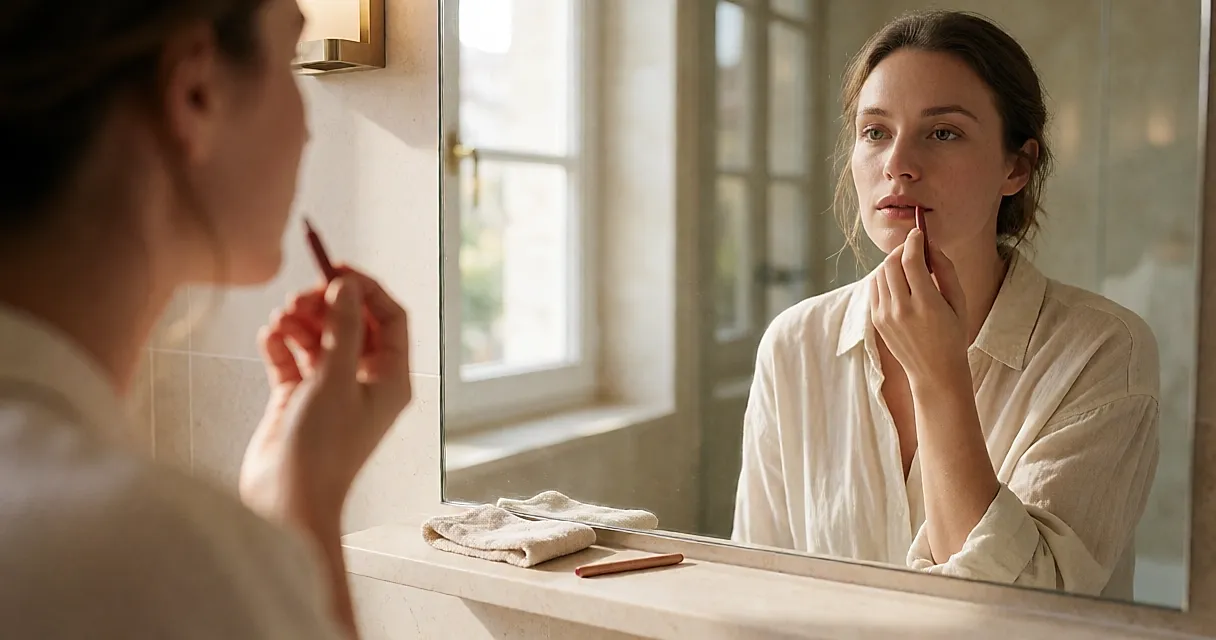
Sunday night, and the bathroom light is in no mood to be kind. You draw the outline, step back, and there it is: sharp, stern, a little older than you feel. The pencil isn't the problem. It's using it like a pen when it really wants a fingertip.
The sharp outline has had its day
For years we were sold the 'drawn' mouth: a line following the lip to the millimetre, perhaps a touch above it, to make the mouth look bigger. On a twenty-year-old mouth, fair enough. On a mouth that has laughed, talked and lived, that line sits exactly where the skin is thinnest — and the raking midday light will make sure you notice.
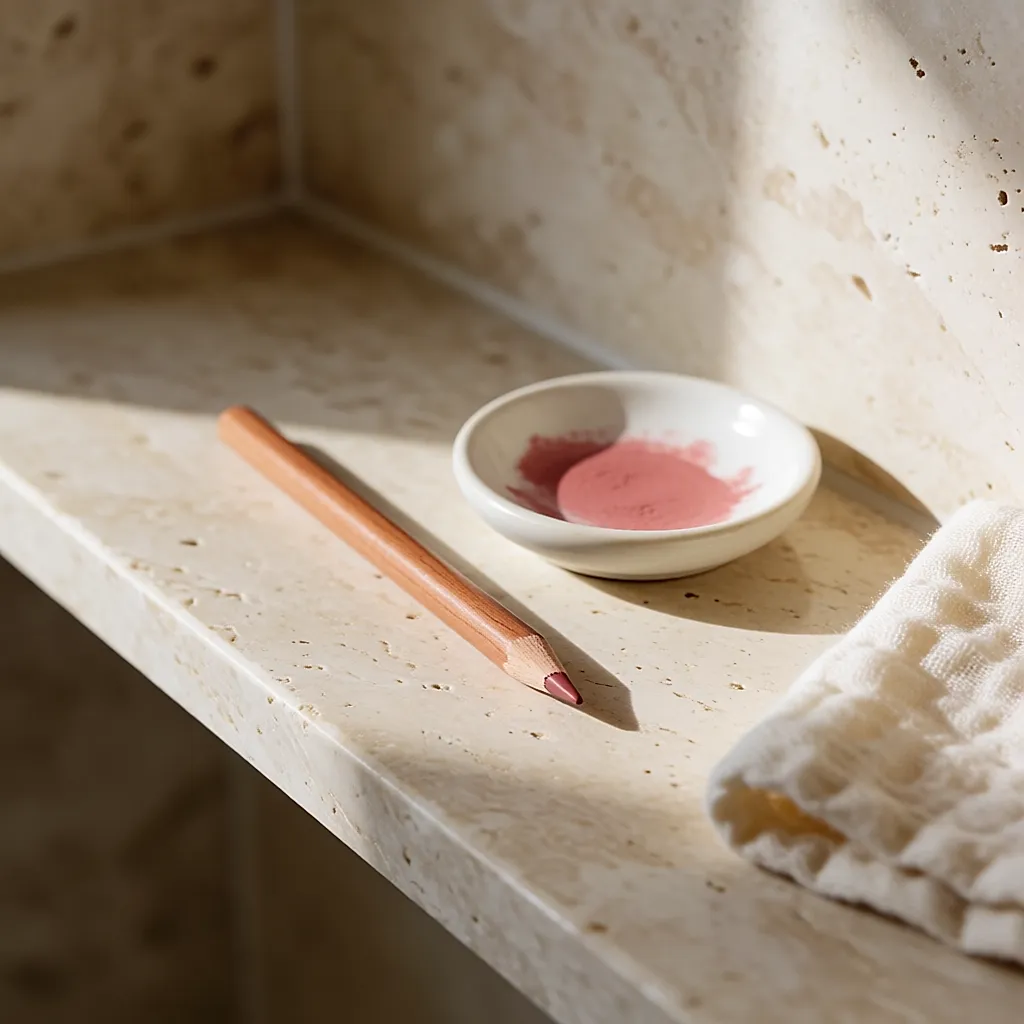
The alternative isn't skipping pencil altogether: it's letting the pencil become a base of colour. Apply the colour, blend it, and let the tint do the work rather than the line. Lips look fuller without being redrawn, and lipstick has something similar underneath instead of floating on top.
Hard lead, soft lead: what actually changes
It all comes down to the lead. A hard lead — the 'long-lasting' kind praised in the Nineties — catches the skin, lays down dense pigment and refuses to budge. On a smooth lip, it gives formidable precision. On a lip marked with fine lines, it highlights them one by one, like a pencil on crumpled tracing paper.
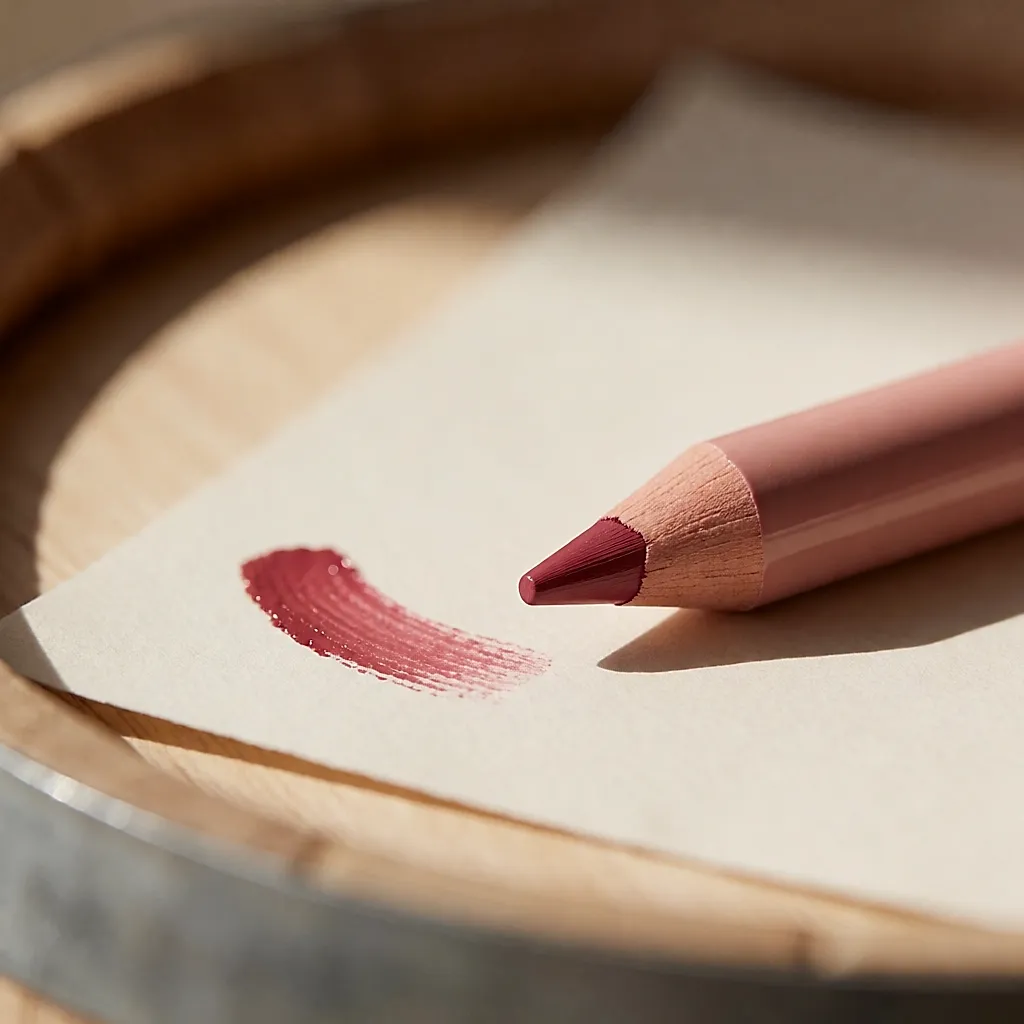
A soft lead behaves differently: it glides, goes on as a veil and welcomes the fingertip. The downside? It fades faster over coffee and needs a lipstick on top to stay put. It's a trade-off, not a verdict: do you want blur or definition? If your lips are lined and you're after a diffused look, soft wins; for an immaculate edge on a big night out, hard still has its uses — as long as you don't use it as a base.
And don't trust shortcuts: within the same range, shades aren't always equal. The pale nude can be firmer than the plum, because pigments don't all behave the same way. There's no guarantee that a pencil that's perfect in nude will be perfect in burgundy.
The back-of-the-hand test, in three minutes
In store, testers are there for exactly this — use them. Draw a firm line on the back of your hand, without pressing hard, then wait a full minute. If the lead has already set and won't spread, you have a hard pencil. If it still stretches under your finger and keeps its colour, it's a soft one.
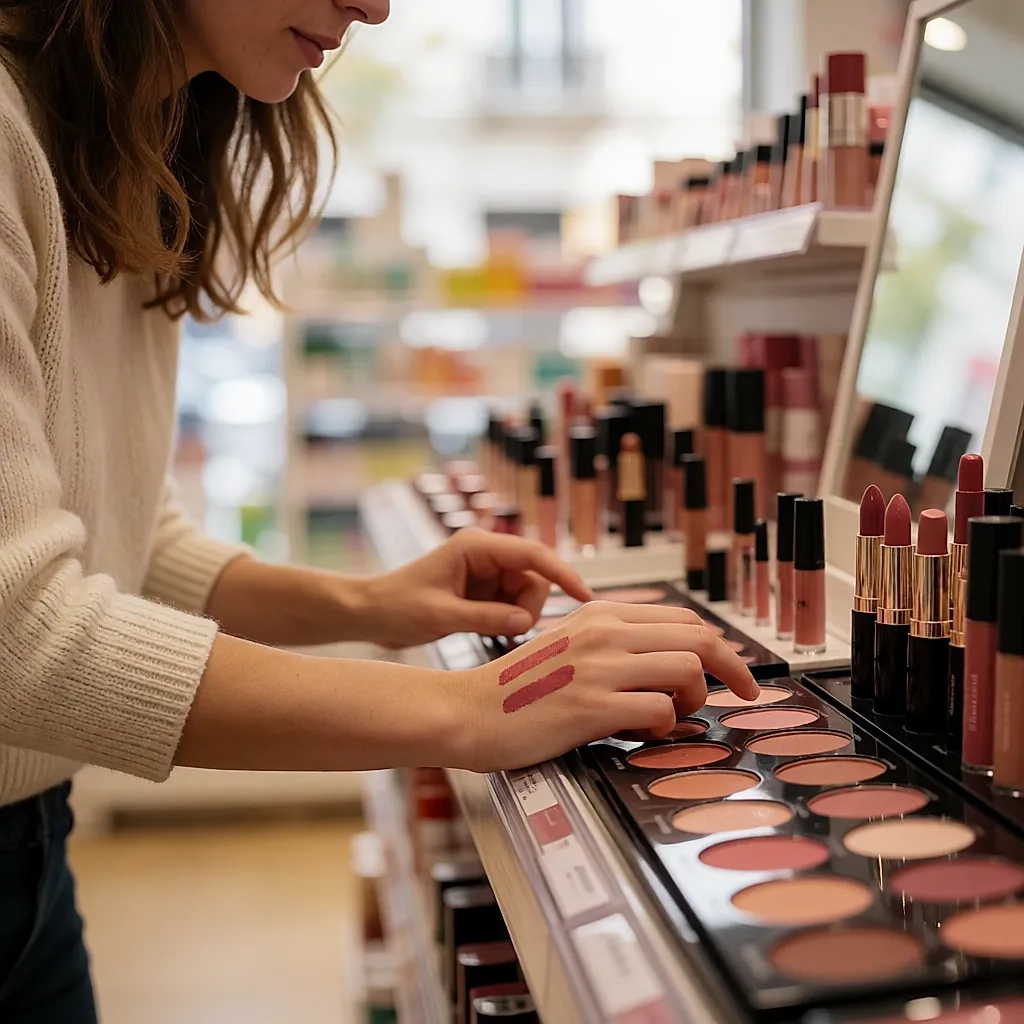
Then look at the edge of the line: if it frays into little lines in the creases of your skin, it will do the same on your lips. Check the tip too: a pencil you can't sharpen to a point will end up as a fat round stick, impossible to place near the lip edge.
The quick in-store test: draw a line on the back of your hand, wait a minute, blend with your index finger and see whether the colour stays even or breaks up in the creases. Also run the lead over your fingertip: a pencil that scratches the back of your hand will scratch your lips too.
The technique, once you've got the right pencil
Forget the outline in the strict sense. Sharpen the lead, draw a light line in the centre of your lips, then blend outwards with your fingertip, tapping rather than rubbing. Two passes are better than one: the first adds colour, the second evens it out.
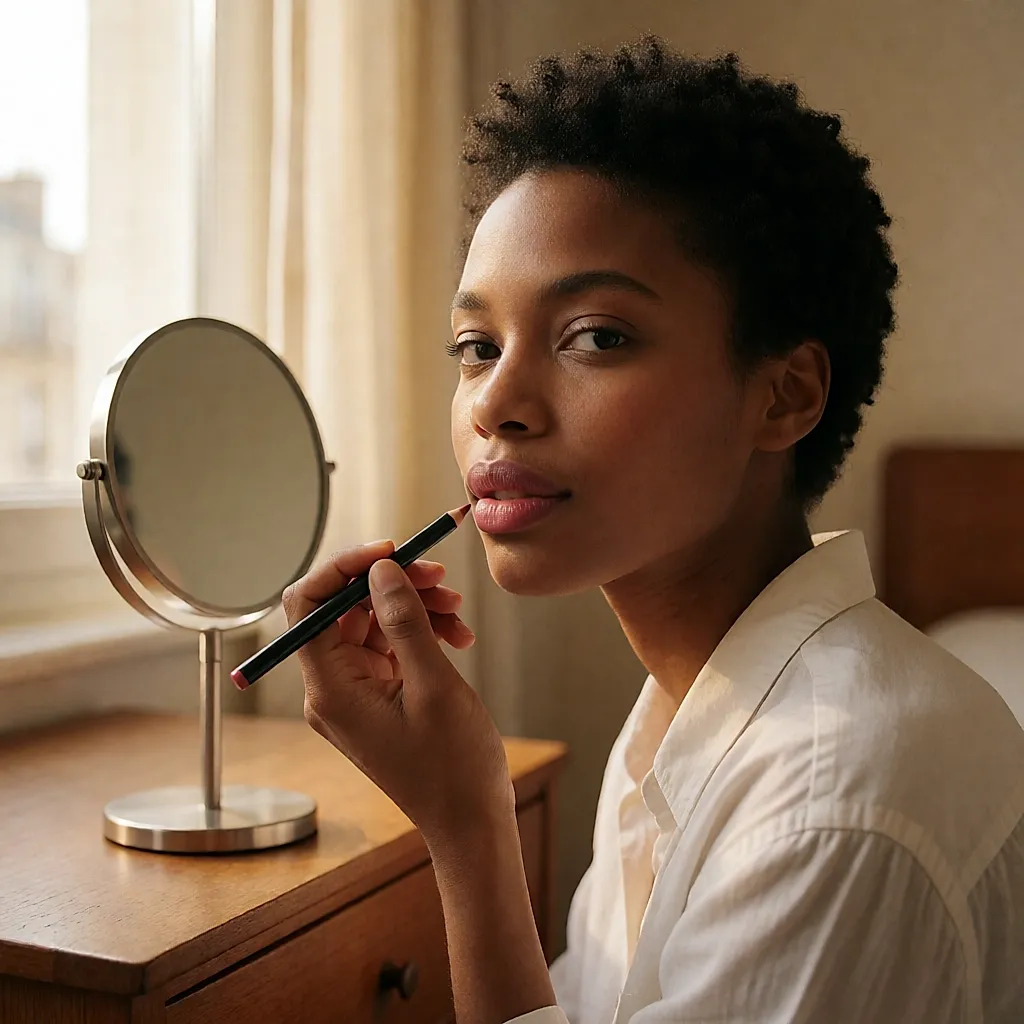
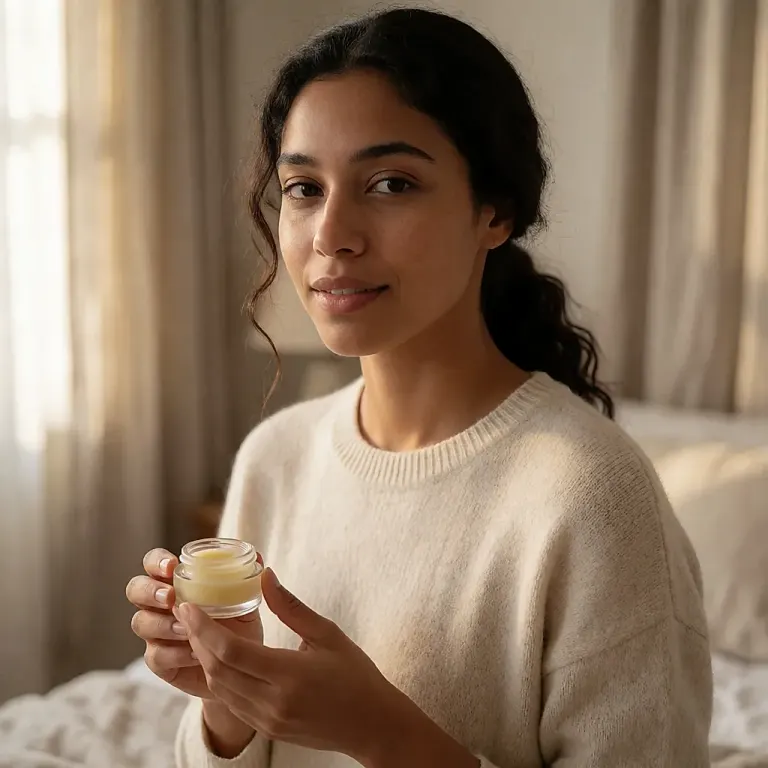
For daytime, a thin layer of balm on top softens the whole thing and catches any small gaps; in the evening, a clear gloss or satin lipstick turns the base into a more polished mouth. And when you've only got five minutes, a soft pencil alone, blended, is enough to make you forget about the morning coffee.
Budget
As a rough guide, expect to pay £5–£12 for a lip pencil from a supermarket or pharmacy brand, £15–£30 for a classic make-up brand, and up to £35–£40 from a luxury beauty house. The price rises mainly with the range and the packaging, rarely with staying power — a good reason not to buy blind.
As for materials, a sharpenable wooden pencil avoids the plastic of a retractable mechanism and can be sharpened right down to the end: the most pared-back choice, provided you have a clean sharpener to hand. Where to look? Supermarkets and pharmacies for low-risk trials, beauty retailers for deeper shades, and online for hard-to-find brands — but then without the back-of-the-hand test, which is like buying without reading to the end.
Lips that still look like you
At heart, a lip pencil has one job: to give your lips a colour that looks like them, not a border. The day you blend it in with your finger without thinking, you'll have found the knack — and you'll still have time to finish your coffee.
Comments
Your opinion matters: rate the article, react and reply to comments.
Comments are moderated; AI-assisted comments are flagged. Text emoticons (8-), :-), <3…) are automatically shown as images.