

Highlighter, the product that catches the light, applied over a cream that is too rich is like varnish on a door that doesn't close properly: the shine is there, but it draws attention to the flaw. The light in a complexion isn't created at the last minute, in a cloud of powder. It is decided beforehand, when you apply the layer of skincare that stays on your skin. And that is all about how much you use.
The shine starts before make-up
You know what highlighter promises: a touch on the cheekbones, a little on the brow bone, and the face lights up. But the product doesn't create light on its own; it reflects the light that is already there. On skin that is comfortable, supple and not overloaded, it does its job. On skin that is shiny because it hasn't absorbed its skincare, it piles on shine where the skin is already gleaming and can leave that slightly greasy finish you weren't after.
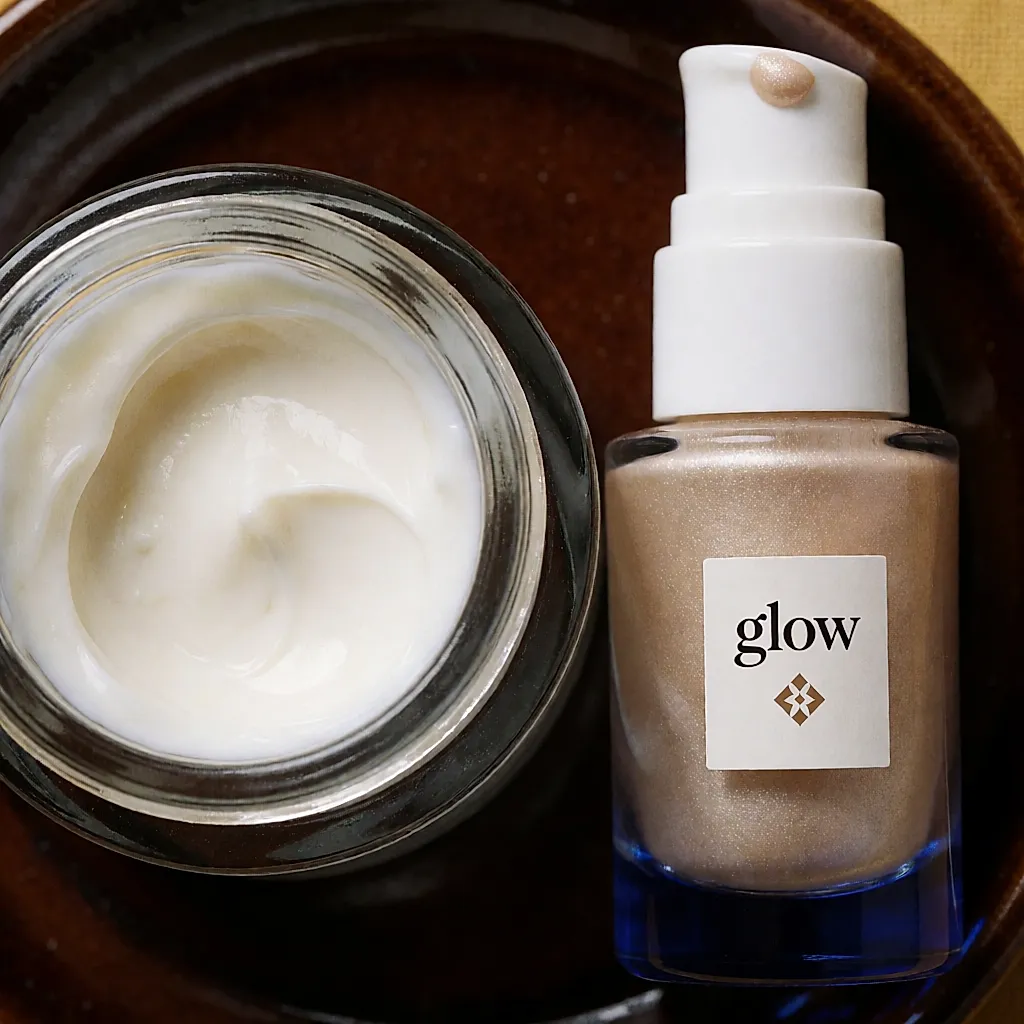
The right question isn't 'which highlighter should I buy?' but 'what am I leaving under my make-up?'. A cream that's too thick, one oil too many, a balm applied out of habit: three gestures that can turn a lovely complexion into a shiny surface. A glowing finish starts in the skincare pot, not on the brush.
How much to use, by skin type
For dry or uncomfortable skin, the final layer can be generous without being greasy: a rich cream on the cheeks and around the face, a balm only on the areas that feel tight. Plant oil seals in what is already there; it doesn't replace hydration. If your skin still feels tight, add more cream underneath rather than three extra drops of oil.
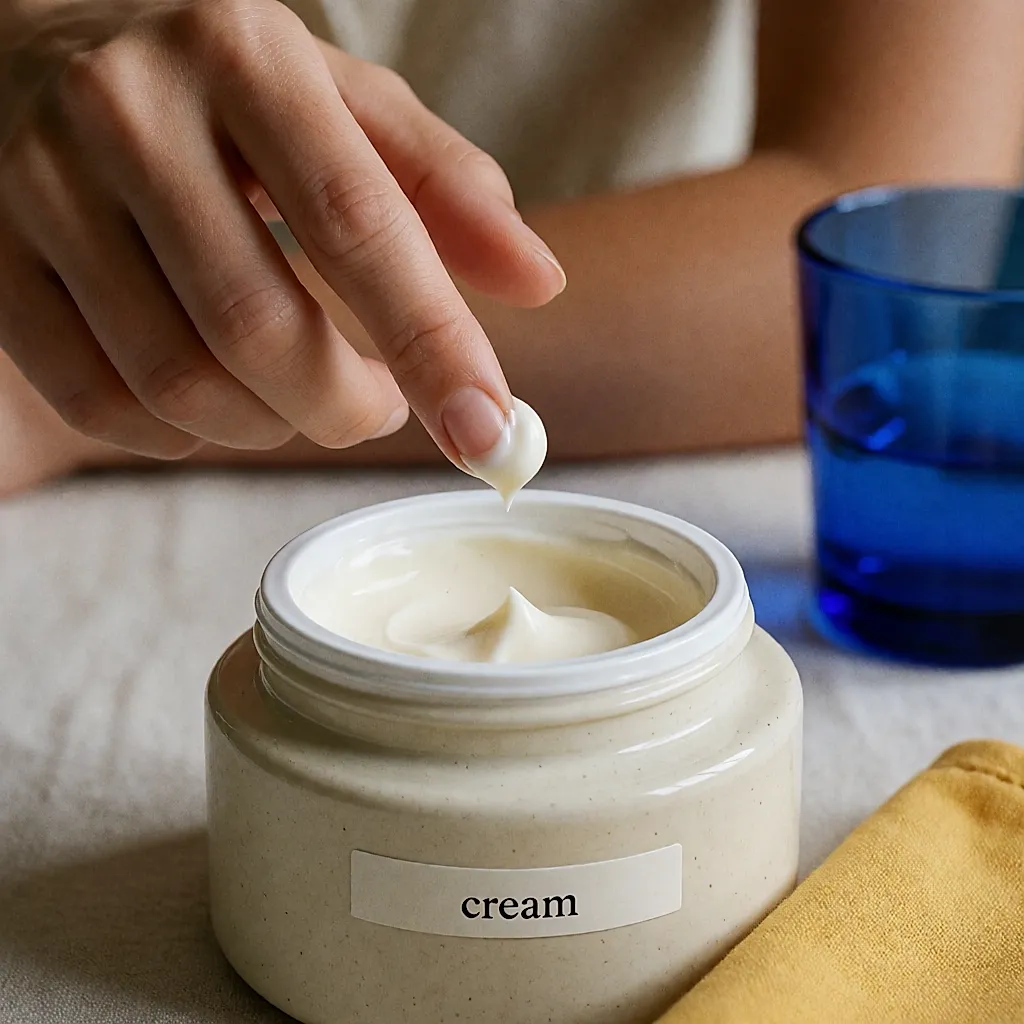
For combination to oily skin, it's better to go lighter: a gel-cream or fluid is often enough, with oil only on the cheeks if they are dry. On the forehead, nose and chin, you can easily skip it. As for normal skin, there's no need to stack products: a pea-sized amount of cream, a light tap, and wait for the skin to absorb it before applying make-up.
The practical check? If after a few minutes your face feels sticky or shines all over, there is still a layer left. A tissue pressed over your forehead and cheeks will lift the excess without removing everything. You can also spread it differently: less on the T-zone, a little more on the cheeks.
Why highlighter misbehaves over rich skincare
A rich cream leaves a film. Make-up can then slide, shift, settle into pores or go patchy, especially if you apply it straight afterwards. It isn't an absolute rule — the highlighter's formula, heat, humidity and your skin all play a part — but it is a classic. Highlighter isn't the villain; it is working on unstable ground.
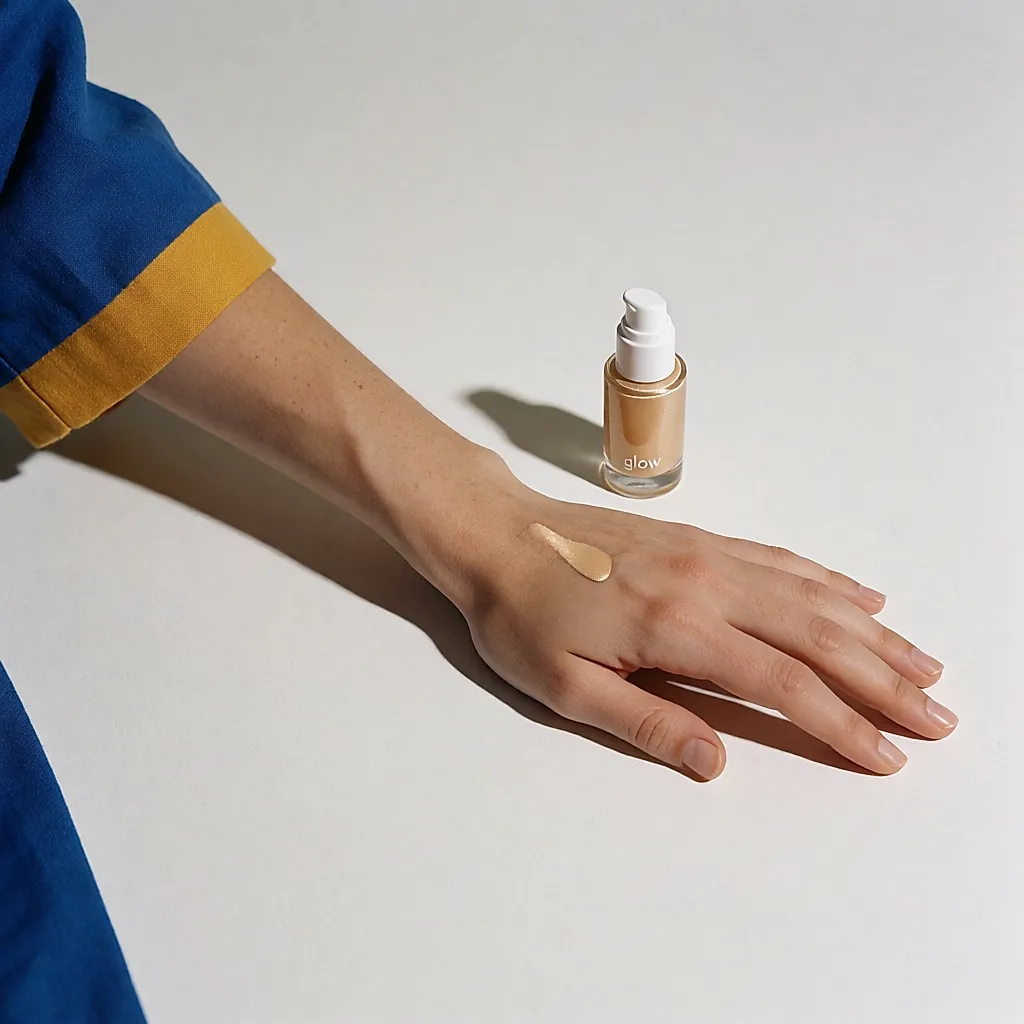
That's why it helps to separate the steps. Leave a few minutes between skincare and make-up, long enough to brush your teeth or put the pot away. If you're in a hurry, blot the excess with a tissue. And keep highlighter for the areas you really want to light up: the top of the cheekbone, the brow bone, sometimes the inner corner of the eye. One touch is enough; two is already a statement.
How to fix it without mattifying the whole face
The mistake, when your complexion is too shiny, is to reach for powder everywhere. You dull the cheeks, flatten the nose, and the face loses exactly what you liked about it. Instead, blot the excess with a tissue, then powder only the T-zone: between the brows, the sides of the nose, the chin if needed. The cheekbones and tops of the cheeks keep their light.

If shine comes back during the day, a veil of fine powder on the forehead is often enough. And if your highlighter goes patchy, mix it with a drop of moisturiser on the back of your hand: the texture becomes more supple. We won't promise it will be perfect every day — tiredness, heating, hormones and weather all change things. But stop mattifying the whole face for one small area of excess.
The tissue test: after skincare, press a tissue over your forehead and cheeks. If it comes away shiny, let the skin absorb a little more before make-up. If it comes away dry, your layer is probably too light for skin that feels tight.
Budget
On the skincare side, expect to pay around £15 to £35 for a simple day cream, £8 to £20 for a plant oil, and £20 to £45 for a richer balm. Prices vary with size, location and range. For highlighter, £15 to £40 covers a lot of textures, whether you shop at beauty retailers, pharmacies or online. There's no need to multiply pots: a good skincare layer, well judged, does more for the finish than a third glow-boosting product.
The one step to remember comes down to a sentence: look after the layer underneath, then let highlighter do the rest. Your complexion doesn't need to be perfectly matte; it needs to be comfortable. And when it is, the light shows straight away — without the over-polished shine.

Comments
Your opinion matters: rate the article, react and reply to comments.
Comments are moderated; AI-assisted comments are flagged. Text emoticons (8-), :-), <3…) are automatically shown as images.