

Your cream isn't responsible for everything. A forehead that's shining by lunchtime and cheeks that feel tight when you wake up are two separate complaints — and one layer of moisturiser won't fix both. The good news: zoning your routine takes less time than overhauling the whole thing.
Your forehead and cheeks don't need the same thing
The forehead, nose and chin — the famous T-zone — have a higher density of sebaceous glands than the cheeks. In practice, sebum gathers there more readily, so the midday shine isn't a betrayal; it's just biology. Cheeks are thinner, have fewer sebaceous glands, and take the hit from central heating, wind and the daily back-and-forth between overheated public transport and the office. Hence the split: one area produces too much, one lacks it.

So when you apply the same rich cream all over, your forehead says thank you but gets too much: a slippery texture, make-up that migrates, pores catching the light. Choose a light moisturiser to calm the forehead and your cheeks feel tight by mid-morning. You're not imagining it — your skin is sending you two different letters, and the question is which one you read last.
On the forehead and nose: light, watery, no extra layer
What works here is the most fluid texture in your routine: a hydrating gel or gel-cream, ideally fragrance-free and without a greasy film. The method matters as much as the product. Use a pea-sized amount, spread it with your fingertips, give it a moment to sink in, then carry on. If your forehead shines very quickly, a touch of translucent loose powder on the centre of the forehead and the sides of the nose is enough — there's no need to powder your whole face and turn your cheeks cakey.
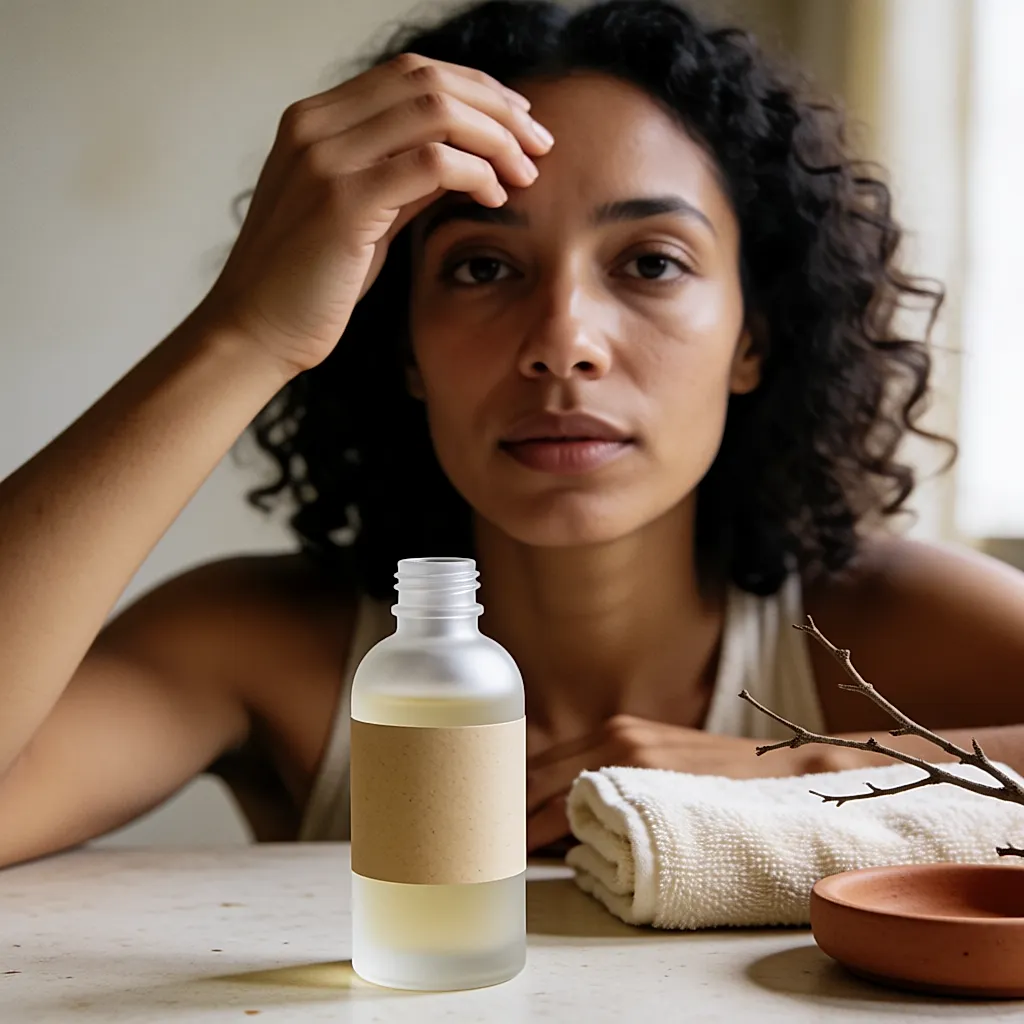
And if you don't want to juggle two textures? The two-texture routine is still the most comfortable when your cheeks really feel tight: use gel on the forehead and nose, then add the richer layer only where it feels tight. But if your skin isn't very dry, there is a simpler option: a light cream applied all over can be enough if your cheeks don't feel too tight, so you don't buy a second pot you'll only half use.
On the cheeks: richer, but not greasier
For cheeks, aim for a balm or cream texture with ingredients that help skin hold on to water — glycerin, squalane, ceramides, shea butter. Beware the 'it's cold, I'll double the dose' reflex: a thicker layer doesn't sink in any better, it sits on the surface and your nose ends up with the shine. Two pea-sized amounts are enough, massaged upwards, and don't forget just below the cheekbones — often the first place to feel tight.
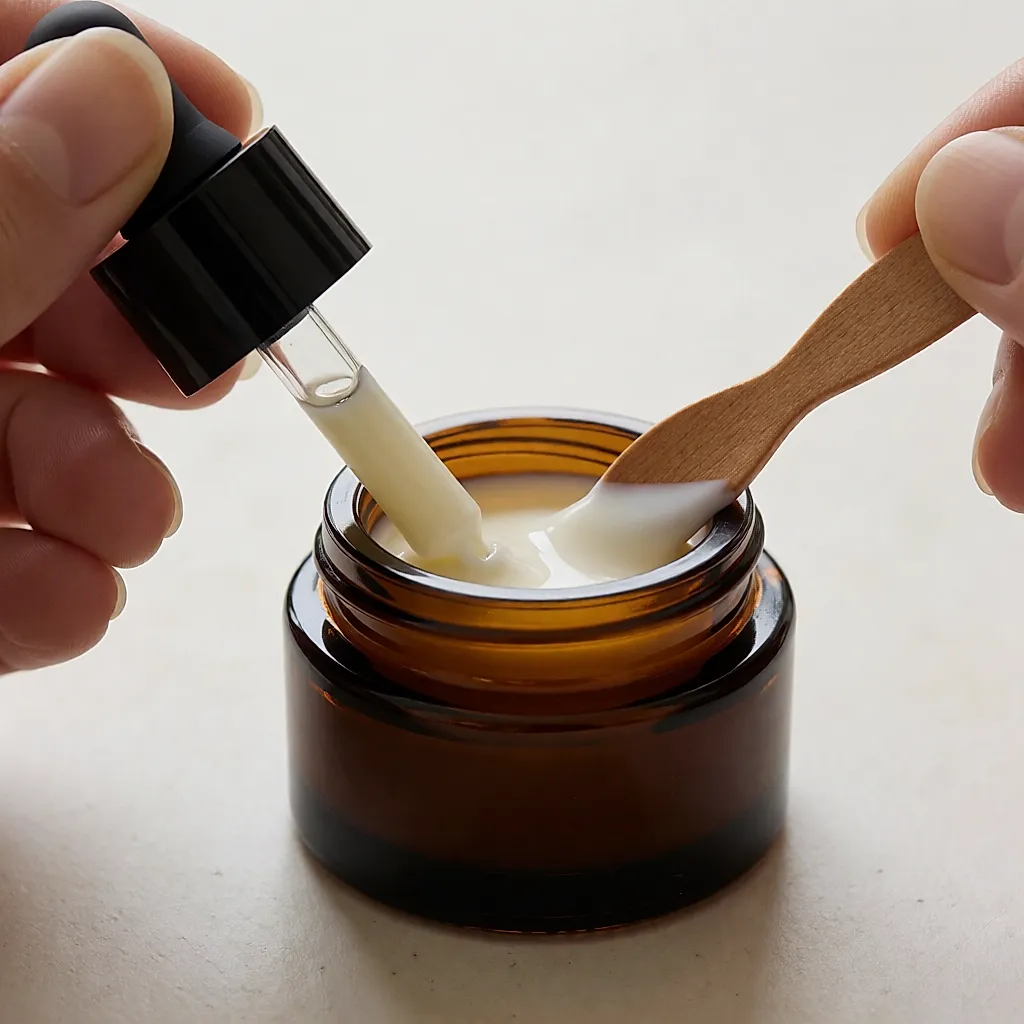
On formulas, products certified COSMOS Organic or Ecocert certify compliance with a set of rules on ingredient origin and manufacturing processes, not a promise of results. What really makes a difference day to day: glass or refillable packaging, a solid or waterless format where possible, a short ingredient list. And if your skin reacts, a well-tolerated conventional product will always be preferable to an organic balm loaded with essential oils. I don't have a magic timeline to give you, either: how long before you see a difference depends on your skin, and no one can predict it for you.
The order, and the express morning ritual
The basic rule is simple and applies to everything: from thinnest to richest. Except that in real life you're not slathering four layers on your face at 7.40am while a child hunts for a sock. The quick version is four steps, and it needs no equipment.
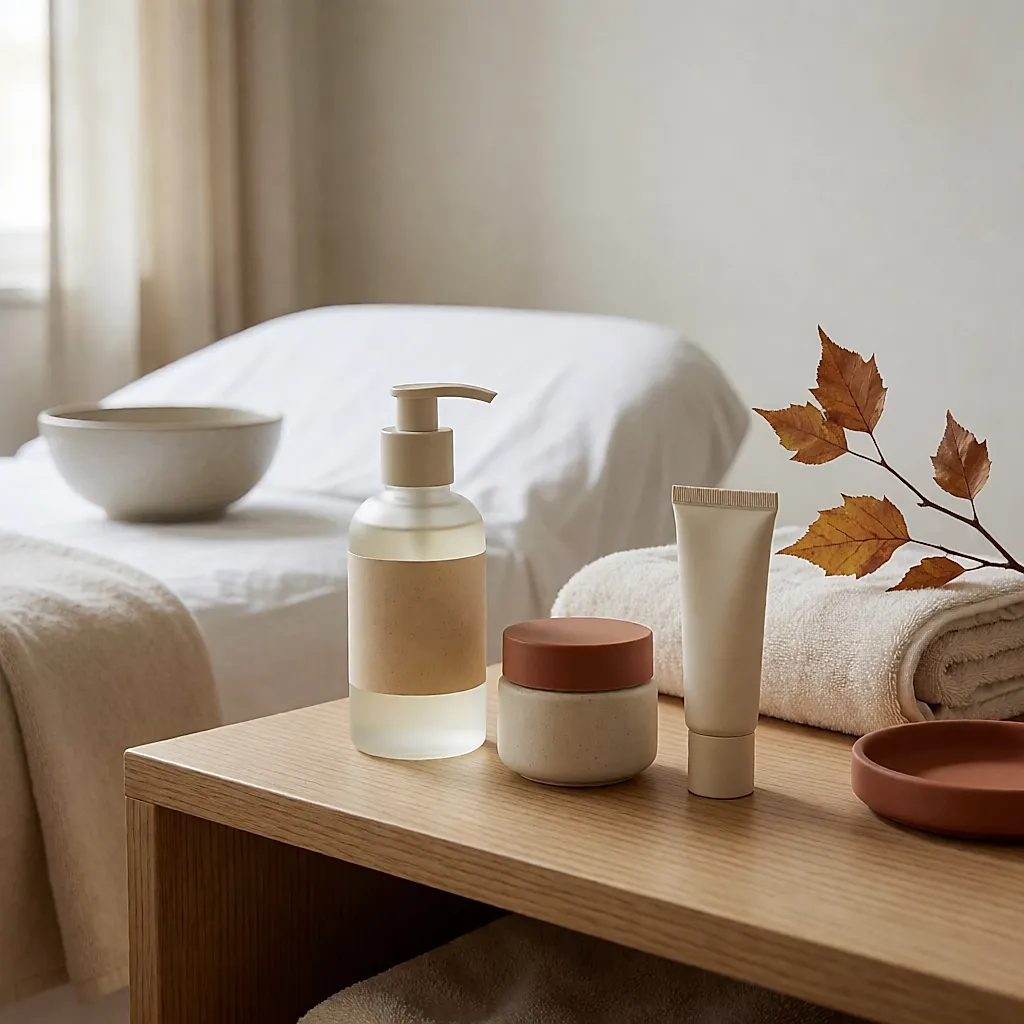
First, a quick cleanse with lukewarm water — never hot. Water that's too hot strips the skin, and over-cleansed skin feels tight, on the forehead as much as the cheeks. Next, gel all over the face, including the T-zone. Then the richer cream only on the cheeks and around the eyes, patted in with your fingertips. Finally, sun protection, useful even when the sky is grey: it's what helps limit the formation of dark spots and redness. The whole thing takes a few moments, not counting toothbrushing.
At night, you're allowed to simplify: remove your make-up, then use one slightly richer product all over. Skin repairs itself at night, and your forehead doesn't need to stay light after 11pm. If tightness settles in, with redness or flaking, it's no longer a texture issue: speak to your GP or a dermatologist.
The two-zone test. If your forehead shines before lunch but your cheeks feel tight when you wake up, you have your answer: two zones, two treatments. If everything feels tight everywhere, look first at your cleanser — it's often too stripping. If everything shines everywhere, lighten the whole routine before you start separating anything.

Budget: what it actually costs
No need for endless bottles. A fragrance-free hydrating gel is widely available for around £8–£25 in supermarkets, chemists and online, depending on size and range; a nourishing balm or cream for the cheeks, around £15–£40. Prices climb with the concentration of actives, organic certification and packaging — glass, refill, solid format. Conversely, for skin that isn't very dry and rarely feels tight, the simplified option is a single pot of light cream; if your cheeks do feel tight, it's better to keep the two-texture routine.
Another more pared-back option: a solid multi-use balm to use on cheeks and lips, plus a basic gel for the rest of the face. Always compare like with like — a 50 ml jar at £30 and a 40 ml tube at £25 aren't in the same category.
And the morning when everything goes wrong
Every other morning, you won't have that time. In that case, the step that remains is simple: gel everywhere, a pea-sized amount of cream on the cheeks, sun protection. Your forehead may shine at 3pm — it will shine less than if you'd hastily piled on three layers.
If you remember only one thing, make it this: a tight cheek shows faster than a shiny forehead. Your skin doesn't need a whole cupboard, just two clear zones.


Comments
Your opinion matters: rate the article, react and reply to comments.
Comments are moderated; AI-assisted comments are flagged. Text emoticons (8-), :-), <3…) are automatically shown as images.