
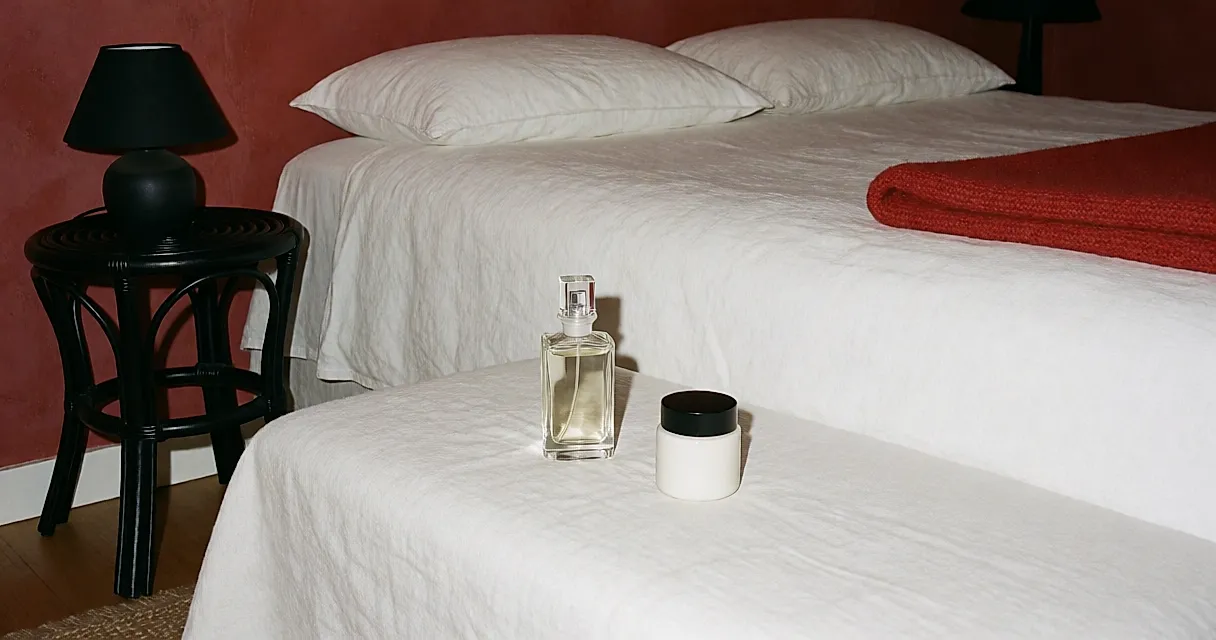
Two products can carry the same word on the label and have neither the same job nor the same price per millilitre. For a few seasons now, fragrance has been moving into skincare — mists billed as hydrating, scented waters billed as nourishing, creams that leave a trail until bedtime — and the traffic goes the other way too. Lovely idea, less lovely bill. So let's look closely at what skincare is actually left in there, what order to use it in, and what it really costs.
What's left of the skincare when the formula smells good
First move: turn the bottle round. The INCI list ranks ingredients by concentration, highest first, down to 1%, below which the order is up to the brand. A "Parfum" listed near the top doesn't carry the same weight as a "Parfum" parked at the very bottom in trace amounts. It isn't a verdict, it's a clue: at least you'll know whether the scent is the whole point of the product or its little extra soul.
Next, look for what's actually doing the skincare. A scented water containing glycerin and a plant oil works on the humectant and emollient fronts: those two do the work, not the fragrance. An alcohol-based perfume with no nourishing active in it, on the other hand, will never replace your moisturiser — it scents, which is already something, but it's not the same job.
Last point: tolerance. Under the UK Cosmetics Regulation, fragrance has to be declared and certain allergens named above a very low threshold. Precious when you're picking through a list, unreadable when the names mean nothing to you. If your skin flushes at the slightest thing, a fragrance-free product remains the calmer choice — and often the cheaper one, as it happens.
The order: mist first, perfume after
It all depends what's in your hand. An aqueous mist or scented water slots in where a toner would, on clean skin, before moisturiser: it brings a little water and the scent, then the cream seals the lot in. The reverse works badly — misting over a rich cream is like watering a waterproof jacket: nothing soaks in.
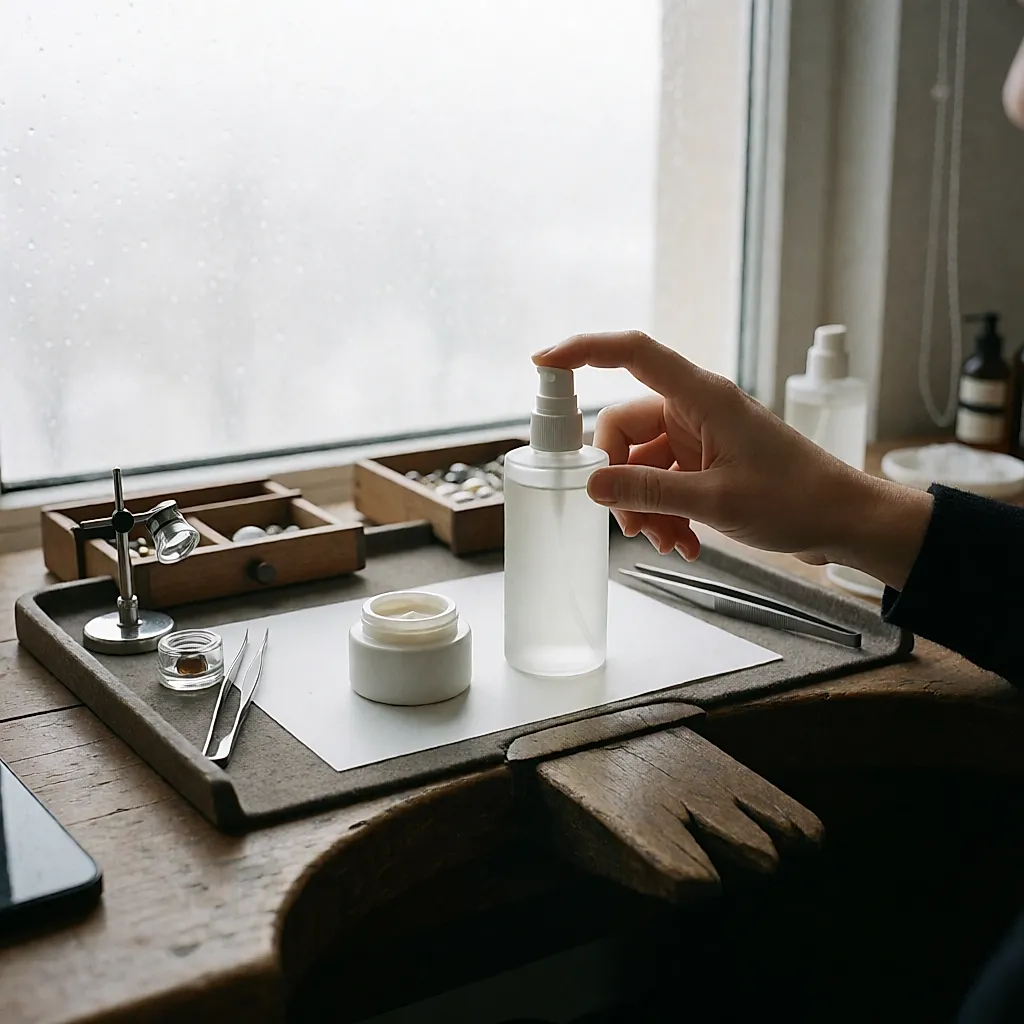
An alcohol-based perfume, meanwhile, goes on afterwards. On bare or lightly moisturised skin, on the spots that warm up: upper chest, nape of the neck, inner wrist. Two sprays is enough; let it settle rather than rubbing it in. As for scented cream, it does both jobs by halves: hydrates a little, scents a little. Perfect if that's exactly what you were after, disappointing if you were expecting a night cream.
Cost per millilitre is the only number that doesn't lie
A 50ml bottle at £90 works out at £1.80 a millilitre. A 100ml mist at £30 comes in at 30p. Six times less, for a product that won't last as long — but you still have to compare like with like. Concentration changes everything: at the same volume, an eau de parfum lasts longer than an eau de toilette, which is itself more concentrated than an eau fraîche.
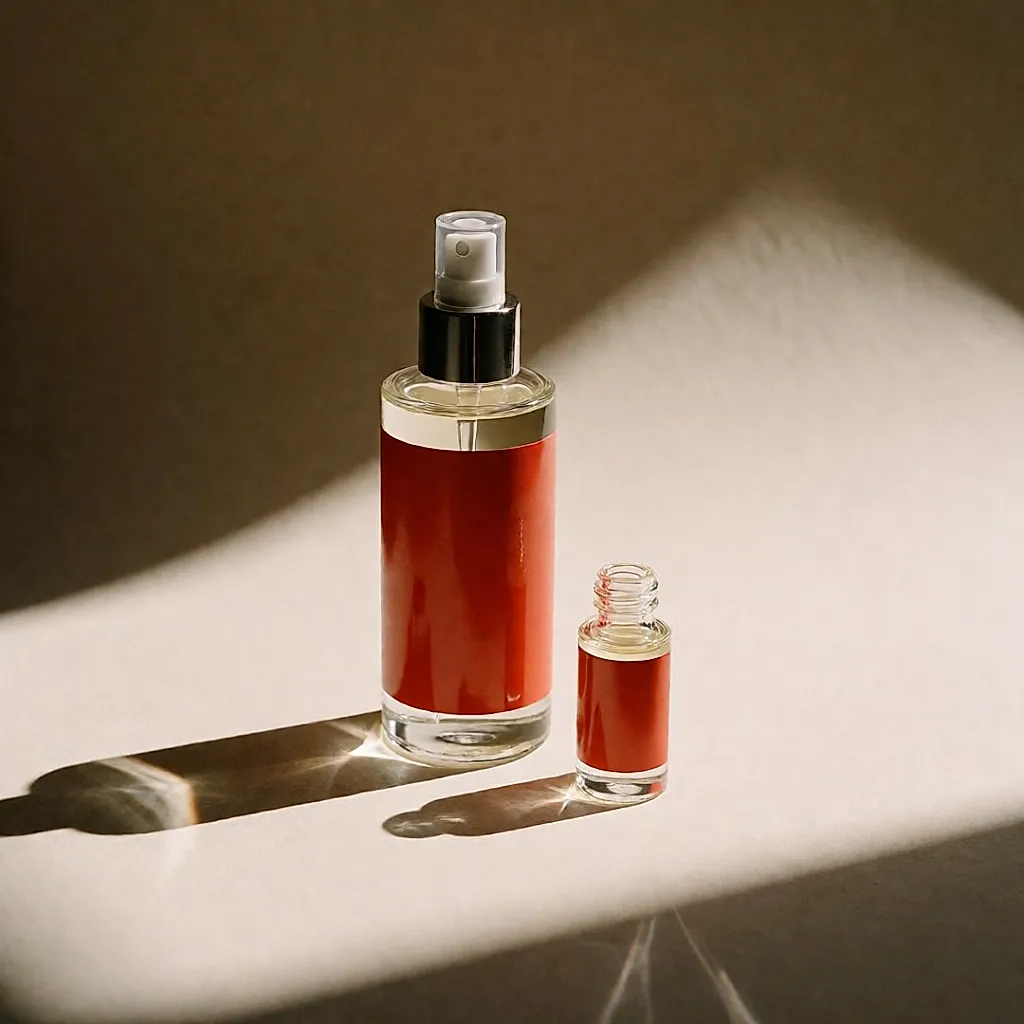
Second trap: formats. A 10ml mini at £20 feels gentle; per millilitre it often costs more than the full-size bottle. Get the calculator out on your phone for two seconds. And with a scented treatment, ask yourself how long it will last: used morning and night, a 50ml bottle is gone in a few weeks, whereas a perfume spread over six months doesn't cost the same to use.
Budget
As a rough guide to UK price brackets, reckon on £50 to £120 for a 30–50ml perfume at a department store or fragrance retailer, £20 to £50 for a 100ml scented water or mist, and £30 to £70 for a 50ml scented cream. In supermarkets and own-brand ranges you'll often drop to between £15 and £30, with formulas that are sometimes shorter. If the brand offers a refill, you keep the glass bottle and the price per millilitre usually comes down.
Where to smell before committing? In a department store or fragrance shop, in a brand's own store where it has one, sometimes in a pharmacy or chemist for brands stocked there. The real advice: don't decide on a paper strip. Spray it on your skin, go out, live for three hours, see what's left. If you like the test, ask for a sample — a good way to try without paying.
The anti-regret test: one spray on the forearm, not one on each wrist — it's easy to overload. You wait, you don't rub. If you still like the trail a few hours later, that's a good sign. And beware a saturated nose! After three bottles sniffed in a row, nothing means very much any more: smell your sleeve or step outside for five minutes.
So, does a perfumed treatment replace your morning moisturiser? Rarely — and that's fine, it's not the same job. What you can demand from a scented product is honesty: actives that nourish, a fragrance that doesn't overreach, a price per millilitre that stands up. Keep the moisturiser, add the perfume wherever it makes you happy, and do the maths before you splurge. The nose has its reasons; so does the wallet.
Comments
Your opinion matters: rate the article, react and reply to comments.
Comments are moderated; AI-assisted comments are flagged. Text emoticons (8-), :-), <3…) are automatically shown as images.