

The culprit is right there in your hand: soft, warm and pressed against your jaw for a good part of the day. We tend to blame tiredness, a face mask, stress or the serum we bought in a hurry. Yet redness across the lower face often starts with the textile, long before the skincare bag comes out.
The friction suspect you never think to check
The movement is always the same: you pull your scarf up, tuck your chin down, pull it up again. Without thinking, the same knit passes back and forth over the underside of your chin, your cheeks and the top of your neck — areas we moisturise less than the rest of the face, often because we look at them less.

Friction alone is rarely the full story, and no one can diagnose you from these lines. But on skin that is already reactive, it can keep irritation going — and the urge to scratch, which helps no one. If redness persists, itches, flakes or spreads, don't improvise: speak to a healthcare professional.
Check the label before you reach for cream
Turn your scarf over: the composition is right there, and it is often more revealing than half the soothing products on the shelf. A rough wool, an itchy knit, a coarse yarn: all of these rub. A fine merino wool or organic cotton, by contrast, may sit more comfortably on the skin — it is a question of contact before it is a question of style.
Two labels are worth a look: OEKO-TEX Standard 100, which indicates that a textile has been tested for certain undesirable substances — not an anti-redness guarantee, just one more filter — and GOTS for certified organic cotton. And one habit: check how much of the blend is synthetic. What exactly is sitting against your skin all day?
Washing your scarf: the step we forget
We wash jumper collars, change pillowcases and clean our phones. The scarf, meanwhile, spends the winter around the neck, carrying sebum, moisturiser, perfume and whatever the city leaves behind. If you wear it every day, washing it about every two weeks is a practical comfort marker — not an official standard.
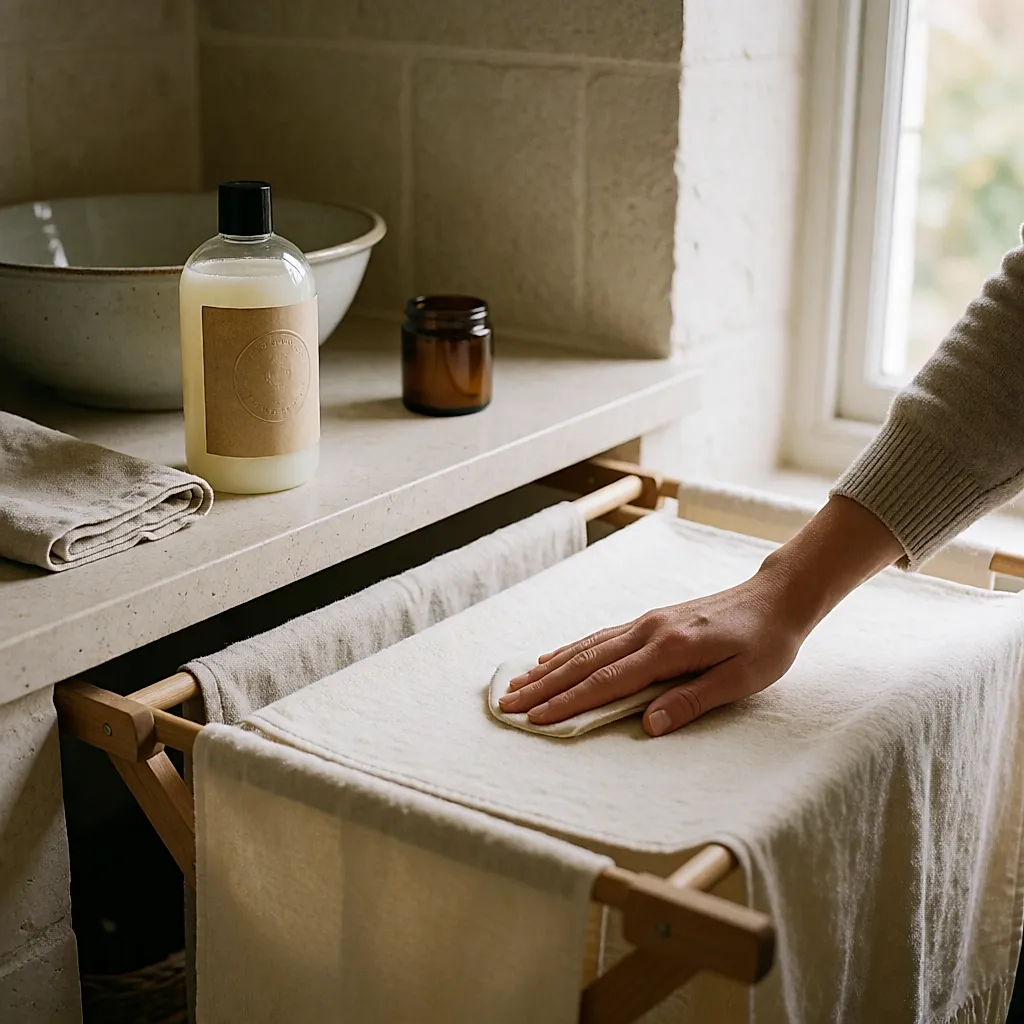
On the machine: wool cycle, no fabric conditioner, dry flat. Fabric conditioner is not essential, and many wool-care labels advise against it. Between washes, a night in the open air often freshens it.
A break from wool
If your skin reddens mainly where the scarf ends, give it a break. A few days without wool, in practice, to see whether the discomfort eases — and if it does, you have a useful clue without spending a penny on serum.

In practice, alternate: cotton, silk, or a cotton roll-neck indoors. Avoid keeping your scarf on in an overheated meeting, where it becomes mostly a decorative, damp accessory. And loosen it: a tight scarf is warm, but it rubs more.
Soothe, but in the right order
Once the textile side is lighter, you can look after the skin. Don't stack products: no acid, no retinol, no exfoliant on the chin and neck for a few days. Rinse with lukewarm water, use a simple fragrance-free moisturiser rich in emollients — glycerine, panthenol, plant wax — and leave it to do its job.
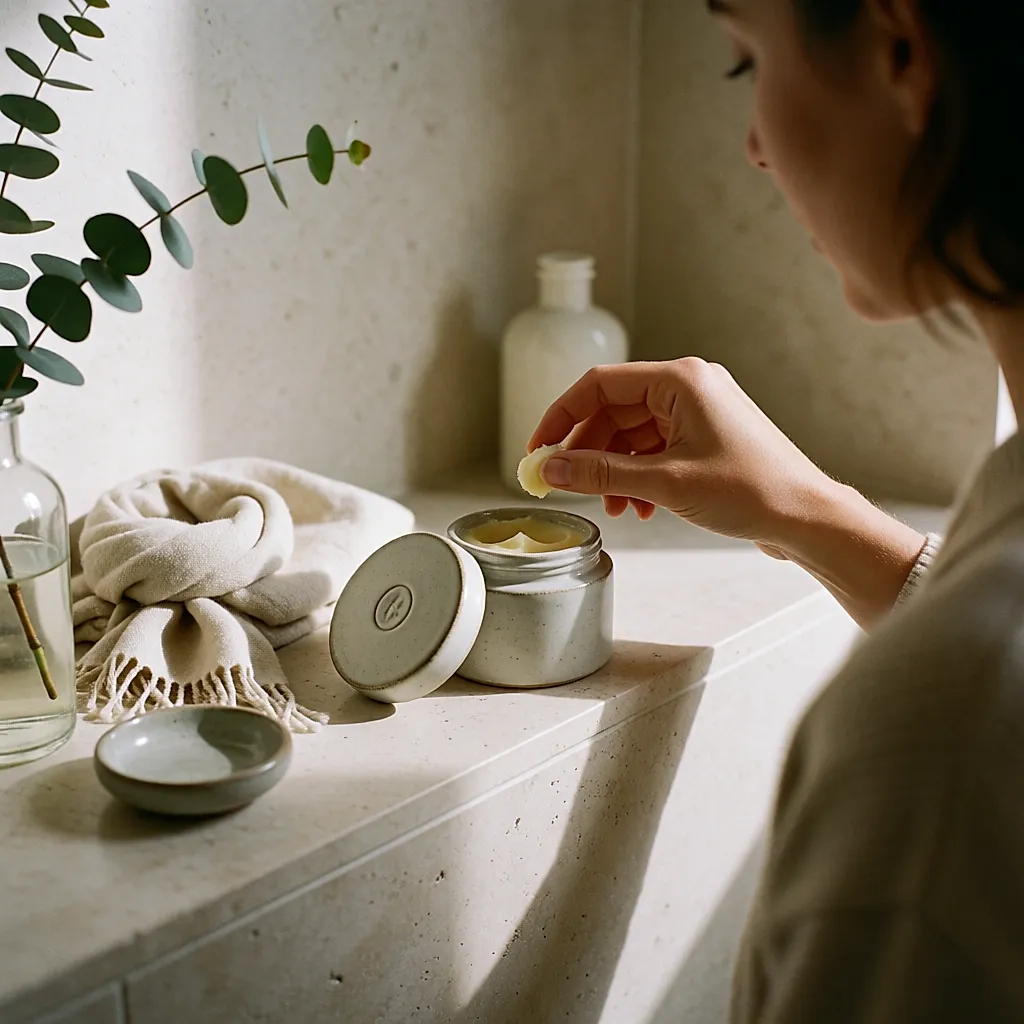
My honest caveat: I can't promise you a timeline. Reactivity to contact varies a great deal from one person to another, and what irritates one person will do nothing to someone else. What I do know is that removing a possible cause before adding another product avoids buying one more thing for a problem a wash might already have solved.
What it costs
In the UK, prices vary widely with the fibre, the brand and where you buy: a supermarket or online scarf will usually cost less than a small-brand merino scarf. Organic cotton and silk vary too, so check the composition before paying more — at bargain prices, the knit is often less soft.
A gentle wool detergent is inexpensive, and a simple fragrance-free soothing product costs less than most serums. If you need one, a pharmacy or supermarket own-brand option is usually enough. The best purchase is often the one you don't make: wash what you already own, test the break, observe.
The wool-break test Wash the scarf: wool cycle, no fabric conditioner, dry flat. Then leave wool aside for a few days, with a cotton or silk layer at the neck. Observe: is it easing? The textile is your lead. No change? Soothing care can come into play — and a healthcare professional if the redness settles in.
November redness is not always a cream problem. Sometimes it comes down to knit, washing and patience — three ingredients that cost next to nothing and are already in your wardrobe. Before you buy anything, check the label on your favourite scarf: it may already have the answer.

Comments
Your opinion matters: rate the article, react and reply to comments.
Comments are moderated; AI-assisted comments are flagged. Text emoticons (8-), :-), <3…) are automatically shown as images.