
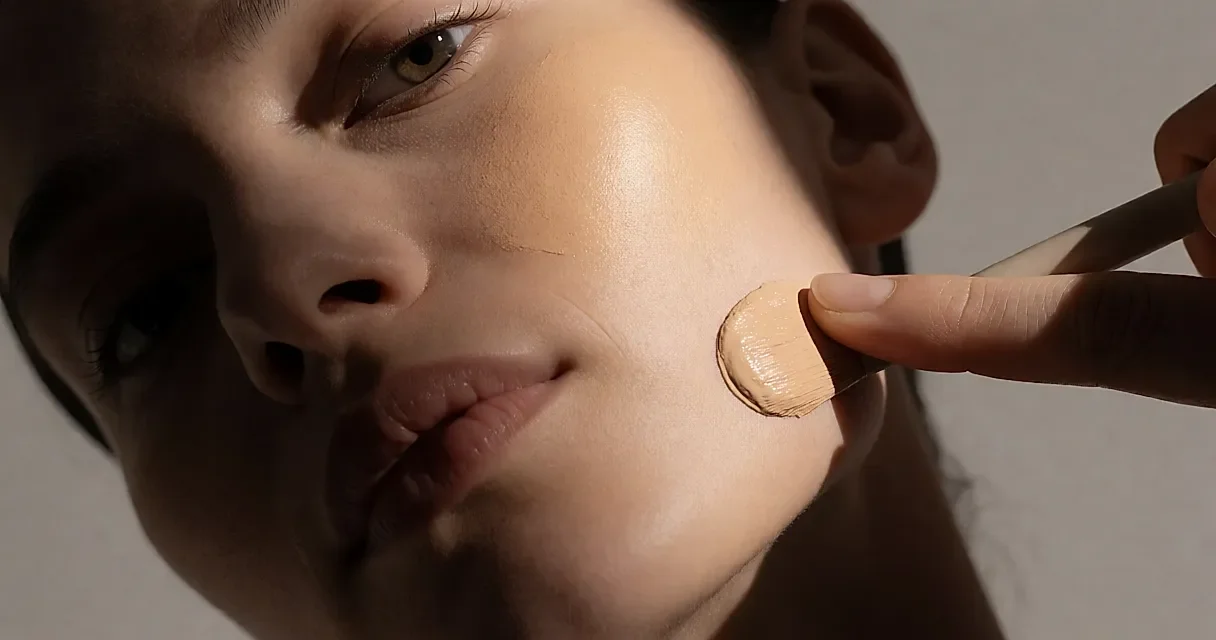
There is a light that forgives nothing: the Tube neon at 8.12am, when your coat is still damp and your coffee is already lukewarm. That's where you see the difference between a full-coverage base and skin that looks well: the finish you notice is not the one that shows, it's the one you assume is skin. But we're not stopping at the observation. Here is the order to apply things in, how to divide it zone by zone, and what to budget for that satin finish, which comes from skincare, not foundation.
The real change is in the placement
In the looks doing the rounds, you clock the dress, the hair, the colour; it is texture that speaks: skin that catches the light on the cheekbones, a soft velvety finish across the cheeks, none of those flatly matte zones that map the face like a Tube map. The base is there, but blended in — closer to satin than velvet. Don't confuse it with glazed, the mirror-like, very luminous finish that has taken over cheekbones, or with matte, which absorbs light. Here, you want a soft, moderate reflection, created by precise distribution of layers.

This finish changes what people see: you no longer notice makeup, you notice skin that seems to be doing well. The question is how to get there in a real, rushed life: the order of the layers and the distribution zone by zone. That's where it gets interesting — and you can try it tonight.
Hydration in layers, the foundation step
Satin isn't achieved by adding more; it's about layering light. A lotion or essence on skin that is still damp, a serum, then a cream: three steps, not thirty. In practice, leave about 30 seconds between each layer for the skin to drink it in — your fingers shouldn't stick and the product shouldn't pill.

The trap is doing too much. If skin feels sticky, if it feels tight, if the cream forms threads as your finger passes over it, the next layer won't save it: it will slip. Sunday evening, when no one is waiting for you, is the moment to test the order without stress. For the rest of the week, two layers are often enough; a third only if your skin feels tight.
A drop at the end of the routine, not another layer
Oil or balm comes last. One drop, warmed between the palms, then pressed onto the tops of the cheekbones, the nose and the forehead: press, don't rub. That's the move that gives the soft reflection you're after, not an extra layer.
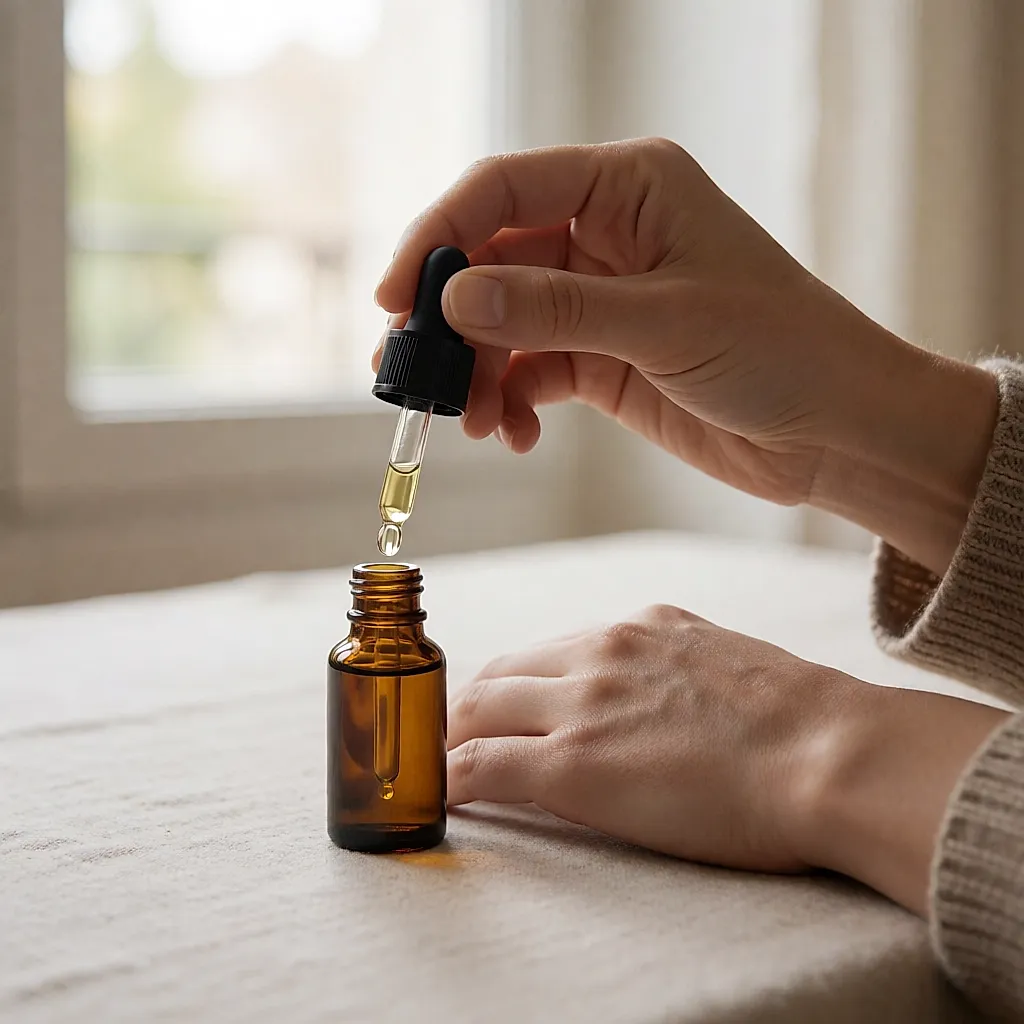
Watch the dose: a satin finish can quickly turn shiny. One drop, really? Yes — and on combination skin you can start with half a drop. In that case, keep the oil for the evening instead, or limit it to the cheeks. Balm, which is richer, earns its place in winter and on dry skin; in May, on a terrace, it won't hold up as well through the day.
Take down shine zone by zone
The rule to remember: zone by zone. A little fine powder on the forehead, either side of the nose, on the chin. The rest of the face breathes. Keep the satin where light flatters and the matte where it doesn't.
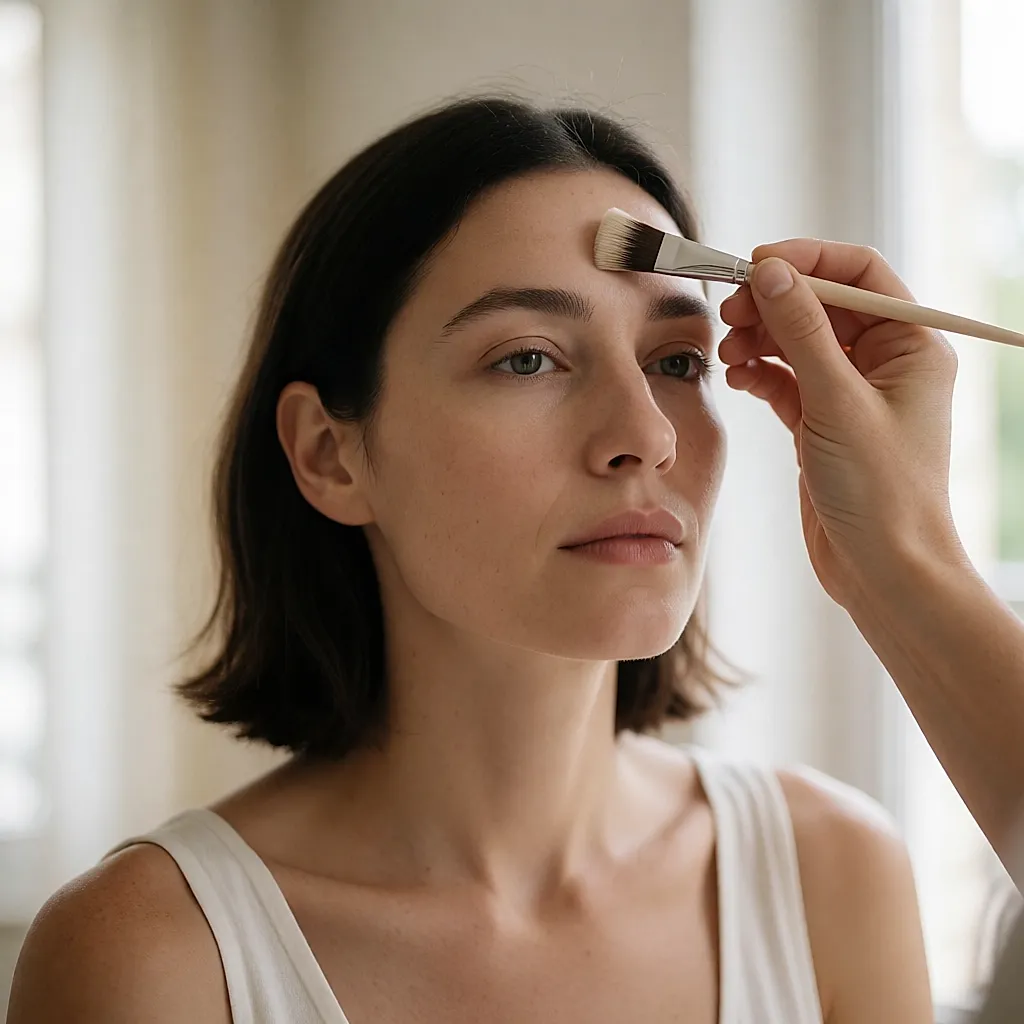
During the day, blotting paper is often more elegant than re-powdering: it takes away excess without adding more product. A clean brush, a barely loaded powder, and the move takes ten seconds between one appointment and the next — without redoing your base.
Three limits worth knowing
First limit: wear time. A satin finish often lasts less long than a matte one; that's the price of light. No solid figure says how many hours it lasts: it depends on your skin, the heat, the number of coffees and the air quality around you. Second: flash photography. An oil or balm at the end of your routine can create whiter reflections in the image. For Saturday drinks, it's better to reduce the dose.

Third, and most important: the face is not one single zone. Combination skin may want satin on the cheeks and matte on the forehead — and that's perfectly fine. A satin finish isn't a prescription; it's a question of distribution.
Choosing skincare that keeps up without costing the planet
The skincare that produces this finish doesn't need to be expensive; it needs to be legible. A short formula, naturally derived actives (vegetable glycerine, vegetable squalane, oils), packaging that doesn't end up in the bin after three weeks. A label such as COSMOS Organic sets standards for a share of organic ingredients and an ingredient list; it does not guarantee efficacy, or how it will feel on your skin. That's already a lot, but it isn't everything.
For packaging, check what is recycled where you live and choose a refill when one exists — though it has to be available for the product you've chosen, and that isn't guaranteed. A solid balm remains an option for dry skin. And if a synthetic ingredient is the only thing that works on combination skin, that isn't a failing: it's an accepted compromise, as long as you don't dress it up as an eco gesture.
You don't need a long list of products: a simple moisturiser, a basic serum and a plant oil are often enough. In the UK, expect to pay roughly £5–£20 for a moisturiser, £10–£30 for a serum and £8–£25 for a plant oil, depending on size and range; you'll find them in pharmacies, supermarkets and health-food shops. The most important thing is still to read the ingredient list rather than the price tag.
The five-minute ritual. Essence or lotion on damp skin, serum, cream: 30 seconds between each. One drop of oil pressed onto the cheekbones and forehead. A veil of powder only on the forehead and around the nose. The next day, start again — more lightly.
A good complexion today looks less like a layer of makeup than an accumulation of small attentions: water, a well-applied layer of cream, a drop in the right place, a little powder where it's needed. Nothing spectacular, and that's exactly why it works. The one move left when you have only five minutes? A pea-sized amount of cream on damp skin, and out you go.

Comments
Your opinion matters: rate the article, react and reply to comments.
Comments are moderated; AI-assisted comments are flagged. Text emoticons (8-), :-), <3…) are automatically shown as images.