

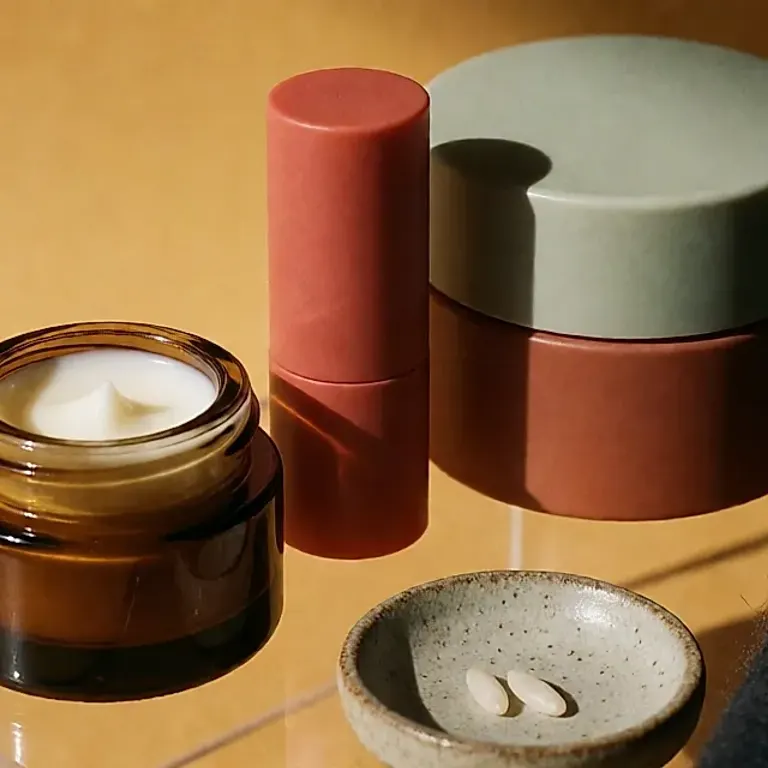
Two jars standing side by side can look like sisters: same amber glass, same screw-top lid, same promise of a rested complexion. Except one says "day" and the other says "night", and what's inside isn't doing the same job. The real question isn't whether you need two jars — it's whether the second one does anything the first doesn't.
What actually sets the two apart
Three differences matter: SPF, active levels and richness. A day cream can contain a UV filter (often SPF 15 to 30), which a night cream practically never does — you don't sleep in the sun, so the logic holds. Then there's the dose of actives: night creams are often more heavily loaded, whereas a day cream has to stay compatible with make-up, daylight and the eight hours that follow.
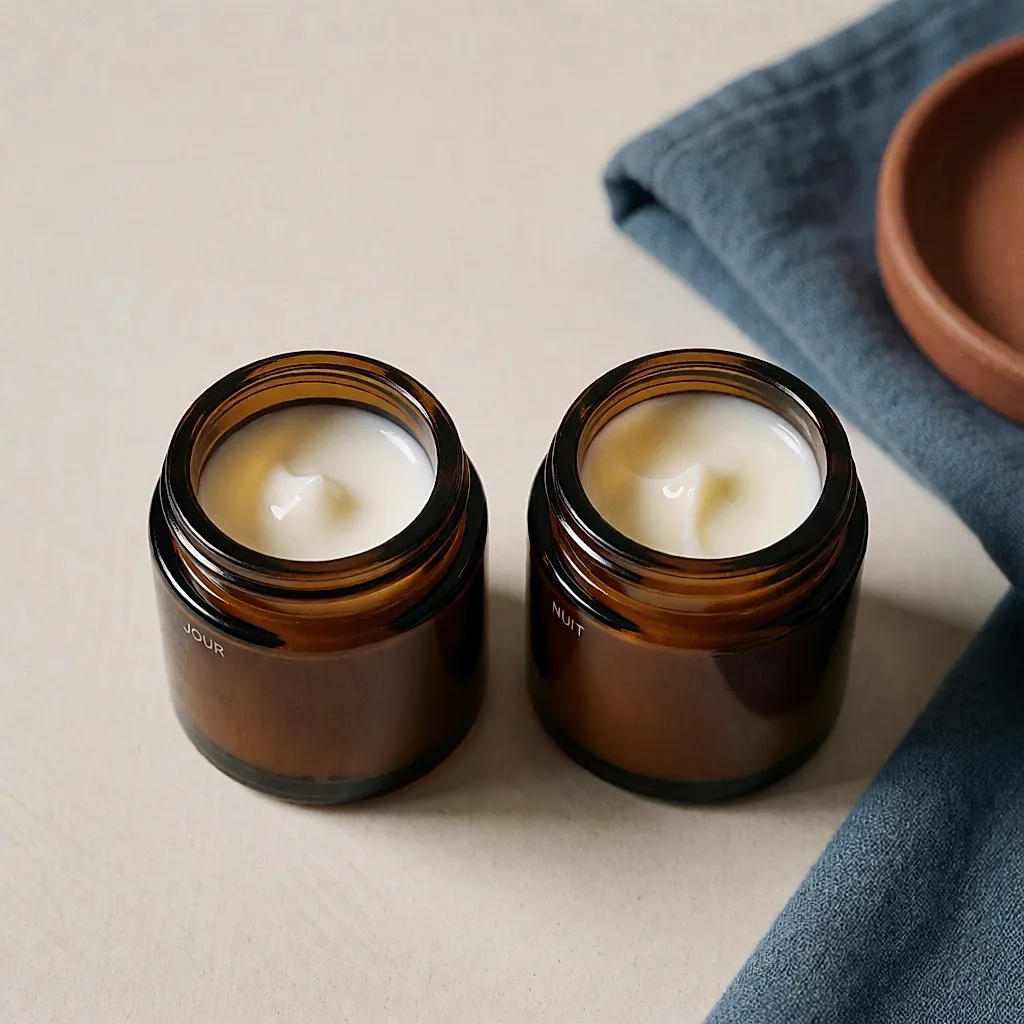
Then there's texture. The night jar is richer in emollients — butters, oils, waxes — because nobody is running for a bus in it. The day jar has to dry down quickly enough that you can pull on a coat without leaving a mark on the collar. That's not a hierarchy, it's a different brief.
The SPF is the one thing you can't skip
If you take one thing from this article, make it this: sunscreen in the morning is not negotiable. Whatever your age, whatever the season — yes, even in November, even when the sky looks like a faded photocopy. UV gets through, and no night cream replaces a morning filter.
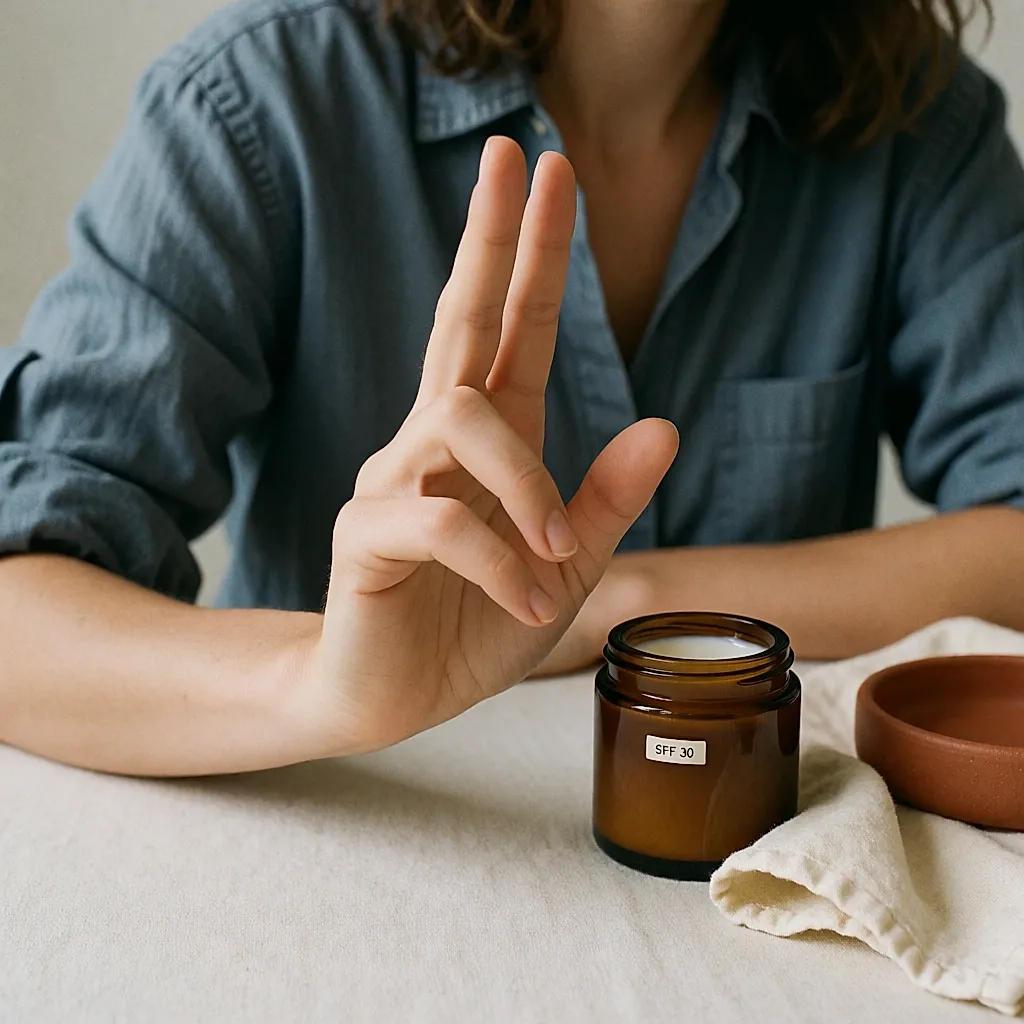
Which gives you a simple call: if your day cream has no filter in it, you need protection on top — and at that point two jars aren't enough, you need three. Some day creams build in enough SPF for a commute, provided you use the right amount (the two-finger rule, not a pea-sized blob). If you're after one product that does it all, that's where to look first.
So what changes at night?
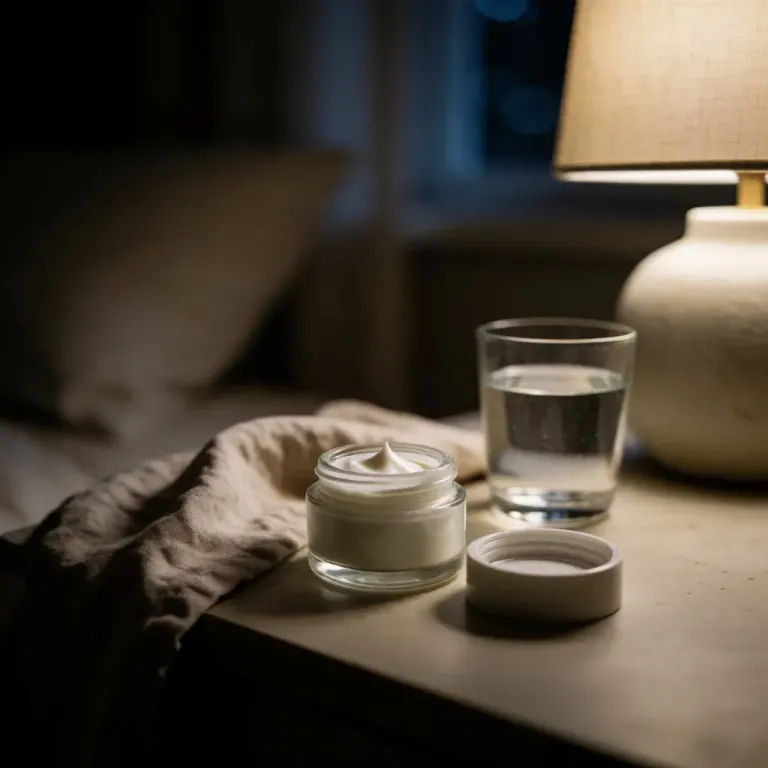
Skin doesn't shut down at 11pm; what the night really buys you is comfort. Nobody's looking, so you can get away with a richer texture and with actives that don't play nicely with sunlight. That's what justifies a separate jar — not the word "night" on the label.
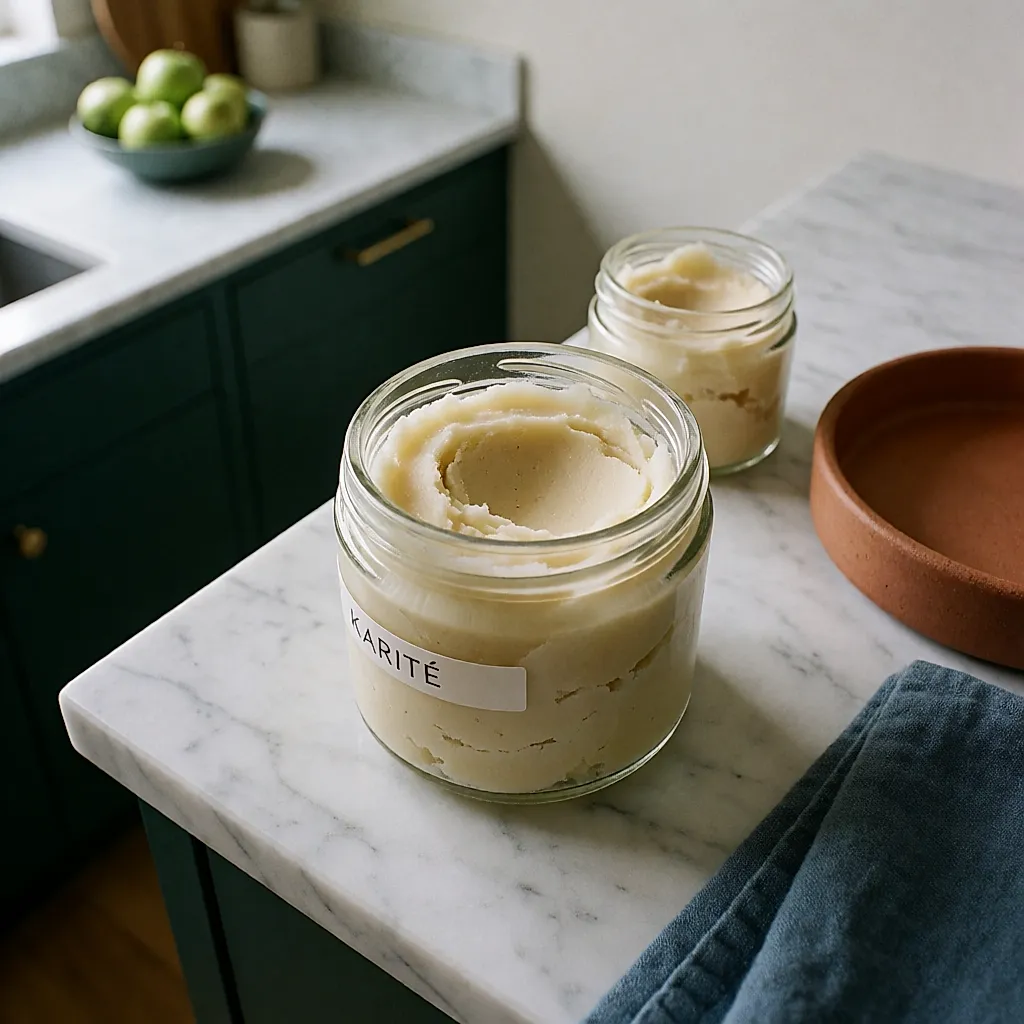
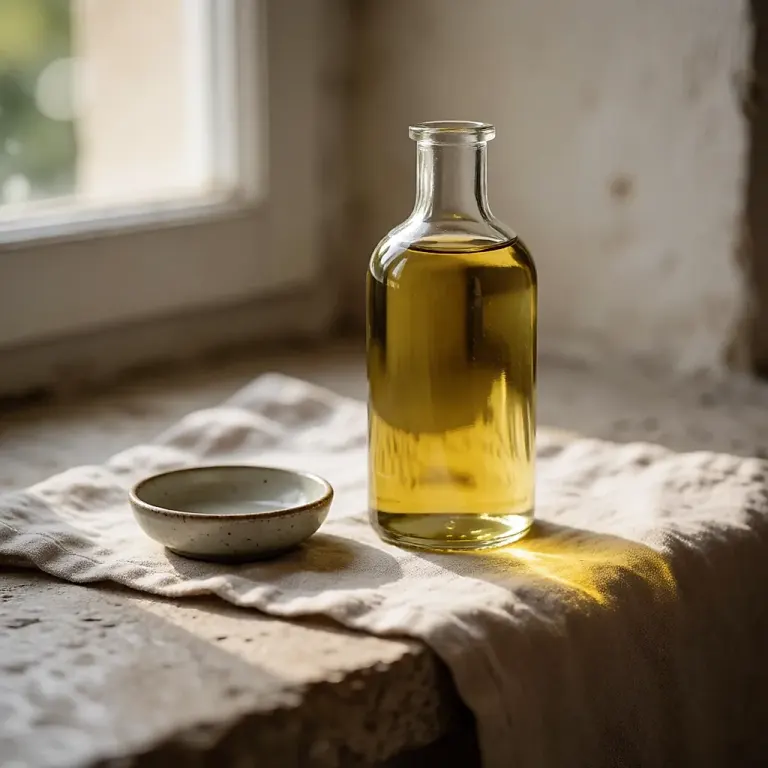
But if you're not after a specific active (no retinol, no acid, no "dark spot corrector"), the second jar becomes a comfort luxury rather than a necessity. A plain plant butter — shea, cocoa, rosehip oil — smoothed in a thin layer on slightly damp skin does the job perfectly well. I won't promise you miracles: it doesn't treat anything, it nourishes, and that's already a lot.
If you'd rather buy just one jar
Is the second jar worth it? Two options hold up. A day cream with a filter and a middling texture, which you can keep using at night if your skin isn't asking for more. Or a rich night cream plus a dedicated sunscreen — two products, each in its own role.
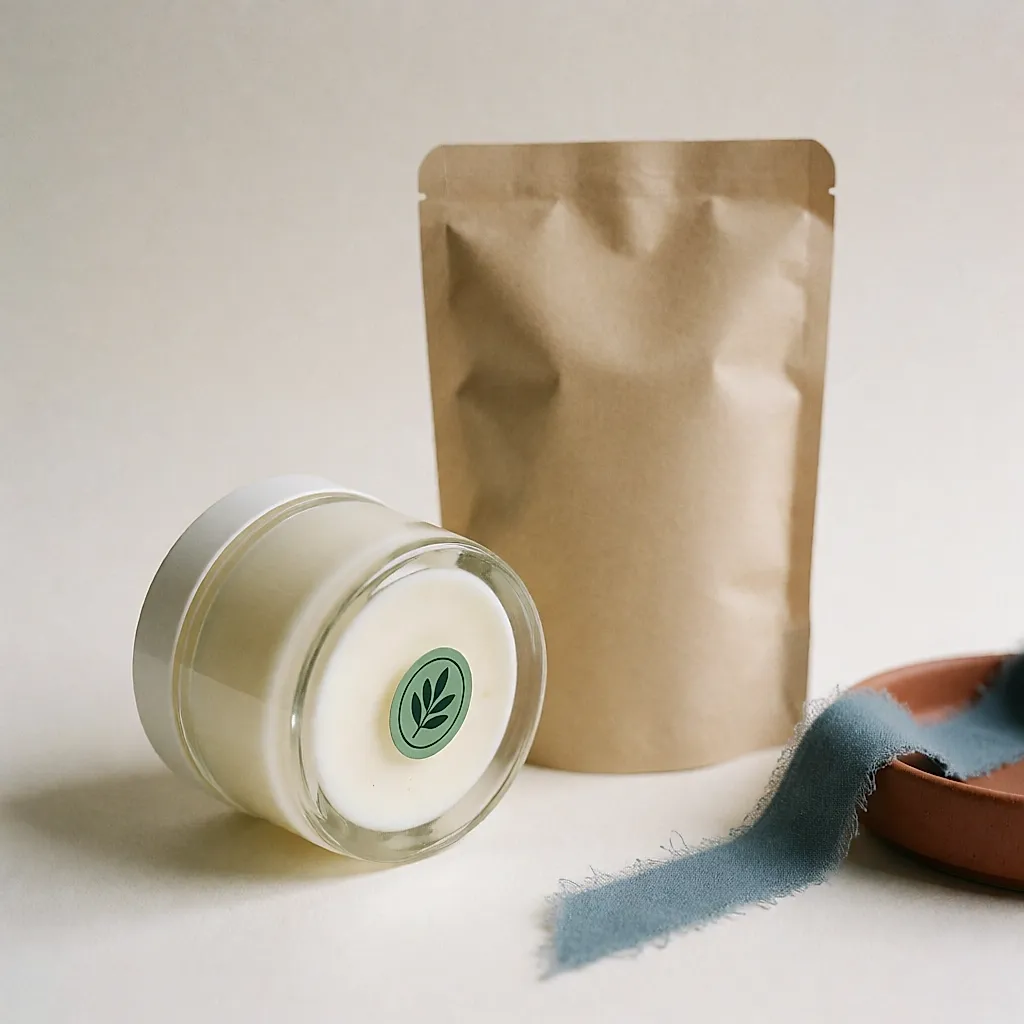
On packaging, one practical and cautious criterion: favour containers whose materials separate easily and are accepted in your council's kerbside recycling. A refillable format, or a lighter tube for travelling, is a genuine plus. And be wary of the word "natural" on its own — in regulatory terms it means nothing. A certified organic cosmetics standard sets a minimum percentage of organic ingredients and limits synthetic ones, depending on its own rulebook — read the standard, not just the logo.

What it costs
As a rough guide: £8 to £18 at a supermarket or chemist for a decent basic cream, £20 to £45 at a beauty retailer for a day cream with actives and an integrated SPF, and £6 to £15 for a raw plant butter in a glass jar. A dedicated facial sunscreen tends to land between £8 and £25 depending on the format. Promotions move these around constantly, so treat the figures as a starting point rather than a fixed price.
The classic trap: the "day + night" set, which costs about as much as three products and leaves the night jar half-full at the back of a drawer. Buy the jar you're missing, not the pair.
Before you buy, turn both jars over: if the ingredient lists are near-identical and only the fragrance changes, you're mostly paying for a second container. Check the period-after-opening symbol too (the little open jar): how long a product stays effective depends on the period printed on it, and past that point the actives may lose their punch.
The final word
Do you need a night cream? Sometimes yes, often no. Ask yourself once a year, not every morning at the shelf: does this jar do something the other one doesn't? If the answer is "it smells nice", keep it if you enjoy it — just know why.
And if you're only going to invest in one product, put the money into the morning one, with a filter. The rest is comfort — and comfort is a choice.
Comments
Your opinion matters: rate the article, react and reply to comments.
Comments are moderated; AI-assisted comments are flagged. Text emoticons (8-), :-), <3…) are automatically shown as images.