
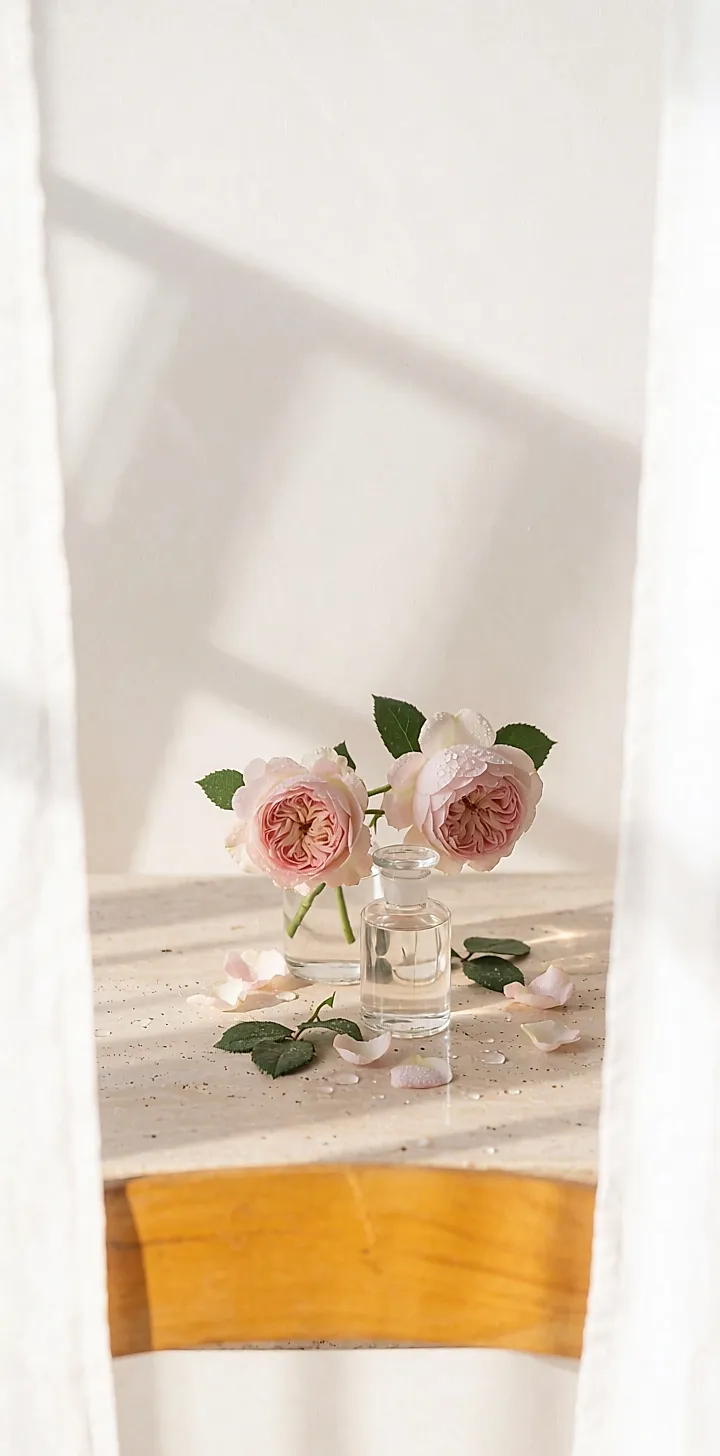
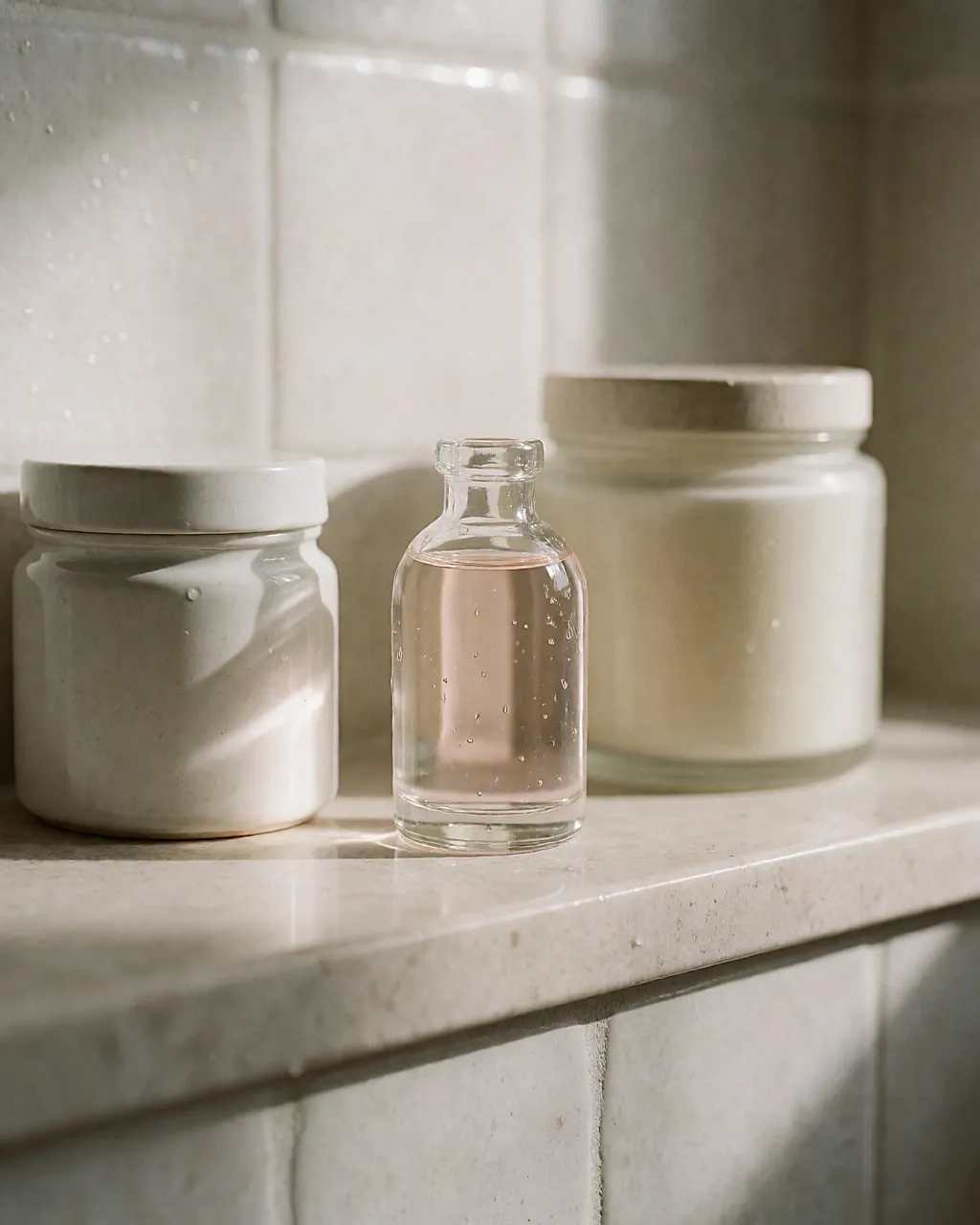
A friend was round the other day and stopped dead at my bathroom shelf, eyes fixed on a small bottle of rose water wedged between two moisturisers. Why, exactly, was I keeping that? Because it is the quickest move I know for waking up a tired complexion on a morning when everything happens at once. And because rose, in skincare, is not just a pleasant scent: it is a raw material, with its own textures, its own gestures and its own limits. Shall we go through it?
A raw material before it is a fragrance
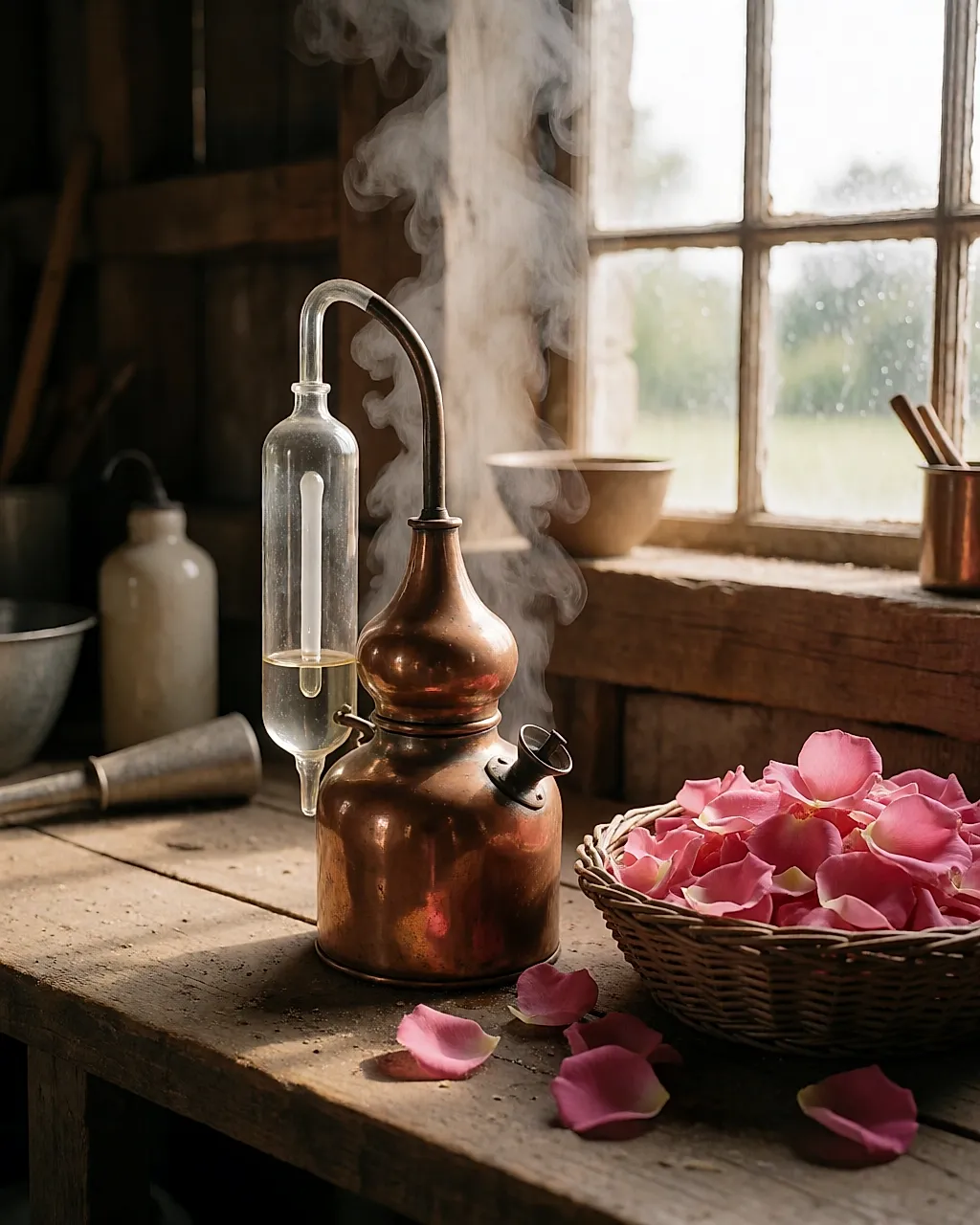
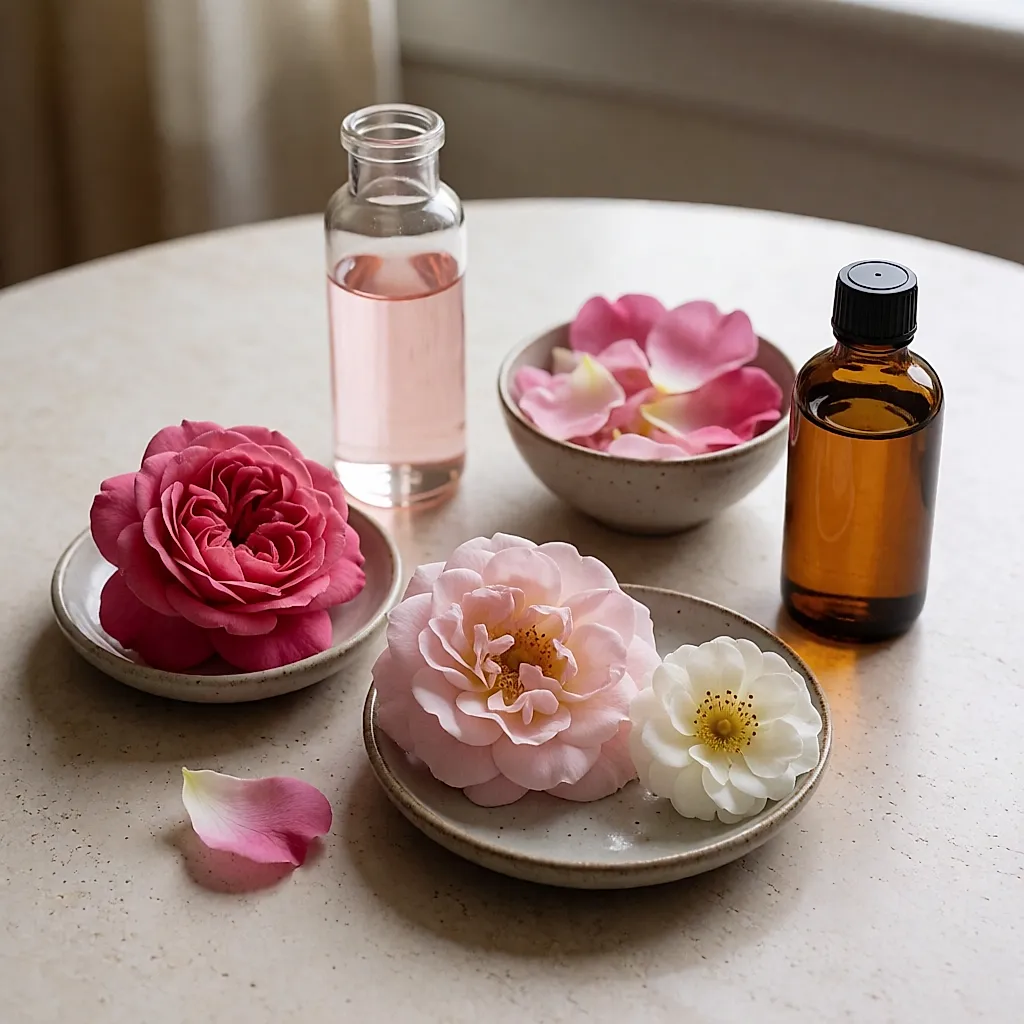
It all depends on which part of the flower you work with and how you extract it. Rose water, or hydrosol, comes from distillation: steam carries the aromatic molecules out of the petals and you collect what comes off. Its texture stays fluid, almost watery — an ideal base for a mist or a toning lotion, used before your serum. The oil is pressed from the seeds of certain varieties: denser, more enveloping, it belongs at the end of the routine, in the evening.
In between sits a whole spectrum of formats: creams, balms, milks, serums. What changes is not the flower but the base — and so the way you use it, and where it slots into your routine.

Three roses, three jobs
Rosa damascena. Picked at dawn in the valleys of Bulgaria, Turkey or Iran, when its scent is at its strongest. It gives us the rose water and the essential oil that go into lotions and soothing skincare.

Rosa centifolia, the May rose of Grasse. Its petals mostly go to perfume houses, though a few creams do use the extract — for the scent rather than for any effect.
Musk rose (Rosa moschata). Its seeds contain unsaturated fatty acids, omega 3 and 6. The oil they yield nourishes, softens and limits moisture loss. It is a particularly interesting oil for dry or easily uncomfortable skin, and Weleda has built a whole Wild Rose range around it. I have used it across several seasons: the texture stays light for an oil, which is not that common.
The routine, step by step
- After cleansing, mist the hydrosol over your face while it is still damp.
- Follow with your serum, then a rose cream if your skin feels tight.
- In the evening, two or three drops of musk rose oil in the palm of your hand: warm it between your palms, then massage from the centre of the face outwards.

The step that makes the real difference is water: mist first, skincare second. A cream applied to dry skin sinks in less well, and you quickly decide it does nothing when it has simply been put on wrong.
Rose water is a fresh product. Once opened, keep it out of direct light and use it within six months. If the smell changes or it turns cloudy, tip it down the sink — not onto your skin.
What you will actually find on the shelf
L'Occitane still has a whole line built around rose. Dr. Hauschka still makes its Rose Day Cream, formulated with reactive skin in mind — I have not tried it myself; I mention it for its well-documented formula. Coslys uses rose water in several cleansers and masks, though it is harder to track down over here. On the organic side, Melvita and Sanoflore have turned hydrosol into an affordable staple, again with patchier availability in the UK. And with the big houses, part of the price is the name, not only the formula.
What it costs
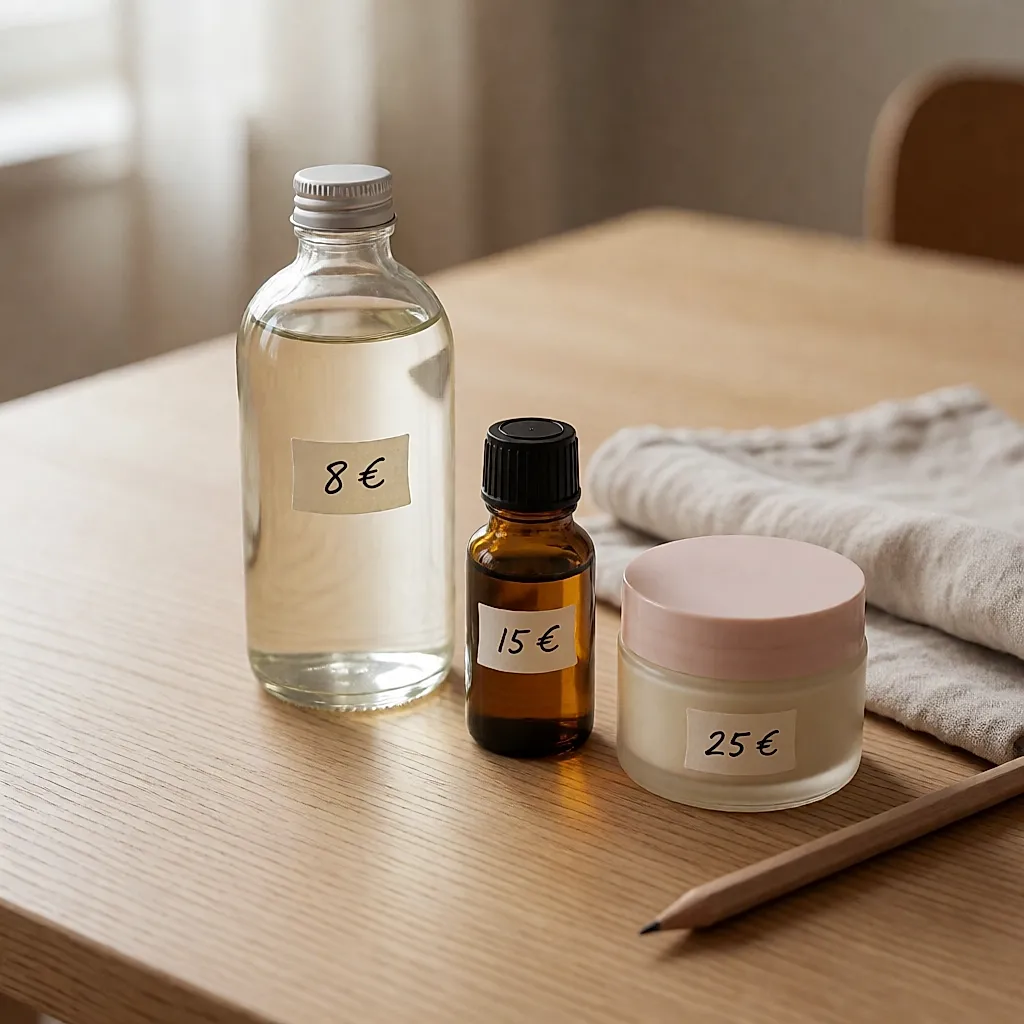
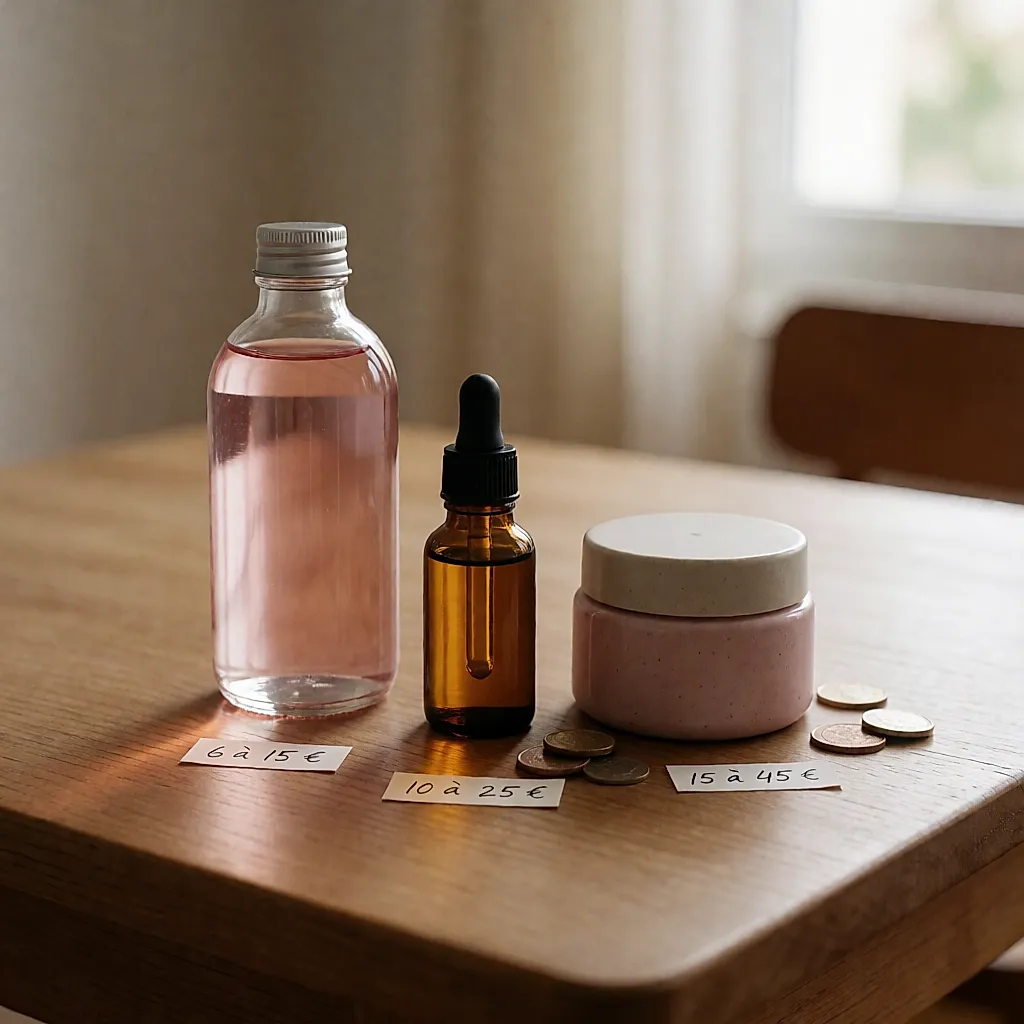
- Rose water or hydrosol: expect roughly £7 to £16 for 200 ml, from a health food shop, a pharmacy or online.
- Pure musk rose oil: expect roughly £12 to £25 for 30 ml, from a health food shop or online, depending on origin and packaging.
- Rose face cream: expect roughly £15 to £45, from a beauty retailer, a pharmacy or online, depending on the brand, the concentration and the certification.
Prices shift between retailers, so treat these as a guide rather than a quote. What pushes the bill up: the certification (COSMOS Organic, Ecocert, Soil Association), glass or a refill rather than plastic, local manufacturing, and how much rose is actually in the formula. An £8 hydrosol can be perfectly good; a £40 cream earns its price mainly if your skin reacts quickly. If you are just starting out, begin with the mist — it is the cheapest link in the chain and the one that does most for your routine.
Sources
- Weleda, Wild Rose range — weleda.co.uk
- L'Occitane, Rose line — uk.loccitane.com
- Dr. Hauschka, Rose Day Cream — drhauschka.co.uk
- Coslys, floral waters and cleansers — coslys.com
- Melvita, hydrolats — melvita.co.uk
- Sanoflore — sanoflore.fr


Comments
Your opinion matters: rate the article, react and reply to comments.
Comments are moderated; AI-assisted comments are flagged. Text emoticons (8-), :-), <3…) are automatically shown as images.