
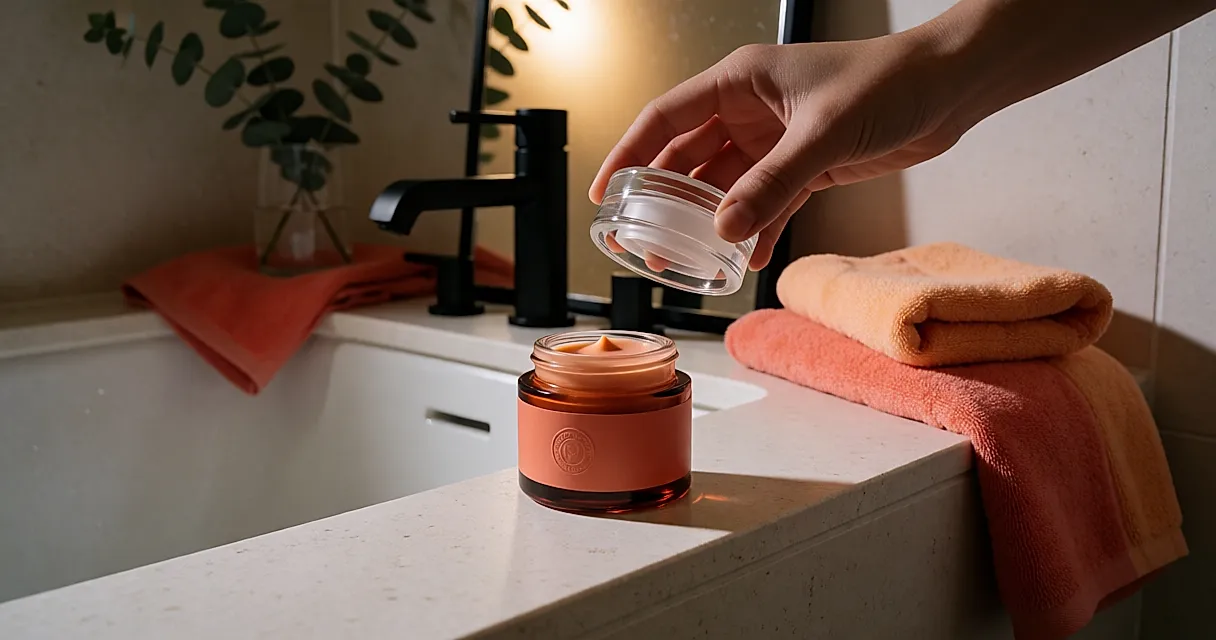
A daytime balm and a night mask are the raincoat and the duvet of lip care. The first follows you all day; the second plays a different game, more occlusive, and stays put for hours. Yet we often blur them into one routine: a tube bought in a hurry, applied thinly at night, and by morning your lips can be exactly as they were the night before. No softer, just a bit shinier.
Two steps, two thicknesses
A daytime balm is a surface step: a thin layer you reapply ten times, which sits under lipstick and doesn't catch your hair in the wind. You want it comfortable, almost invisible, and never mind if you have to go back for more.
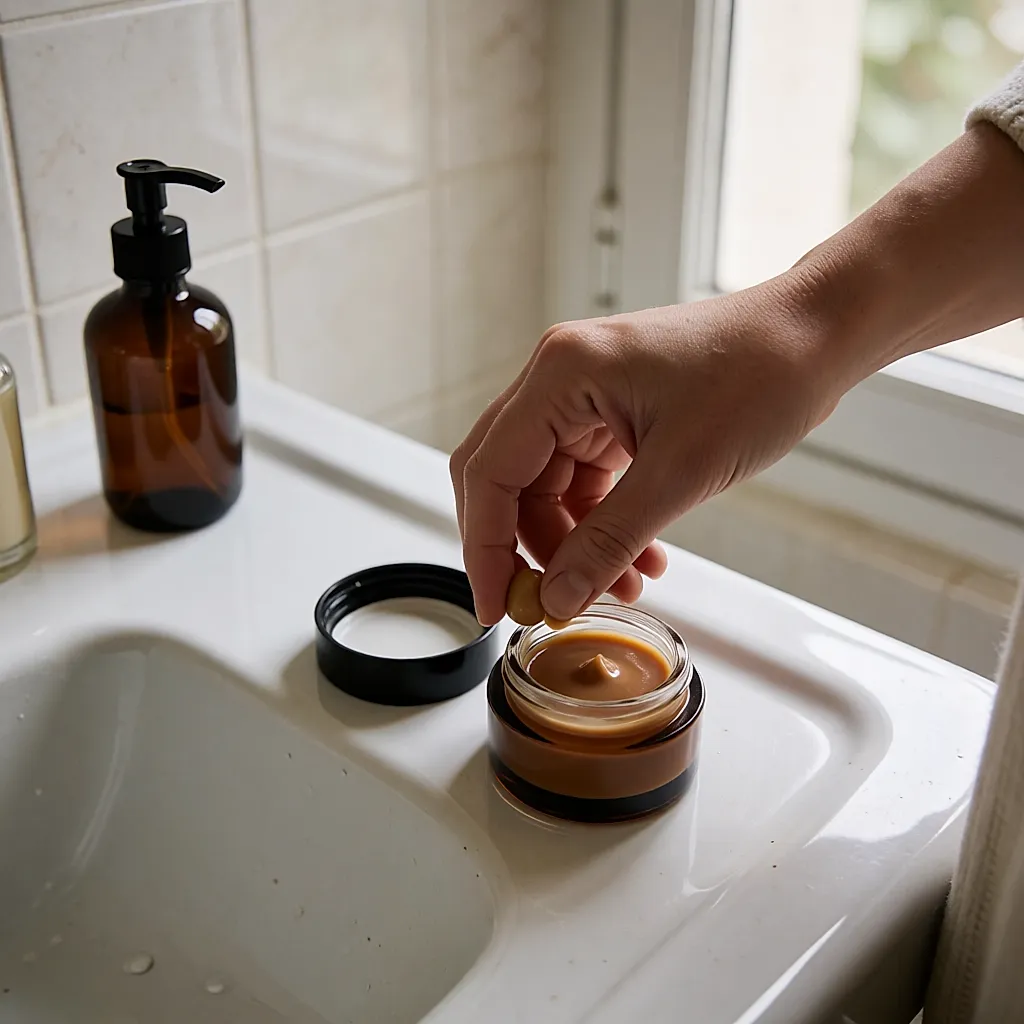
A night mask plays a different game. You're after an occlusive layer: a rich film that sits on the lips for hours, without being absorbed or transferred to the pillow. The step changes, and so does the setting — no need to look presentable, just apply it before bed.
The classic mistake isn't the product but the amount. A pea-sized amount of daytime balm applied thickly before you leave the house and you're left with silent-film-star lips. Night masks are generally richer and more occlusive than daytime balms; thickness is a guide to application, not proof of efficacy on its own.
Waxes and butters: what makes the cushion
Read the ingredients list in order: as a rule, especially among the main ingredients, the first names carry most weight in the formula. In the UK and EU, ingredients present at less than 1% may appear in any order, so the list doesn't let you draw firm conclusions for every product. For a night treatment, look for oils and waxes that hold their shape — shea butter, beeswax, rice or carnauba wax, castor oil, lanolin. Wax gives the film structure; butter brings the melting richness. A good mask melts on contact with the lips without vanishing.
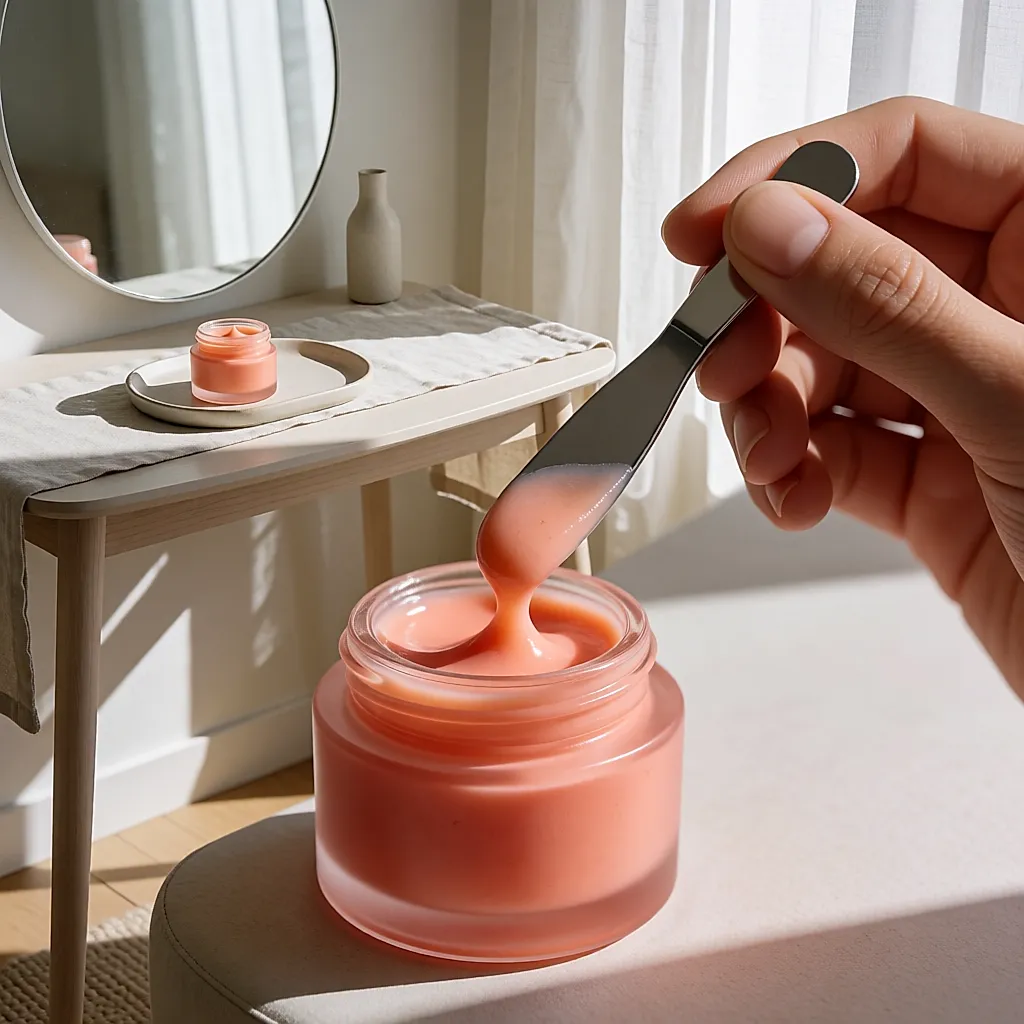
Humectants (glycerin, honey) draw water in, which is useful provided an oil or butter holds that water in place. On their own, they can have the opposite effect: the lips drink, then dry out. It comes back to the amount, again.
On cracked lips, be wary of menthols, camphor and tingling flavourings: you feel the tingle, but the relief is more debatable. And know that petroleum jelly remains a very effective occlusive, for a few pounds. It's neither chic nor organic, but it's a deliberate compromise — and it does the job in a pinch.
Pot or tube: the bedside verdict
The pot has an unbeatable advantage at night: you dip a finger in and take a proper scoop, which no stick allows. Its downside is hygiene: clean finger, lid closed, and don't let it rattle around at the bottom of your bag between receipts.
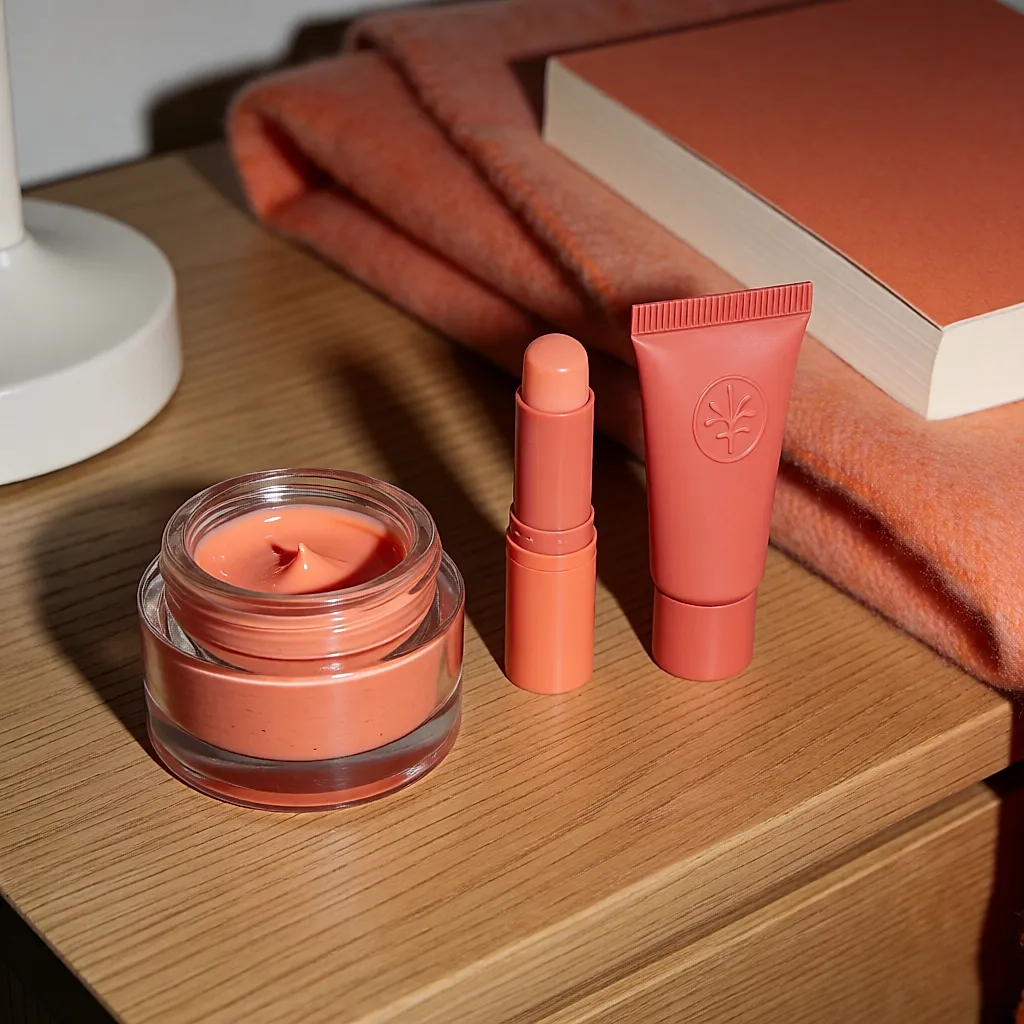
So, pot or tube? The tube wins for daytime: precise and portable. The stick is the most practical of all, but the thinnest — perfect as a stopgap, not enough as a mask. As for packaging, if environmental impact matters to you, look at what happens at the end of its life: a glass pot is usually easier to recycle than a tube that mixes plastic and aluminium, and some brands offer refills. Check the brand's official website rather than the label, which is often vague.
What to spend
Does price make the thickness? Almost never. As a rough guide, expect about £4–8 for a basic balm from a supermarket or pharmacy, £8–15 for a night mask from a health-and-beauty retailer or pharmacy beauty aisle, and £20–40 from a department store beauty hall or established skincare brand. Certified organic formulas often sit between £8 and £18.
Where to look? A pharmacy or health-and-beauty retailer for rich, fragrance-free formulas; a supermarket for the emergency tube; a department store beauty hall or brand website for more refined textures. The real criterion remains the ingredients list, not the logo on the lid.
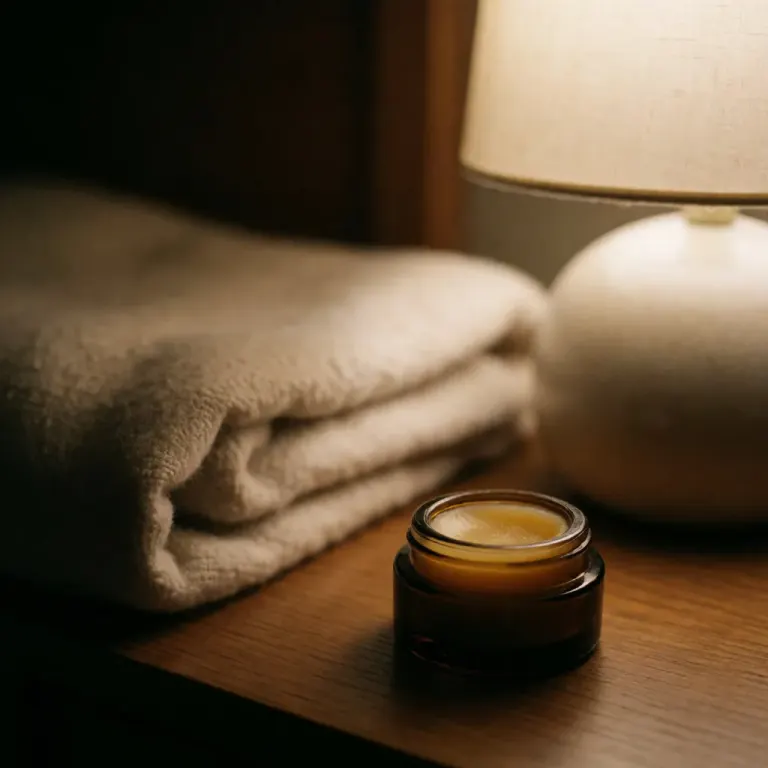
The evening step, in brief: keep the pot on your bedside table rather than in the bathroom, so you're less likely to forget it. Take a scoop, place it in the centre of the lips, spread towards the corners without rubbing. In the morning, a warm cotton pad is enough to remove the excess. If the product turns grainy after a few weeks, it's often the wax crystallising: not serious, just unpleasant.
One last honest word: I don't have a favourite to recommend, because formulas change and what rescues lips battered by cold won't suit lips that react to everything. The step itself costs almost nothing: a thick layer, a pot within reach, a few moments before bed. If you remember one thing, make it this — at night, you don't apply the same amount as you do in the morning.
Comments
Your opinion matters: rate the article, react and reply to comments.
Comments are moderated; AI-assisted comments are flagged. Text emoticons (8-), :-), <3…) are automatically shown as images.