
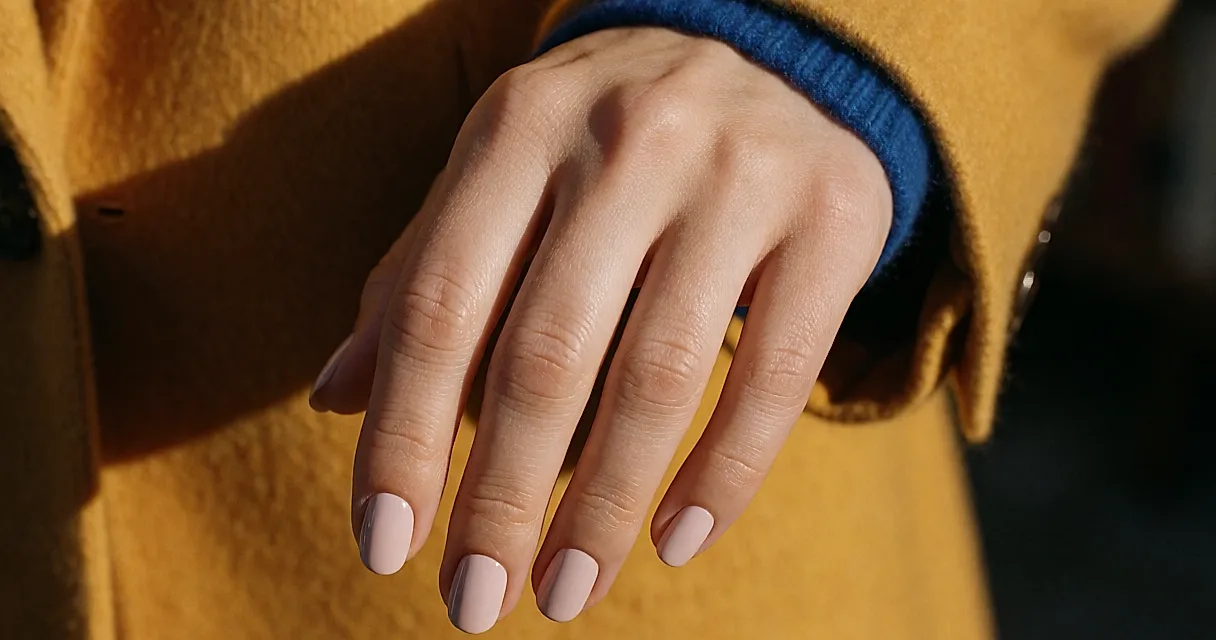
The word 'care' has slipped in beneath the colour, in discreet small capitals, as if it had always been there. On some bottles it even climbs into the product name, just before the shade. Yet nail polish is still a film: a coloured resin applied to a keratin nail plate, worn for a few days, then chipped. That doesn't mean it shouldn't be chosen with more thought than a blind pick, shade in hand.
Why 'care' on a bottle means very little
As far as we know, no public standard defines what the word 'care' is allowed to mean on a bottle of nail polish. In practice, it can refer to a base enriched with fibres, a hardener, a formula free from certain solvents, or simply a product that comes off without leaving your hands in a sorry state. Very different things gathered under a four-letter word. So is it a selling point or a genuine benefit?
What matters is the INCI ingredients list and the order of the ingredients, not the claim on the front. As a general rule, particularly among the main ingredients, INCI order gives you an indication; ingredients below 1% may be listed in any order. Plant oils and glycerin, often highlighted in the marketing, sometimes appear right at the bottom of the list: the order alone cannot tell you for certain that they are present only in tiny amounts. And if a plant extract catches your eye, bear in mind that you almost never know its concentration: brands rarely disclose it, and the label won't settle the question. Nor does a polish treat a nail that splits, turns yellow or changes thickness; in that case, see a podiatrist or dermatologist rather than simply switching bottles.
The bottle size tells you more than you might think
A 5 ml bottle and a 15 ml bottle don't play the same role in your kit. The small format is the discovery or travel bottle: it lets you try a bold shade without spending much, but the price per millilitre is often two to three times higher. The large format pays off if you wear the same colour all season—provided you like the brush that comes with it, as widths vary a lot from one bottle to another.
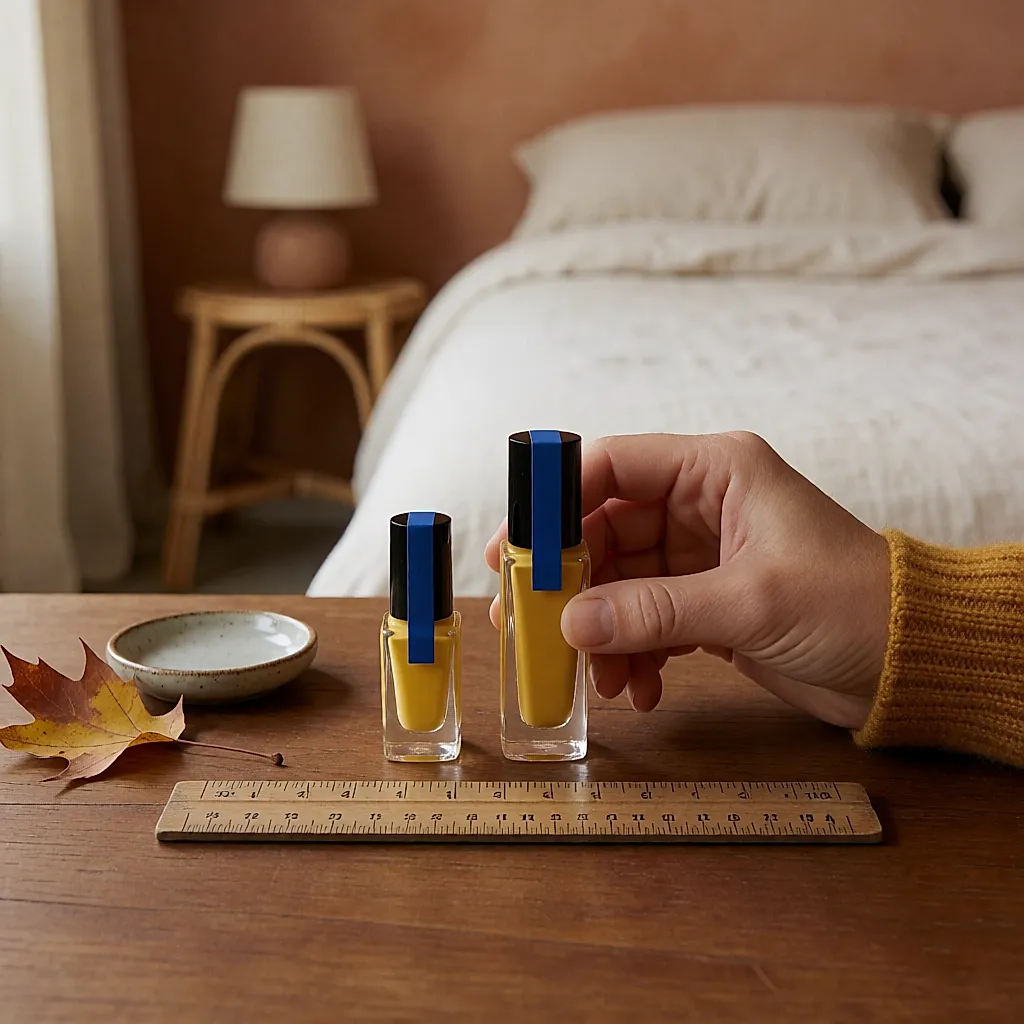
Think about the end of the product's life, too: polish thickens over time and as air gets into the bottle. A glass container can be cleaned and kept, and some brands offer refills or fill-your-own bottles—a point to check on their official website, because not all do. The best compromise is often somewhere in the middle: a medium glass format that you buy again once the shade has really earned its place.
Before you choose a shade, look at your bare nails
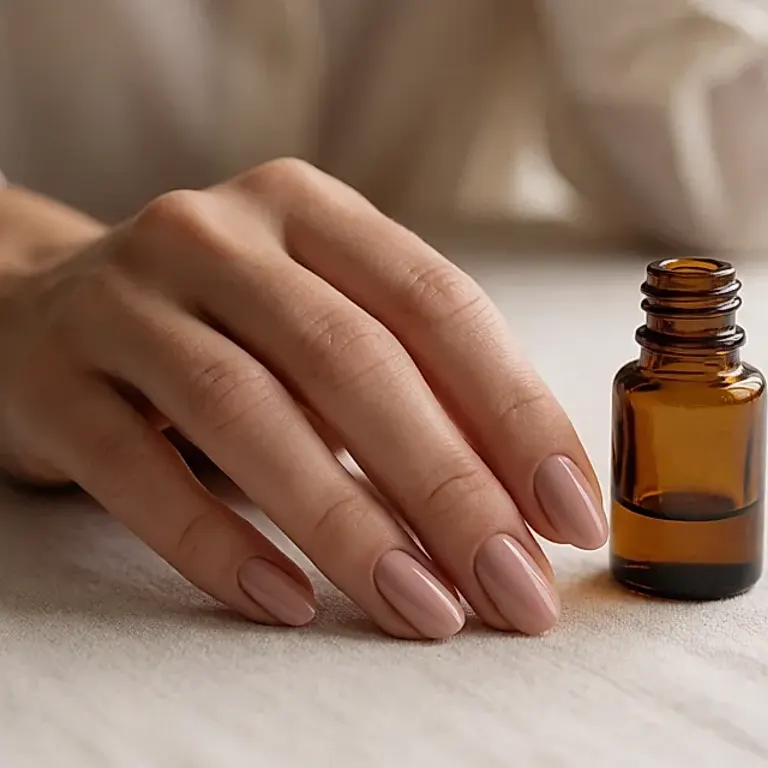
Lay your hand flat under daylight, then turn your fingers over: that's where you see ridges, white spots and a tip that flakes. A yellowing nail will carry a rosy nude or a blue-grey better than a bright coral, which makes the contrast more obvious. A short, wide nail looks more at ease with a satin finish than with a very dark glossy red, which tends to make the nail surface look smaller.
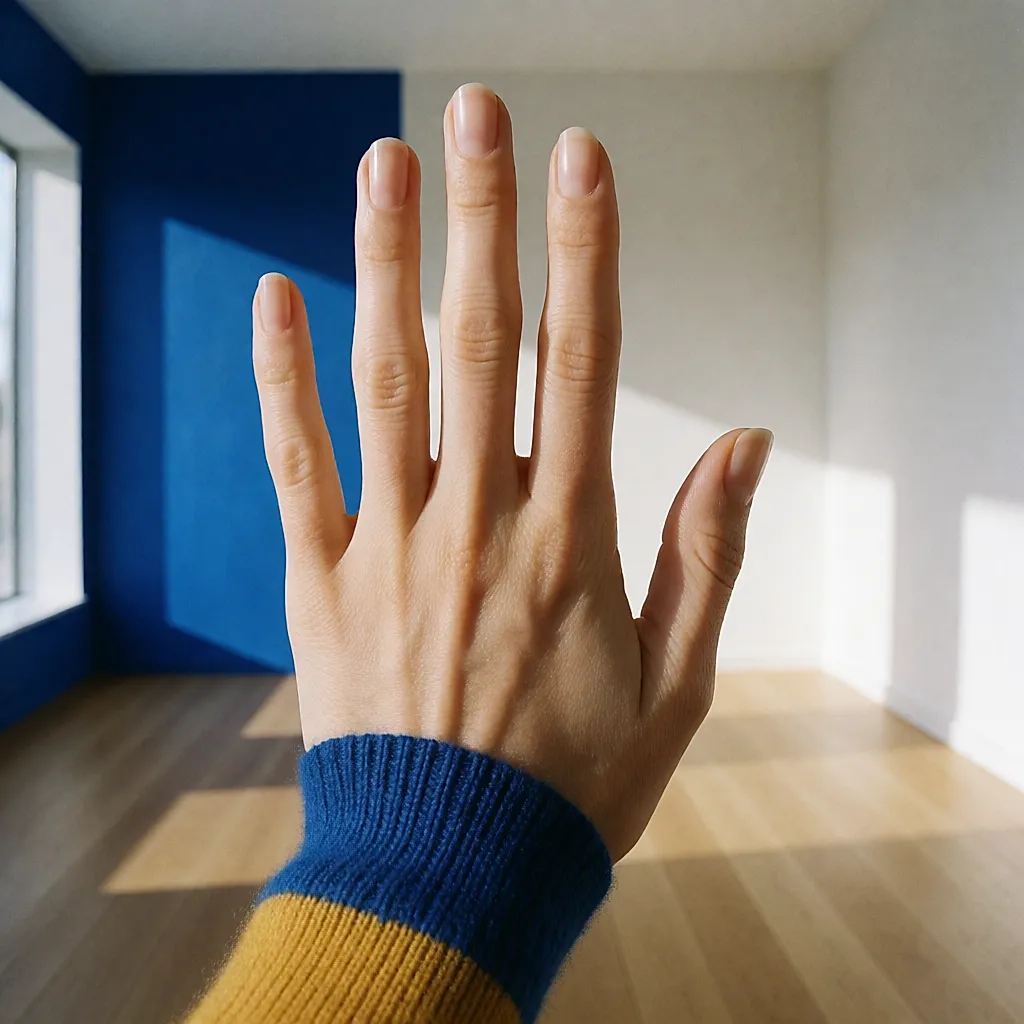
Length matters as much as colour. On short, neatly filed nails, a light shade in one coat is often enough to look put together. On long nails, you can go for dark and glossy. And if your nails are thin, soft or brittle, avoid gel and extensions until you have sought advice: start with a classic colour, applied in two thin coats, and give yourself time to see how your nails react.
Budget
Let's be clear about the rough figures: expect around £3–£7 for a polish from a supermarket or own-brand range, £8–£15 in beauty halls and pharmacies, and £15–£25 from niche brands or for more complex formulas. 5 ml minis often cost £6–£12, which is reasonable for trying a shade—less so for building a kit. A salon manicure, meanwhile, is usually £25–£45 depending on the city and the finish.
On top of that, add a gentle nail polish remover if your nails are dry, and a base coat: it protects the nail plate and makes removal easier. Two products that last for months beat six bottles drying out at the back of a drawer.
The in-store move: shake the bottle. The rattle of the little ball and the apparent fluidity of the polish give you an idea of its condition—a rule of thumb rather than an exact science. Above all, check the PAO, the little open-jar symbol with a number: it tells you how many months the polish remains good once opened.
There is something reassuring about a bottle that doesn't promise the earth. You choose a shade, check what's inside, keep what works on your own nails. And if you only have five minutes on a rushed morning, a base coat and a clean nude will do more for your hands than a perfect red on a tired nail.
Comments
Your opinion matters: rate the article, react and reply to comments.
Comments are moderated; AI-assisted comments are flagged. Text emoticons (8-), :-), <3…) are automatically shown as images.