
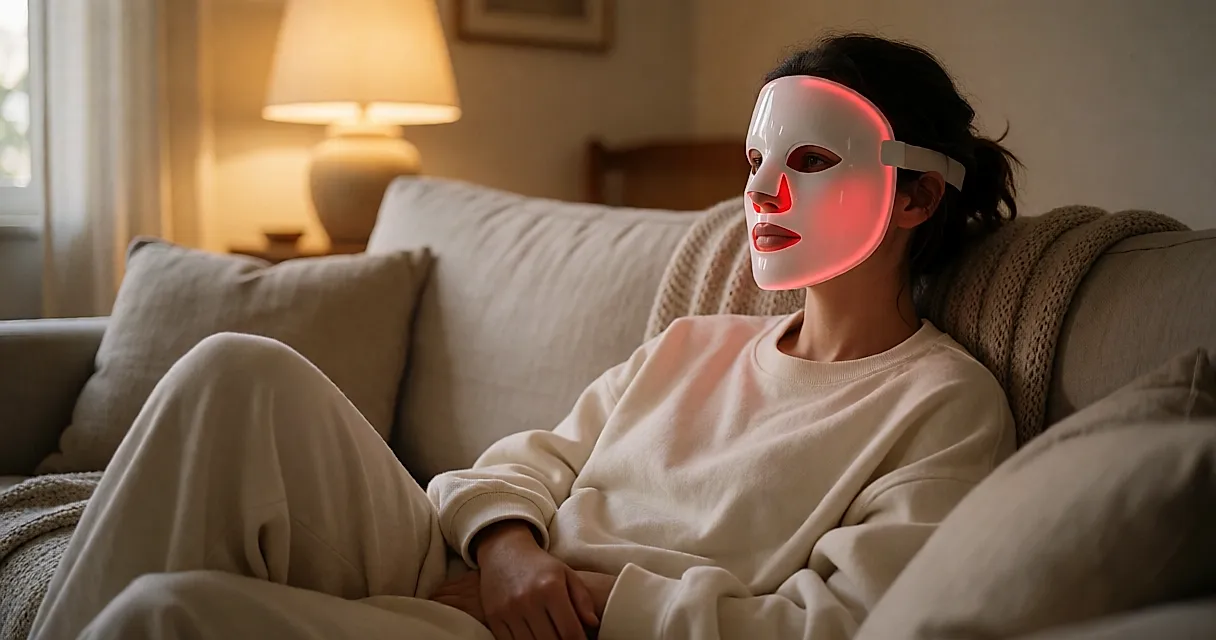
The box arrived on a Tuesday. It was unboxed on the Wednesday, plugged in on the Thursday, and then it sat there gathering a fine layer of dust until winter. The LED mask is probably the most photographed object in our bathrooms and the quickest to be abandoned — not because it does nothing, but because we never decided exactly when we'd switch it on. So the real question isn't which one to buy, but how often, on which skin, and alongside what.
Regularity first, power second
We all know the temptation: a 30-minute session on a Sunday night to make up for three weeks of forgetting, a bit like downing three glasses of water at 11pm and promising to drink better tomorrow. It works no better for light than it does for hydration. A light routine reads like an actives routine: what counts is repetition, not intensity. A newsroom rule of thumb, not a prescription: two to three times a week, at roughly the same time. It's doable, it's easy to spot in the diary, and it leaves room for the evenings when you can't face doing anything at all.
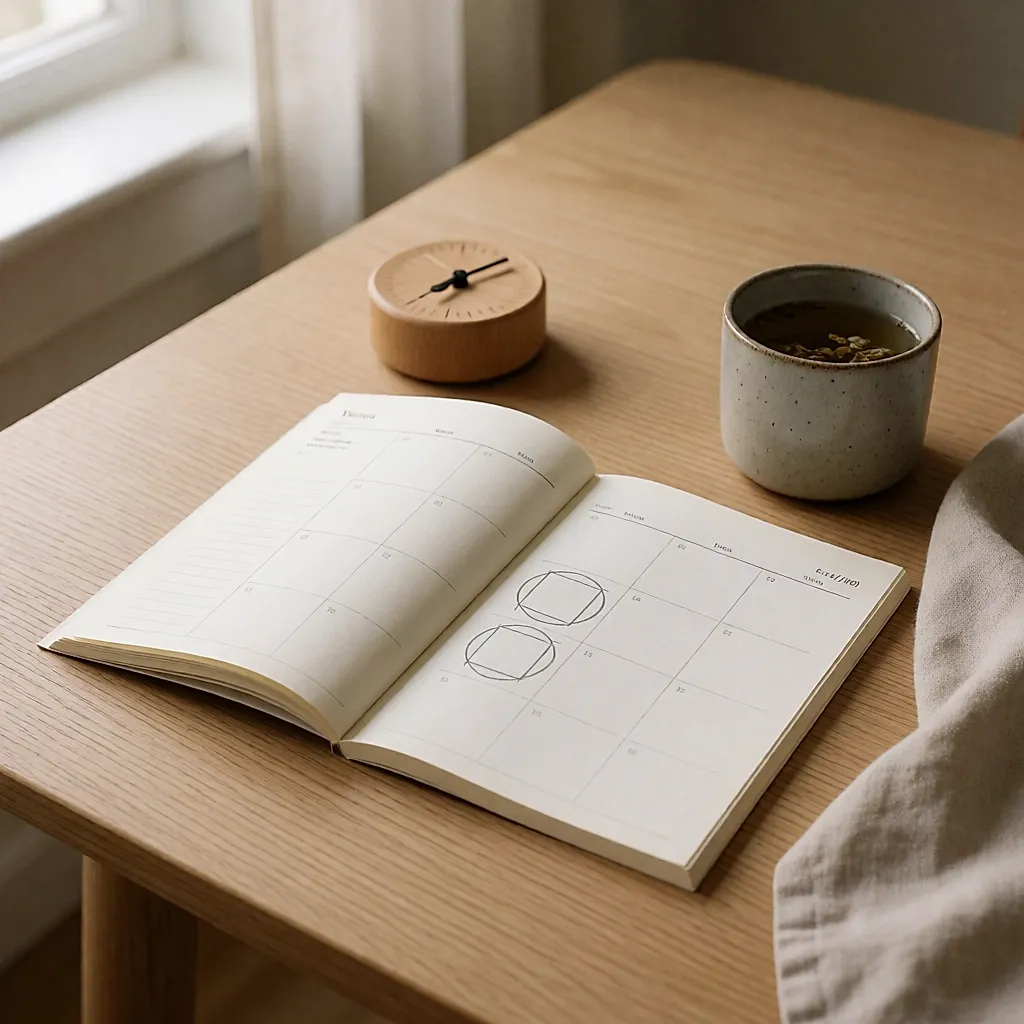
All that's left is finding a slot that survives a real week. If a session means lying still with no phone, it's in direct competition with sleep — and sleep always wins. So hook it onto something you already do: drying your hair, the first episode of whatever you're watching, the Sunday-night breathing before Monday. Ten minutes that slot into an existing habit stand a far better chance of lasting than a solemn beauty appointment.
Clean skin, a clean mask, nothing layered on top
Second question, and often forgotten: what state is your skin in when you press the button? A session over a face still in make-up, or straight after a brisk exfoliation, isn't ideal. Take it off, cleanse, dry, and don't layer: on a session night, skip acid products and retinol. It isn't set in stone, it's common-sense caution — two punchy protocols on the same evening and your skin will referee, rarely with any elegance.
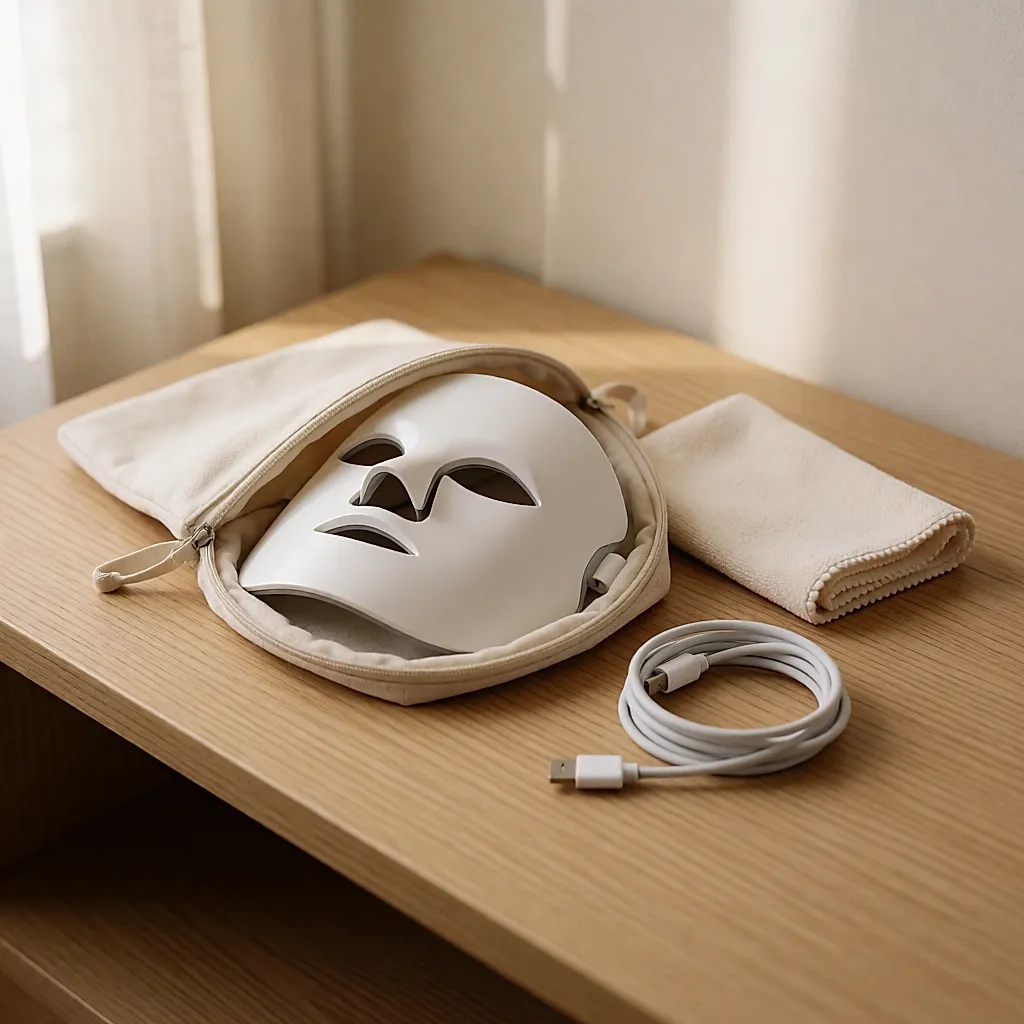
The device deserves a bit of care too: follow the manufacturer's instructions for cleaning, keep the mask away from dust, check the charge before you settle in rather than halfway through. And if you're pregnant, using a treatment that makes your skin reactive, or having a flare-up of a skin condition, ask a healthcare professional before you start. Light isn't a trivial treatment just because it lives in a drawer.
What a session doesn't replace
This is where a lot of routines come off the rails: you add a device and, without noticing, drop whatever was holding the whole thing together. A light session replaces neither the evening cleanse, nor moisturiser, nor morning sun protection. Nor does it stand in for proper advice when a real problem settles in — pigmentation, inflammatory acne, rosacea — because a home mask isn't a clinic device, and results seen with one don't necessarily carry over to the other. A session is an extra, not the foundation.
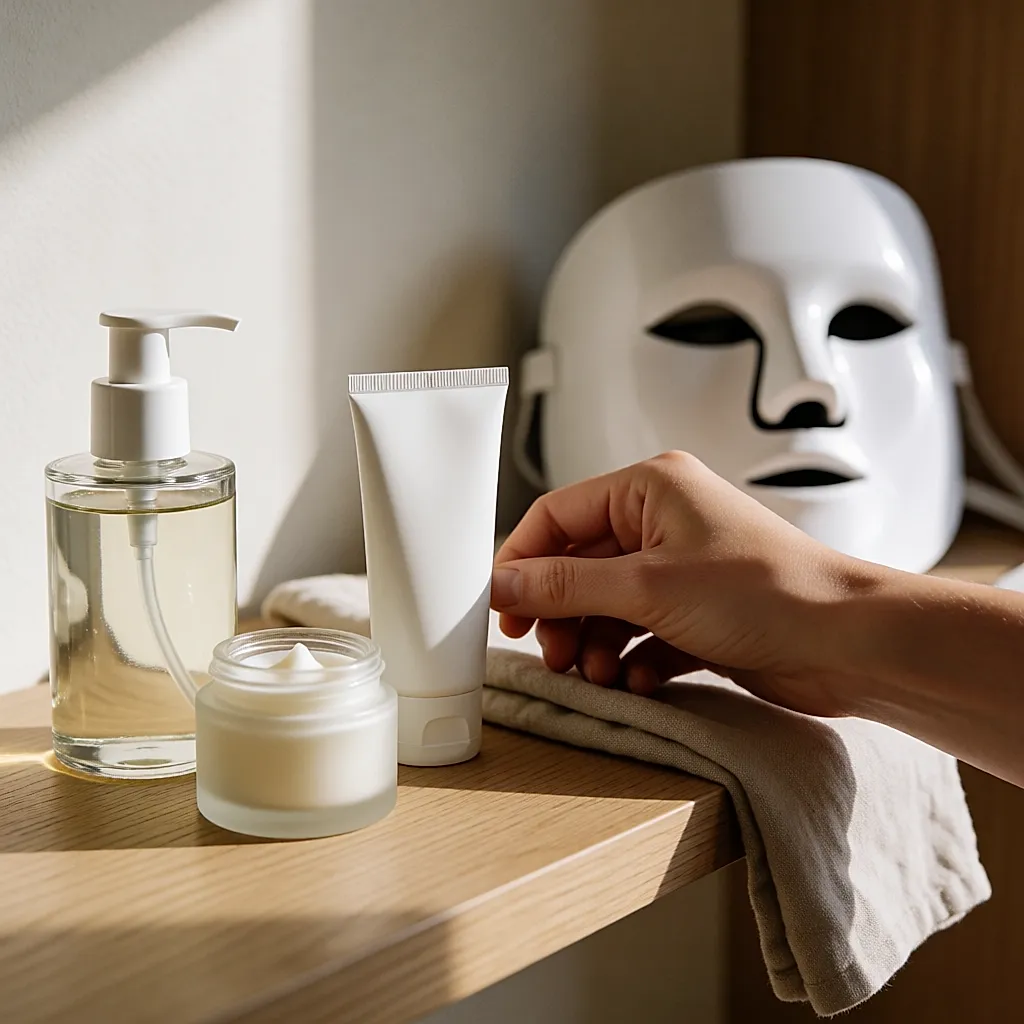
The reverse is true as well: there's no point stacking everything. If your evening routine already runs to six products, the LED mask won't be the seventh that saves the day. Put it beside a simple routine, two or three steps you genuinely keep up, and let it stay a bonus. Consistency in a short routine beats a perfect plan abandoned in February.
What it costs
On the spending side, expect roughly £70 to £150 for an entry-level rigid mask, and more like £250 to £450 for the more advanced devices — more diodes, several wavelengths, timers, a longer warranty. In a salon or clinic, a session often lands between £45 and £110 depending on the city and the protocol, which adds up fast if you want to go regularly. Price also shifts with where you buy: department stores and beauty retailers let you see the device in person, online shops sometimes list discounts, and pre-owned looks tempting on paper — though you'd need to be able to clean the device properly and check the warranty.
A device is electronics and a battery: check the warranty length and whether after-sales service is available before you fall for the sleekest casing. It's the criterion that decides whether your mask ends up on the top shelf or in the bin.
Before you buy, test the frequency dry: for two weeks, note the evenings when you'd genuinely have ten minutes to give it. If you find fewer than three, wait. It isn't the mask you're missing, it's the slot.
The only step left, when the week has eaten everything, is the one you've made easy. Put the mask on charge next to your toothbrush, decide on your two evenings, and keep to them without beating yourself up on the other days. You'll soon see whether the object earns its place — and at least it won't judge you for your punctuality.


Comments
Your opinion matters: rate the article, react and reply to comments.
Comments are moderated; AI-assisted comments are flagged. Text emoticons (8-), :-), <3…) are automatically shown as images.