

Skin that lacks water is not the same as skin that lacks oil, and that is the whole difference between a bit of November tightness and settled dryness. The reflex — one more layer, a richer texture, a balm applied like a poultice — comes all too easily. And it often misses the point.
Tightness has two causes, and they get confused
After a shower, skin feels supple; ten minutes under central heating and it feels tight. This isn't a seasonal inevitability, it's domestic physics: heated air has a lower relative humidity than outdoor air, and it readily draws moisture from your skin. Add to that hotter washing, wool that rubs, and nights with the windows shut. The result is skin that lacks water — which has nothing to do with skin lacking lipids.

Yet the word 'dry' covers both. A tired skin barrier lets water evaporate faster; dehydrated skin feels tight even when it is oily. Putting grease on a lack of water is like closing the shutters and hoping the room warms up: it limits the damage, but it doesn't solve the problem.
Humectants and occlusives do different jobs, and neither outranks the other
A humectant draws water in and holds it at the surface. Familiar examples include glycerin, hyaluronic acid, low-concentration urea and aloe vera. They tend to have fluid textures and can leave a faint steamed-up look on the face. Their job is not to nourish but to hydrate — a distinction that 'intense nourishment' labels cheerfully blur.
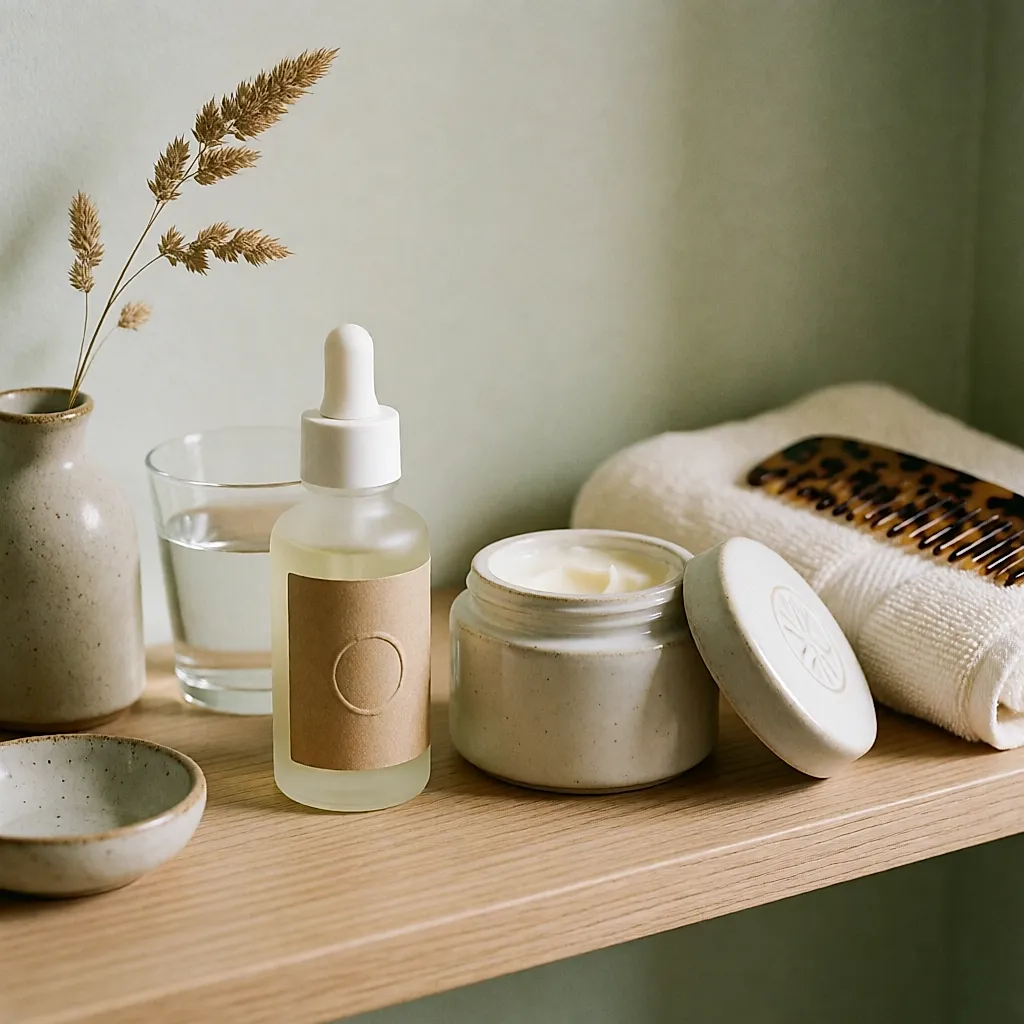
An occlusive, by contrast, forms a film: shea butter, waxes, plant oils, or petroleum jelly in conventional versions. It slows water loss; it does not add water. Hence the logical order: humectant first, occlusive on top, never the reverse. A humectant alone in very dry air may not be enough; that's where a light film earns its place. And if your skin reacts with breakouts, go lighter on the occlusive rather than piling on more.
The 'just use something richer' reflex, and its slight hangover
You know the Sunday-night scene: three layers, a thick balm, and by Monday morning a shiny forehead under a roll-neck. Nothing dramatic, but not comfortable either — and makeup wear pays the price. Richer doesn't mean better nourished; it often just means heavier.
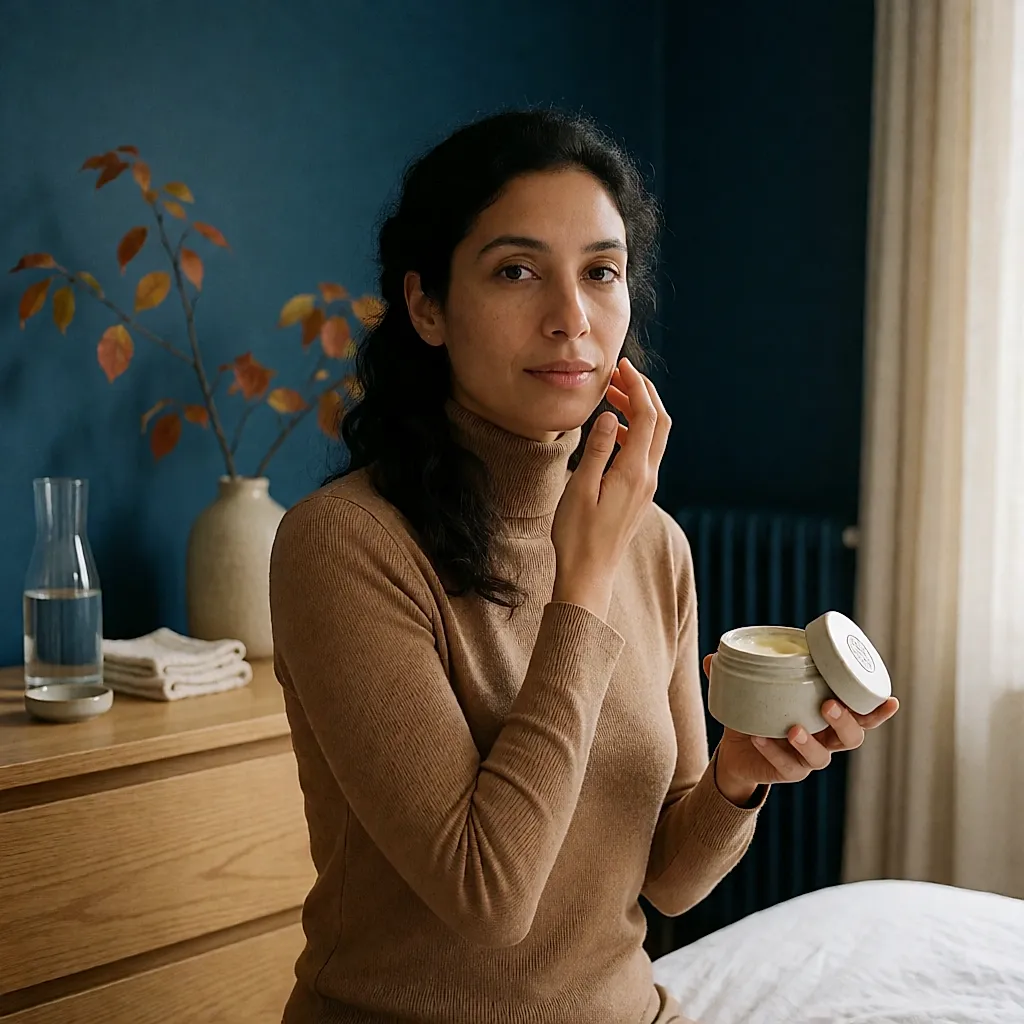
What costs less than a third layer: turn the thermostat down by one degree, open the windows properly in the morning, put a bowl of water near the radiator. The effect of a bowl of water is modest, but less dry air is noticeable. A humidifier? It needs serious maintenance, otherwise you just move the problem. No one is asking you to give up the radiator!
The routine that takes three minutes
After a shower, pat yourself dry without rubbing, and don't wait. On skin that is still damp, apply a pea-sized amount of humectant, then a cream containing a little occlusive to seal it in. At night, go richer; in the morning, go lighter, perhaps keeping the balm for cheekbones and around the lips. The neck and backs of the hands need the same, and no one ever thinks of them.
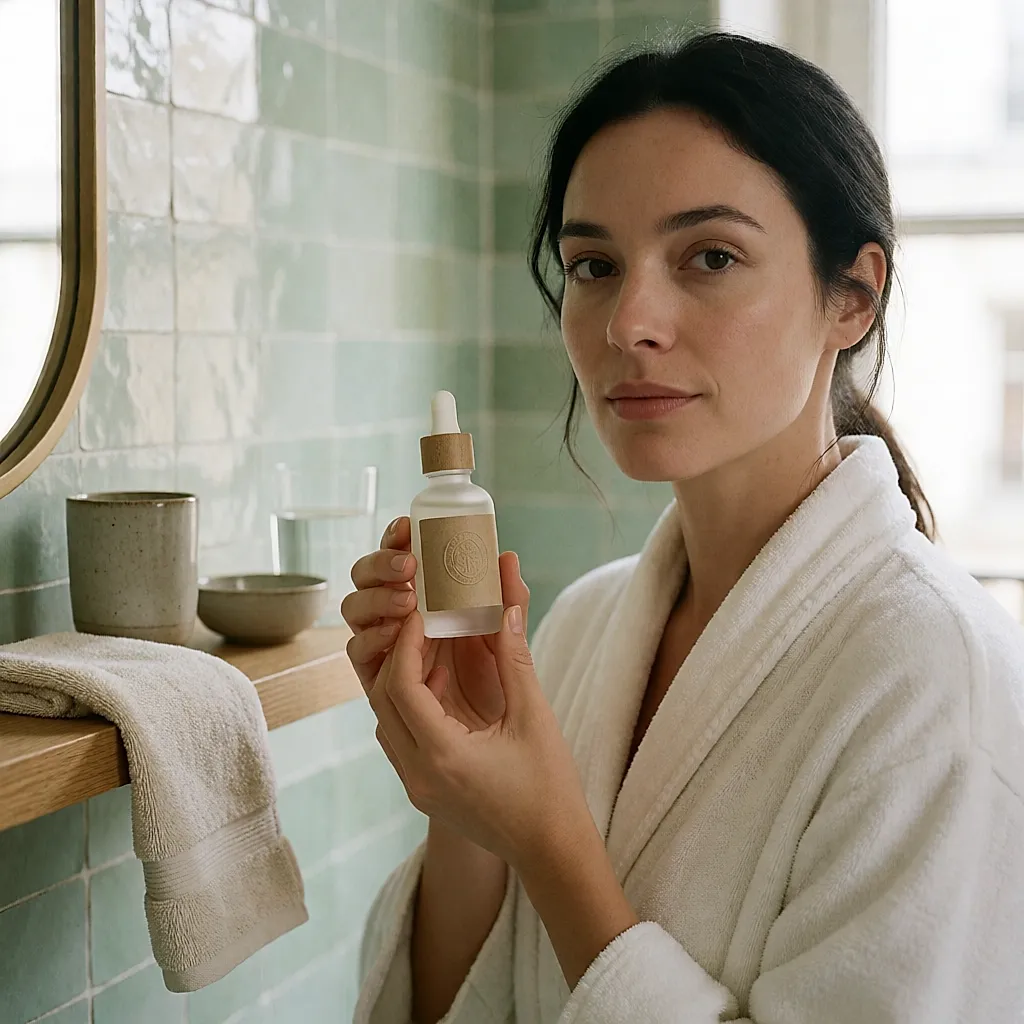
If it still feels tight, don't increase the amount: change the order, lower the water temperature, and give skin a few days to adjust in practice. And if tightness comes with patches, itching or redness, that is one for a dermatologist, not a jar of cream.
Budget
As a rough guide, expect around £5–12 at a supermarket or pharmacy for a simple glycerin serum, £15–30 for a hyaluronic acid product depending on size, and £8–20 for a shea butter balm. Prices climb with city, range and size — there's no need to aim for the most expensive jar just to test the idea.
On packaging, favour glass, refills where the brand offers them, or a solid balm: often less water in the formula and less plastic in the bathroom. And take a look at the INCI list: as a rule, the higher an ingredient appears, the more of it is present among the main ingredients; below 1%, the order is no longer meaningful.
The three-step evening routine: lukewarm cleansing, humectant on damp skin, a little occlusive on areas that feel tight. In the morning, go lighter. And keep the bowl of water by the radiator — it won't replace skincare, it just makes the air less hostile.
I'm not going to promise you peach-soft skin by 15 November: no one can. But between dry air and grease, there is an order to put right — and it is often the only step that remains when you have just five minutes.
Food supplements do not replace a varied, balanced diet and a healthy lifestyle.



Comments
Your opinion matters: rate the article, react and reply to comments.
Comments are moderated; AI-assisted comments are flagged. Text emoticons (8-), :-), <3…) are automatically shown as images.