
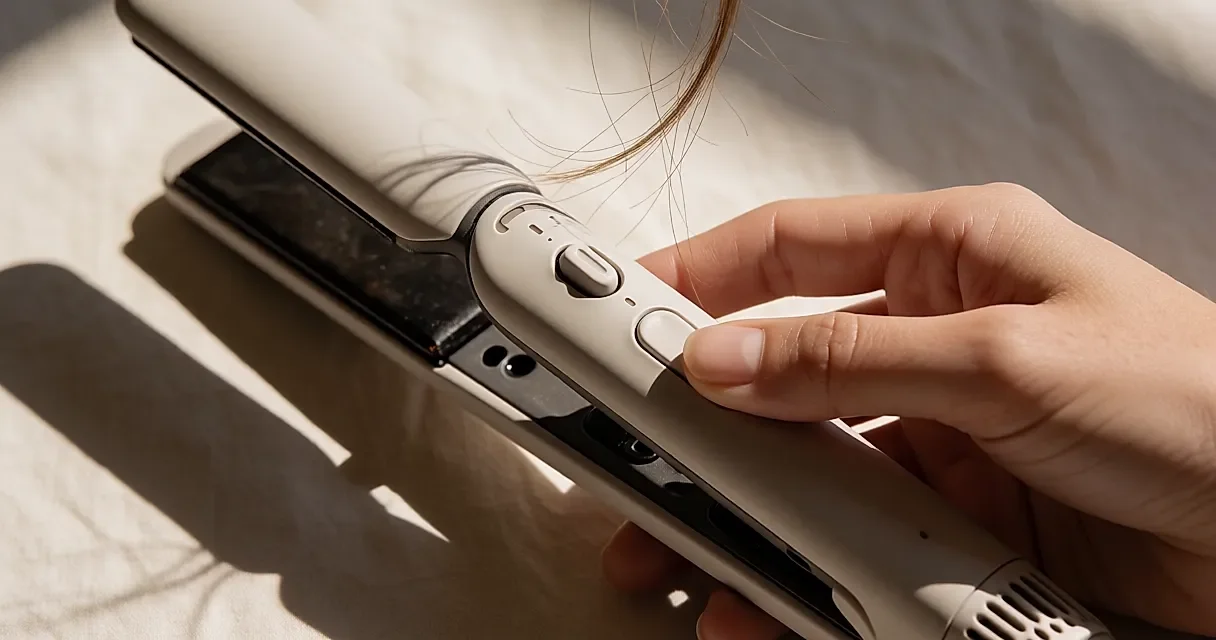
On plenty of boxes, the maximum temperature is the selling point; the minimum says nothing at all. As if a pair of straighteners has to scorch to prove it heats up. In a sale, that silence can cost you: you bring home a device with only one very hot setting, and discover the problem on fine hair, on a morning when you're already in a rush.
The setting range is the missing detail
'Temperature control' doesn't always mean 'useful temperature control'. A straightener can have a dial but offer only two or three settings bunched together at the top of the range. For fine or coloured hair, what matters is a genuinely low setting: a temperature the device holds steadily and that gives you time to draw the section through. In practice, some straighteners start genuinely low; others start much higher. So the useful question isn't 'what's the maximum?' but 'how low does it go, and can it hold that temperature steadily?'
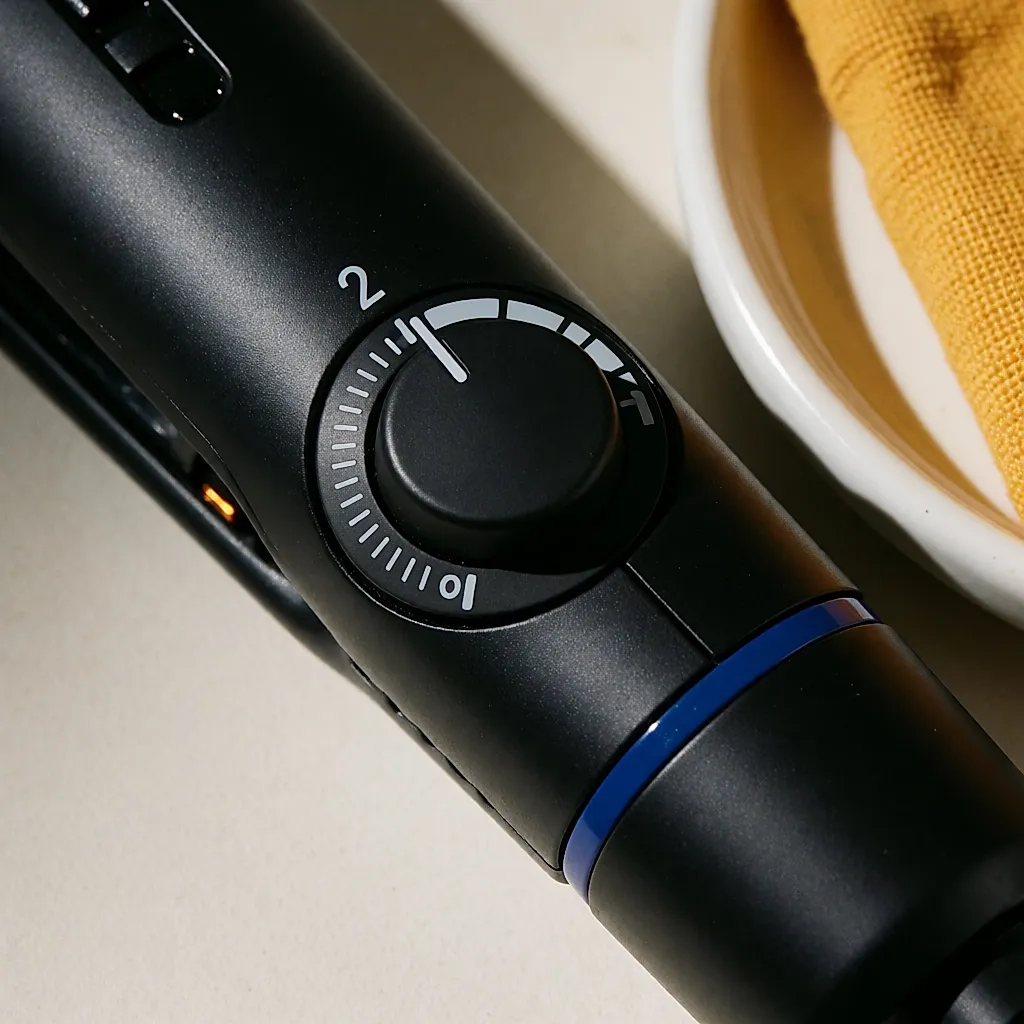
Fast heat-up matters too, for a different reason. A straightener that reaches its chosen setting in seconds makes life easier when you've got five minutes. But that setting still needs to be low and consistent: a device that heats quickly but whose temperature jumps around never lets you know whether you're working at the temperature you intended or much higher. On fragile hair, that lottery is no comfort.
What your hands can check
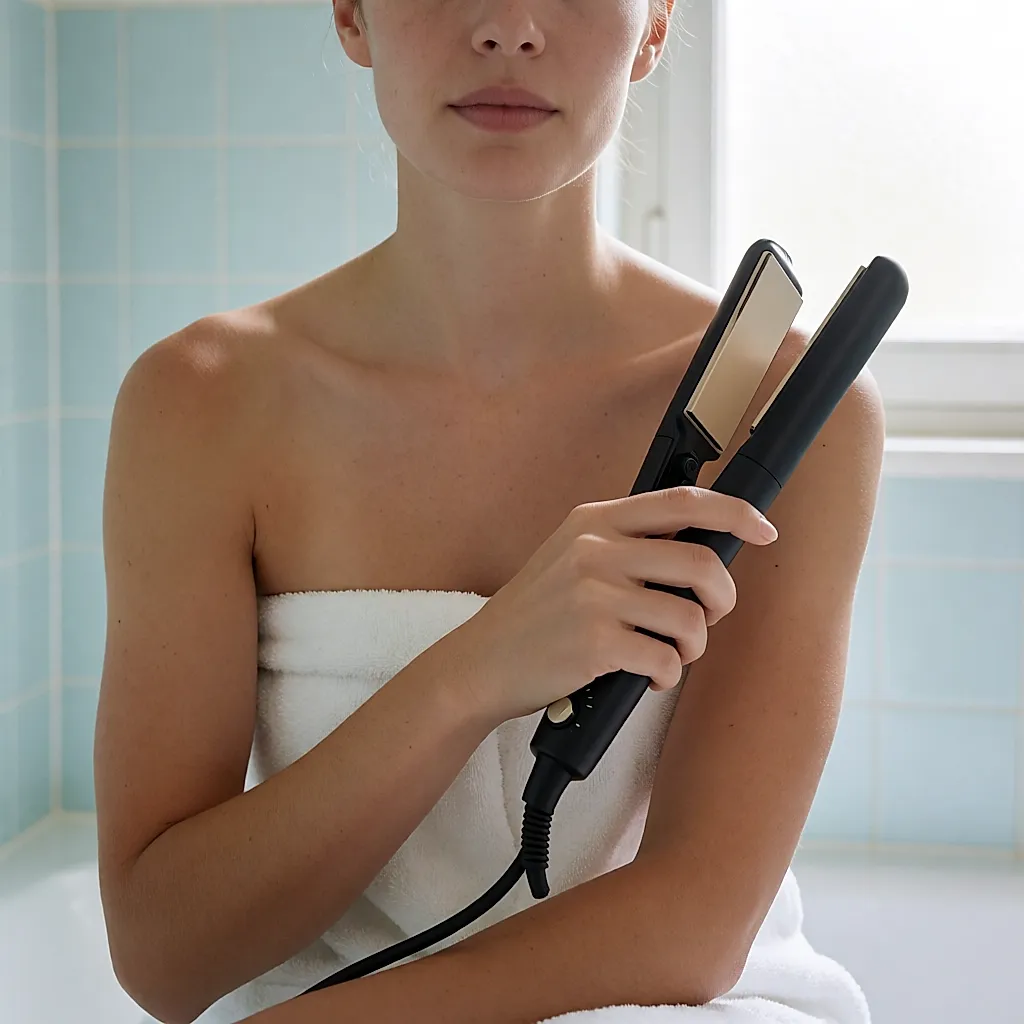
Before you even plug it in, pick the straightener up and open the plates. Look at the edges: if they're thin, metallic and exposed, your fingers may heat up before your hair does. Edges that stay cool — or an insulated zone around the plate — let you hold hair close to the roots without leaving a painful reminder. This detail is almost never splashed across the packaging, but it changes everyday comfort.
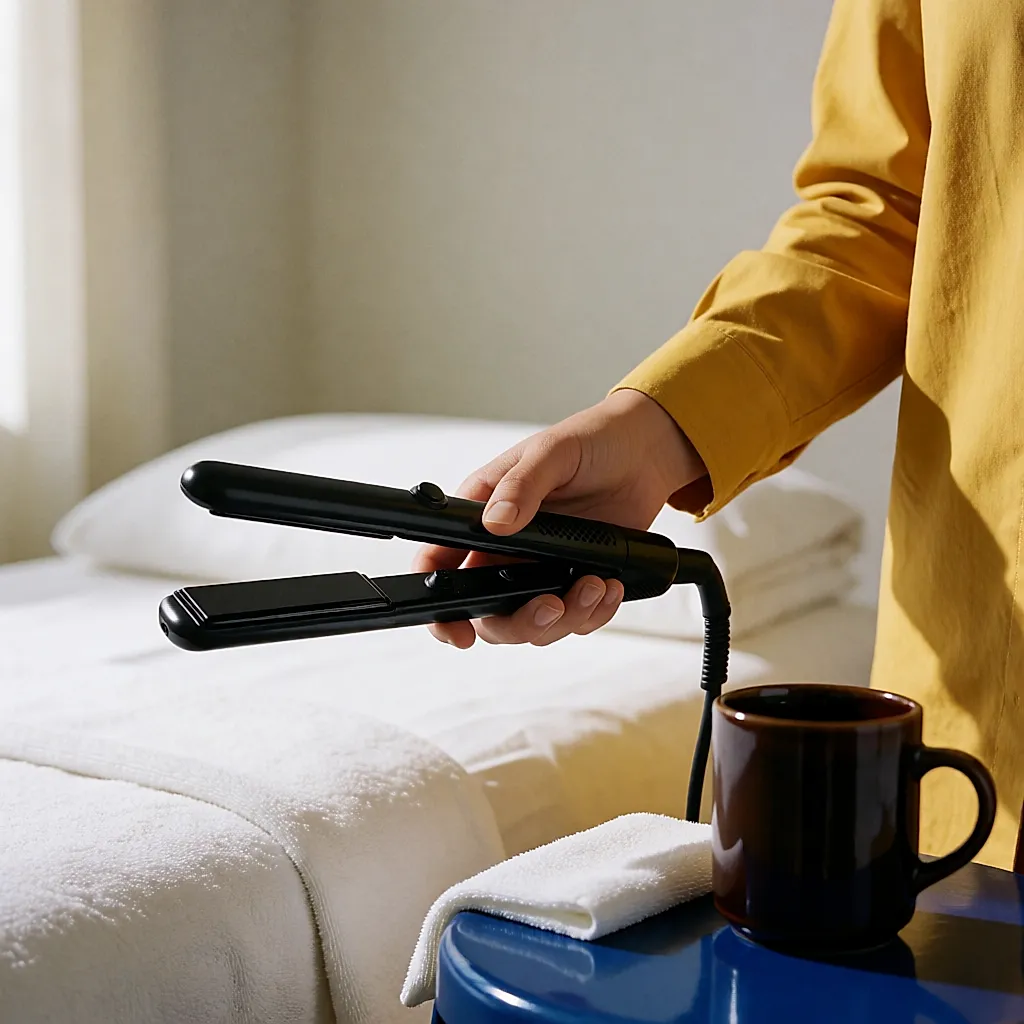
Next, look for the full range on the product page or in the instructions: does it adjust by numbered setting, by degree, or with an electronic thermostat? A five-position dial can be less precise than a digital display, but the main point is elsewhere: the full range, not just the maximum temperature. If the listing gives only a maximum temperature and never the minimum, treat the information as missing. That doesn't prove the device is bad; it's a reason not to buy blind.
The deal with only one setting
This is the trap with end-of-line models and travel straighteners: an on/off switch, a single temperature, often high. The device is compact, cheap and looks perfect for a suitcase. Except that one high setting leaves no margin on fine, coloured or sensitised hair. You can space out passes, slow your hand, but you can't lower the temperature. The bargain then becomes a purchase by default, tucked in a drawer after two tries.
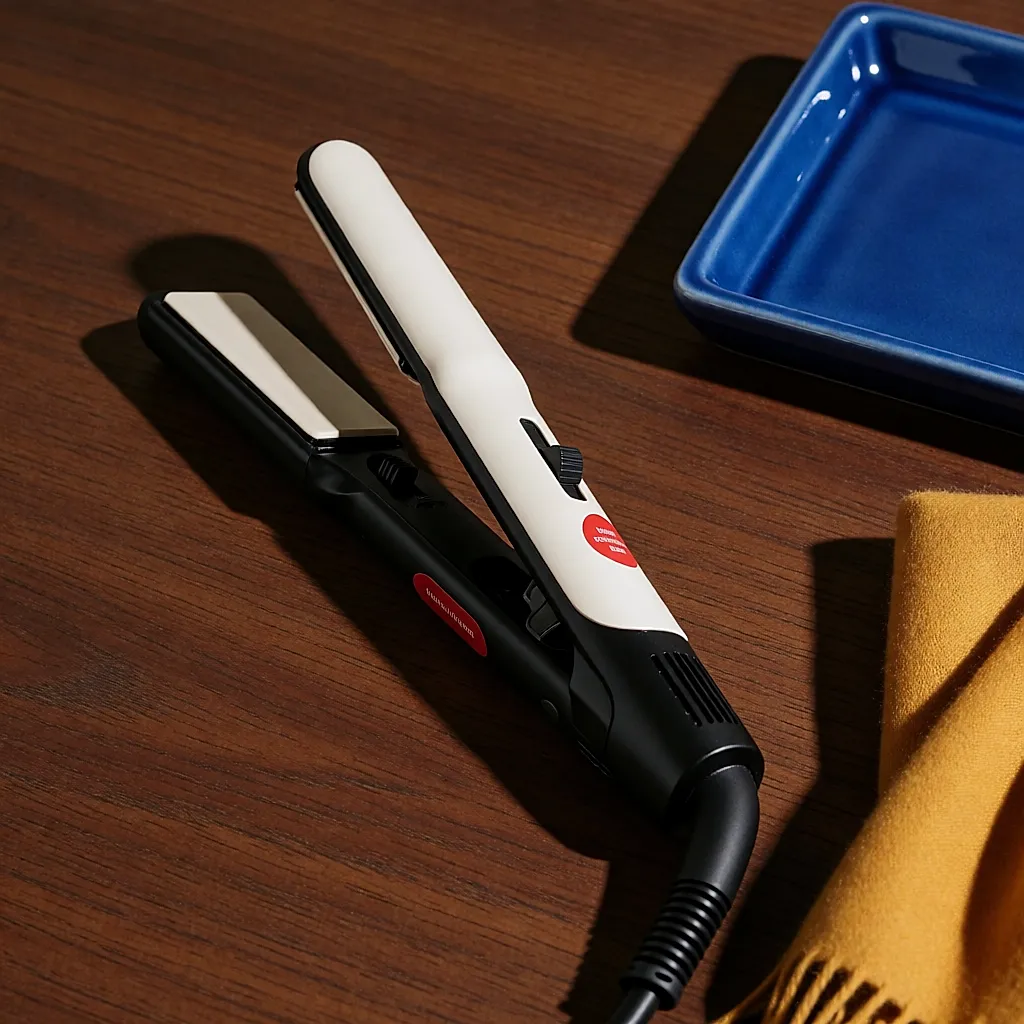
In truth, a low price isn't the problem in itself. A simple model can work if you want a spare pair and your hair tolerates heat. But for regular use, the crossed-out price tells you nothing about the setting range. Before you cave in, check that the lowest setting really exists and that you can find it without a three-page manual.
The sale check: before you buy, look for the 'temperature range' line in the product listing. If it isn't there, walk away — or check in store that the straightener really does go low enough.
What to pay
Expect to pay around £25 to £50 for an entry-level straightener, £50 to £100 for a model with a genuine temperature range and better-designed edges, and £100 to £180 for professional haircare brands. Prices vary by retailer, location and end-of-line stock. In supermarkets, pharmacies, beauty retailers or on a brand's own website, the same claim can hide very different devices: read the product details, not just the red sale sticker.
Also look at longevity: a straightener whose cord or plug can be replaced, or whose brand documents repairability, saves you buying another. And if you're torn between two models, give more weight to the low setting and how it feels in the hand than to the number of functions. A slightly more expensive device with a stable low setting will often be the better buy — even without a sale.
The final check
Next time a straightener deal catches your eye, turn the box over. Look for the minimum temperature, the setting range and the plate edges. Three modest pieces of information, often absent from the sales pitch, yet decisive. If they're missing, wait; if they're there, you'll know what you're paying for.
The right straightener isn't the one that gets hottest. It's the one that can heat gently when your hair asks for moderation — and no promotion can promise that on your behalf.


Comments
Your opinion matters: rate the article, react and reply to comments.
Comments are moderated; AI-assisted comments are flagged. Text emoticons (8-), :-), <3…) are automatically shown as images.