
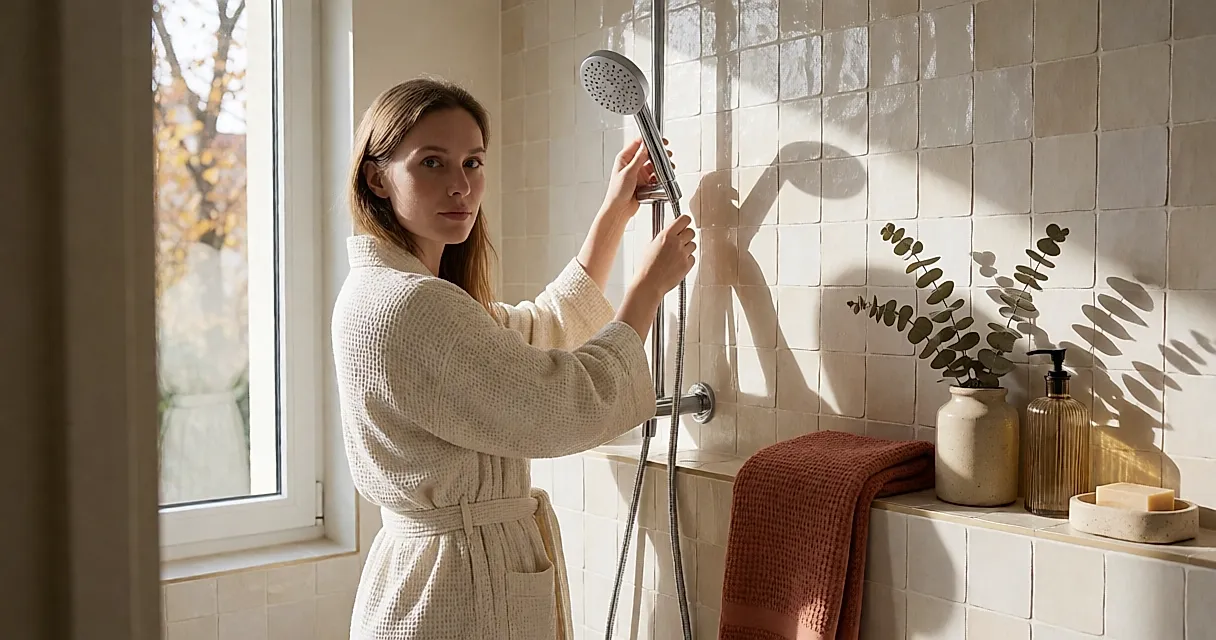
We will happily spend forty pounds on a restorative serum and far less on what pours over it. Tap water is not a neutral ingredient: it has a hardness, a smell, a temperature, and an annoying habit of making itself known when your skin feels tight in January. Which is where the slowly growing idea comes from: move the care step earlier, before the bottle, with a filtered shower head. Does it really change anything? Honestly, it depends what you expect from it.
What water does to your skin
Two things add up when the radiators are on. You turn up the shower temperature — hot water strips oils faster, hence that tight feeling just after you towel off — and you stay under it longer, which does not help. Residual chlorine, meanwhile, is there to keep water safe to drink right up to your tap: we are not going to demonise it, even if it can sometimes upset a reactive scalp.
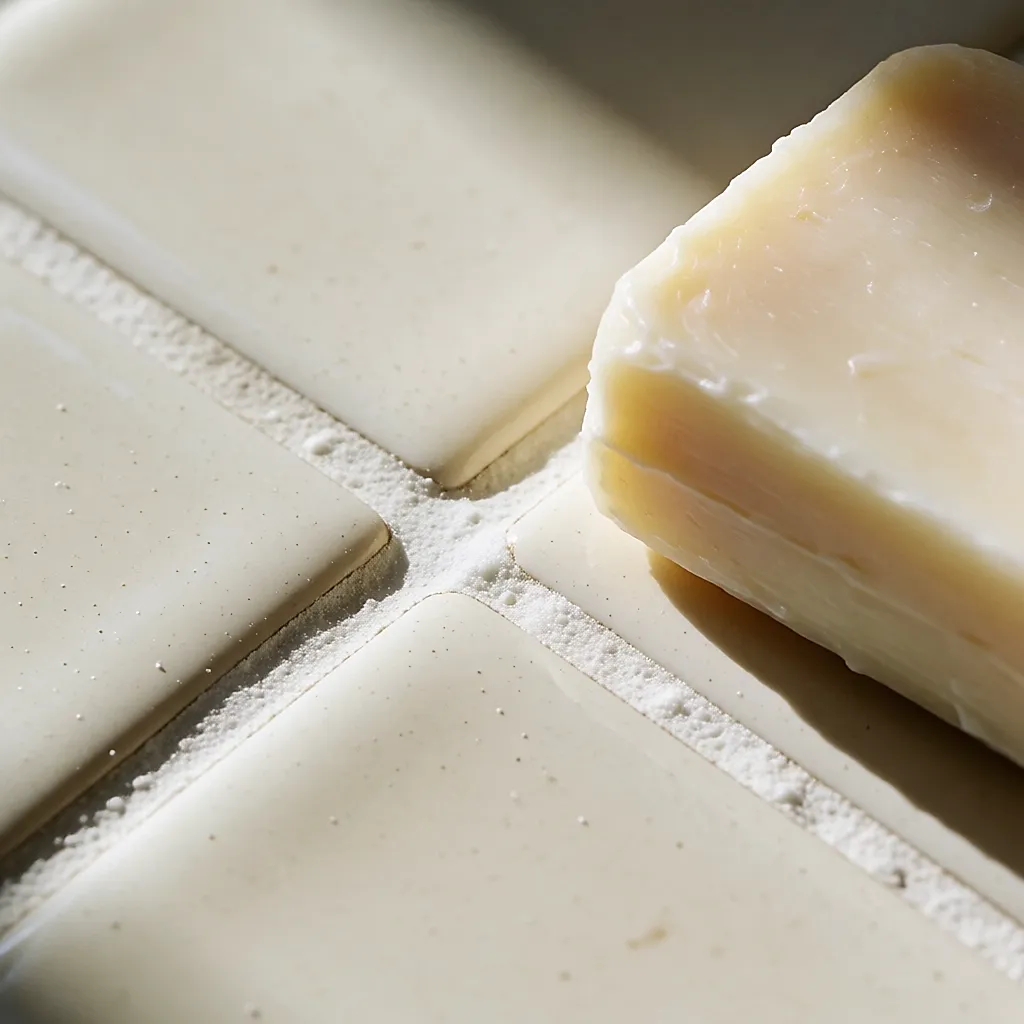
Limescale is another story. Water described as 'hard' contains more calcium and magnesium, and you see it before you feel it: a white deposit on the wall, soap that will not lather properly, a film-like feel on the skin. This is not a health issue — tap water quality is tightly regulated, and limescale is not a contaminant. It is a question of skin comfort. Many people with dry skin report more noticeable tightness in very hard water areas. These are anecdotes, not proof.
What a filter actually catches
The most common cartridges combine activated carbon with resin beads. Carbon traps sediment, some organic compounds and free chlorine; resin is supposed to reduce deposits. But most filtered shower heads do not durably change the hardness of water, and resin does not make hard water 'soft'. Some limited-capacity resin devices may reduce some of it; an ion-exchange water softener remains the dedicated appliance — a different device, a different budget, a different installation job. So be sceptical of packaging that promises the opposite.
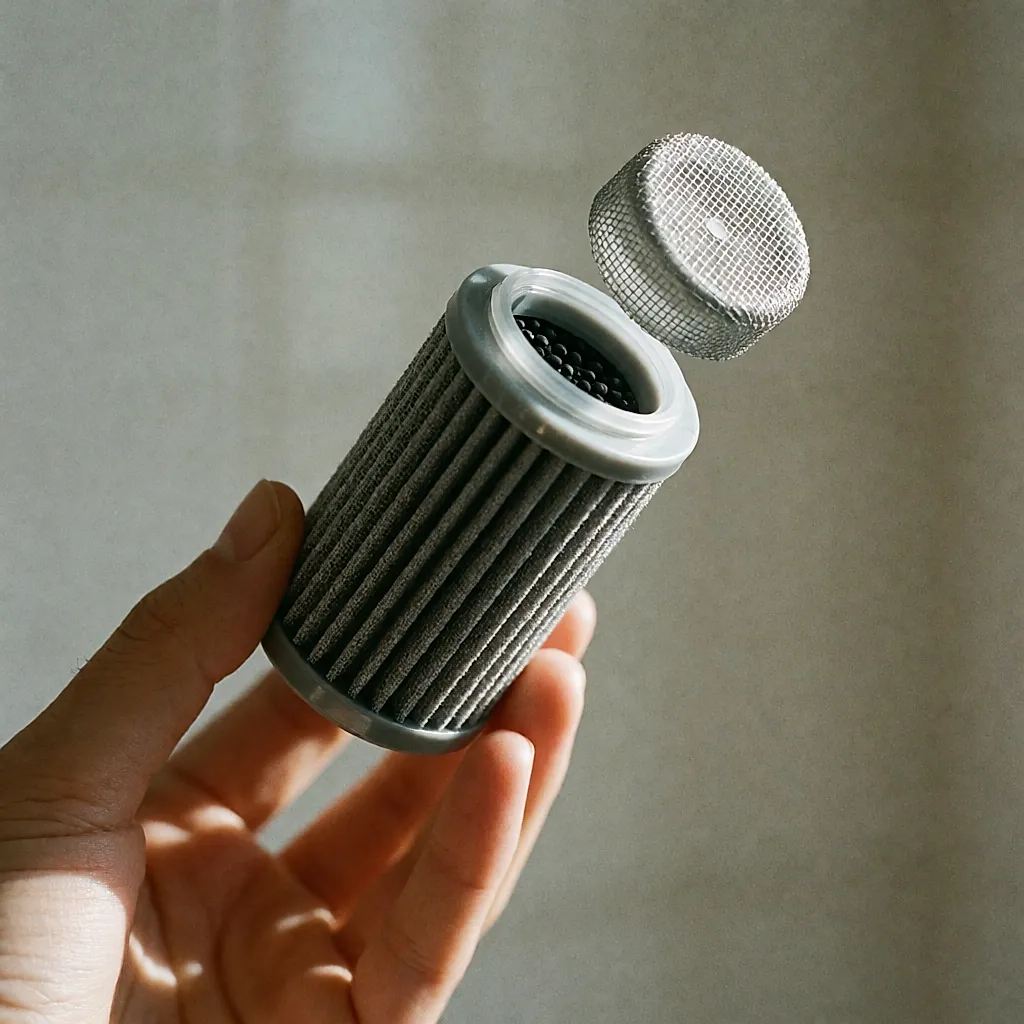
Then there is the question of time. A saturated cartridge can lose efficiency and hold on to residue; follow the manufacturer's instructions for when to change it. I have not measured the chlorine in my bathroom, and I doubt that is how you want to spend a Sunday afternoon.
Three formats, three compromises
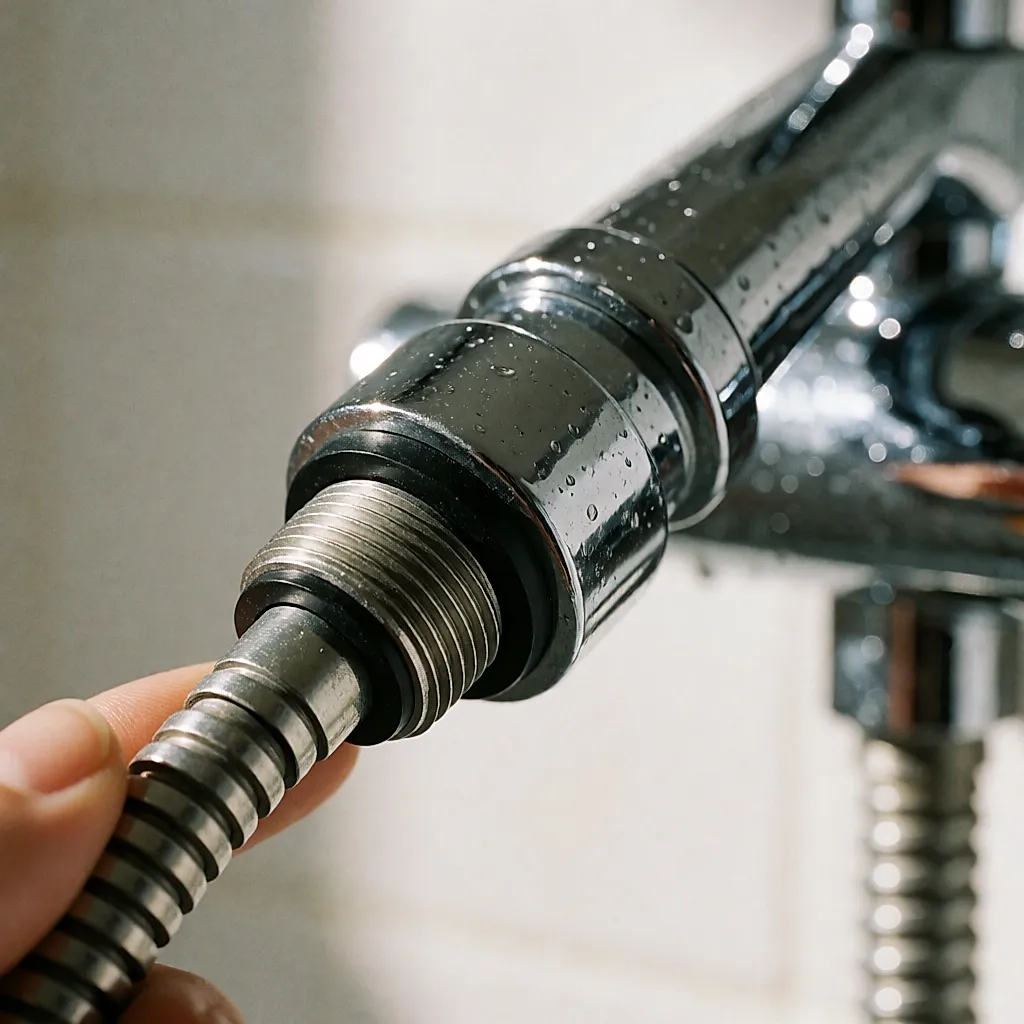
The on-head model, which screws onto the hose, is the most common and the simplest. It makes the whole set-up heavier and takes up space: in a freestanding bath, you are one wrong move away from a bruised elbow. A more discreet option, an inline unit fitted between the wall outlet and the hose, keeps your original shower head and soon blends into the background — provided there is a little slack in the hose. Finally, filters sold on their own, without a head, are for anyone who already likes theirs: check compatibility before you order, because this is the kind of detail that turns a purchase into bathroom decoration.
On materials, stainless steel costs more and weighs more, but it takes knocks and years of use better than plastic, which yellows. When it comes to cartridges, some brands offer refills rather than a full replacement: check their official website, because not all do. A cartridge thrown away regularly according to the replacement schedule is still waste, and whether it can be recycled depends on the materials and local facilities.
Before you order, check the connection: unscrew your shower head and note it down. Also look at the weight of the whole set-up and the stated flow rate, because a filter that is too restrictive turns a shower into a trickle of lukewarm water.



Budget
The entry price is modest: expect to pay roughly £20–£40 for a plastic shower head supplied with a cartridge, and more like £60–£150 for a stainless-steel model or a branded inline unit. This is where the calculator comes out. Cartridges on their own cost £10–£40 each; depending on the frequency given in the instructions, the annual bill can quickly exceed the price of the device.
You will find them in hardware shops, larger DIY stores and on manufacturers' websites. On durability, a stainless-steel body kept for years beats plastic replaced several times, even if its cartridge costs a little more.
Verdict
A filtered shower head will not turn dry skin into peach-soft skin, and nobody can honestly promise you that. It can, in some cases, reduce what irritates: a little less chlorine, a little less deposit, a shower that smells less like a swimming pool. If your water is very hard, the free step remains turning the temperature down and shortening your shower — that is something you feel straight away.
And if you do go for it, compare the price of cartridges before the price of the shower head: that is the only number that matters over the year. The rest is comfort. And comfort is rarely a one-off payment.

Comments
Your opinion matters: rate the article, react and reply to comments.
Comments are moderated; AI-assisted comments are flagged. Text emoticons (8-), :-), <3…) are automatically shown as images.