
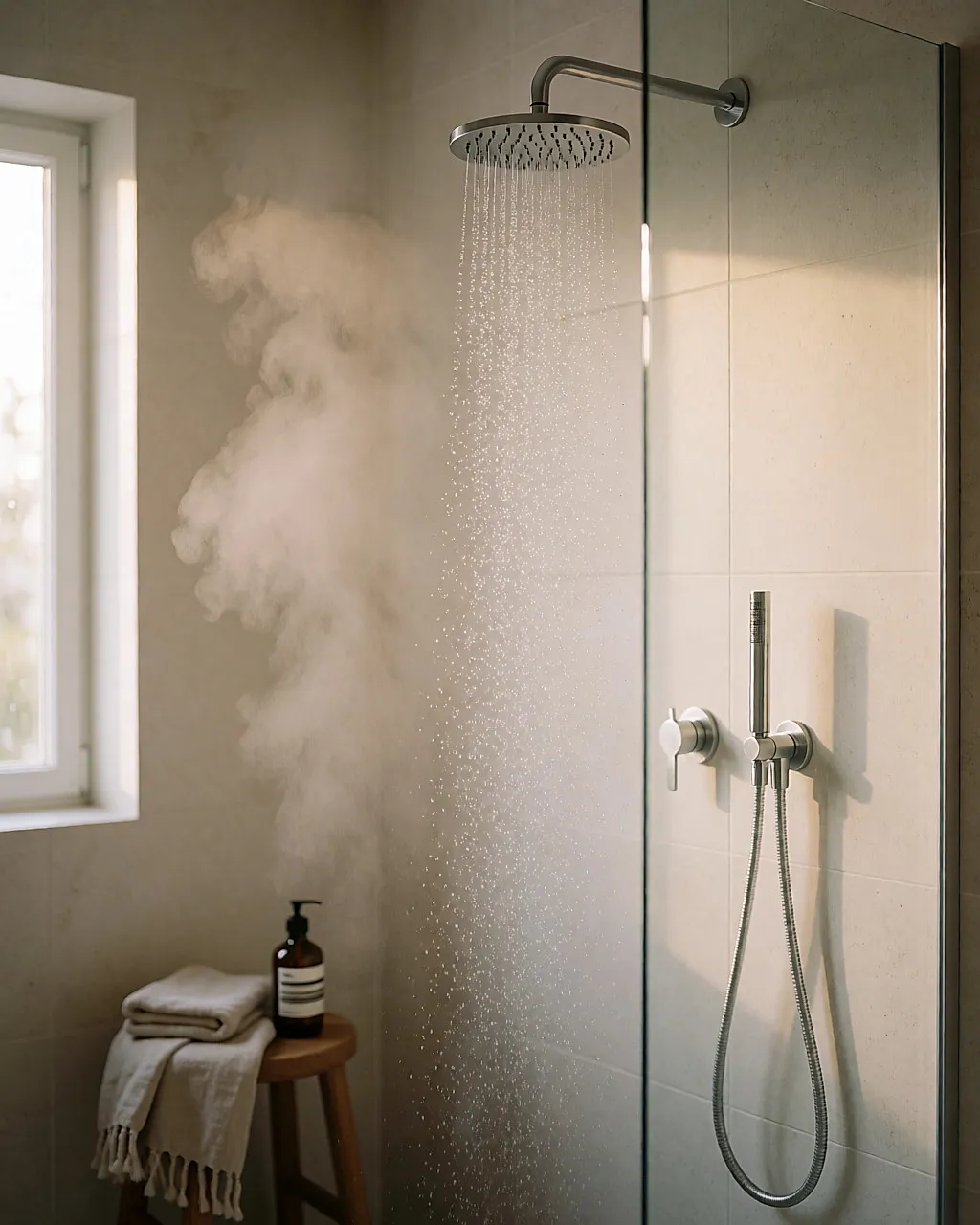
Some mornings a shower does more for you than a second coffee. Other mornings you step out feeling just as sluggish as you went in. That difference isn't random: it comes down to three things — temperature, product and technique. We'll go through all of them, without making any grand promises.
What does 'invigorating' actually mean?
Invigorating doesn't mean icy. It's a ritual that relies on temperature contrast and on what you put on your skin afterwards. The feeling is immediate: a sense of waking up, skin that looks firmer, a fresher complexion. For the rest, let's not pretend: the evidence on mood or recovery is still limited. What is solid is that very hot water dries out the skin — and dry skin then feels tight all day.

The hot-cold switch: the move that makes the difference
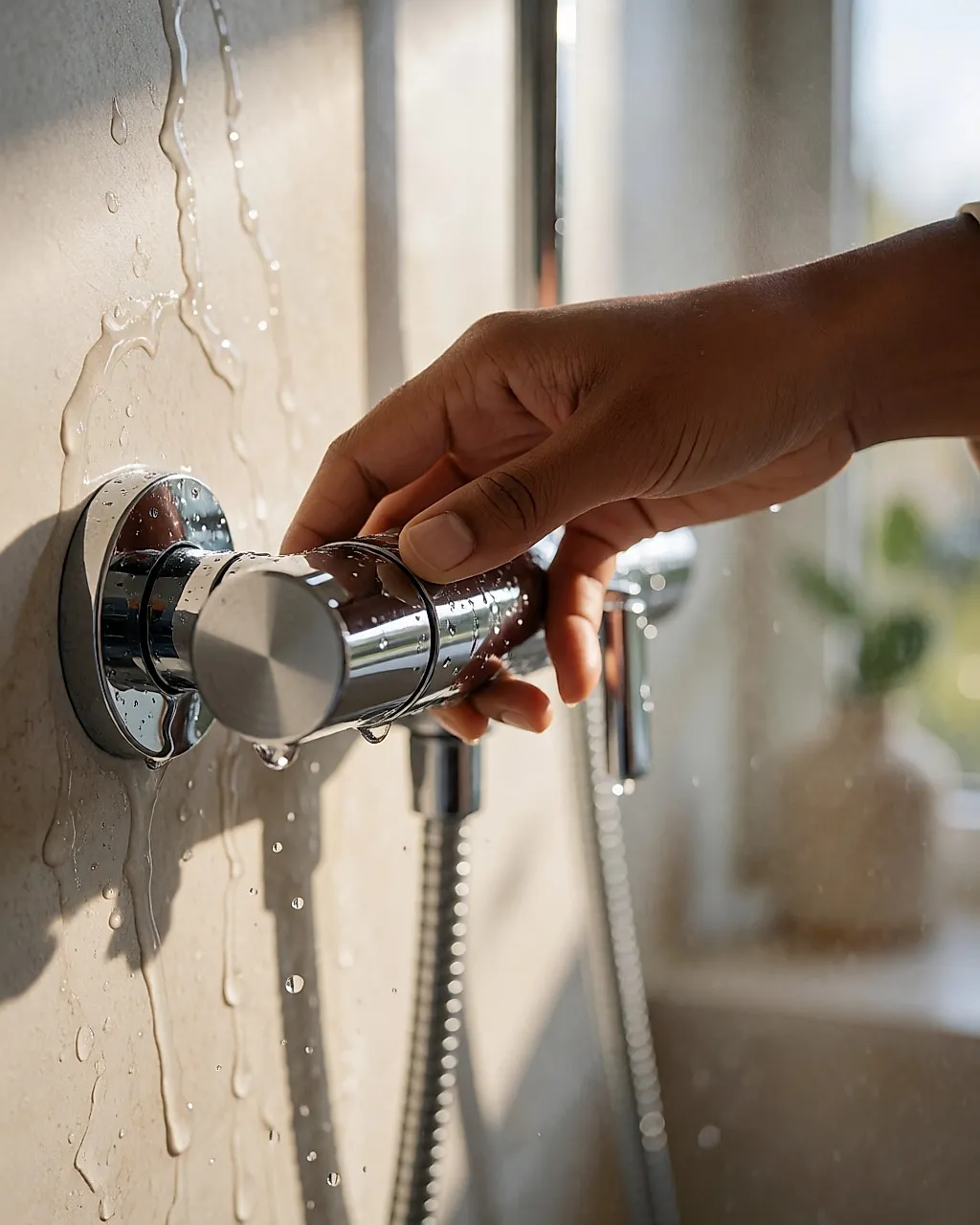
Start with warm water to wash, then turn the thermostat down gradually, without sudden shocks. Finish with twenty to thirty seconds of cold water, working from your ankles up to your shoulders. If you can handle it, repeat the cycle two or three times. One honest point: the idea that pores open and then close is a shortcut; their size is largely genetic. The cold mainly gives a feeling of firmness and calms temporary redness. As for the jet, a concentrated stream on your calves or the nape of your neck is where the effect is felt most clearly.
The product: gentle rather than foamy
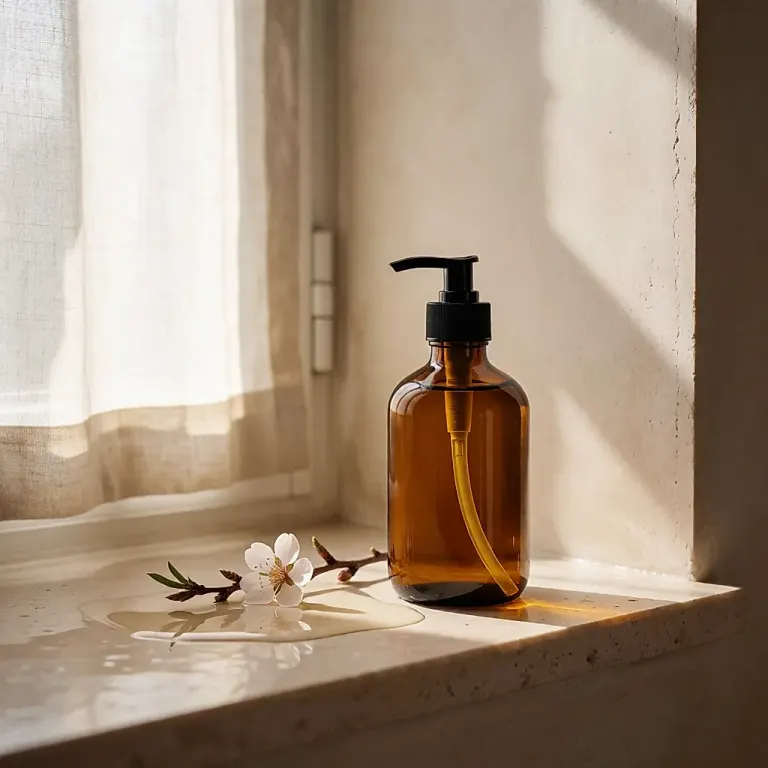
A rich lather has never cleaned any better — let's be honest. What matters is a mild surfactant and a pH close to that of your skin. The formula also changes how it feels: gel, shower oil or a dermatological cleansing bar won't leave the same texture on your skin.
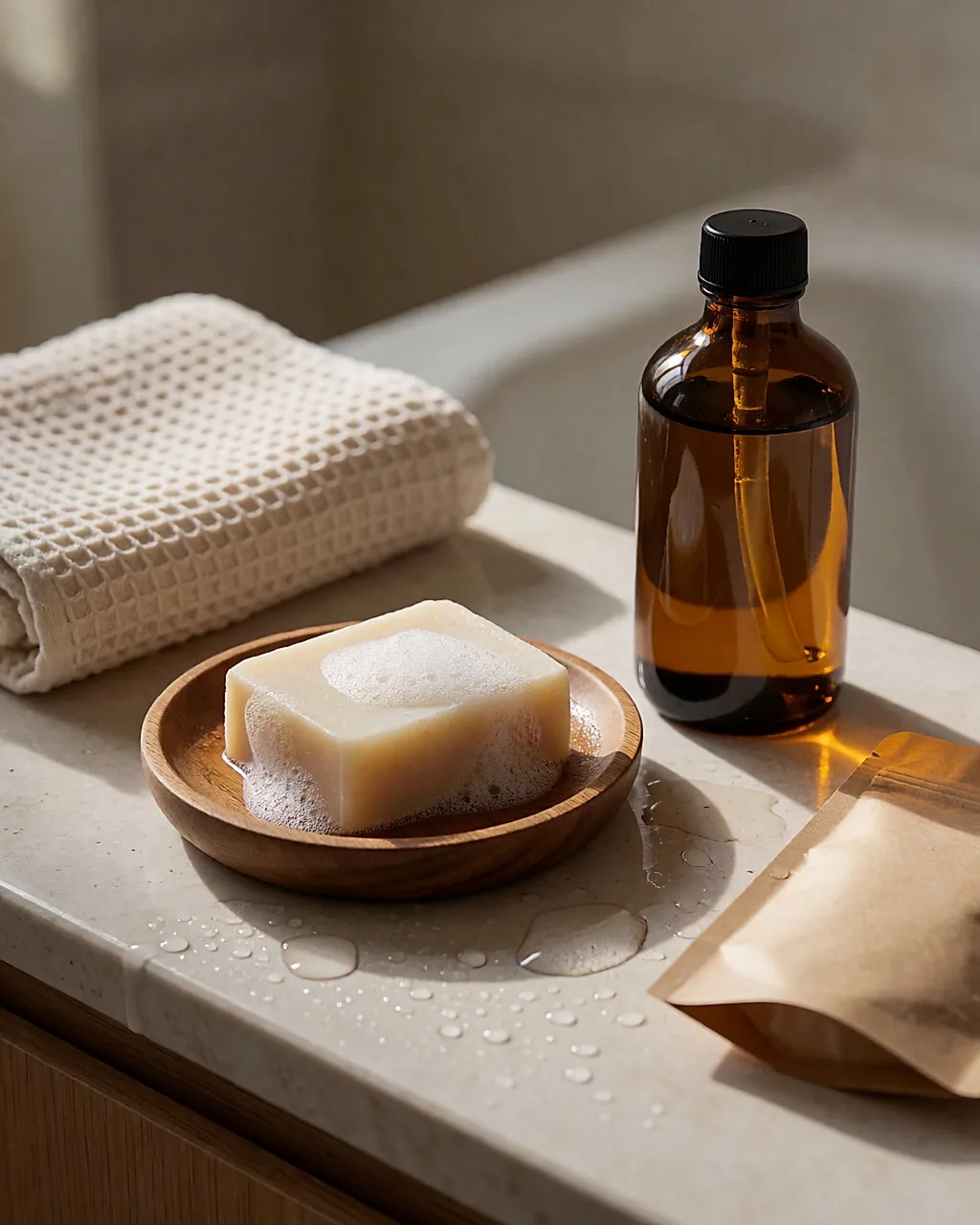
On labels, the COSMOS Organic standard, run by Cosmébio and Ecocert, provides a useful framework. It requires a high proportion of naturally derived ingredients, plus a quota of organic ingredients, which is lower for rinse-off products. It doesn't guarantee that a product will suit you, but the standard is audited. For a solid soap, check that it is superfatted; otherwise it can leave skin feeling tight. And a solid format or a refill also means less packaging.
The express Scottish shower: 30 seconds warm, 20 seconds cool, twice, then get out. If you start shivering, turn the thermostat back up without feeling guilty — the goal isn't to suffer, it's to finish awake.
The kit
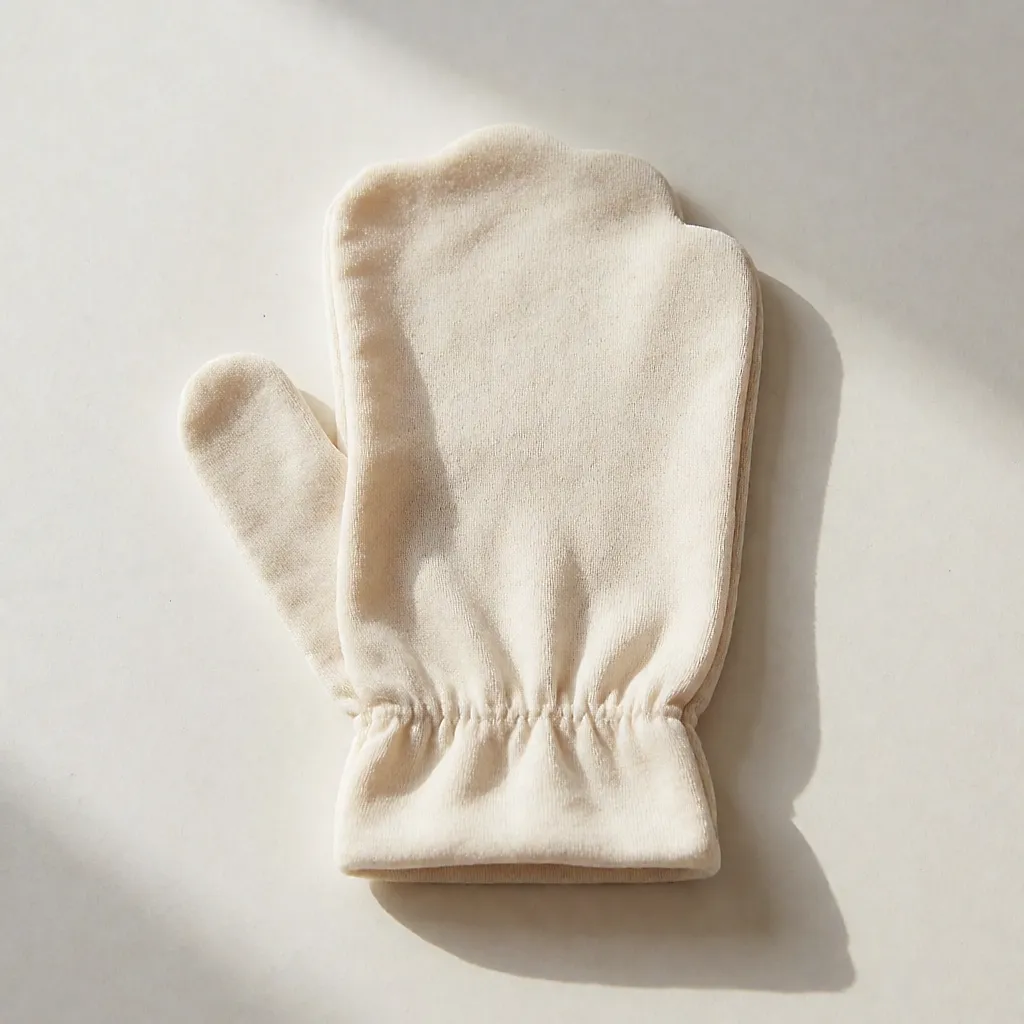
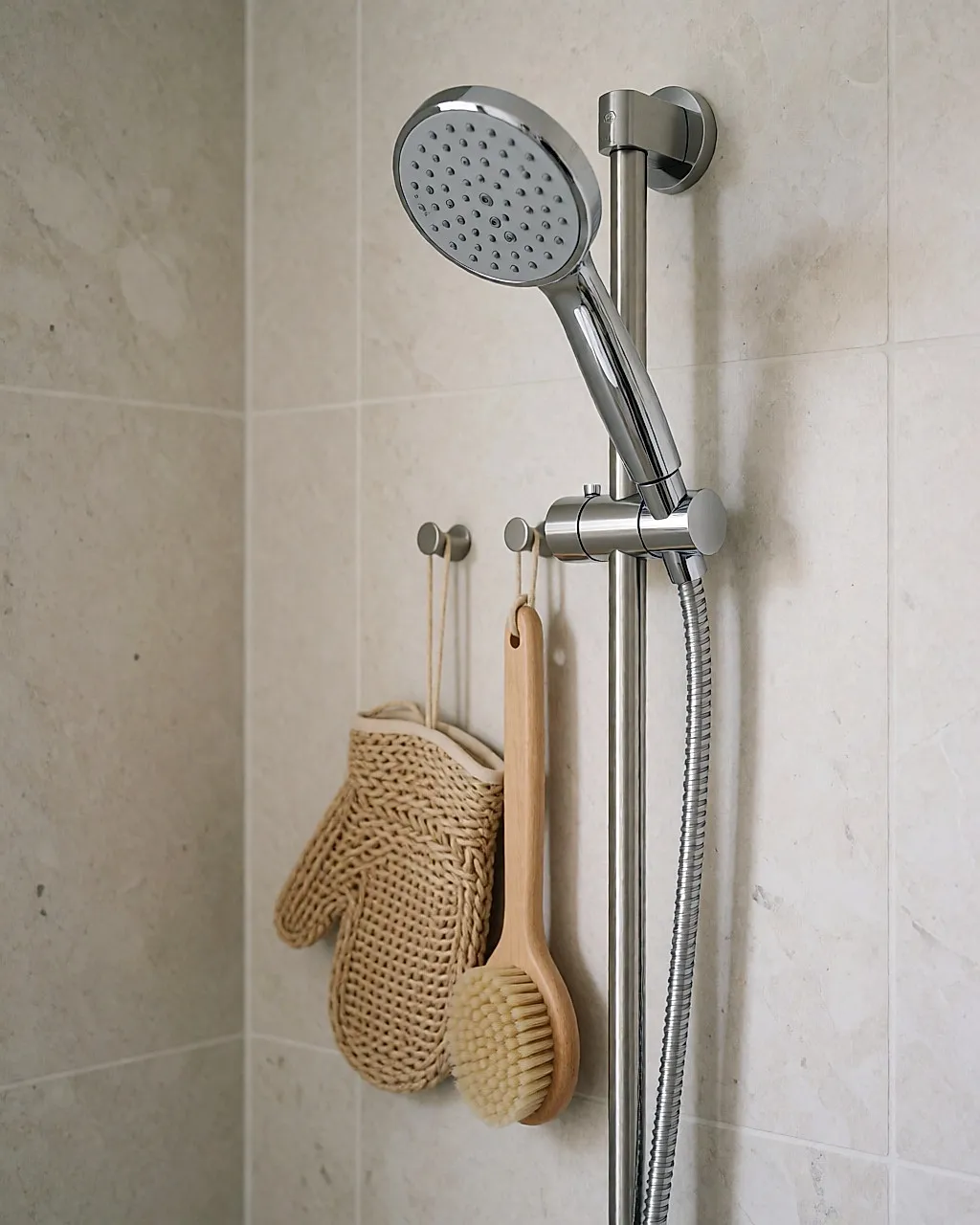
On the equipment front, we love an adjustable shower head: it lets you alternate without touching the mixer. We also love a water-saving insert, which reduces flow while keeping the same feel — and the difference shows at the end of the month. A soft brush or a massage glove completes the routine, as long as you wash them regularly.
Budget
Expect to pay around £2–£6 for a supermarket shower gel, £7–£15 for an organic or gentle formula from a beauty retailer or health-food shop, £4–£10 for a solid soap and £8–£20 for a shower oil. An adjustable shower head costs about £15–£60, and a water-saving insert £10–£30. These differences come down to the label, the size, whether a refill is available and the sales channel — supermarket, beauty retailer, pharmacy, health-food shop or online.
Sources
- UK cosmetics regulation, including Regulation (EC) No 1223/2009 as retained in UK law — MHRA.
- COSMOS Organic standard — Cosmébio / Ecocert.
- Energy Saving Trust and Water UK, hot water and domestic water use.
- Advertising Standards Authority and Competition and Markets Authority, guidance on cosmetic claims.

Comments
Your opinion matters: rate the article, react and reply to comments.
Comments are moderated; AI-assisted comments are flagged. Text emoticons (8-), :-), <3…) are automatically shown as images.