

Two years ago, wearing a flicked eyeliner on a Tuesday morning felt like a statement of intent. Today you pass copper lids on the morning commute, between notifications, and nobody raises an eyebrow. Bare skin hasn't surrendered. It has simply stopped making the rules.
The eye is back in charge
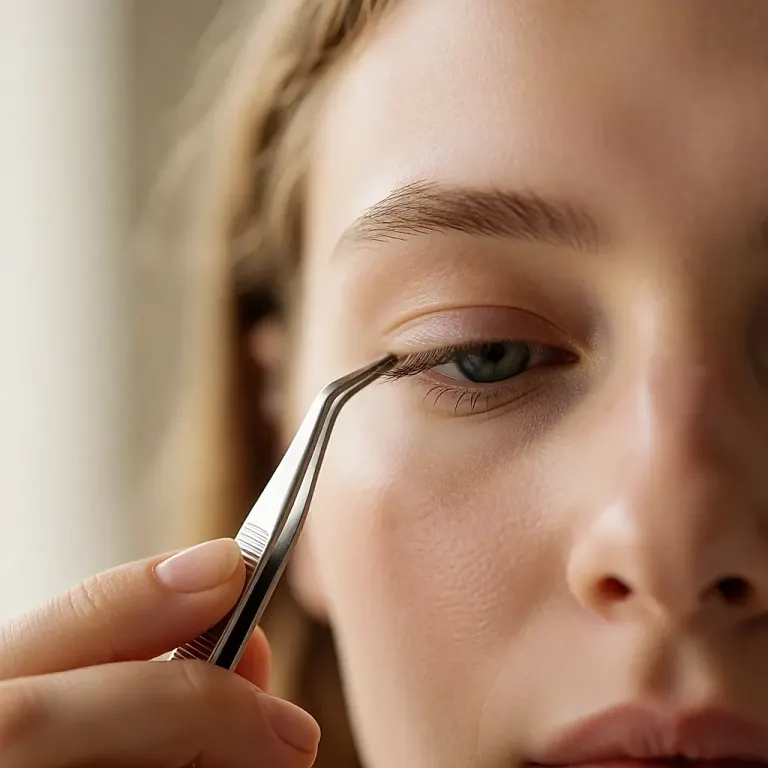
For seasons, everything hung on a promise: 'you'd think she's wearing nothing.' A lovely promise, and a tiring one to keep. What's coming back now can be summed up in one word: intention — a line, a gradient, an outer corner darker than the rest. Pencil becomes a tool again, not a confession. Cream texture glides and blends; powder builds and controls. Two schools, two gestures, two speeds of Monday morning.
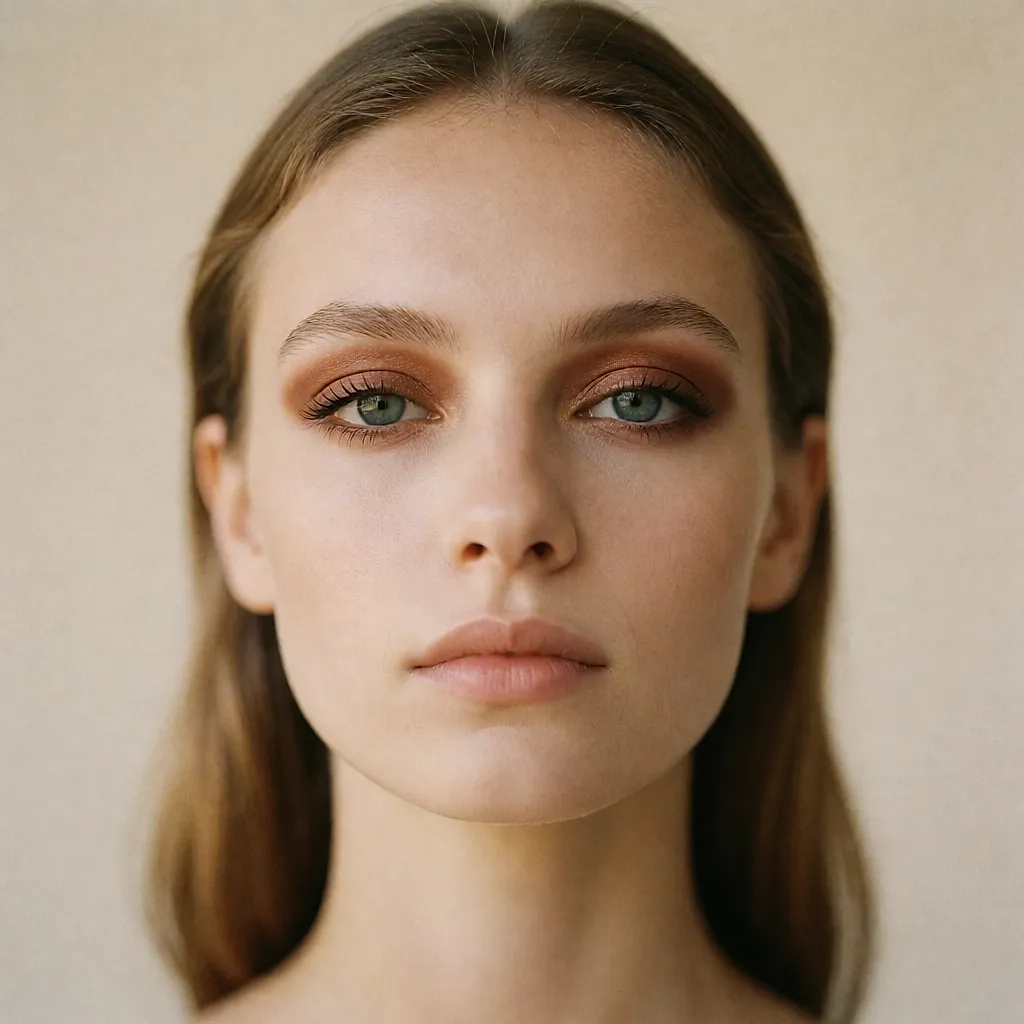
You still have to choose. A sharp line and a heavy shadow on the same lid, and you're late — it's arithmetic. The rule that works: one strong zone per face. Eyes, or lips, or cheeks. Not all three.
The fringe is the tell
If you want the most reliable signal of this shift, don't look at the colour of the season. Look at foreheads. The fringe is back, in forms that don't box you in — a curtain fringe that opens in two, a tapered fringe that grazes the brow. It's a visible, architectural decision that costs no colour and commits you to no shade. And it does something very specific: it puts the eye centre stage.

Let's be honest, though: a fringe is a commitment. It needs a blast with the hairdryer in the morning, copes badly with November rain and goes strangely shiny by 2pm. If your routine takes three minutes and not a second more, a long curtain fringe is kinder than a blunt one. It's worth a go, it's up for debate, and it will grow out.
Texture before colour
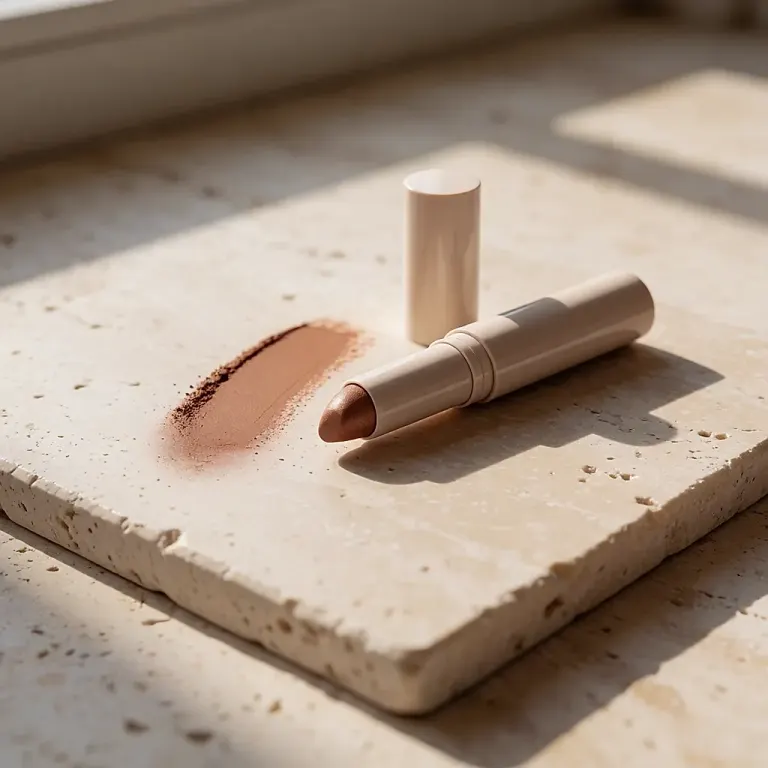
The real shift isn't in the shades. It's in the textures. Cream shadows, tinted balms, stick blushes: these formulas are worked in with fingers, melt into the skin and leave a satin texture rather than a powdery finish. Paradoxically, that looks less made-up — while being far more visible.
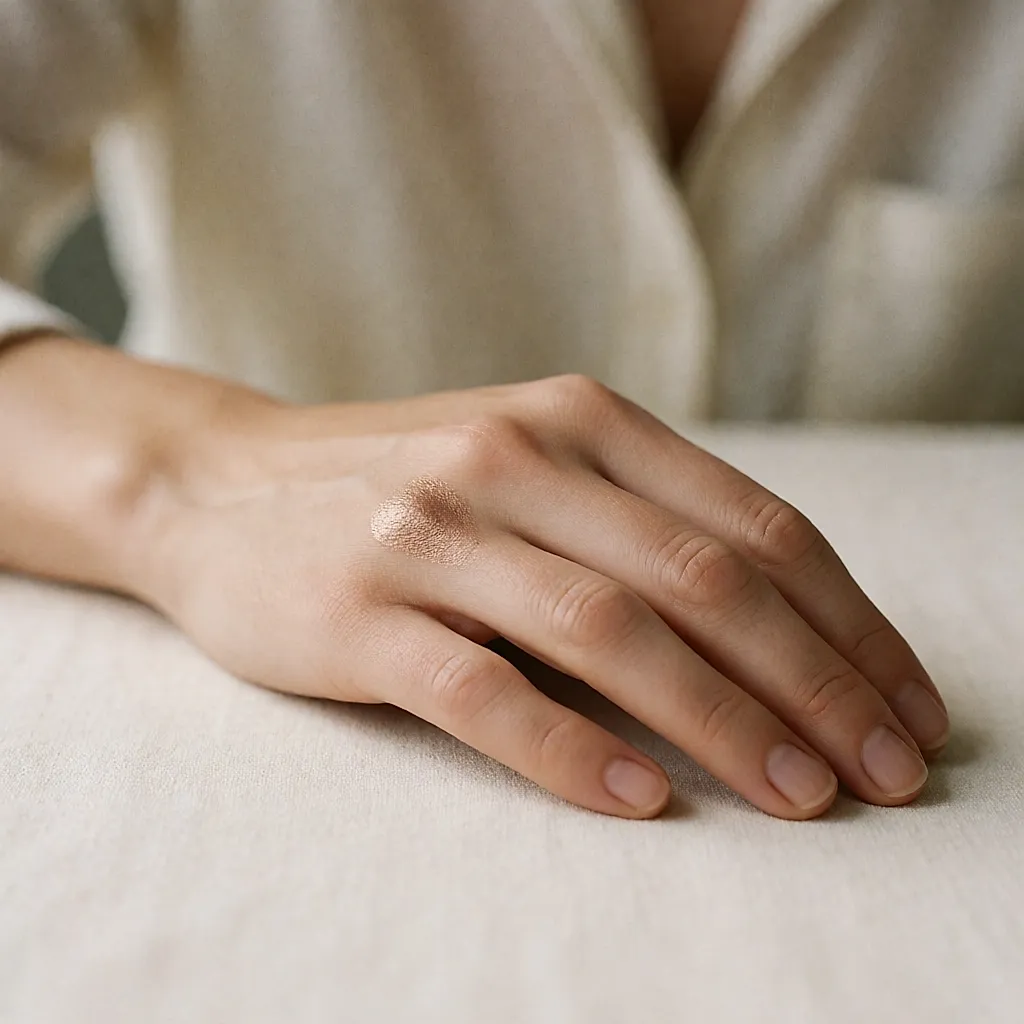
Your skin decides the rest. On dry skin, a cream alone wears well and stays comfortable. On combination to oily skin, the same cream can shift by midday: a thin layer of powder on top, applied with a brush, extends wear without turning the face into a mask. And technique matters as much as the product — tap off the excess on the back of your hand before you go near the lid, and build in thin layers.
What stays quiet
Not everything is coming back, thank goodness. Base make-up stays in the background: lightweight formulas, buildable coverage, skin-like finish. A skin tint or a very fluid foundation carries on doing the groundwork while the accent plays out elsewhere. That's the principle of the season: a calm base, one detail that speaks.
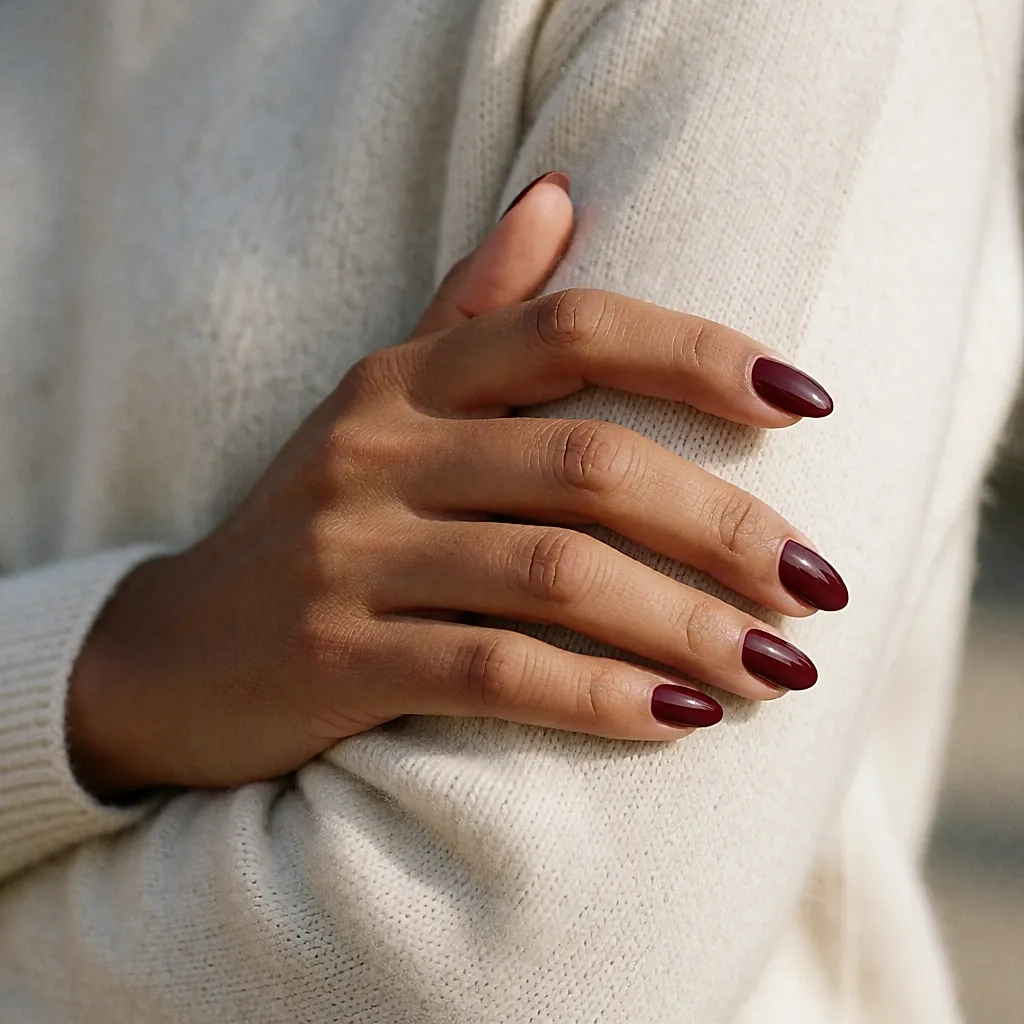
Then you decide what to keep back. Lips, often: a satin nude, or a colour you wear on its own. Nails, perhaps — a deep red does the same job as an eyeliner, and is less tiring. Watch any crowd after work and you'll see it: one accent that has held all day, rather than three effects fighting for attention by 6pm.
Ten seconds, and that's the whole trick: put a pea-sized amount of cream shadow on the back of your hand, warm it between two fingers, then tap it onto the lid with the tip of your index finger. You get a veil, not a blotch — and if the result is uneven, it's often because the product is too cold or the layer is too thick. A second thin pass is better than one heavy one.
Budget
Good news: a visible eye doesn't need a whole kit. Count around £8–25 for a mascara, from a high-street chemist or a beauty hall, £5–20 for a pencil or liner, and £10–30 for a single cream shadow. Palettes run from £15 to £50 depending on the brand and how many shades they hold — but one single shade is plenty for everyday wear. Brushes start at around £5 and will last for years if you wash them. As for the fringe, it's a salon conversation: a trim is sometimes free with a cut, sometimes charged as a supplement, so ask before you sit down.
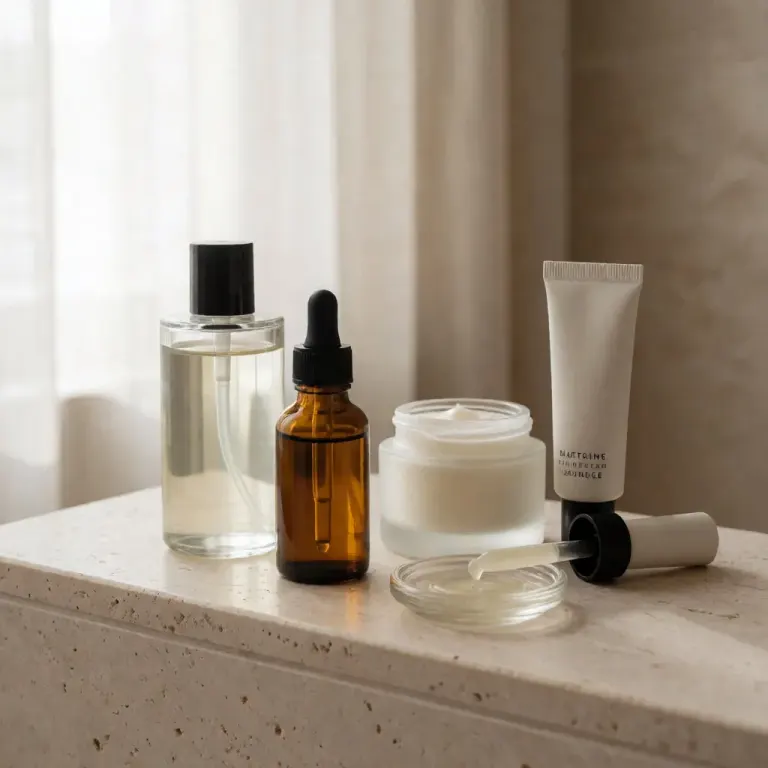
A few habits worth adopting when it comes to packaging: refillable palettes save you buying the casing again, solid formats and wooden pencils cut down on plastic, and a glass jar is simpler to recycle than a plastic compact. Check what a label actually guarantees rather than trusting the pretty natural claim printed in green. And before you buy anything, dig through your make-up bag: last year's abandoned shadow works perfectly well with a clean brush. It's the most thrifty and low-waste move there is, and it costs nothing.
What changes, in the end, isn't a colour or a product. It's the permission you give yourself again: to make a choice people can see. A wobbly line can be fixed; an overloaded lid can be taken off. The only real risk is staying for three more seasons in a face nobody notices — including you. So next Tuesday morning, give yourself those three minutes and draw the line.
Comments
Your opinion matters: rate the article, react and reply to comments.
Comments are moderated; AI-assisted comments are flagged. Text emoticons (8-), :-), <3…) are automatically shown as images.