
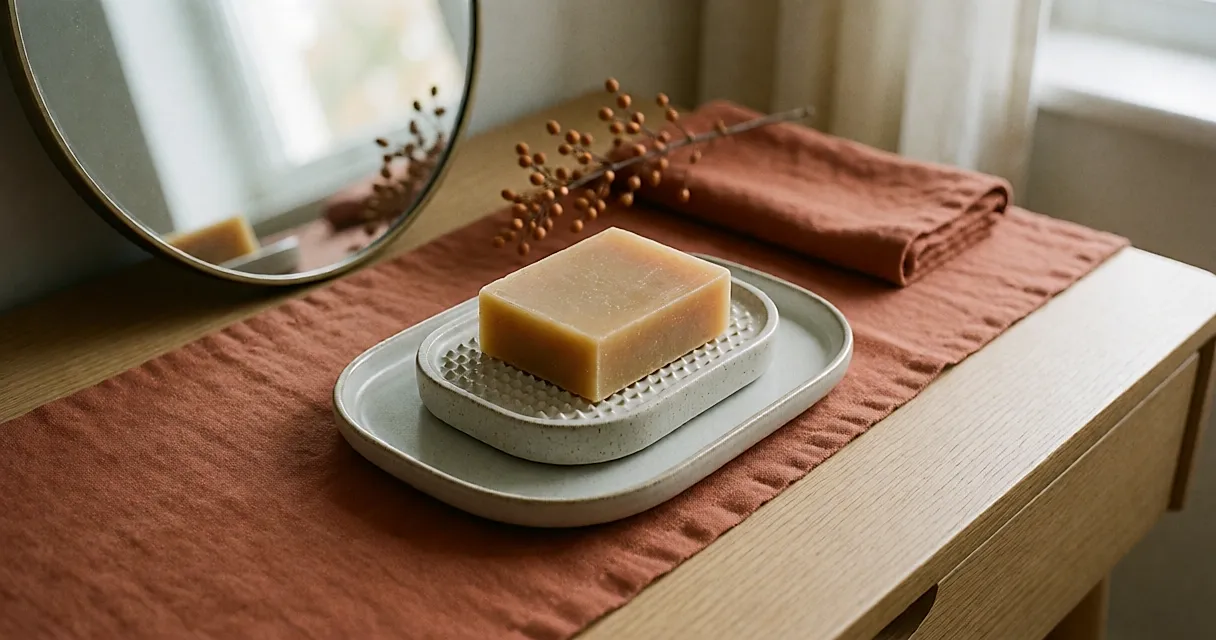
You can’t really compare a shower gel with a solid soap at the till. The honest comparison happens three weeks later: one bottle is finished, while the bar is still quietly dissolving into the puddle on its dish. The difference isn’t only the formula. It’s the water with nowhere to go. And the least glamorous object in the bathroom — a soap dish that actually drains — is what decides how long the bar lasts.
Soap doesn’t wear out, it melts
A bar of soap doesn’t vanish because you wash with it; it vanishes because it stays wet. Left flat in a dish, its base sits in water, softens, and every reach for it carries away a thick layer that goes straight down the plughole. It isn’t use that melts the bar so much as waiting.
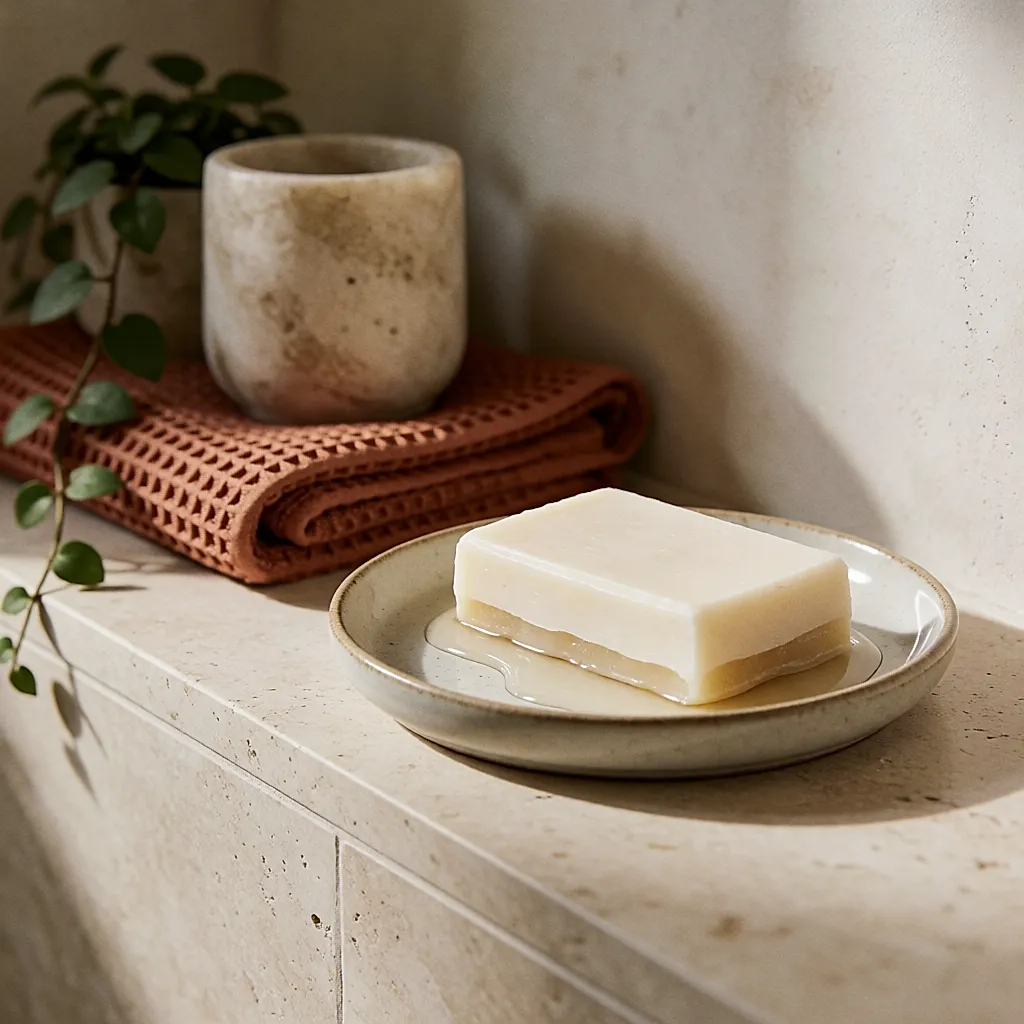
We can’t give you a universal number: how much you lose depends on how hard the bar is, how many showers it gets through and how generously everyone in the house splashes. But a soap that dries completely between uses will last noticeably longer than one that sits damp — a reliable rule of thumb, and one you can test at home for nothing. A very superfatted or glycerin-rich bar, which drinks up moisture, will be the first to give up. That isn’t a fault in the product. It’s a fault in its housing.
Three materials, one simple brief
What you ask of a soap dish can be summed up in one sentence: the water must get away, and air must pass underneath. Spikes or slanted ridges do that job; a hollow tray, however pretty, only moves the puddle around. Before you buy, turn the object over: if there’s no opening at the bottom, it’s a plate, not a drainer. And be wary of cheap hollow plastic versions that trap water in their little dimples.
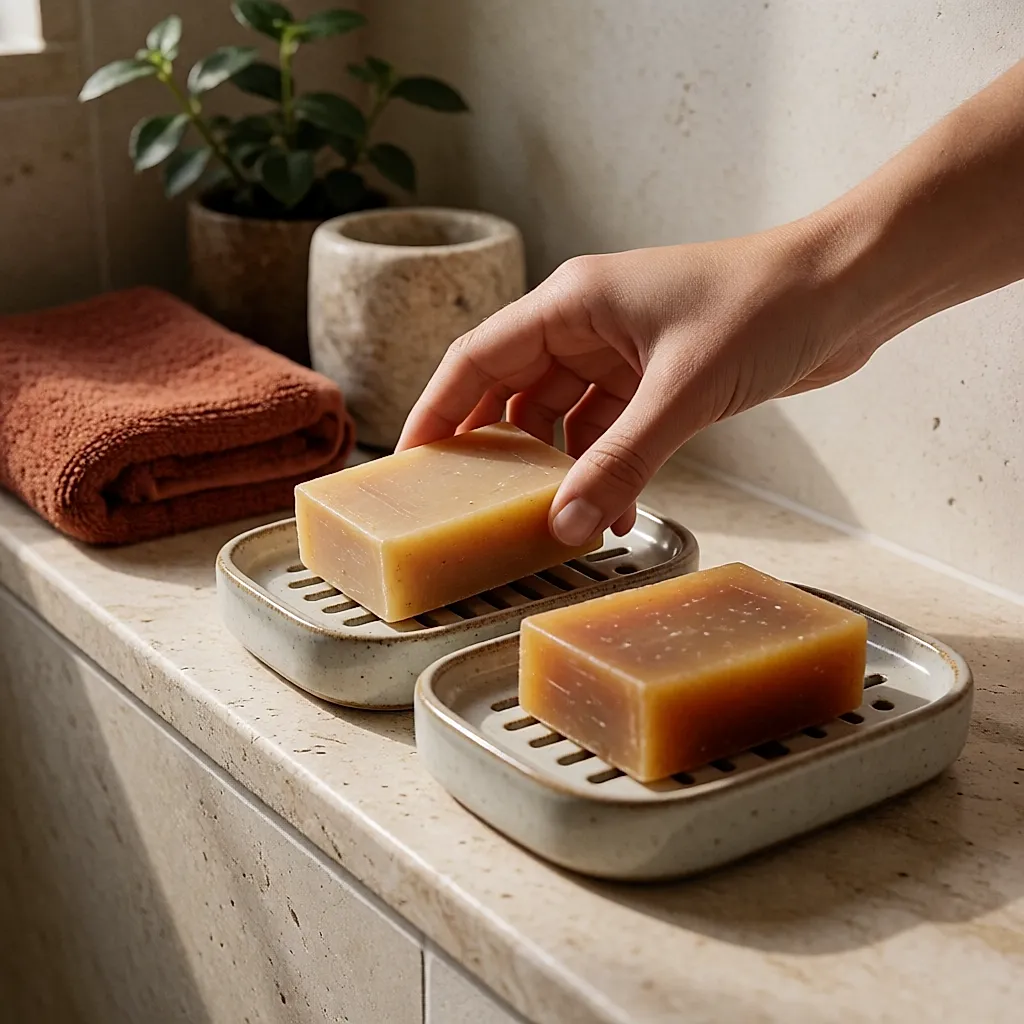
As for materials, three types are worth considering. Ceramic with spikes is stable, heavy and easy to rinse — perfect if it sits away from the shower jet. Slotted stainless steel dries quickly and can stand up to the shower, provided you choose one heavy enough not to skate across the shelf. Wood or bamboo is warm and slightly absorbent, but it needs wiping now and then and should be left to dry upright, otherwise it blackens; check how it has been treated, because varnished wood holds water on the surface instead of letting it drain.
Then there’s the habit that makes the biggest difference: keep two bars in rotation. One in use, one drying on its edge. The second isn’t an indulgence; it’s the first one’s drying time.
Packaging is the second soap dish
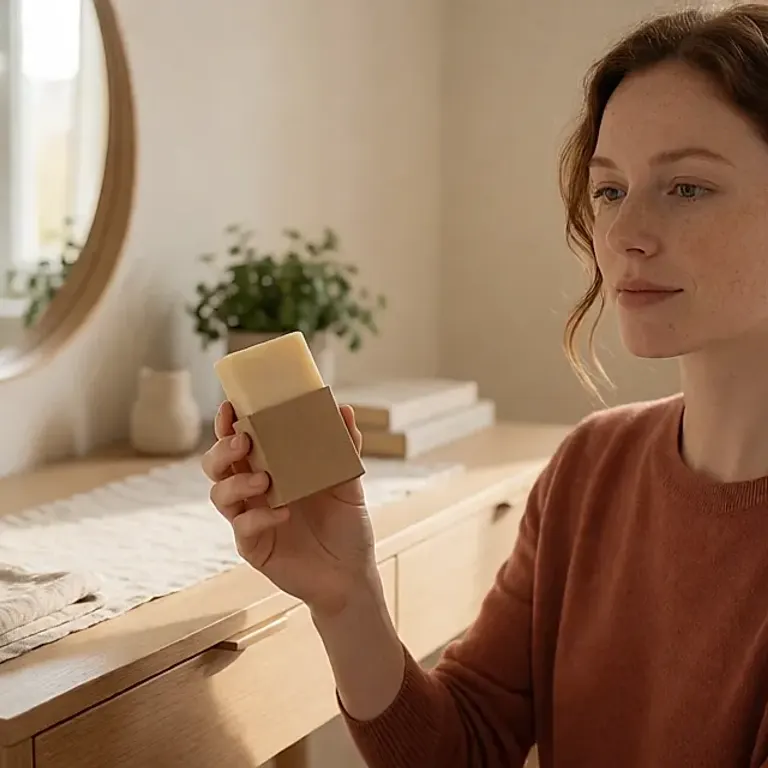
A solid soap usually arrives in cardboard or paper, sometimes naked and loose from a soap shop. A shower gel, by contrast, travels in a pump bottle, with a lot of water in the formula and a container that ends up in the bin unless it’s refillable. That isn’t a reason to ditch your favourite gel; it’s a reason to look at what’s left in the bathroom at the end of the month.
One honest caveat: solid soap is only eco-friendly if it lasts. A bar that melts in ten days because it sat in a wet dish is an eco-friendly purchase going down the drain just as fast as a bottle. And if your bathroom has nowhere for anything to dry — no shelf, no ledge, just the floor — it’s better to sort that out before you change products. The accessory first, the formula second.
Three habits that help a bar last longer
- a dish with spikes or a grid, with drainage at the bottom;
- rinse the dish once a week and don’t leave it in the shower jet;
- keep two bars in rotation, each drying in turn on its edge.
Budget
In the UK, as a rough guide, expect to pay £3–£8 for a recycled-plastic or basic stainless-steel dish from a supermarket, £8–£20 for ceramic or finished wood from a hardware shop or zero-waste shop, and more from a ceramicist or for a stone model. As for the soap itself, an artisan bar of solid soap often costs £4–£9, against £2–£8 for a 250–500ml shower gel from a supermarket, pharmacy or health-and-beauty retailer.
The number that matters isn’t the price on the label but the cost per shower. A £6 bar that lasts two months works out cheaper than a £3 bar that turns to mush in three weeks. This is one of the few lines in your beauty budget where the dish counts for more than what sits on it.
The upshot: before you compare formulas, scents and claims, give your soap a decent bed. A draining dish for a few pounds and a bar kept on its edge already give it far fewer reasons to melt between showers. The beauty that genuinely works often starts with a detail that looks like nothing.


Comments
Your opinion matters: rate the article, react and reply to comments.
Comments are moderated; AI-assisted comments are flagged. Text emoticons (8-), :-), <3…) are automatically shown as images.