
Cream blush: it's got it all
Have you ever spent ten minutes in front of the mirror, brush in hand, wondering why your powder blush gives you that flaky-cheeked look instead of the healthy glow you were hoping for? Many of us have been there, and the answer is often two words: cream blush.
This format really does get everything right. It goes on with your fingers, with no brush or sponge to wash, and above all, it melts into the skin instead of sitting on top of it. Honestly, it's that fresh finish powder can't quite create when the office lighting isn't kind to your cheeks!
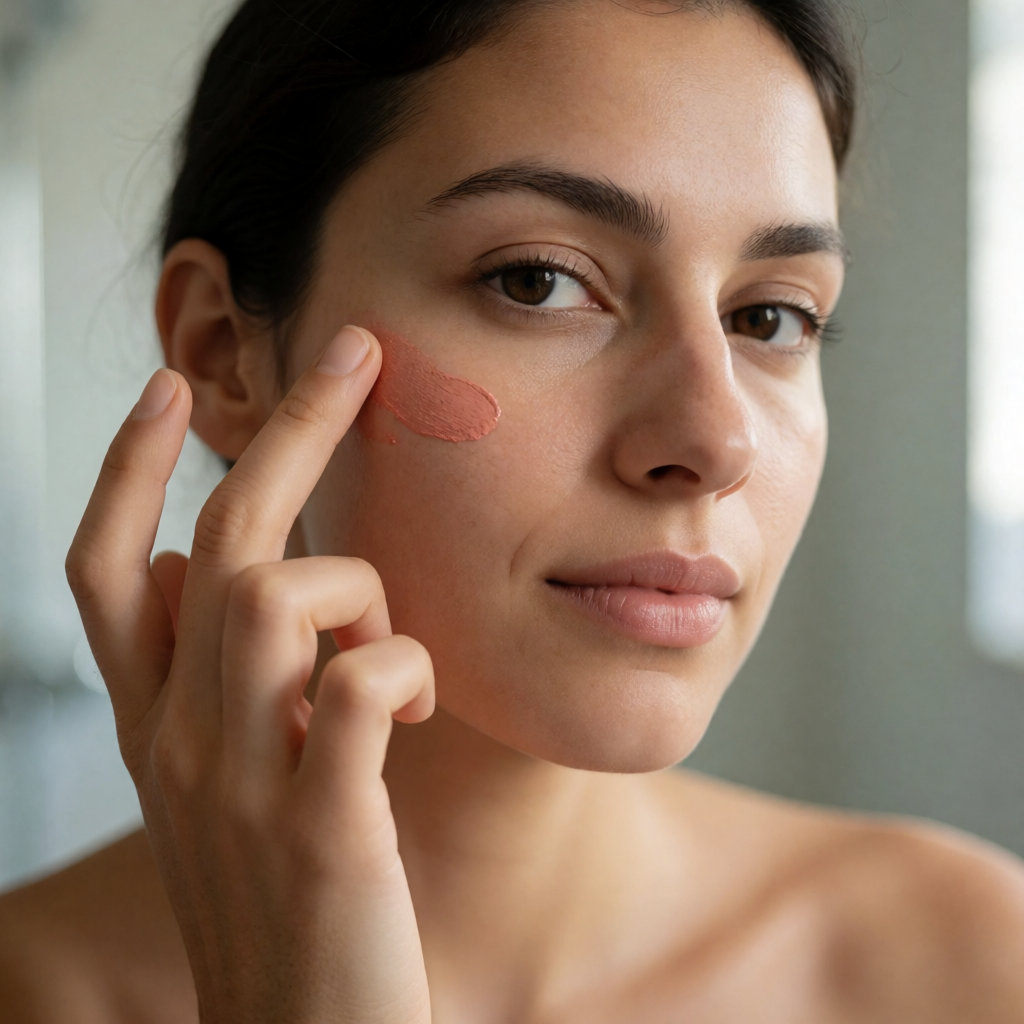
Why it appeals to so many skin tones
Cream blush has a quality powder will never have: it follows the texture of your skin. A cream can be worked, blended, and leaves a slightly glowy finish, never powdery or dry. And contrary to received wisdom, it isn't harder to apply. It's just a matter of habit and getting the amount right.
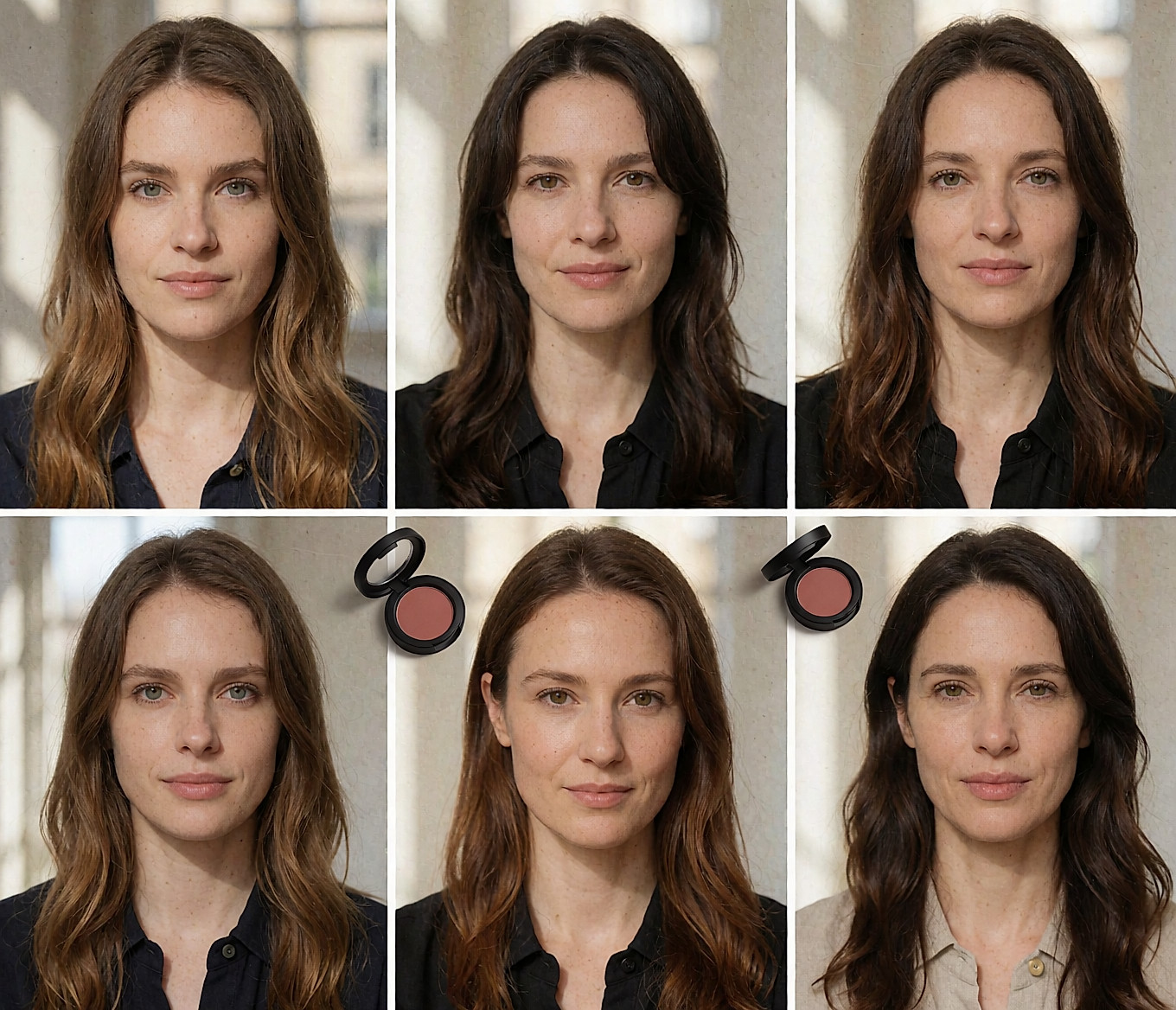
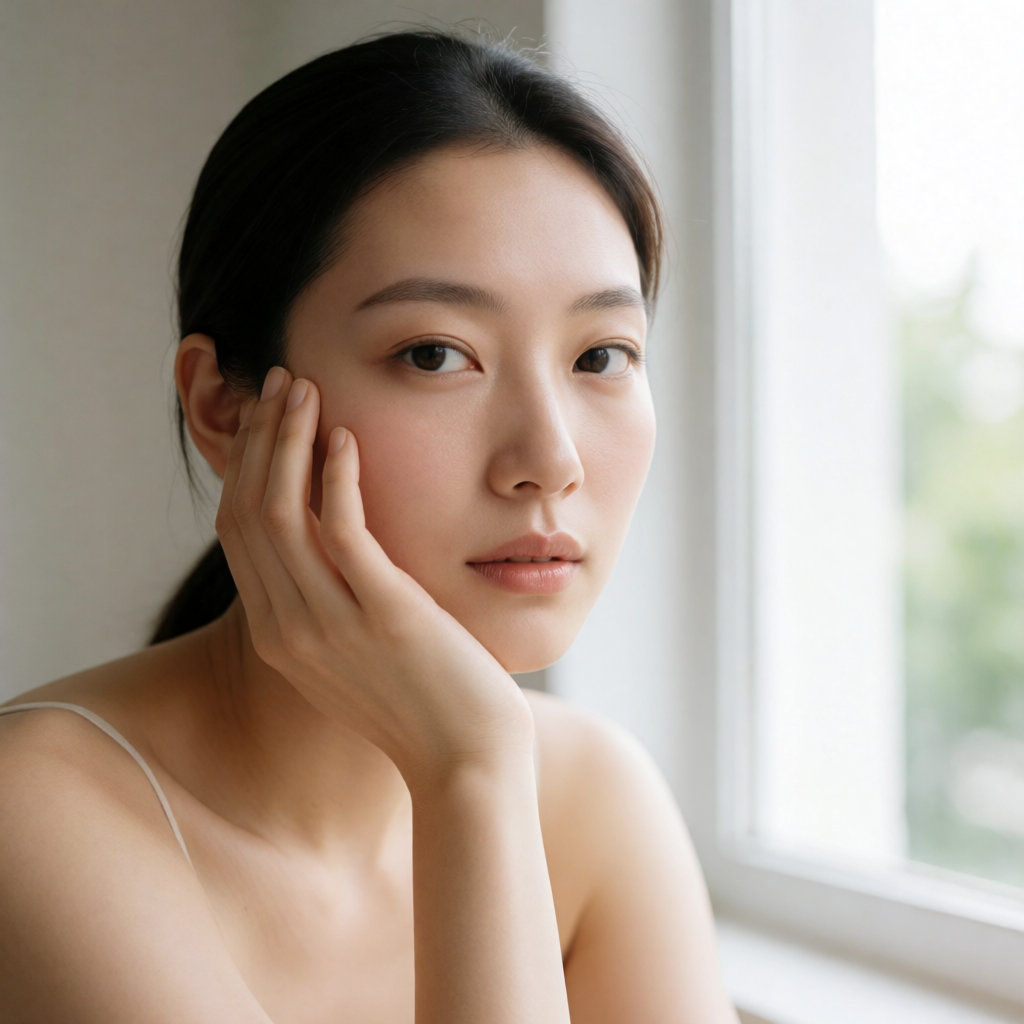
Because there is a catch. Not all formulas are equal, and staying power varies enormously from one product to another. Well formulated and well applied, a cream blush stays put without fading until evening; poorly measured or poorly chosen, it can slip into the hollows of the cheeks by mid-afternoon. That's exactly where choosing well matters.
And when you're starting out, the first instinct is often the wrong one: you pick up too much without thinking and end up with two red circles on your cheeks. A tiny dot of product is enough for both sides! You can always add more in small touches; the opposite is much harder to fix.

The technique that changes everything
Forget the classic sweeping motion you use with powder. Here, you don't smear, you tap. Two or three little touches on the cheek, then blend with your finger along the cheekbone, from the inside of the face outwards. As long as there's a visible edge, you're not finished.
For a fresher effect, add a final press higher up, towards the temple: it lifts the lower face without overloading it. Simple, isn't it?
My tip: first even out your complexion with a long-wear foundation, then apply only the blush to your cheeks. And it changes everything.
A cream blush warms up and behaves like a living material: it doesn't need to be "blended" with a brush from the first contact. Take the time to tap it in well with your fingertip; that warmth is what makes the difference on a natural complexion.
How to choose it without getting it wrong
Cream blush seems to have become more visible in recent years, and between melting, balmy or more fluid textures, it's easy to get lost. The right product depends above all on your skin type and how you do your make-up day to day.
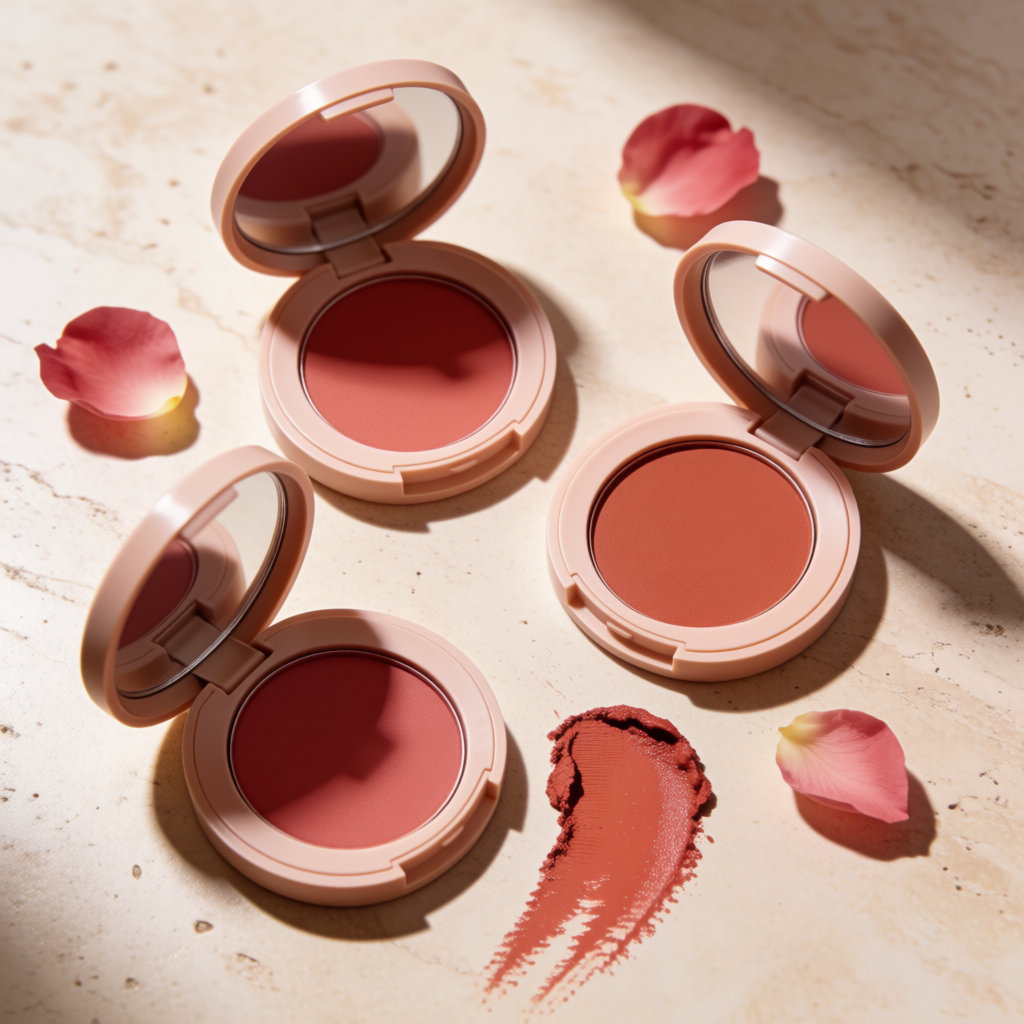
Texture first. A cream-balm hybrid is easy to apply with your fingers and forgives little morning mishaps. A more fluid version demands a quicker hand, but gives a very light result. It's up to you to see what feels most comfortable.
Then the finish: matte, satin or slightly pearlescent, depending on what you like to see on your cheeks. If you prefer a natural matte look, be wary of formulas that play heavily on iridescence. Pigmentation, finally, makes a huge difference: the more pigmented a blush is, the less it forgives overapplication — so go in with tiny touches.
And the most reliable test remains the back of your hand. Spread a small amount, see whether the product blends or leaves a sharp line, then check how it wears by the end of the day. If the colour slips into creases, it's not the right one.
As a general rule, also look at the packaging: a glass pot or refillable cardboard compact recycles better than an all-plastic case, and some brands that focus on natural formulas, such as UNE Natural Beauty, offer believable shades. By contrast, long-standing references such as Rose de Rose by By Terry or MAC's Cremeblend remain conventional: more expensive, but with very carefully crafted shades.


Budget
A cream blush calls for a small investment, but the differences are huge depending on where you buy it. In supermarkets or pharmacies, expect around £8 to £20 for a decent formula. In health food shops or beauty halls, certified formulas tend to sit between £15 and £30. In premium beauty halls, luxury brands can easily climb from £30 to £50.
The price depends on the range, the weight, the packaging — glass, cardboard, refillable where available — and of course the point of sale. Where to get it? Supermarkets and pharmacies for accessible formats, health food shops for certified formulas, beauty halls and online for higher-end ranges. Check whether a refill is available: it's often the best compromise for both budget and waste!
Léna's verdict
Yes to cream blush, but on one condition: learn how much to use. Once you've got the technique, you probably won't go back to powder for everyday complexion. It's not a magic formula, it's just easier to live with. And for a rushed routine between two children, that really counts!
Sources
- COSMOS-standard, the reference standard for organic and natural cosmetics — cosmos-standard.org
- Regulation (EC) No 1223/2009 on cosmetic products — EUR-Lex


Comments
Your opinion matters: rate the article, react and reply to comments.
Comments are moderated; AI-assisted comments are flagged. Text emoticons (8-), :-), <3…) are automatically shown as images.