

November, 7pm, the washing-up is going cold in the sink and your hands have decided to make their feelings known. The skin pulls tight between your fingers, the backs of your hands have gone all tracing paper, and the tube next to the soap is doing nothing: three minutes later there's no trace of it left. What if the problem isn't the cream, but what you do — or don't — put over it?
At night, the advantage changes hands
During the day we pile it on. A layer after washing up, another before heading out, a third because the tube was still sitting on the desk. Except your hands spend their hours being rinsed, dried and exposed to the cold, and every layer leaves with the next. We know how it goes.
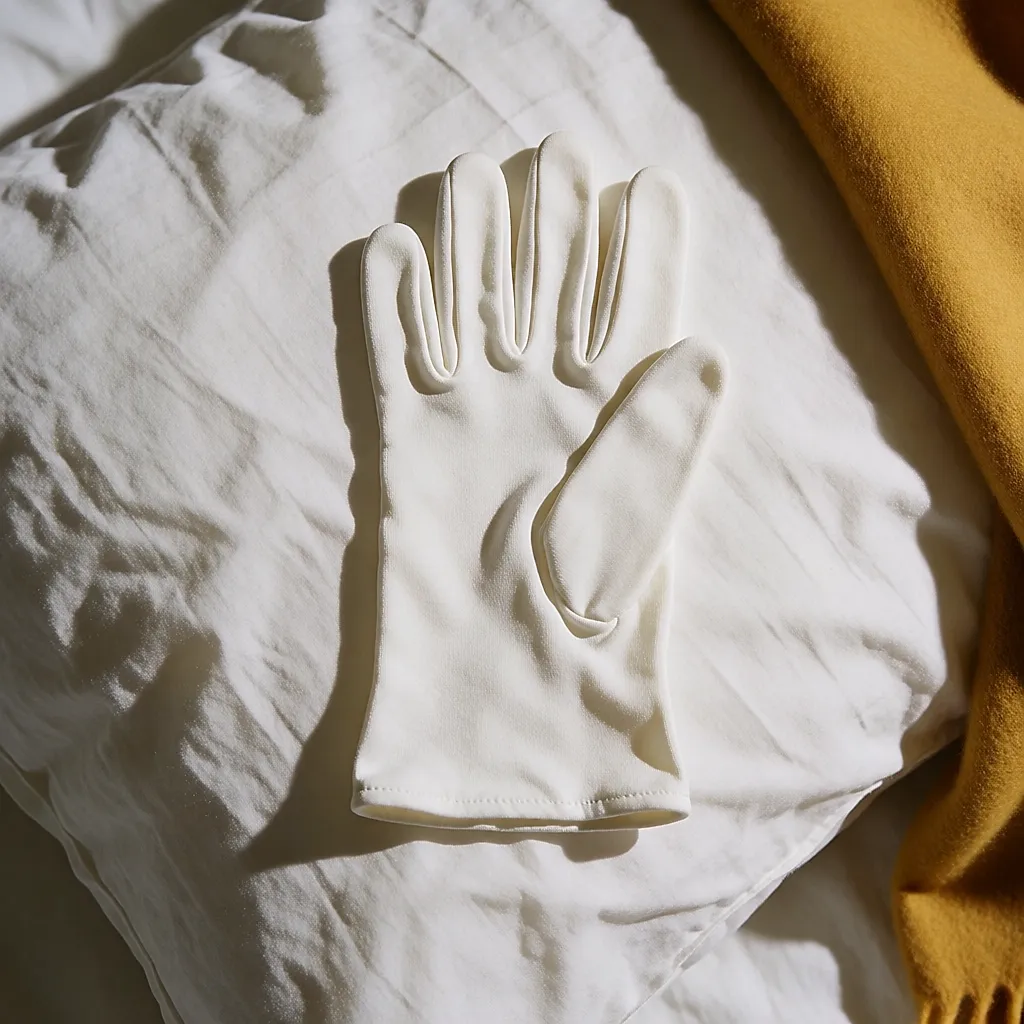
At night the rules change: no washing up every ten minutes, no keys to hunt for at the bottom of a bag. This is where occlusion comes in — a serious word for a very simple idea. A pair of cotton gloves over a layer of cream keeps that cream next to your skin instead of letting it disappear into the pillowcase. There's nothing miraculous about it, and it isn't a treatment: if your hands are cracking, bleeding or itching, that's a conversation with your GP or pharmacist, not with a haberdashery.
Second caveat, and it matters: you don't drown your hand in cream. Too much product under a glove and you wake up with an unappealing clammy feeling. Nor will we promise new skin in three nights — nobody can promise that on your behalf. The right amount is a pea-sized blob, and consistency does the rest.
Cotton, but the right kind
Cotton first, because it lets skin breathe — the opposite of a synthetic glove that turns your hand into a miniature greenhouse. Look for 100% cotton, ideally organic or certified to Oeko-Tex Standard 100, the testing standard for harmful substances with defined limit values. You'll find them at the chemist, in a pharmacy, at a haberdashery, sometimes in the baby aisle of the supermarket — and yes, baby sizes exist; they're mainly useful for very slim hands.
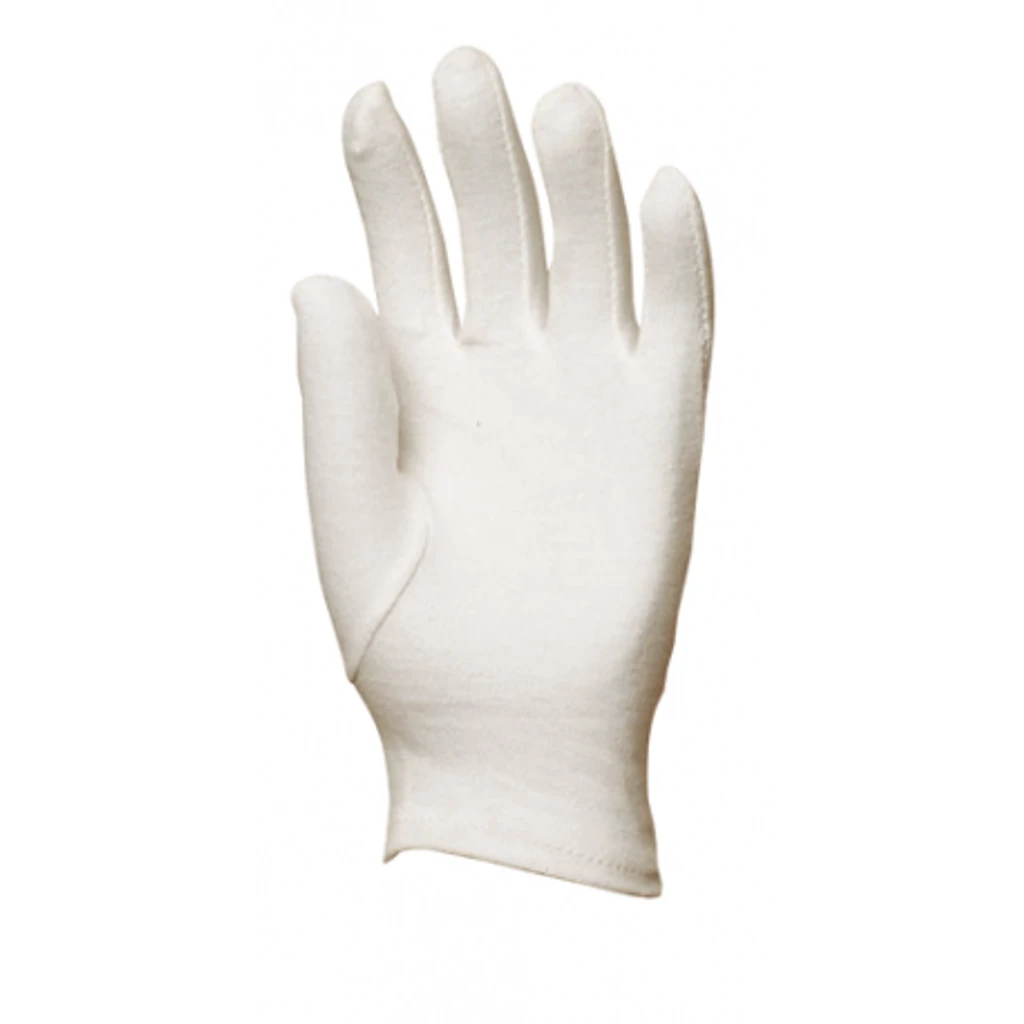
Sizing, then. A glove that's too tight presses on the wrist and makes you want to rip it off at 2am; too loose and it twists round and ends up at the foot of the bed. Take the time to try them on: shop pairs often come up small, and an S/M is usually enough. The cuff should stay put without leaving a mark.
Then there's washing, the real subject nobody talks about. Two pairs in rotation is the comfortable minimum: one on your hands, one in the laundry basket. In practice, wash them as the label says and change them often — every two or three days if you wear them nightly. Cotton left sitting for three weeks starts to smell fusty, which isn't really the point of the exercise.
What goes underneath
Thickness often matters more than price. A fluid day cream will have vanished before you've turned off the light; an ointment, a rich cream or even a body cream will do the job. On ingredients, the natural classics are there for a reason: shea butter, vegetable glycerine, jojoba oil. On badly damaged hands, it's better to skip fragrance, which adds nothing to comfort.

The method takes about thirty seconds: a pea-sized amount per hand. Work it into the backs — the area that goes red in the cold — and between the fingers, massage briefly, then pull the gloves on. If packaging matters to you, a glass jar or a refill will serve you better than a new tube every month.
Budget
Expect to pay roughly £3 to £10 for a basic pair of cotton gloves, from a chemist, a pharmacy, a haberdashery or a supermarket. Certified organic cotton climbs to somewhere between £7 and £18 in a textiles shop or online: the difference is in the certification and the fineness of the weave, not necessarily in comfort.
For the cream, budget £5 to £25 depending on size and formula, from a pharmacy, a health-food shop or online. All in, often under £20 for the whole set-up — the price of a pocket-sized tube, without the pocket-sized effect.
The check before you buy: turn the glove inside out and look at the seams. If they're thick and scratchy on the inside, they'll scratch at 3am. Flat seams, a soft cuff, fine cotton: that's the whole brief.
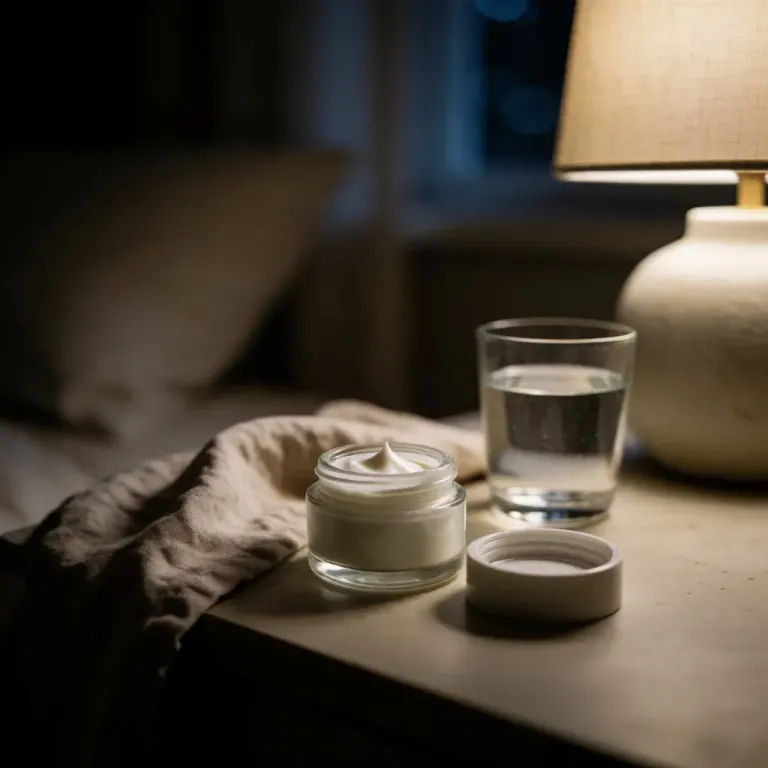
And that leaves the one gesture that survives a day which has only five minutes left in it: the pair on the bedside table, next to the pot. In the morning you don't compare, you notice — your hand is supple or it isn't. If it is, you've gained a habit for a few pounds, and won back a bit of drawer space from one tube fewer.


Comments
Your opinion matters: rate the article, react and reply to comments.
Comments are moderated; AI-assisted comments are flagged. Text emoticons (8-), :-), <3…) are automatically shown as images.