

There are evenings when the mirror turns into a judge. You tug at a jumper, tilt your head, and wonder whether surgery would really change anything — and whether you're allowed to think about it. Cosmetic breast surgery addresses very concrete situations: breasts you feel are too small or too large, breasts that sag, marked asymmetry, or reconstruction after cancer. But it has limits, and let's be clear from the start: every procedure carries risks, and it won't fix a complicated relationship with your body. Here's what we know, and what we don't yet — let's take stock together.
Three situations, three answers
Reasons for consultation almost always revolve around the same things: volume, too little or too much; shape, drooping breasts; symmetry. Each time, the technique changes, recovery changes too, and the budget even more so.

When you think your breasts are too small
The most common answer is still breast implants, usually cohesive silicone gel. Saline is still used, but it has become less common. The implant is placed through a small incision: under the breast, around the areola or in the armpit, depending on your shape and your surgeon's advice. You choose the size and shape of the implant together, and this is where it matters: harmony with your shoulders and hips counts for much more than the number of cubic centimetres.
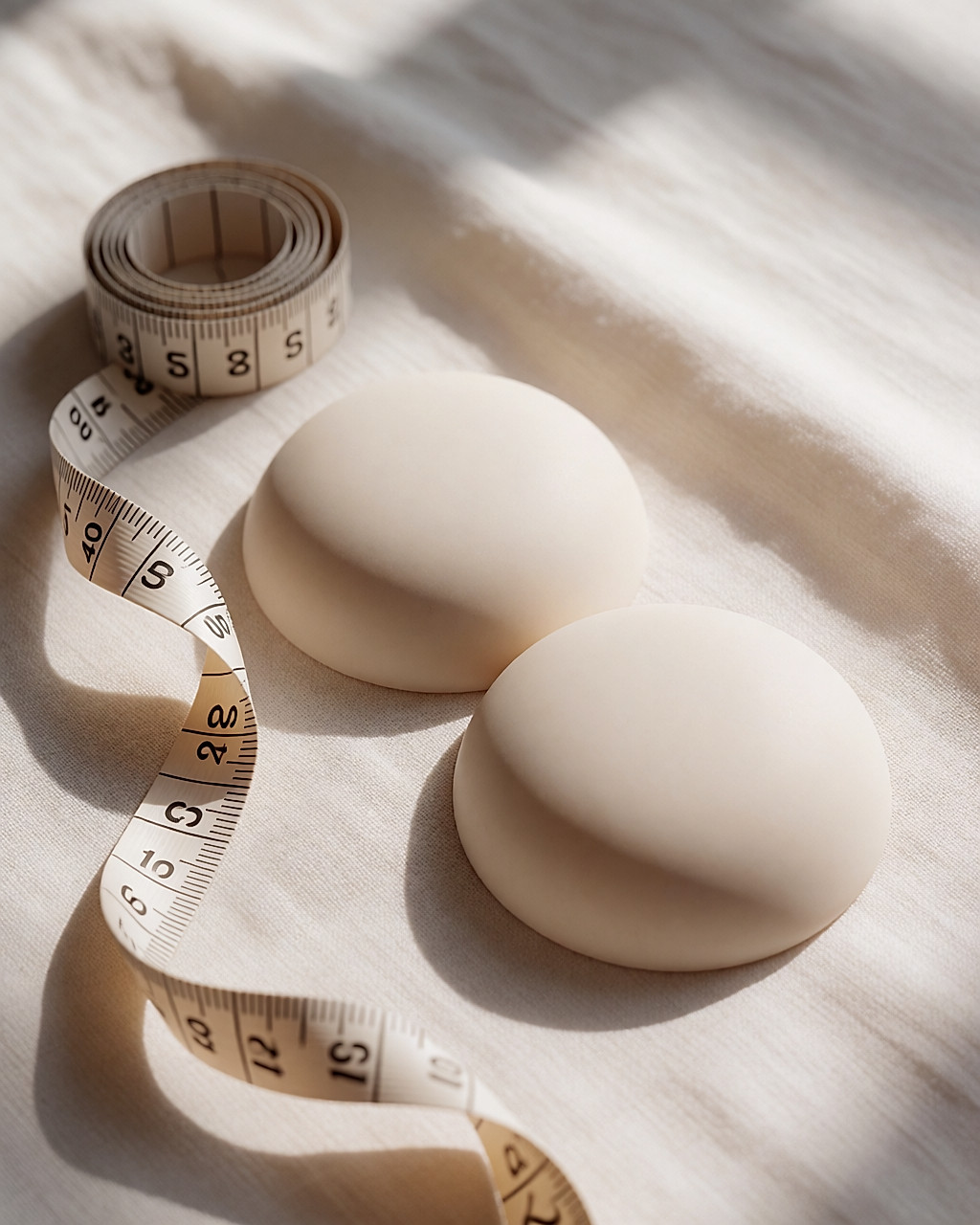
The operation usually takes one to two hours. You'll wake with a surgical bra to wear day and night for several weeks, and you'll need to avoid knocks and intense exercise for around four to six weeks.
In practice: breastfeeding is often still possible, but it depends on the incision used — discuss it beforehand, not afterwards. Sensation in the breast may also change, sometimes permanently. And the idea that implants must be replaced every ten years is outdated: there is no fixed lifespan, and further surgery is done if there's a problem or a change of plan. Fat transfer, or lipofilling, is an alternative for small corrections or to harmonise one breast.
When you think your breasts are too large
Breast reduction removes fat and glandular tissue, then lifts the breasts. It does leave more visible scars than implants, however: around the areola, vertically beneath it, and sometimes in an anchor shape down to the crease under the breast.

After surgery, the breasts are swollen and bruised. Allow two to three months for a stable shape. Scars fade over time, but they don't disappear — better to know that before committing than after.
Good news, though: in the UK, NHS funding may be possible for breast reduction if your symptoms are significant — usually back or neck pain — and you meet your local criteria. These often include a minimum amount of tissue removed (some areas use thresholds such as 500g per breast, though policies vary) and a BMI limit. Your GP can refer you, and your local integrated care board (ICB) decides. A functional rather than purely cosmetic reason can therefore change everything administratively.
When your breasts sag
With age, pregnancy and weight changes, skin loses elasticity. Neither firming creams nor exercise will lift the gland back up: they are useful for general tone, not elevators. Mastopexy, or a breast uplift, removes excess skin and reshapes the breast. Be aware, though: it doesn't add volume unless it's combined with an implant or lipofilling. Again, scars are inevitable, and you have to accept living with them.
Before you commit: check that the practitioner is a qualified plastic surgeon, on the GMC specialist register, working in a CQC-registered facility. In the UK, reputable clinics follow a cooling-off period of at least two weeks between the quote and the procedure, and you should have an anaesthetic consultation. A serious surgeon won't promise you a perfect result: they'll also explain what can go wrong. If you're unsure, talk it through with a trusted professional, such as your GP or gynaecologist, who can help you frame your questions.
Budget
In the UK, private fees are not fixed and vary mainly according to the surgeon's reputation, city, type of facility and complexity of the procedure. With a quote in hand, treat these as rough guides only — every case is different:
- breast augmentation: roughly £4,000 to £8,000, including implants and anaesthesia;
- breast reduction: around £5,000 to £8,000 privately;
- mastopexy: around £4,500 to £7,500;
- lipofilling: several thousand pounds, highly variable depending on the volume taken;
- pre-operative consultation: often £50 to £200, sometimes not refunded.
Where should you go? A private plastic surgery clinic, a private hospital, or an NHS hospital if you meet the criteria — waits are longer, but there are no private fees. Be wary of 'all-inclusive' packages with travel and a stay abroad: post-operative follow-up is often the weak point, and that's exactly when you need support. A low headline price rarely hides a pleasant surprise at the end.
In practice, remember this
What should decide it is neither a photo you saw on social media nor a promotional price. It's a calm consultation, a written quote, a respected cooling-off period, and the desire for a result that looks like you rather than a magazine ideal. Take time to ask all your questions, even the ones that seem silly: they never are. And if a surgeon rushes you, plays down the risks or promises you a perfect result, change surgeon — it's often the best thing you can do for yourself.
Sources
- MHRA — Breast implants: information and recommendations, Medicines and Healthcare products Regulatory Agency.
- NHS — Breast reduction, NHS.uk.
- NHS — Breast reconstruction, NHS.uk.
- BAAPS — British Association of Aesthetic Plastic Surgeons.
- Royal College of Surgeons of England — Cosmetic surgery.




Comments
Your opinion matters: rate the article, react and reply to comments.
Comments are moderated; AI-assisted comments are flagged. Text emoticons (8-), :-), <3…) are automatically shown as images.