
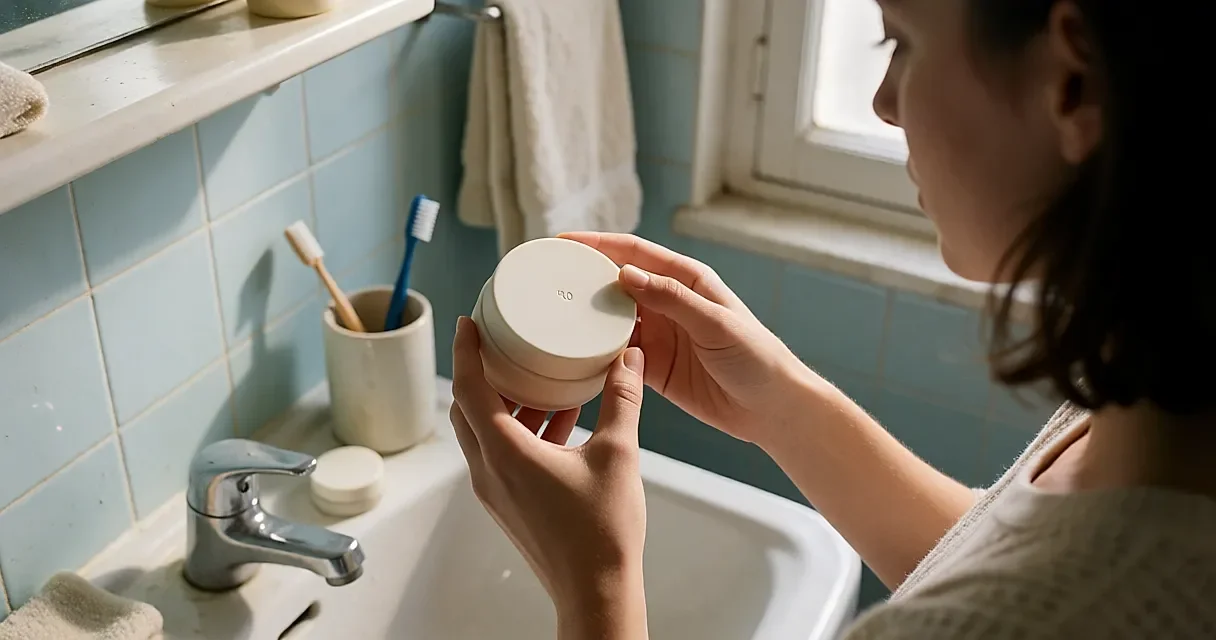
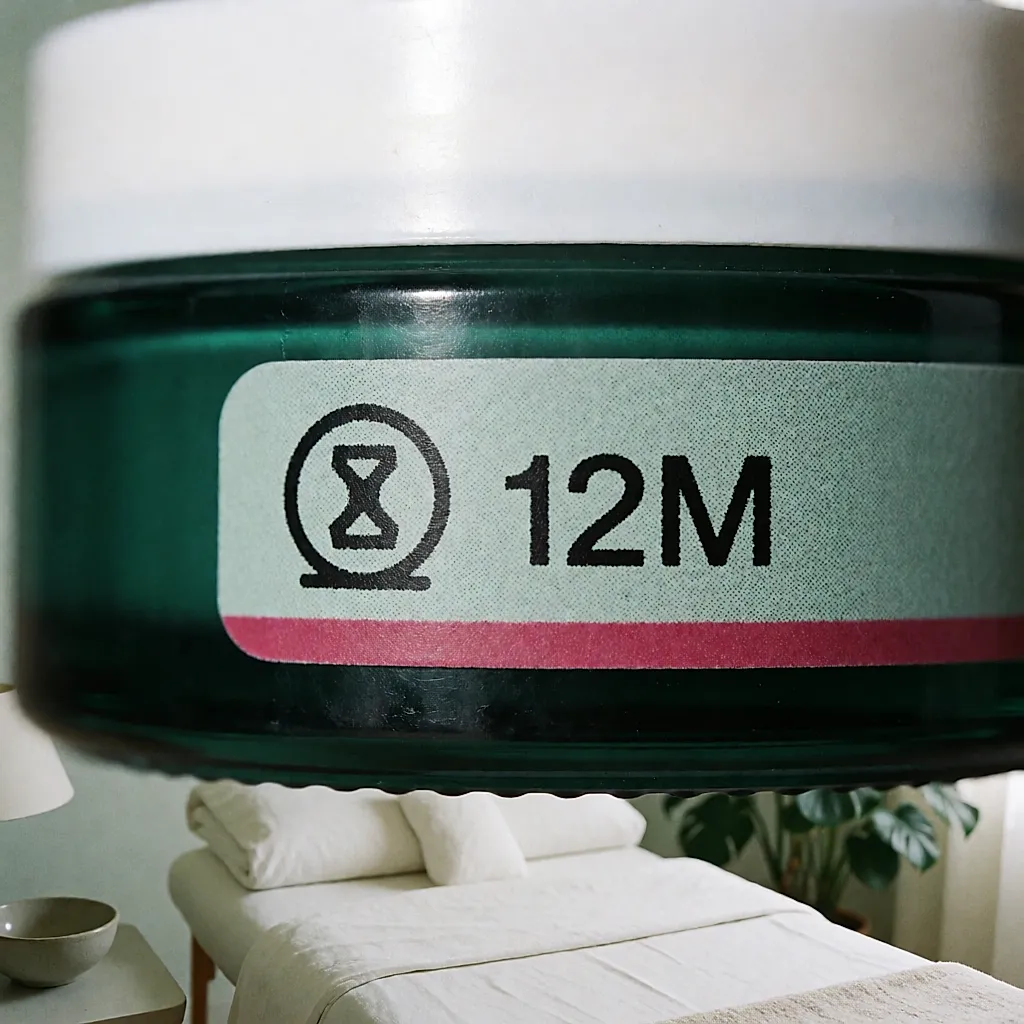
Turn the pot over. Under the ingredients list there's a small drawing of an open jar, lid lifted, with a number next to an M: 6M, 12M, 24M. That's the PAO, the period after opening — the only clock that genuinely starts the day you unscrew the lid. In a discount bin it's the first thing we forget to read. We look at the price, sniff the pot, put it back.
The little jar and the number nobody reads
The minimum durability date tells you how long the sealed product keeps its qualities. Once the pot is open, the PAO — period after opening — takes over: it tells you how long the formula stays good in use. What the PAO says nothing about is time spent in a warehouse. It measures how long the formula holds up once air is in, fingers have been in, light has got to it.
Which is exactly the trap with surplus stock. A pot can be brand new, sealed, and have sat on a shelf for a very long time: the PAO tells you nothing about that stretch. What you can do is inspect the product itself — and there your senses do the job no label will do for you.
The batch code: a pot's quiet ID
Look for a string of numbers and letters printed on the base of the pot, on the label or on the box: that's the batch code. It identifies the production batch, and some brands offer a form on their website where you type it in to retrieve a date. Others don't — there's no universal rule, and plenty of surplus pots arrive without a box, with a code that isn't always legible.
Is that a deal-breaker? Not necessarily, but it changes how you shop. Without a code, it's hard to know whether the pot is from last year or from 2019. So you have two options: either the reduction is genuinely steep and you accept the gamble on a low-risk product (body oil, soap, a very basic balm), or you put it back and walk on. On a facial product with actives, a serum or a sunscreen, the gamble isn't worth it.
Seal, smell, texture: the two-minute check
First reflex: the seal. Intact cellophane, a tamper seal, foil under the cap. If it's missing, if the thread is greasy, if the pot has clearly been opened and closed again, someone has been handling it before you. In a discount bin that happens more often than you'd think. Put it back, no guilt.
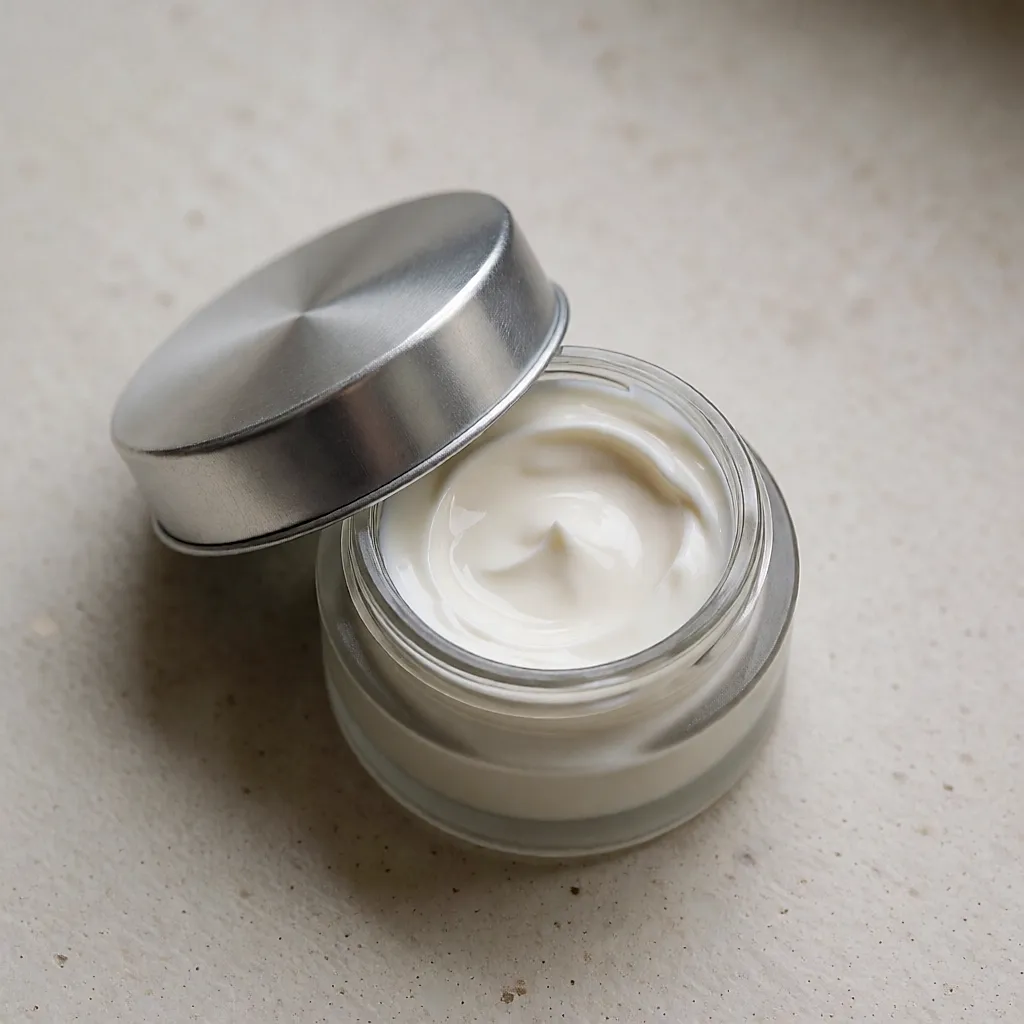
Then your nose. A cream that smells rancid, an oil that smells of sharpened pencil or a stale cupboard, a fragrance that's turned sour: the formula has been working, and not in a good way. Check the texture too — a split emulsion, water beading on top of the cream, graininess, a yellowed colour. On your face this isn't about being stingy: a broken emulsion no longer has the texture you're paying for.
And once it's home? Write the opening date on the pot in marker. A daft little habit that saves you wondering, six months down the line, whether the 12M has been ticking since January or since spring.
Before you pay, three questions: is the seal intact? is the batch code legible? has the pot been kept out of the heat (not a bin by a south-facing window, not boxes stacked under a canopy)? Three yeses and you're good to go; a single no on a facial product and the discount stops being worth much at all.
Where the discount costs more than the price
Sunscreen first: UV filters are formulated to hold their performance under good storage conditions, and a bottle that has spent months next to a heated window may no longer offer the same protection. On something you apply to protect yourself, you don't gamble.

Mascara next, because there's no way of seeing what's going on inside the tube. In practice it's best not to keep one beyond three to six months after opening — and a discounted mascara may have sat on a shelf for a long time before your first coat. Same caution for actives known to be sensitive to light and air, vitamin C and retinol top of the list: a serum that's turned pale orange has lost its edge.
On the green side, an unsold product that finds a buyer is always something gained. It still has to be used to the last drop rather than relegated to the back of a drawer with the impulse buys.
Budget
Rough UK benchmarks, as a guide rather than a quote: a facial product selling for £22 to £40 at a department store or beauty retailer often turns up at £7 to £16 in a discount bin or on clearance sites. A mascara at £10 to £25 drops to around £3.50 to £10, a body oil at £18 to £30 falls to about £6 to £13. Discounts of 30 to 60 per cent are common, sometimes more on the last formats — at a chemist, a discount retailer, online, or in end-of-line sales at a beauty counter.
One last calculation, the one we forget: price per millilitre. A 200 ml format at half price that you won't finish before its PAO runs out costs you more than a 50 ml at full price, used right to the end. A good question to ask yourself over the bin: will I get through this pot before the symbol proves me wrong?
Turning a pot over, having a sniff, checking the seal: thirty seconds, standing in the aisle. The price will never tell you whether the cream spent the summer in a sunlit window. A pot that ticks all three boxes and that you already know when you'll open is still a good buy; a doubtful pot at 70 per cent off is just one more thing to throw away in six months.


Comments
Your opinion matters: rate the article, react and reply to comments.
Comments are moderated; AI-assisted comments are flagged. Text emoticons (8-), :-), <3…) are automatically shown as images.