
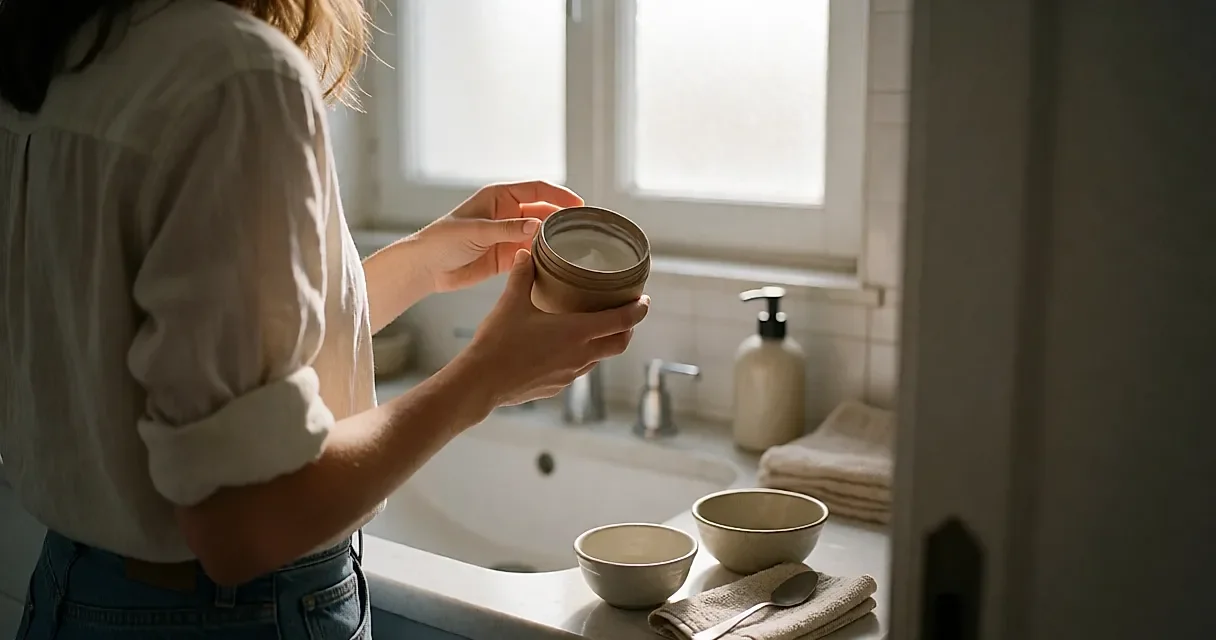
A “cardboard” cream jar rarely contains pure cardboard inside. The outside may look understated, even raw, and tempting enough to keep on the shelf; inside, there is usually an inner layer, often plastic, sometimes a coating, sometimes a thin pouch. This invisible detail is what determines how well the cream keeps — and how you end up disposing of the jar.
The cardboard is just the part you can see
A cardboard cosmetic jar is almost always built from several parts: cardboard for the structure and branding, and a barrier where it meets the formula. Lift the lid: sometimes you’ll see a smooth film, sometimes a treated surface you can feel, sometimes a flexible pouch that lifts out. Cardboard on its own isn’t designed to hold cream: it would soak up the formula like a sponge.
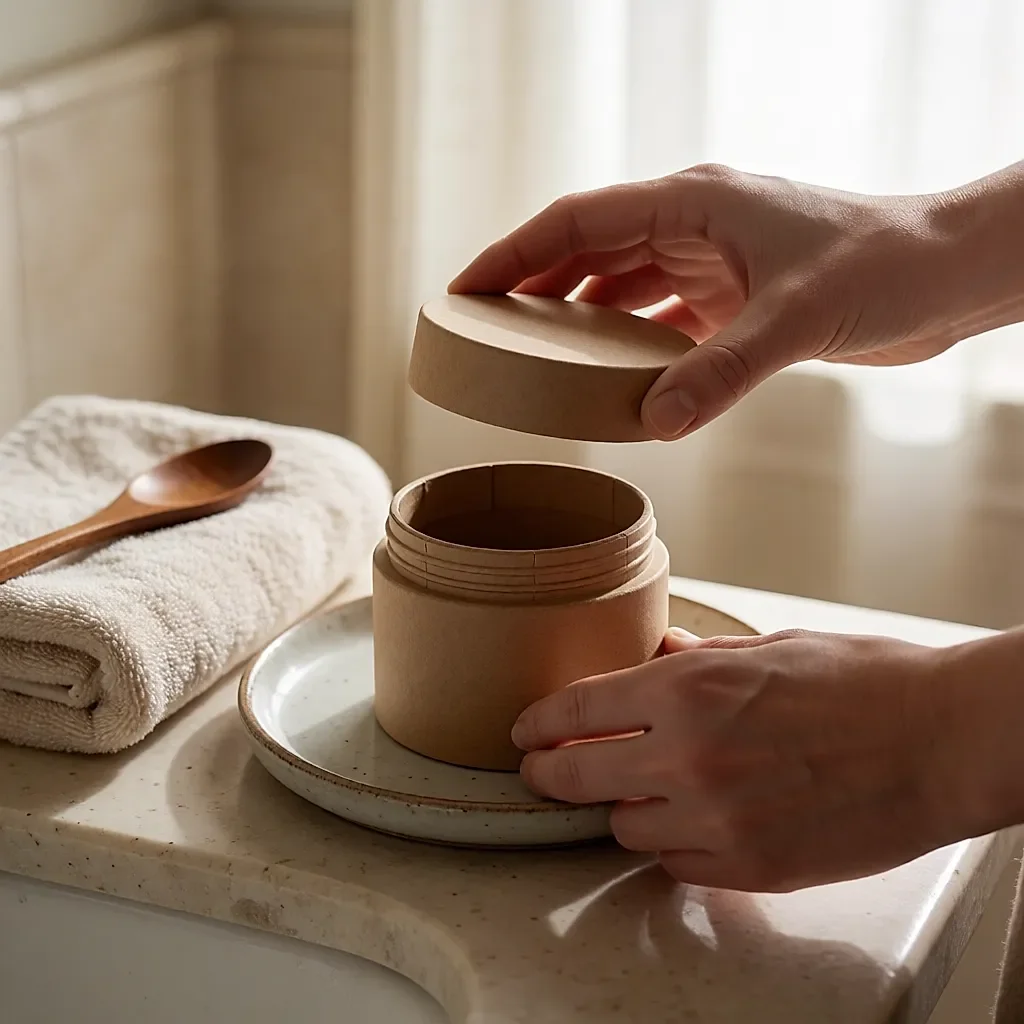
Why? Because cream contains water, oils and active ingredients, and bare cardboard absorbs. The inner layer acts as a barrier, limits contact with the outside and helps the texture stay stable. The word to remember is coating: this surface treatment, or added film, turns a simple jar into technical packaging. Without it, the jar might look nice, but it would be unsuitable.
The thin film that keeps the cream protected
This barrier isn’t a decorative detail. It limits how much cream seeps into the cardboard and how much air gets in, and protects the formula from small everyday stresses. It is the part doing the main job, even though the cardboard is what you see first.
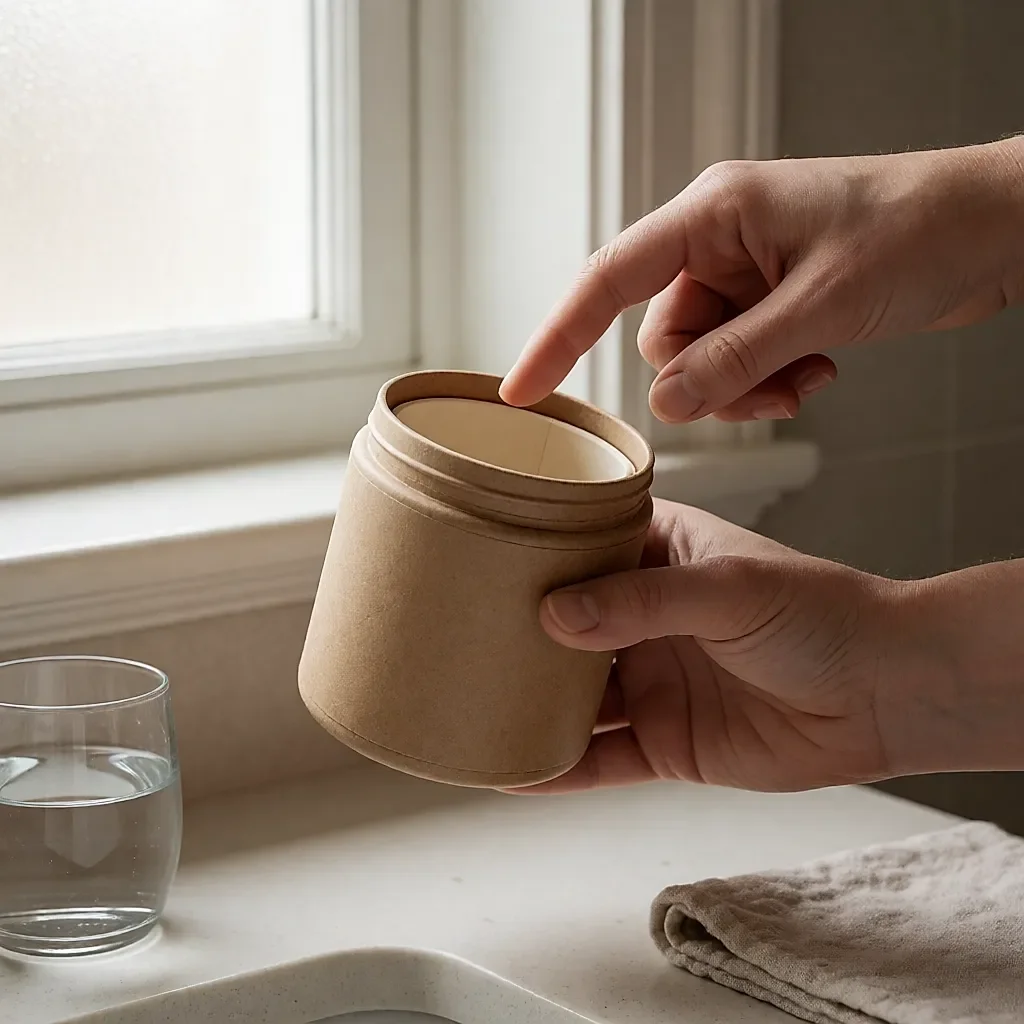
What happens if this barrier is damaged? A jar that has got wet, whose coating has bubbled or whose pouch has been pierced no longer protects the cream in the same way. We can’t generalise: the thickness and type of barrier vary from jar to jar. But the reflex is the same: before you buy, look inside the jar, not just at the outside.
Before you bin it, check what can be separated
Do you always need to separate everything? No. Unscrew the lid, peel off the seal if it lifts away, and take out the inner pouch if it is designed to be removed. Don’t force it: if the film is glued to the cardboard, you are likely to damage everything and make recycling less straightforward.
Then check your local council’s guidance — rules vary by area, and the recycling label on the pack can help. Empty the jar as much as you can, without rinsing it under a running tap. And if the jar is composite, follow your council’s guidance rather than your instinct. Recycling isn’t a puzzle: it’s information to read.
The real trade-off on the shelf
Is cardboard always the star pupil? Not automatically. It is lighter than glass, which matters for transport, but it often becomes composite because of its inner barrier. Glass recycles well where collection exists, but it is heavier. No packaging is perfect: the right choice depends on the formula, the format and the end-of-life route you can actually access.
For the same formula, look for a jar whose inner layer can be removed, a refill or a recyclable glass container. But read the promise closely: a “cardboard” jar isn’t necessarily recyclable, and a refill isn’t magically neutral. We can’t make that call for you: the construction changes from one product to the next.
The lid check. Lift the lid before you buy and look at the inside wall. If there is a pouch that lifts out, take it out without forcing it; if the film is glued down, don’t tear the cardboard to separate it. Keep the recycling guidance to hand, not filed away in your head.
The one detail to remember
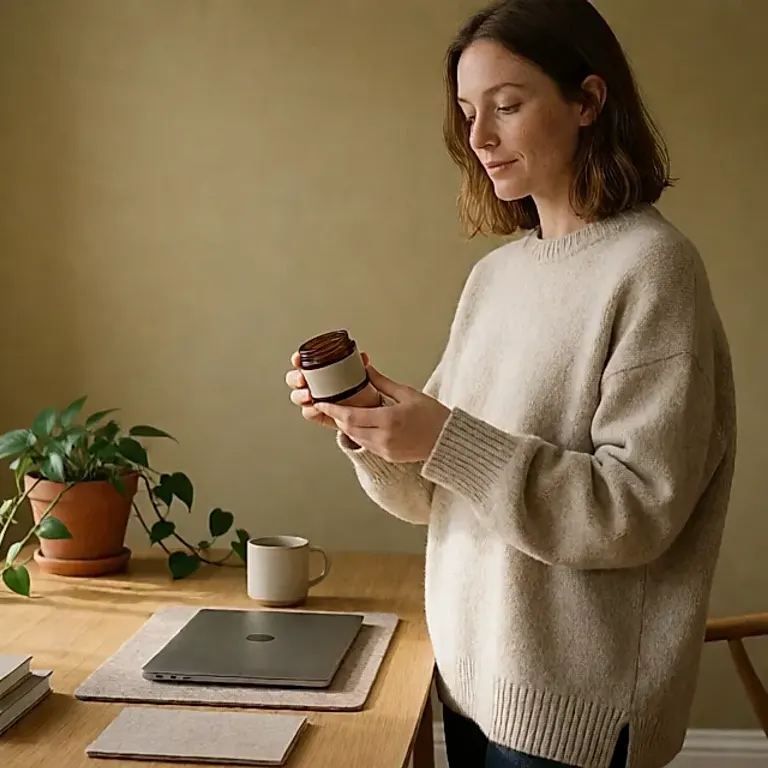
The next time a cardboard jar catches your eye, don’t just look at the pretty outer material. Open it, touch the inside wall, look for the pouch or coating. That few-second check helps you understand how the jar is designed to protect the cream, and how it will end its life.
The rest comes down to balance: a jar you understand is easier to recycle, and a cream you like enough to finish deserves packaging you don’t bin on autopilot.


Comments
Your opinion matters: rate the article, react and reply to comments.
Comments are moderated; AI-assisted comments are flagged. Text emoticons (8-), :-), <3…) are automatically shown as images.