
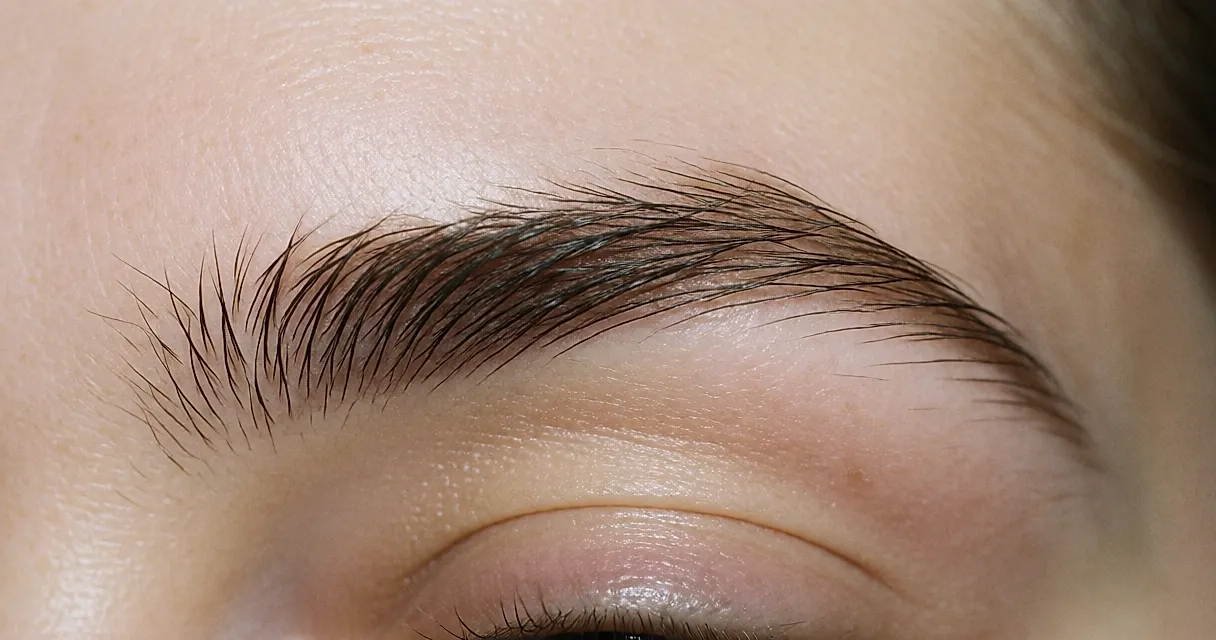
A brow pencil and a mascara have this in common: you rarely use them right to the very end, and yet they decide, in about two minutes, how an entire face looks. They are the things you repurchase fastest, the things you bin while promising yourself you will finish the next one. So why the detour via South Korea?
The quiet makers behind your pencil
At Schwan Cosmetics, which makes pencils and mascaras, the craft is the formula and the industrial gesture — how a lead glides without dragging, how a brush catches the lashes, how a material holds all day without clumping.
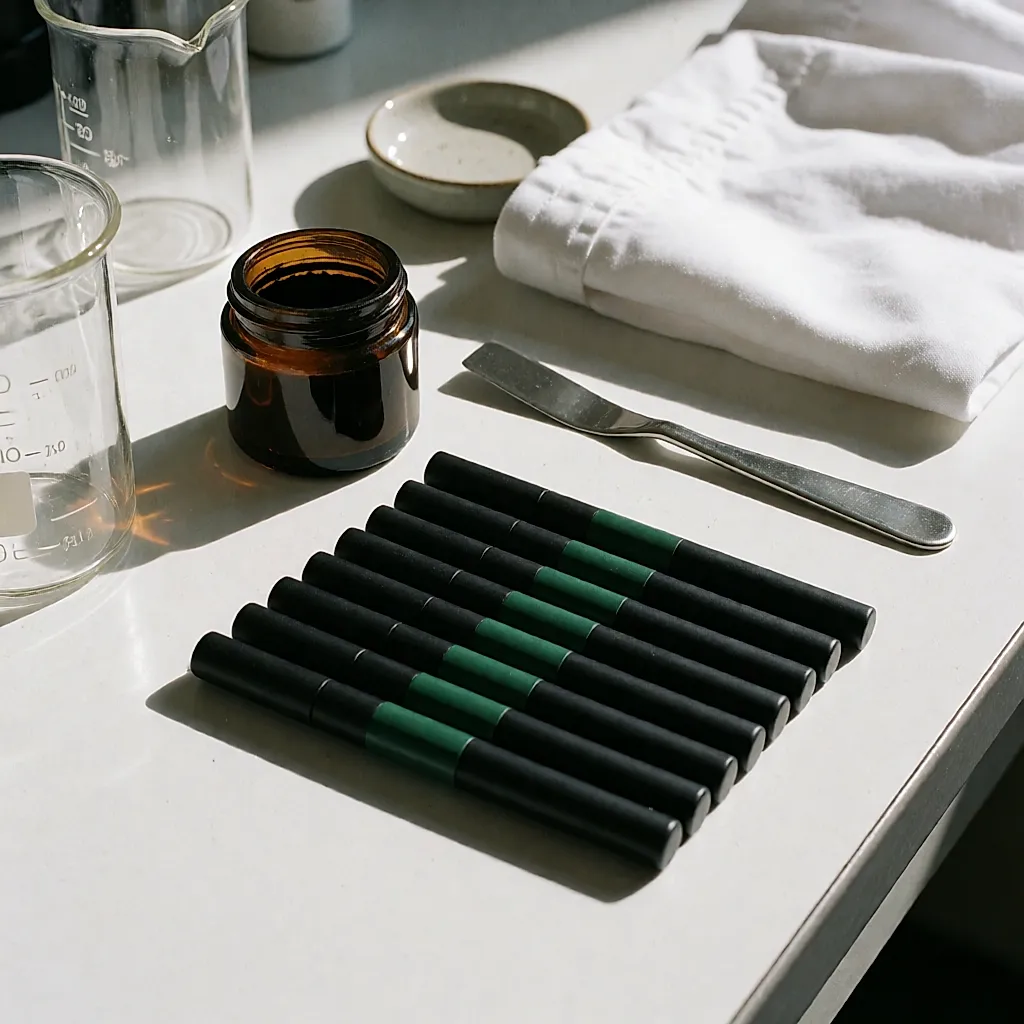
On the Korean side, the names that come up are Cosmax and Kolmar Korea. For a pencil manufacturer, looking towards Seoul can mean giving up on translated briefs and starting to hear them first-hand — in the street, in videos, in feedback from the people who actually wear the stuff. The point is not to copy a trend but to understand how a texture behaves on a real face.
One sizeable unknown remains: nobody yet knows what these formulas will change on UK beauty counters. A lab is not a factory. It is a place where things are tried, got wrong and started again — and where, occasionally, a texture emerges that then turns up everywhere.
Three moves that make K-beauty
K-beauty is no longer an exotic corner with three serums and a face mist; it is a family of products judged on results too. And it comes down to three very concrete moves: cushion foundation, the gradient lip and the ultra-fine eyeliner flick.
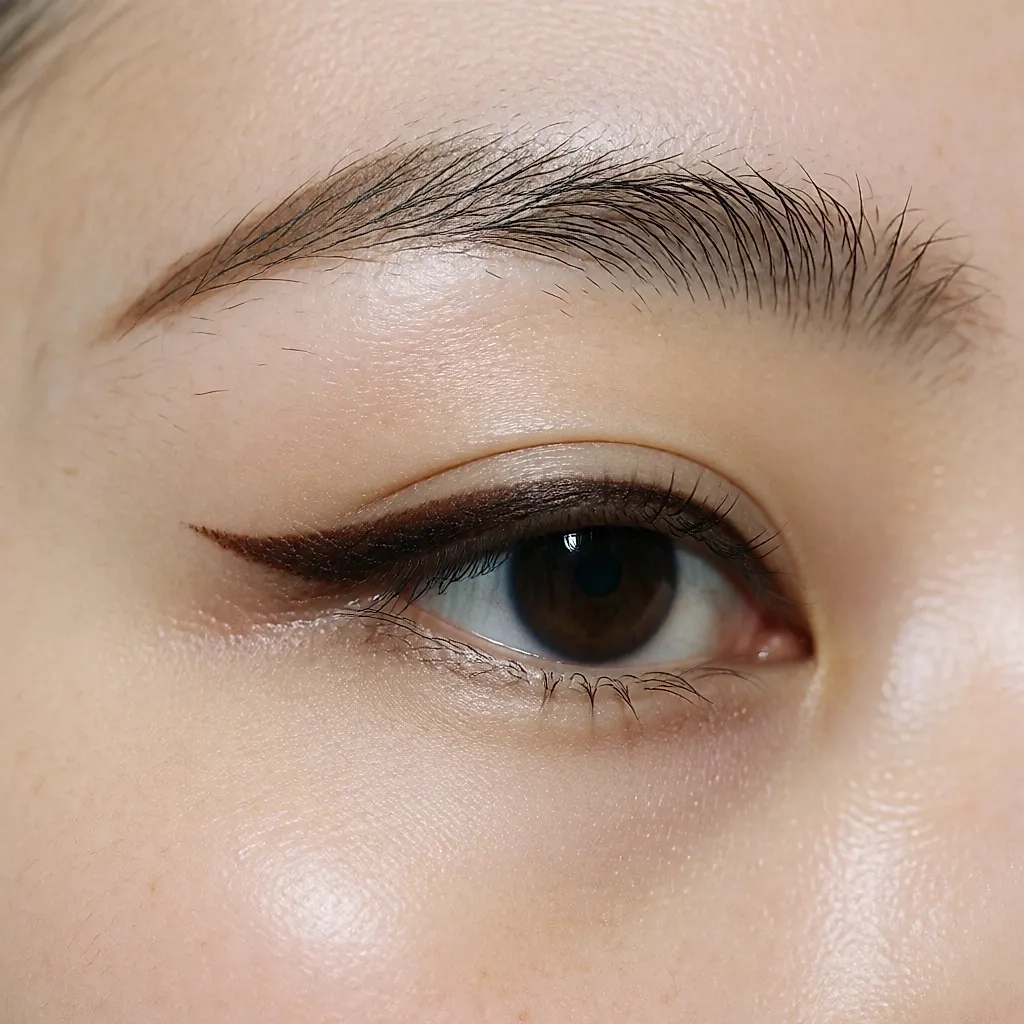
Why those three? Because they demand texture technology, not just a pretty shade. A cushion has to go on as a veil without marking, which takes a formula willing to be pressed a hundred times into a sponge. A fine line has to glide without snagging the eyelid, which comes down to pigment, binder and felt tip together. These are close cousins of the skills a pencil and mascara maker has been honing for decades — which makes the overlap less of a coincidence than it looks.
One caveat: what works in Korea will not necessarily suit you. A cushion is handy and known for a luminous finish, but the amount takes some getting used to and the sponge needs washing regularly, for hygiene's sake. As for the just-bitten lip shades, they are known for lasting — sometimes at the cost of a tight feeling on dry lips.
What it means for your make-up bag
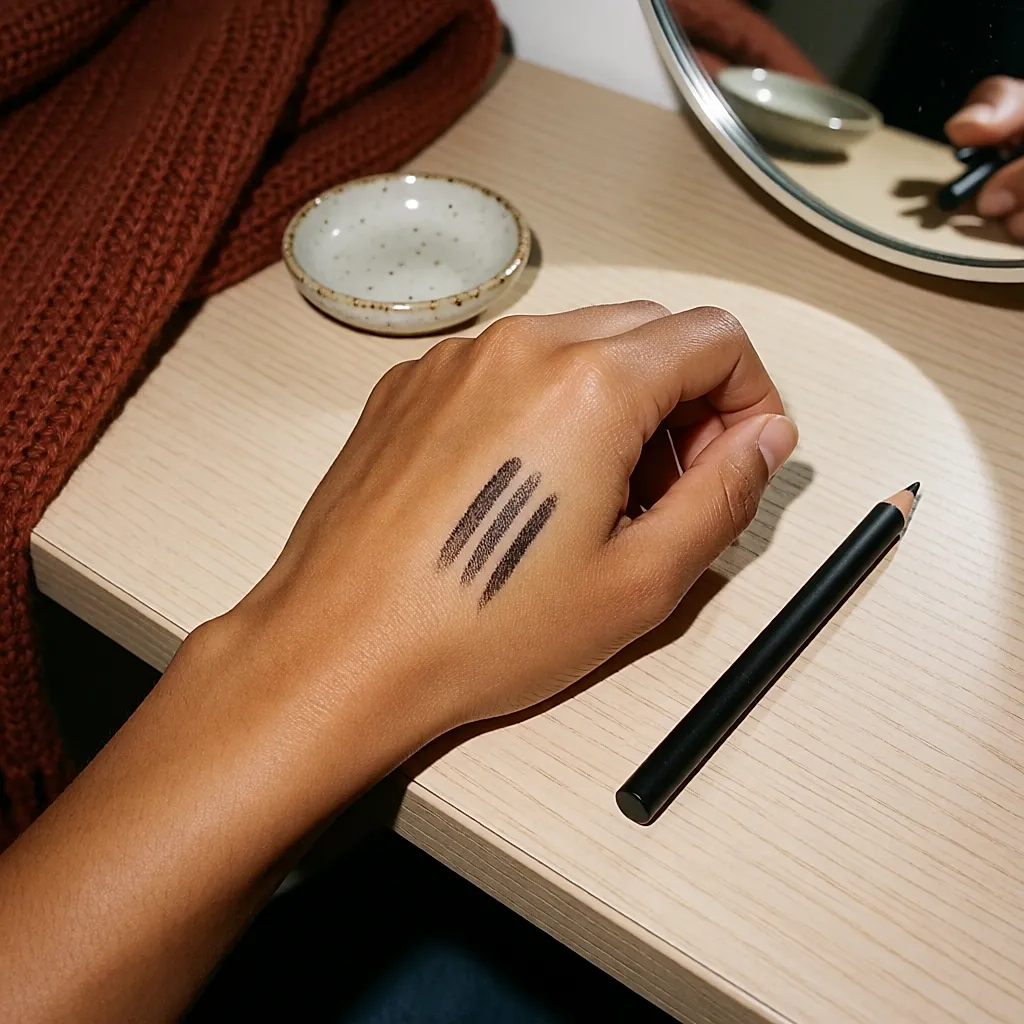
The good news is that this competition can help products we never got to know properly. Precision pencils, soft-tip liners, curved-brush mascaras: the comparison pushes everyone to improve the gesture, not just the pitch. In practice, it gives you one more thing to check before you buy: does it glide without dragging? Ask in store, try it on the back of your hand, and see whether the line stays sharp after a few seconds.
A second useful habit: think about the end of the product's life. Some brands, Korean ones in particular, sell refills for their cushions — genuine progress, provided the refill is actually available in the UK, which it is not always. For mascaras, refills barely exist: that is the category's weak spot, whatever the country of origin. The only sensible approach is the one we all know — pick a size you will genuinely finish.
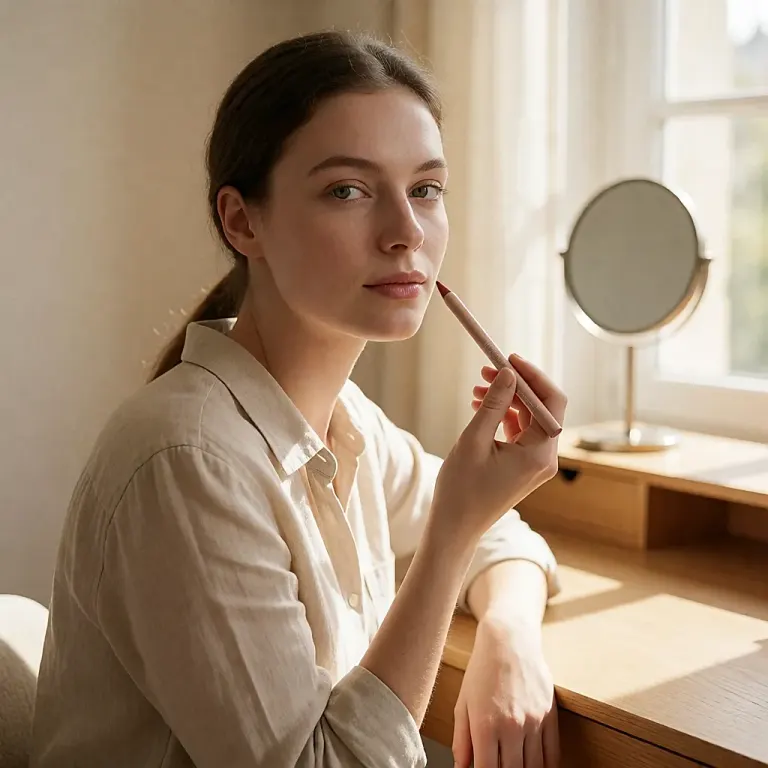
The in-store pencil test: draw a line on the back of your hand, wait thirty seconds, then rub it with a finger. If it smudges, it will smudge on your eyelid. If it stays sharp and comes off without you having to scrub like mad, you have found your candidate.
What you will pay
Expect to pay in the region of £8 to £20 for a pencil or liner, depending on brand and retailer, £12 to £25 for a Korean mascara from a beauty retailer or the brand's own site, and £25 to £40 for a cushion, which often comes with a refill; the refill on its own then costs around £18 to £25. Prices move quickly: in larger stores or on specialist online platforms you will sometimes drop below £10, but postage and delivery times make up the difference.
Where to find them? Beauty retailers and department stores for officially distributed brands — that is where you can test the shade, which remains irreplaceable — brands' own websites for the more specialist references, and dedicated stands in some high-street shops. A friendly tip from me: before you fall for a shade you have seen a hundred times in a video, check that it is actually sold in the UK in your skin tone. The shade range is often narrower than you would imagine.
And if you take only one thing from this detour via Seoul, let it be this: the next pencil you buy may have been designed there. What you will notice is whether it glides — and no press release can stand in for that.

Comments
Your opinion matters: rate the article, react and reply to comments.
Comments are moderated; AI-assisted comments are flagged. Text emoticons (8-), :-), <3…) are automatically shown as images.